How Nutrition Heals: Max Gerson's Founding Principle
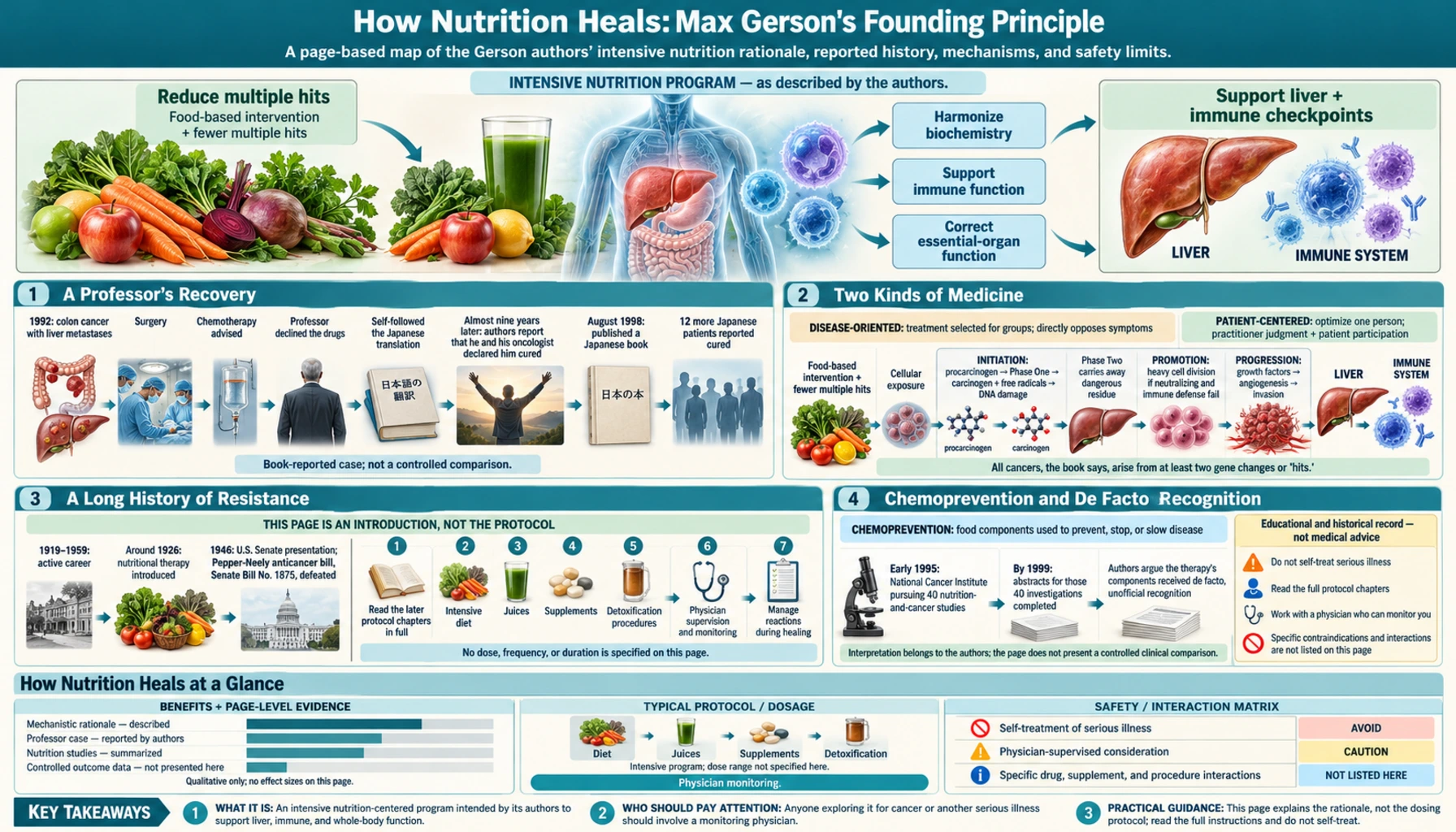
Chapter One of The Gerson Therapy, “How Nutrition Heals,” lays out the idea everything else in the book rests on: that food, used deliberately and intensively, can restore the body’s own healing systems. Charlotte Gerson and Morton Walker open with the story of a Japanese professor of medicine who followed the program on his own, then explain why they place the Gerson Therapy within “patient-centered” medicine, how they understand cancer to form, and why they believe so many everyday exposures add up to illness.
This page walks through that chapter in plain language and in the authors’ own terms: the forty-nine everyday factors they list as contributors to cancer, the “multiple hits” model, the liver’s two-phase role, the three stages of tumor growth, and the fifty-two health problems the book reports the therapy has treated. Everything below is presented as the book states it.
Table of Contents
- A Professor’s Recovery
- Two Kinds of Medicine
- A Long History of Resistance
- Chemoprevention and De Facto Recognition
- Diet and Cancer: Why the Link Took So Long
- The Five Major Forms of Cancer
- Forty-Nine Everyday Factors
- The Multiple “Hits” Theory
- Initiation, Promotion, Progression
- Fifty-Two Illnesses Treated by Diet
- Using This Information Safely
- Key Research Papers
- Connections
- Featured Videos
1. A Professor’s Recovery
The chapter opens in 1992 at a Japanese medical college. A professor of medicine, Dr. Yoshihiko H., M.D., Ph.D., learned he had colon cancer. During surgery to remove the tumor, his surgeon — a personal friend and former classmate — found that the cancer had already spread to the liver, and advised several courses of chemotherapy afterward.
The professor already knew Dr. Max Gerson’s book A Cancer Therapy: Results of Fifty Cases, which had been translated into Japanese. The authors write that he weighed the outlook he faced — they quote failure figures of 93 percent of patients dying after chemotherapy for colon/rectal cancer, and 97 percent for liver metastases — and declined the drugs. Instead, using the Japanese translation, he followed the Gerson Therapy on his own.
By the time the book was written, almost nine years after the diagnosis, the authors report that he and his oncologist had declared him “cured” of both the colon cancer and the liver metastases. In a letter to Charlotte Gerson, quoted in the chapter, he wrote that he had published a book in August 1998 introducing the therapy to Japanese readers — the first on the subject by a Japanese medical doctor — and that it included the stories of twelve more Japanese cancer patients who, he reported, were also cured using the Gerson program.
2. Two Kinds of Medicine
The authors describe one shared science of immunology and biochemistry, but two opposing ways of practicing medicine on top of it.
- Disease-oriented medicine sorts patients into groups with similar symptoms and looks for the treatment that works best for the group, often by blinded, placebo-controlled trials. Problems are corrected with approved drugs, chemotherapy, surgery, immunotherapy, radiation, or other high technology — the aim being to produce effects that directly oppose the symptoms. The book calls chemotherapy for cancer “the perfect example” of this approach.
- Patient-centered medicine asks what can be done to optimize the health of one unique person. It relies on the practitioner’s judgment and on the patient’s own close participation; the doctor often spends as much time teaching as treating. The book notes this approach is also called “functional medicine.”
Even when a patient has only subclinical signs, such as irregular lab results, patient-centered medicine according to the authors aims at three things:
- Harmonize the person’s biochemistry.
- Elevate the workings of a suppressed immune system.
- Correct the malfunctioning of essential organs.
The authors place the Gerson Therapy squarely in this second camp. They describe it as “the best in self-help health care,” especially for reversing serious degenerative illness, and say it uses mostly nutrition to achieve all three goals — “the ultimate in natural healing and a powerful antidote to the highly unnatural lifestyle that prevails in all modern industrial societies.”
3. A Long History of Resistance
The book states that Dr. Gerson first introduced his nutritional therapy around 1926, and that from then on it found no place in conventional medicine. The authors trace his active career over forty years, from 1919 in Bielefeld, Germany, to 1959 in New York City, and call him “probably half a century ahead of his time.”
They point to 1946, when Gerson presented patients before a U.S. Senate committee and the event drew national media attention. The book reports that the Pepper-Neely anticancer bill (Senate Bill No. 1875) was defeated that year, and that among the deciding votes against it were four senators who were themselves physicians. In the authors’ view, treating degenerative disease with diet was “just too excessively simple” and took decision-making power away from the medical profession.
The authors also describe Gerson being attacked editorially in a leading national medical journal after the Senate demonstration, which they attribute to the medical politics and financial policies of the period. Through it all, they write, Gerson “plodded on and continued bringing sick people who consulted him back from the brink of death.” After his death, his daughter Charlotte and the institute bearing his name carried on the work of educating the public.
4. Chemoprevention and De Facto Recognition
The authors call chemoprevention — using nutrients, phytochemicals, nutraceuticals, and other food components to prevent, stop, or slow disease — “the most revolutionary and promising field of medical research against degenerative diseases.”
They report that by early 1995 the National Cancer Institute was pursuing forty studies on nutrition and cancer, covering enzymes, fiber, fat, micronutrients, vitamins, and phytochemicals, and that by 1999 abstracts summarizing those forty investigations had been completed. According to the book, nearly all of the components of the Gerson Therapy play leading roles among the substances these studies identified as worth adding to or removing from the diet.
From this the authors argue that the Gerson Therapy is, “in effect, recognized as a viable treatment against cancer and most other degenerative diseases” — a de facto recognition by the United States, “without lawful authority and literally unofficial,” but real in that its components now underpin dietary advice given by major cancer organizations.
5. Diet and Cancer: Why the Link Took So Long
The chapter repeats figures from the book’s preface: at least 1.9 million people in the United States diagnosed with some form of cancer each year (excluding skin cancer and in situ cervical cancer), and, citing a holistic oncologist, at least 700,000 American cancer deaths annually.
The authors state that over 70 percent of malignancies are in some way related to what we eat, and that denatured food is a main source of breast and colon/rectal cancer, and of lung cancer in nonsmokers. What we eat, they write, influences both whether we develop cancer and whether we can cure it once it appears.
They then ask why conventional medicine has taken so long to accept the diet–cancer connection, and offer these answers:
- A focus on technology. American medicine leans toward high-tech treatment; eating vegetables as Gerson recommended uses almost no technology.
- Patents and profit. The authors write that a therapy that cannot be patented is usually ignored, because no commercial company will invest research time and money to promote it.
- An uncomfortable finger-pointing. Admitting the diet–disease link implicates makers of heavily processed, unnatural packaged foods — and ourselves, as a source of our own illness.
- Little nutrition training. The authors state that most medical doctors receive very poor education in nutrition, and that physicians who use nutrition as treatment are mostly self-educated.
The book reports that times are changing: more conscientious physicians, finding that too many patients do not get well on standard treatment, are turning to nutrition for cancer, arthritis, heart and blood-vessel disorders, diabetes, stroke, and other degenerative diseases — and looking at the underlying causes rather than only the symptoms.
6. The Five Major Forms of Cancer
Of roughly 150 types of cancerous growth, the chapter describes five major groups, classified by the tissue in which wild, excessive cell growth occurs:
- Carcinomas — form in the epithelial cells covering the skin, mouth, nose, throat, lung airways, and the genitourinary and digestive tracts, or lining glands such as the breast and thyroid. Solid tumors of the lung, breast, prostate, skin, stomach, and colon/rectum fall here.
- Sarcomas — develop in bone and in soft connective and supporting tissues: cartilage, muscle, tendon, fat, and the linings around the lungs, abdomen, heart, nervous system, and blood vessels.
- Leukemias — arise in blood and bone marrow; abnormal white cells travel the bloodstream and damage the spleen and other tissues. They do not form solid tumors and are considered blood dyscrasias (imbalances).
- Lymphomas — malignancies of the lymph glands, made of abnormal lymphocytes collecting as solid tumors in the neck, groin, armpits, spleen, center of the chest, and around the intestines. Non-Hodgkin’s lymphoma and Hodgkin’s disease are the two most common in North America.
- Myelomas — rare; arise in the antibody-producing plasma cells or blood-forming cells of the bone marrow.
The authors describe cancer cells as “essentially parasitic and immortal”: they fail to specialize, build their own blood-vessel network to siphon nourishment from normal cells, and grow until they kill their host. Because they are not enclosed by fiber, they can invade nearby tissue. A cancer that stays put is called localized; one that spreads is called metastasized.
7. Forty-Nine Everyday Factors

The book states that in 1958 Max Gerson became the first physician to say that cancer is caused by multiple interdependent factors, several of which he had identified over his forty-one-year career. The authors write that the list has since grown: environmental sources have released over 52,000 cancer-causing substances into air, soil, and water, which in their view suppress immunity and inhibit the enzymes needed for life. They count at least forty-nine stressors (their Table 1-1) that contribute to physical, mental, and emotional decline. Grouped for easier reading, the list covers:
- Radiation and fields — cosmic rays and X rays, sunlight’s ultraviolet rays, chronic electromagnetic field exposure, geopathic stress, ionizing radiation, microwave oven radiation, nonionizing radiation from household appliances, overhead power lines, nuclear radiation.
- Environment and water — sick building syndrome, pesticide and herbicide residues, industrial toxins, drinking or bathing in polluted, chlorinated, or fluoridated water, physical irritants such as asbestos.
- Food and diet — irradiated foods, food additives, diet or nutritional deficiencies, synthetic “nonfoods,” alcohol.
- Drugs and habits — tobacco and smoking, hormonal therapies, immune-suppressive drugs, steady use of street, prescription, or nonprescription drugs.
- Metals and dental factors — mercury toxicity from any source, toxic metal syndrome, amalgam fillings, root canals, cavitations (jawbone spaces left after poor extractions), dental metals of all types.
- Mind and stress — chronic physical or mental stress, destructive negative emotions, nerve interference fields.
- Infections — parasites, viruses, bacterial infections, fungal infections.
- Internal terrain — depressed thyroid action, intestinal toxicity or digestive impairment, blocked detoxification pathways, free-radical pathology, cellular oxygen deficiency, adverse cellular terrain.
- Inheritance — oncogenes, genetic predisposition, and “miasm” (described as energy residues of earlier illnesses).
The authors write that Gerson’s early insights into these factors were long ignored, and that treating tumors without correcting the causes behind them leaves patients worse off.
8. The Multiple “Hits” Theory
The book explains cancer risk through the “multiple-hit” theory. All cancers, it says, arise from at least two changes — “hits” — to a cell’s genes. These hits build up and interact over time until a breaking point is reached, “the proverbial straw that broke the camel’s back,” and cancerous growth switches on. The hits are likely to come from the factors in the list above.
What matters most, according to the authors, is the number and types of hits, how often they happen, and how intense they are. Some act as cancer “initiators” and others as “promoters.” A person who avoids most of them may never develop symptomatic cancer — but with one in three (and approaching one in two) North Americans or Europeans getting cancer, the book notes, the odds are high it will touch you or someone you love.
This is the logical heart of the chapter: if cancer is the sum of many hits, then reducing the hits and strengthening the body’s defenses — through food — is the way to tip the balance back.
9. Initiation, Promotion, Progression
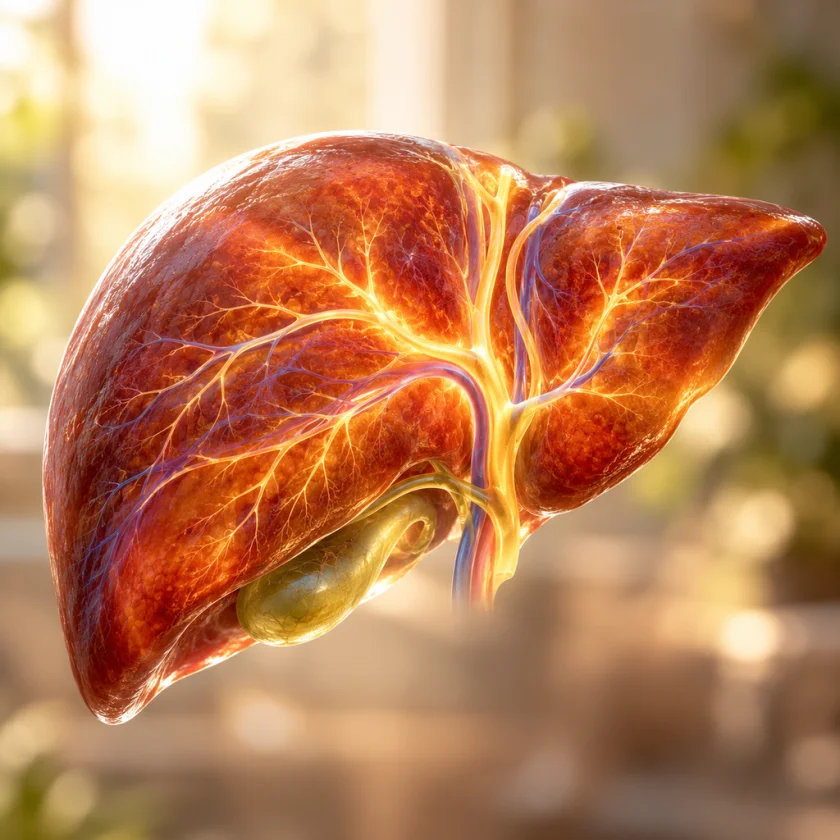
The chapter describes three steps from damaged cell to full-blown cancer, with the liver playing a double role.
- Initiation. A precursor carcinogen (procarcinogen) produces large numbers of free radicals that damage a cell’s DNA. In the liver’s Phase One enzyme reaction, the procarcinogen is converted into a full carcinogen; the liver’s Phase Two enzymes then carry away the dangerous residue Phase One leaves behind. The book sums this up: the liver “simultaneously” initiates carcinogenesis and neutralizes it.
- Promotion. If the liver’s neutralizing is not up to par, the damaged cell changes its normal pattern of division and begins dividing heavily. The immune system should recognize these cells as foreign and destroy them; if it fails, a tumor can form.
- Progression. The tumor tries to build its own blood supply. Clusters of cancer cells release growth factors that drive new blood-vessel formation (angiogenesis), after which the malignancy can invade surrounding tissue.
Read alongside the rest of the book, this explains why the Gerson program puts so much weight on supporting the liver and the immune system: in the authors’ model, those are the two checkpoints at which cancer can be stopped.
10. Fifty-Two Illnesses Treated by Diet
The authors state that each factor in their list can be prevented or treated with dietary intervention, that certain foods fight off or reverse cancer and other degenerative diseases, and that every food component of the Gerson Therapy works against a wide range of physical and mental conditions. They report that nearly ten thousand patients had benefited from the Gerson dietary treatment, with many success stories published in the institute’s bimonthly newsletter.
Their Table 1-2 lists fifty-two health problems — “a sample of the several hundred” — against which they report the therapy has shown verified, permanent effectiveness:
- Acne
- Addictions
- AIDS
- Allergies
- Anemias
- Ankylosing spondylitis
- Arthritis
- Asthma
- Cancers and leukemias
- Candidiasis
- Chemical sensitivities
- Chronic fatigue syndrome
- Constipation
- Crohn’s disease
- Cushing’s syndrome
- Depression/panic attacks
- Diabetes
- Emphysema
- Endometriosis
- Epilepsy
- Fibroids
- Fibromyalgia
- Genital herpes
- Gout
- Heart and artery diseases
- Hemorrhoids
- Hepatitis
- High blood pressure
- Hyperactivity
- Hypoglycemia/hyperglycemia
- Immune deficiency
- Infertility
- Intestinal parasites
- Kidney disease
- Liver cirrhosis
- Lyme disease
- Lupus erythematosus
- Macular degeneration
- Migraine
- Mononucleosis
- Multiple sclerosis
- Obesity
- Ocular histoplasmosis
- Osteomyelitis
- Osteoporosis
- Phlebitis
- Premenstrual syndrome
- Psoriasis
- Shingles
- Stroke
- Tuberculosis
- Ulcerative colitis
11. Using This Information Safely
This chapter is an introduction to the reasoning behind the therapy, not the protocol itself. The book describes the Gerson Therapy as an intensive program, and its later chapters set out the diet, juices, supplements, and detoxification procedures in detail, including how patients are supervised and how reactions during healing are handled. Anyone with cancer or another serious illness who is considering the program should read those chapters in full and work with a physician who can monitor them — the professor in this chapter’s opening story was himself a medical doctor working alongside his own oncologist.
See the Practical Guide and Detoxification pages for the book’s own practical and safety guidance.
Key Research Papers
- Gerson C, Walker M. The Gerson Therapy. Chapter One, “How Nutrition Heals.” — primary source for this page.
- Gerson M. The cure of advanced cancer by diet therapy: a summary of 30 years of clinical experimentation. Physiol Chem Phys. 1978. PubMed PMID: 751079
- Gerson M. Effects of a combined dietary regime on patients with malignant tumors. Exp Med Surg. 1949. PubMed PMID: 15396126
- Gerson M. [No cancer in normal metabolism; results of special therapy]. Med Klin. 1954. PubMed PMID: 13144228
- Gerson M. [Cancer a problem of metabolism]. Med Klin. 1954. PubMed PMID: 13202917
PubMed Topic Searches
Connections
Featured Videos