Respiratory and Lung Herbs
The Herbs (8)
Plantain Herb
Common sidewalk weed, not the banana, used as a first-aid leaf for stings and cuts and as a soothing tea for dry coughs.
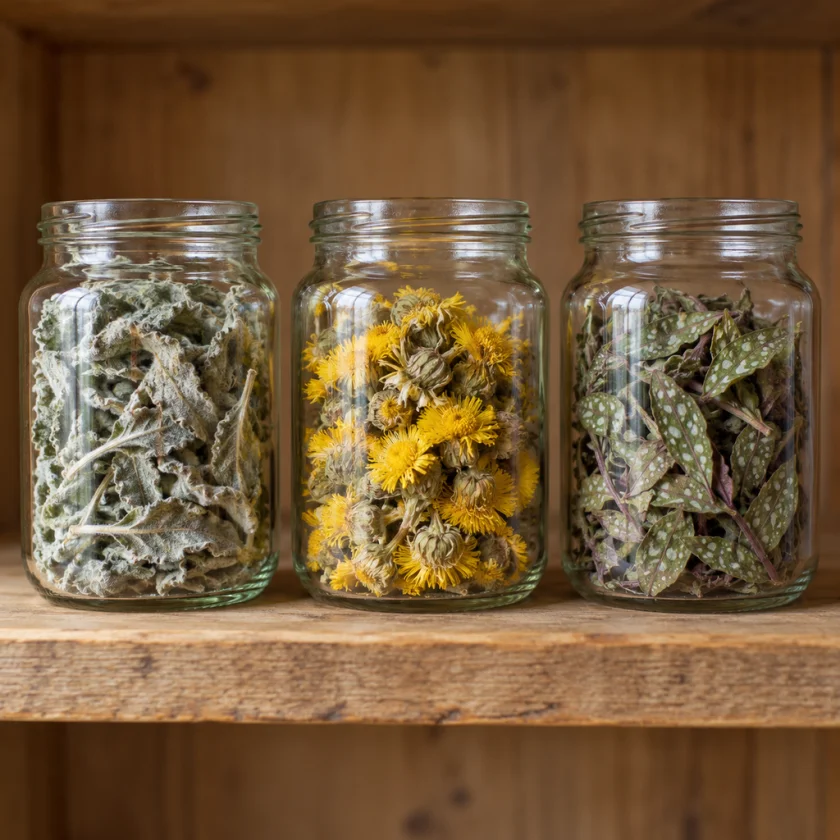
Read the deep dive →Coltsfoot
Early-spring yellow flower once a beloved cough herb, but it contains liver-toxic pyrrolizidine alkaloids, and several countries restrict internal use.
Read the deep dive →Elecampane
Tall yellow daisy whose aromatic, inulin-rich root has been a European remedy for wet, congested coughs for over two thousand years.
Read the deep dive →Horehound
Woolly gray mint behind old-fashioned cough drops, traditionally used for coughs and sore throats and as a bitter digestive tonic.
Read the deep dive →Houttuynia
Fishy-smelling heart-leaved herb eaten raw in Vietnam and drunk as tea in Japan, used for lung heat with mostly laboratory evidence.
Read the deep dive →Lungwort
Spotted-leaf woodland herb named for its lung-like look, traditionally a soothing remedy for coughs, bronchitis and sore throats, with limited research.
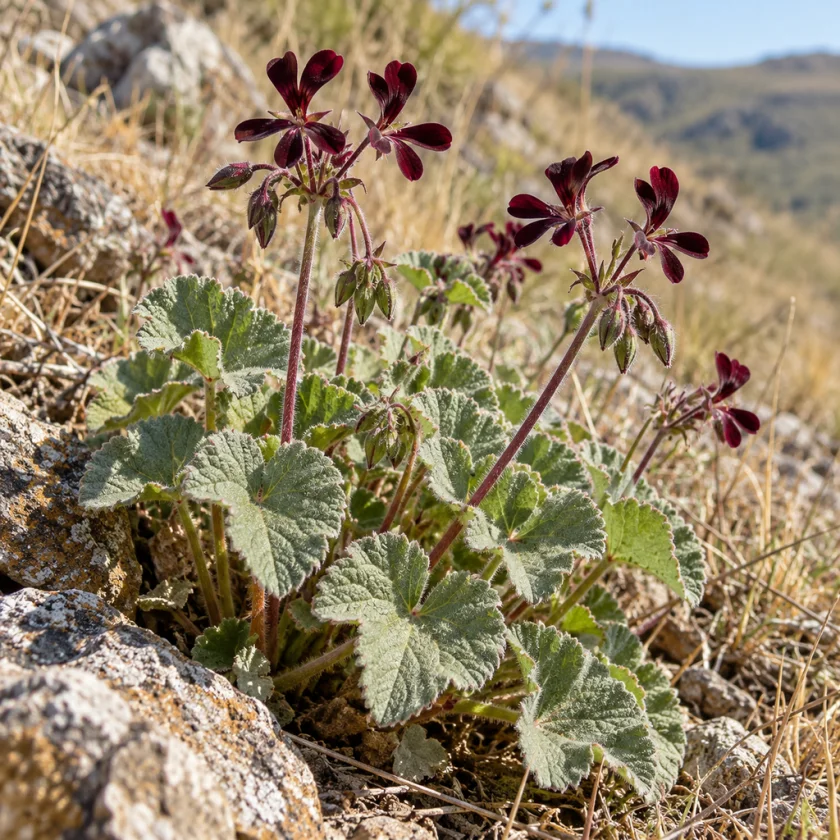
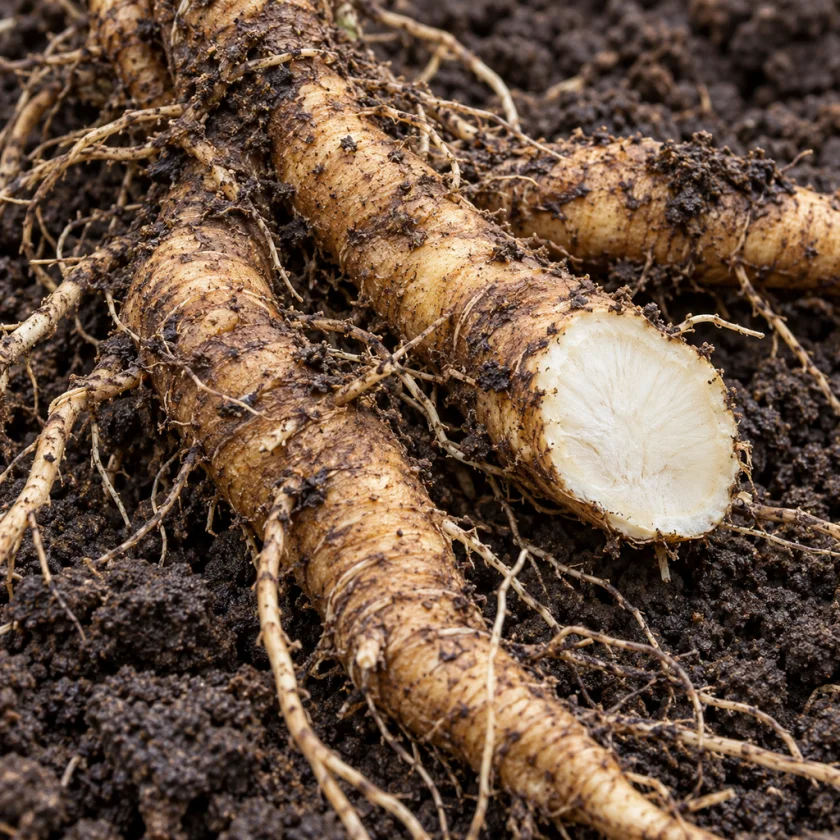
Read the deep dive →Pelargonium
South African geranium root behind a well-studied cough and bronchitis extract, with trials of modest benefit and rare reported liver injury.
Read the deep dive →Ivy Leaf
Common climbing ivy whose dried-leaf extract is a European cough syrup for adults and children; the controlled evidence is thin and the berries are poisonous.
Read the deep dive →The traditional cough, chest and lung herbs of European practice, plus their Asian counterparts. Two of them contain pyrrolizidine alkaloids and are no longer considered safe taken internally; those pages lead with that rather than bury it.
A herb is filed here by what it is traditionally used for, not by a claim that it works. Each herb page states its own evidence tier, its documented harms and its drug interactions — read those before the category name.