Stinging Nettle Nutrition, Iron and Nettle as Food
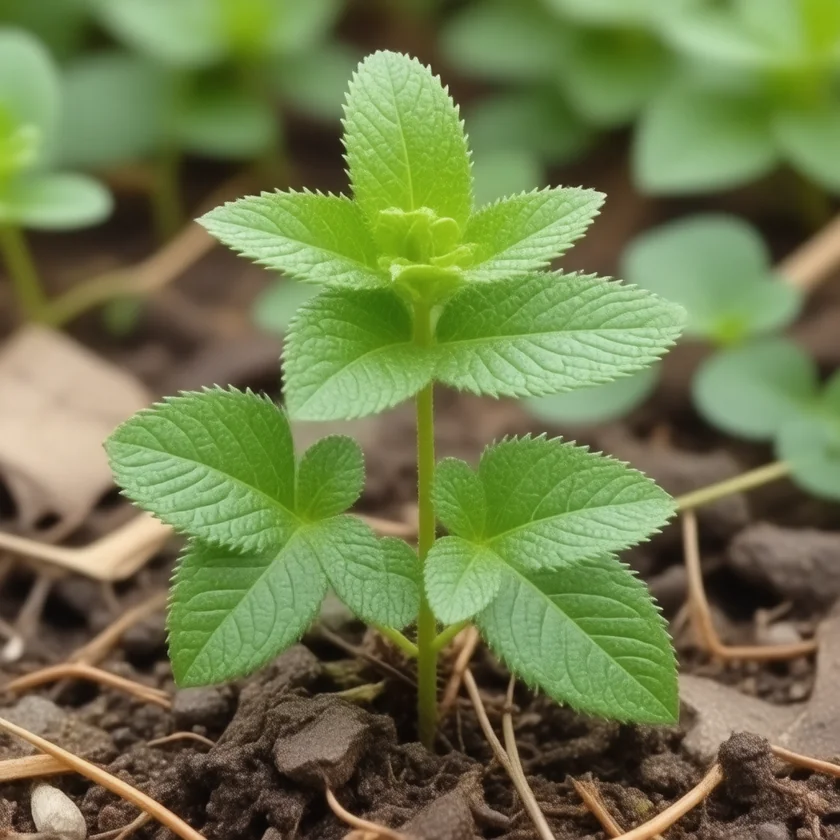
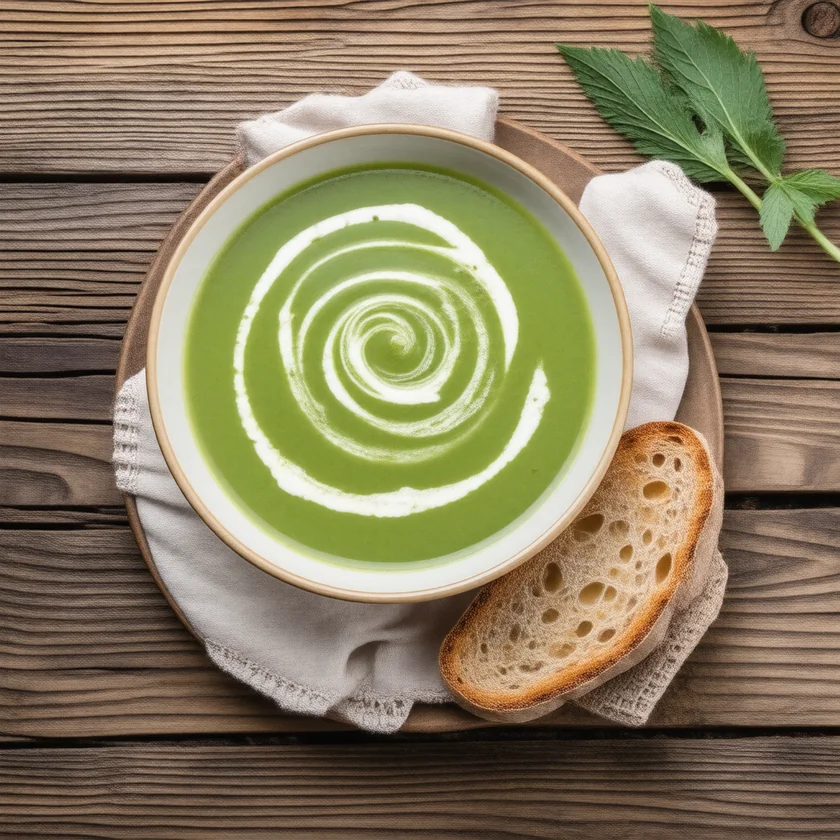
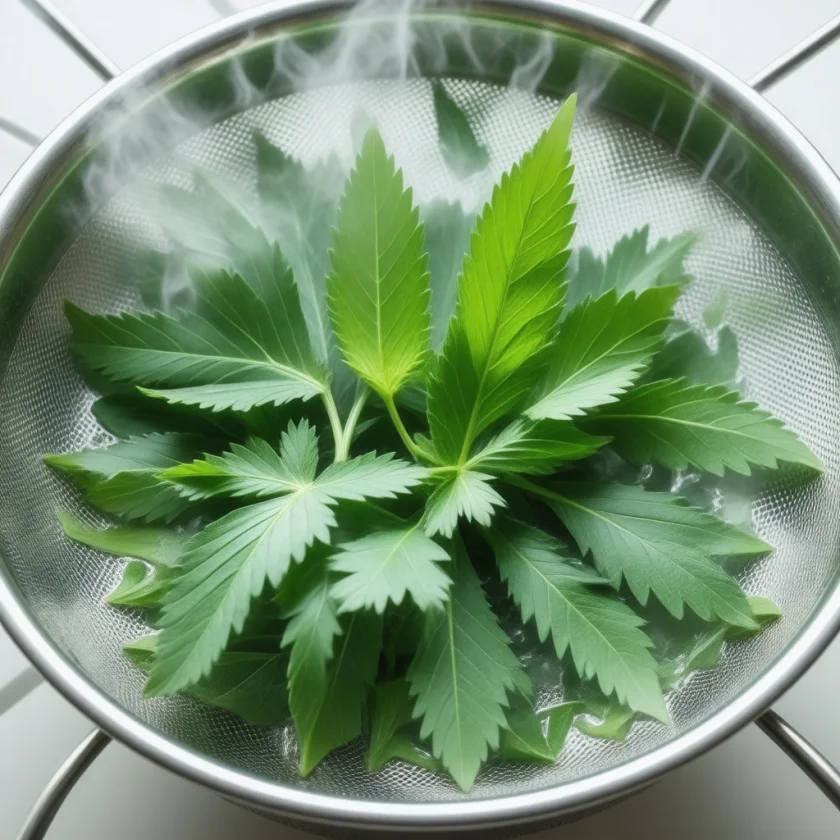
This is the part of the nettle story that needs no trials, no mechanism and no benefit of the doubt. Somebody analysed cooked nettle in a laboratory and wrote the numbers down. They are in the U.S. Department of Agriculture (USDA) database, anyone can look them up, and they are genuinely striking.
They are also not quite the numbers people expect. Nettle’s reputation is built on iron — the old “blood builder” and spring tonic story — and its iron content turns out to be respectable but ordinary. What is actually exceptional is its calcium, which is in a class of its own among leafy greens, and its vitamin K, which is high enough to be a genuine drug interaction rather than a nutritional footnote. This article gives you the real figures and what to do with them.
Table of Contents
- The Numbers, per 100 g Cooked
- Calcium: The Genuinely Exceptional One
- Iron: The Reputation Versus the Analysis
- Vitamin K: Why This Is a Warfarin Problem
- Oxalates, Kidney Stones and Mineral Absorption
- Dried Leaf, Flour and Tea Are Not the Same Food
- Foraging: Where, When and What Not to Pick
- Cooking It: Killing the Sting and Not Wasting It
- Who This Actually Helps
- Cautions
- Key Research Papers
- Connections
- Featured Videos
The Numbers, per 100 g Cooked
U.S. Department of Agriculture FoodData Central entry 169819, “Stinging nettles, blanched”, per 100 g — roughly a generous cooked side portion, which is a surprisingly large heap of raw leaves before it wilts down:
- Energy: 42 kcal
- Protein: 2.71 g
- Fat: 0.11 g
- Carbohydrate: 7.49 g, of which dietary fibre 6.9 g — nearly all of it
- Calcium: 481 mg
- Iron: 1.64 mg
- Magnesium: 57 mg
- Phosphorus: 71 mg
- Potassium: 334 mg
- Sodium: 4 mg
- Zinc: 0.34 mg; manganese: 0.78 mg
- Vitamin A: 101 µg RAE (retinol activity equivalents; 2,010 international units, IU)
- Folate: 14 µg
- Vitamin K (phylloquinone): 498.6 µg
Two immediate observations. That fibre figure — 6.9 g out of 7.49 g of carbohydrate — means nettle is effectively a zero-net-carbohydrate vegetable, which is unusual. And the U.S. Department of Agriculture record carries no vitamin C value, which is expected: vitamin C is water-soluble and heat-labile, and blanching destroys most of it. Fresh nettle contains vitamin C; cooked nettle largely does not.
How it compares with the greens people actually eat
All figures per 100 g cooked (boiled, drained), from the same U.S. Department of Agriculture database:
- Calcium: nettles 481 mg · kale 150 mg · collards 141 mg · spinach 136 mg · broccoli 40 mg
- Iron: spinach 3.57 mg · nettles 1.64 mg · collards 1.13 mg · kale 0.84 mg · broccoli 0.67 mg
- Vitamin K: nettles 498.6 µg · spinach 494 µg · kale 418 µg · collards 407 µg · broccoli 141 µg
Nettle wins calcium by a factor of more than three over its nearest rival. It comes second on iron, behind spinach. Its vitamin K sits right alongside spinach at the top of the range.
Calcium: The Genuinely Exceptional One
481 mg of calcium per 100 g is remarkable for a plant food. For scale, 100 g of whole milk contains around 120 mg. A cooked portion of nettle carries roughly four times the calcium of the same weight of milk and about half the adult daily requirement of 1,000 mg.
The honest qualification is bioavailability. How much of a plant’s calcium you absorb depends heavily on its oxalate content, because calcium and oxalate bind into an insoluble complex that passes straight through you. This is the well-documented reason spinach is a poor calcium source despite its numbers, while low-oxalate greens such as kale, bok choy and broccoli give up their calcium readily — absorption from kale is comparable to milk.
Nettle is an oxalate-containing plant, so some of that 481 mg will be bound and unavailable. How much has not been established by a proper human absorption study, which is a genuine gap. Cooking and discarding the water removes a meaningful share of soluble oxalate, and pairing nettle with a slightly acidic ingredient does no harm. On current evidence nettle is a good contributor to calcium intake rather than a milk substitute.
Iron: The Reputation Versus the Analysis
Nettle’s standing as a blood-building tonic is centuries old and appears in herbals across Europe. It is worth saying plainly: the analysis does not support the reputation at the level the reputation implies.
1.64 mg per 100 g cooked is a reasonable amount, better than kale or collards, but less than half what cooked spinach delivers — and spinach is itself a mediocre iron source in practice. Then two further reductions apply:
- It is non-haem iron. Plant iron is absorbed far less efficiently than the haem iron in meat — single-digit percentages under ordinary conditions, versus 15–35% for haem iron.
- Oxalates, phytates and polyphenols all inhibit non-haem iron absorption, and nettle contains all three categories. The tannins in a strong nettle tea are in the same chemical family as those in ordinary tea, which is well known to reduce iron absorption when drunk with a meal.
So a 100 g portion supplying 1.64 mg on paper might realistically deliver a fraction of a milligram. Against an adult requirement of 8 mg/day for men and post-menopausal women, and 18 mg/day for menstruating women, that is a contribution, not a solution.
The one thing that genuinely helps: vitamin C eaten at the same meal can multiply non-haem iron absorption several-fold. Lemon juice, peppers or tomatoes at the same meal supply it. Since blanching destroys nettle’s own vitamin C, that vitamin C has to come from another food at the meal.
If you are actually anaemic, nettle is not the answer. Iron-deficiency anaemia needs a blood test to confirm it, a search for the cause — heavy periods, gastrointestinal bleeding, coeliac disease, poor intake — and usually supplementation at doses no vegetable can approach. Treating fatigue with nettle tea while an undiagnosed bleed continues is a genuinely dangerous way to lose a year. See the iron page for what deficiency actually requires.
Vitamin K: Why This Is a Warfarin Problem
This is the section to read if you take an anticoagulant, and it is not a theoretical caution.
498.6 µg of vitamin K1 per 100 g. The adequate intake for adults is 120 µg/day for men and 90 µg/day for women. One cooked portion of nettle is therefore roughly four to five days’ worth.
Vitamin K is the cofactor the liver needs to activate clotting factors II, VII, IX and X. Warfarin works by blocking exactly that step — it inhibits vitamin K epoxide reductase, the enzyme that recycles vitamin K so it can be used again. The drug and the vitamin are direct antagonists. Raise vitamin K intake and warfarin becomes less effective; drop it and warfarin becomes more effective. The clinical consequence is a swinging international normalized ratio (INR): too low and you risk clot, stroke or pulmonary embolism; too high and you risk bleeding.
The literature on this is settled. Rombouts and colleagues found that people with a low usual vitamin K intake were more sensitive to occasional vitamin-K-rich meals: among them, recent intake was twice as high in those whose international normalized ratio fell too low (164 against 85 µg a day), while a high usual intake went with a lower risk of a low ratio (neither overall estimate reached statistical significance). In their 2007 trial of 200 patients, 100 µg of vitamin K a day made maximal anticoagulant stability more likely (relative risk 1.8), though the 3.6% gain in time within the target range was not statistically significant. Steady intake, not low intake, is the key insight. Booth and Centurelli’s practical guide makes the same point: the goal is consistency, not avoidance. A systematic review by Tan and Lee catalogues warfarin interactions with foods, herbs and supplements and treats high-vitamin-K botanicals as a recognised category.
What the Warfarin Research Shows
- Warfarin, acenocoumarol and phenprocoumon: anticoagulation guidance (Booth and Centurelli 1999) is a constant daily vitamin K intake rather than giving vitamin-K foods up; large swings in intake, such as starting nettle as a daily food or tea, move the international normalized ratio.
- Starting and stopping. On this research, a spring foraging habit that runs for six weeks and then stops swings vitamin K intake more than either eating it every week or never eating it.
- Nettle root is not the issue. Root extract capsules are not a meaningful vitamin K source. This concern is specific to leaf and aerial parts — which means tea, capsules of leaf powder, and food.
- Direct oral anticoagulants (DOACs) are unaffected. Apixaban, rivaroxaban, edoxaban and dabigatran do not act through vitamin K. For people taking one of these, nettle’s vitamin K content is irrelevant to their anticoagulation.
- For everyone else, this is a good thing. Vitamin K is needed for bone matrix proteins as well as clotting, and most people fall short of the adequate intake. Nettle is an excellent source.
Oxalates, Kidney Stones and Mineral Absorption
Like spinach, chard, rhubarb and beet greens, nettle contains oxalic acid. This matters in two ways.
Kidney stones. About 80% of kidney stones are calcium oxalate. Dietary oxalate contributes to urinary oxalate excretion, and in people who form stones it is one of the modifiable factors — in healthy people about half of urinary oxalate comes from the diet and half is made by the body (Mitchell 2019). That 2019 review treats urinary oxalate above 25 mg a day as a level where lowering it may help, and names good hydration, limiting oxalate-rich foods and eating enough calcium as the ways to limit calcium-oxalate stone growth. Nettle sits with spinach among the oxalate-containing greens: boiling with the water discarded removes part of its soluble oxalate, and calcium eaten at the same meal binds oxalate in the gut rather than in the kidney.
Mineral binding. Oxalate binds calcium, iron, magnesium and zinc in the gut, which is why nettle’s impressive mineral numbers are best read as an upper bound rather than a delivered dose.
Boiling helps. Oxalate is water-soluble, and blanching or boiling with the cooking water discarded removes a substantial fraction. The trade-off is that potassium, magnesium and some water-soluble vitamins go down the drain too. A common compromise among regular eaters is a short blanch, discarding the water, then using the leaves.
One traditional practice worth reconsidering: many recipes tell you to keep the blanching water as “nettle broth” or drink it as tea. That water is where the soluble oxalate went, so for people who form stones the broth carries the oxalate the leaves lost.
Dried Leaf, Flour and Tea Are Not the Same Food
Nutrient figures for nettle circulate wildly, and most of the confusion comes from mixing up three different products.
- Cooked fresh leaf — the U.S. Department of Agriculture figures above. About 85–90% water. This is a vegetable.
- Dried leaf or nettle flour — the water has been removed, so everything concentrates roughly eight- to tenfold by weight. Adhikari and colleagues analysed Nepalese nettle flour and reported 33.8% crude protein, 16.2% total ash (that is minerals), 9.1% crude fibre, 3.6% crude fat and 307 kcal per 100 g, with phenolics of 129 mg gallic-acid equivalents and carotenoids of 3,497 µg per gram of dried powder — far more than wheat or barley flour. Those numbers are entirely believable and completely irrelevant to a teaspoon of dried leaf, because nobody eats 100 g of nettle flour. This is where the internet’s more excitable claims come from: quoting dried-weight percentages as though they were serving sizes.
- Tea — a water infusion of 2–3 g of dried leaf. Only what dissolves in hot water comes across: potassium, some magnesium, polyphenols, flavonoids. Calcium transfers poorly. Fat-soluble vitamins A and K transfer very poorly. A cup of nettle tea is a pleasant, mineral-flavoured drink; it is not a multivitamin, and its vitamin K content is far below that of the leaves themselves.
The rule of thumb: if a nutrient claim about nettle sounds extraordinary, check whether the number is per 100 g of dried material. It usually is.
Foraging: Where, When and What Not to Pick
- When. Early spring, when the tops are young and tender — the first four to six leaves of a shoot. Nettle is one of the earliest greens available in temperate climates, which is exactly why it became a spring tonic: it appeared when nothing else had.
- When not. Foragers stop picking once the plant flowers, usually early summer. Older nettle develops gritty cystoliths — calcium carbonate concretions in the leaf tissue — which are traditionally associated with urinary tract irritation and are unpleasant to eat regardless. For a late crop, foragers cut the plants back and harvest the fresh regrowth.
- Where not. Nettle thrives in nitrogen-rich, disturbed ground, which describes roadsides, farmyards and old industrial land. It is also known to take up heavy metals from contaminated soil. Foragers pass over roadside verges, ground that may have been sprayed, dog-walking routes and land with an industrial history.
- Gloves. Thick ones, plus scissors and a bag. The stems sting as much as the leaves.
- Identification. Opposite leaves with coarsely serrated edges, a square-ish stem, and the sting. White dead-nettle (Lamium album) looks superficially similar and does not sting; it is harmless but is a different plant. The general foraging rule — never eating a plant that has not been positively identified — applies here as anywhere.
Cooking It: Killing the Sting and Not Wasting It
The sting is destroyed by heat, drying, freezing, crushing or thorough blending. There is no ambiguity about this and no residual risk once the leaves are cooked.
- Blanching. Drop into boiling water for 60–90 seconds, drain, refresh in cold water, squeeze out the excess. The leaves are now completely safe to handle and eat, and the sting is gone. This also removes some oxalate.
- Soup. The classic use across Europe. Onion, potato, stock, a large volume of blanched nettle, blended. It is a deep green and tastes somewhere between spinach and cucumber, with a mineral edge.
- As a spinach substitute. Anywhere cooked spinach appears — with garlic and olive oil, folded into eggs, in a filo pie with feta, stirred through pasta or risotto.
- Pesto. Blanched nettle, garlic, hard cheese, nuts, oil. The blender destroys any remaining hairs.
- Drying for tea. Hang bunches in a dark, airy place until crisp, then strip the leaves and store in an airtight jar away from light. Well-dried nettle keeps its colour for about a year.
- Freezing. Blanch, squeeze, portion, freeze. Freezing alone also destroys the sting.
- Raw nettle. Enthusiastic claims about raw nettle smoothies exist. A powerful blender does destroy the hairs, but any leaf that escapes the blades will sting the inside of the mouth and throat, and there is nothing to gain that a 60-second blanch does not also give.
Who This Actually Helps
Cooked nettle is a legitimately good vegetable, and worth eating for people who:
- eat few dairy products and want plant calcium from something other than fortified drinks;
- want more dietary fibre from something that is not a grain;
- are short on vitamin K, which most people are relative to the adequate intake;
- enjoy foraging and want a free, abundant, genuinely nutritious wild green;
- are looking for a low-calorie, near-zero-net-carbohydrate vegetable with actual mineral content.
It is not the answer for iron-deficiency anaemia, not a treatment for any disease by virtue of being nutritious, and not a reason to skip a blood test. “Nutrient-dense” is a description of a food, not a therapeutic claim.
Cautions
- Warfarin and other vitamin K antagonists — the headline issue, covered above. The research points to a consistent intake.
- Calcium-oxalate kidney stones — nettle is an oxalate-containing green like spinach; boiling with the water discarded removes part of the oxalate, and the 2019 review names hydration, limiting oxalate-rich foods and enough calcium as the ways to limit stone growth.
- Chronic kidney disease with potassium restriction — 334 mg of potassium per 100 g is not extreme, but on a potassium limit it counts toward the daily total.
- Blood-pressure medication and diuretics — nettle’s traditional diuretic reputation has some animal support: in anaesthetised rats, nettle extract given into a vein lowered arterial pressure by 15% at a low dose and 38% at a high dose and increased urine output; the high-dose effect persisted, which the authors read as a possible toxic effect (Tahri 2000). These are animal results. An added blood-pressure fall with antihypertensives shows up as lightheadedness.
- Diabetes medication — small human trials of nettle leaf extract suggest a modest glucose-lowering effect. In one placebo-controlled trial, 92 people with advanced type 2 diabetes who needed insulin therapy took 500 mg of nettle-leaf extract every 8 hours for 3 months alongside their usual diabetes drugs; fasting glucose, 2-hour after-meal glucose and HbA1c (glycated haemoglobin) fell significantly compared with placebo, with no significant change in kidney or liver tests. Food quantities are unlikely to matter much; with insulin or a sulfonylurea, an added glucose-lowering effect raises the chance of low blood sugar.
- Pregnancy — cooked nettle as an occasional food is generally regarded as low concern, but medicinal doses and strong daily tea are traditionally not used in pregnancy, and there are no human safety data for medicinal doses.
- Contaminated ground — nettle accumulates heavy metals from polluted soil. Where you pick matters as much as what you pick.
- Allergy — rare, but genuine allergy to Urtica exists.
Key Research Papers
Every identifier was verified live against NCBI E-utilities before being written. The composition figures in this article come from U.S. Department of Agriculture FoodData Central, linked below, rather than from any single paper.
- Adhikari BM, Bajracharya A, Shrestha AK. Comparison of nutritional properties of stinging nettle (Urtica dioica) flour with wheat and barley flours. Food Science & Nutrition. 2016;4(1):119–124 — PubMed PMID: 26788318 — Laboratory analysis. 33.8% crude protein and 16.2% ash in dried nettle flour — dry weight, not serving size.
- Kregiel D, Pawlikowska E, Antolak H. Urtica spp.: ordinary plants with extraordinary properties. Molecules. 2018;23(7):1664 — PubMed PMID: 29987208 — Review. Composition, food and industrial uses.
- Bhusal KK, Magar SK, Thapa R, et al. Nutritional and pharmacological importance of stinging nettle (Urtica dioica L.): a review. Heliyon. 2022;8(6):e09717 — PubMed PMID: 35800714 — Review.
- Tarasevičienė Ž, Vitkauskaitė M, Paulauskienė A, Černiauskienė J. Wild stinging nettle (Urtica dioica L.) leaves and roots chemical composition and phenols extraction. Plants (Basel). 2023;12(2):309 — PubMed PMID: 36679022 — Laboratory analysis. Leaf and root analysed separately.
- Maietti A, Tedeschi P, Catani M, et al. Nutrient composition and antioxidant performances of bread-making products enriched with stinging nettle (Urtica dioica) leaves. Foods. 2021;10(5):938 — PubMed PMID: 33922901 — Food-science study.
- Booth SL, Centurelli MA. Vitamin K: a practical guide to the dietary management of patients on warfarin. Nutrition Reviews. 1999;57(9 Pt 1):288–296 — PubMed PMID: 10568341 — Clinical review. Consistency, not avoidance.
- Rombouts EK, Rosendaal FR, van der Meer FJ. Influence of dietary vitamin K intake on subtherapeutic oral anticoagulant therapy. British Journal of Haematology. 2010;149(4):598–605 — PubMed PMID: 20151978 — Human cohort.
- Rombouts EK, Rosendaal FR, van der Meer FJ. Daily vitamin K supplementation improves anticoagulant stability. Journal of Thrombosis and Haemostasis. 2007;5(10):2043–2048 — PubMed PMID: 17666020 — Human RCT.
- Cushman M, Booth SL, Possidente CJ, et al. The association of vitamin K status with warfarin sensitivity at the onset of treatment. British Journal of Haematology. 2001;112(3):572–577 — PubMed PMID: 11260056 — Human.
- Tan CSS, Lee SWH. Warfarin and food, herbal or dietary supplement interactions: a systematic review. British Journal of Clinical Pharmacology. 2021;87(2):352–374 — PubMed PMID: 32478963 — Systematic review.
- Holmes RP, Assimos DG. The impact of dietary oxalate on kidney stone formation. Urological Research. 2004;32(5):311–316 — PubMed PMID: 15221245 — Review.
- Mitchell T, Kumar P, Reddy T, et al. Dietary oxalate and kidney stone formation. American Journal of Physiology — Renal Physiology. 2019;316(3):F409–F413 — PubMed PMID: 30566003 — Review.
- Hurrell R. How to ensure adequate iron absorption from iron-fortified food. Nutrition Reviews. 2002;60(7 Pt 2):S7–S15 — PubMed PMID: 12141601 — Review. Why phytate, polyphenols and oxalate matter for plant iron.
- Tahri A, Yamani S, Legssyer A, et al. Acute diuretic, natriuretic and hypotensive effects of a continuous perfusion of aqueous extract of Urtica dioica in the rat. Journal of Ethnopharmacology. 2000;73(1–2):95–100 — PubMed PMID: 11025144 — Animal.
- Kianbakht S, Khalighi-Sigaroodi F, Dabaghian FH. Improved glycemic control in patients with advanced type 2 diabetes mellitus taking Urtica dioica leaf extract: a randomized double-blind placebo-controlled clinical trial. Clinical Laboratory. 2013;59(9–10):1071–1076 — PubMed PMID: 24273930 — Human RCT.
PubMed Topic Searches
- PubMed: Nettle nutritional composition
- PubMed: Calcium bioavailability and oxalate
- PubMed: Vitamin C and non-haem iron absorption
- PubMed: Vitamin K content of vegetables
- PubMed: Cooking and oxalate reduction
- PubMed: Nettle and heavy-metal accumulation
- PubMed: Wild edible greens — nutritional value
- PubMed: Iron-deficiency anaemia — proper investigation
Data source
Connections
- All Herbs
- Stinging Nettle — main article
- Stinging Nettle Benefits — hub
- Root for Prostate and Benign Prostatic Hyperplasia
- Leaf for Allergies and Hay Fever
- Joint Pain and Traditional Urtication
- Iron — deficiency, testing and supplementation
- Covered in depth on its own page: Calcium