Tamarind for Blood Sugar and Weight
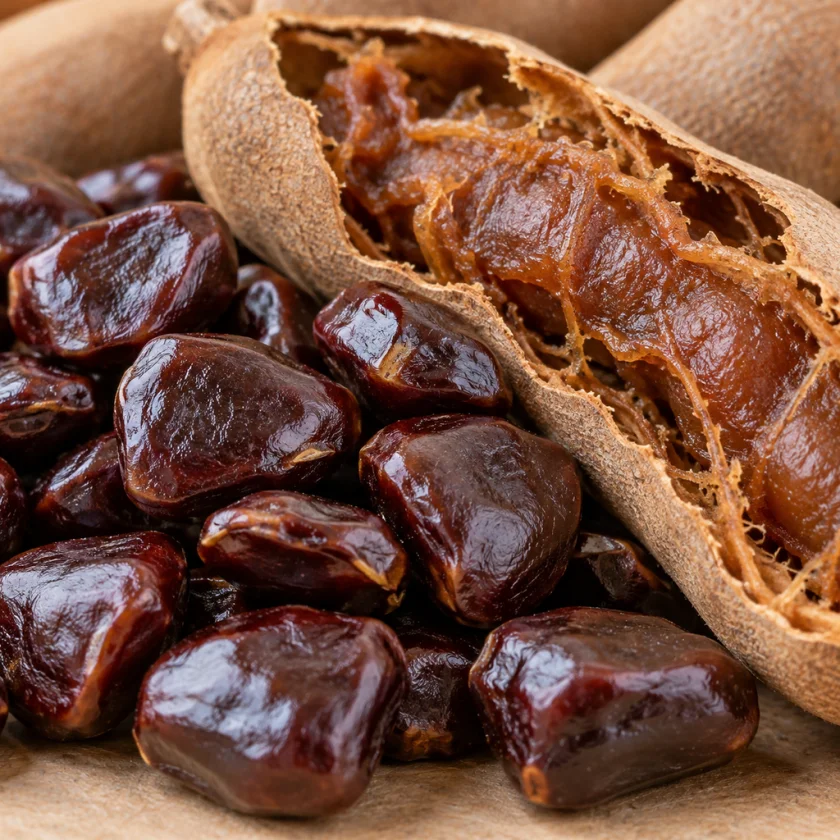
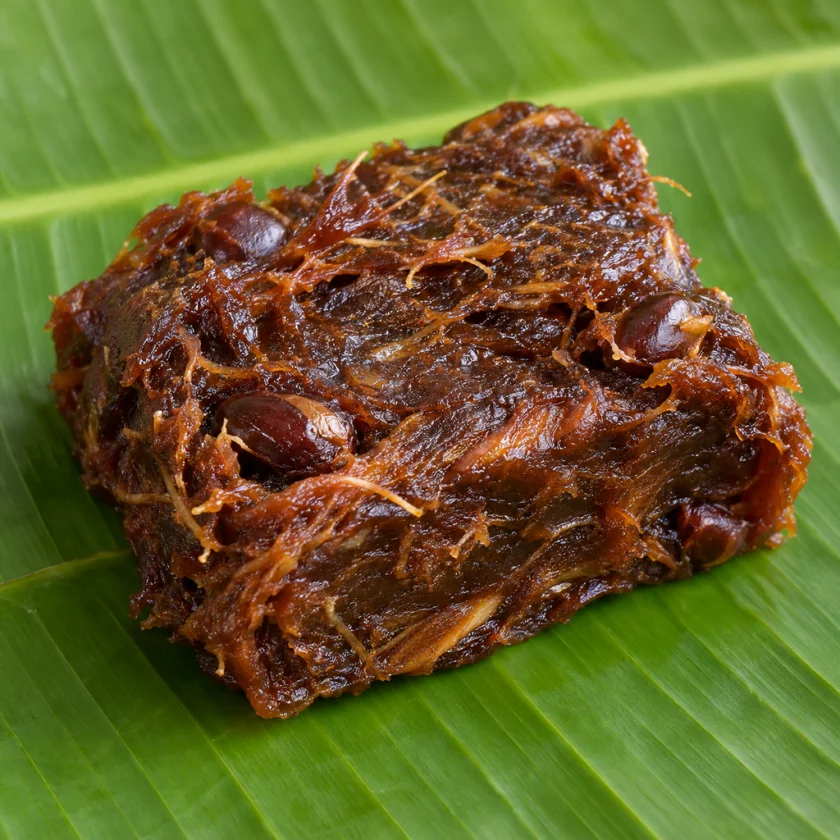
Of all the claims made about tamarind, the metabolic ones are the strangest, because the raw material argues against them. Tamarind pulp is roughly 57 grams of sugar per 100 grams. Proposing it as a blood-sugar remedy is a bit like proposing honey as a treatment for a sweet tooth — not impossible in principle, since a food can contain a compound that acts against its own macronutrient content, but requiring far better evidence than usually accompanies the claim.
Two further complications make this the most confused area in the tamarind literature. First, almost all the metabolic research uses seed extracts, while everything anybody eats is the pulp. Second, the weight-loss claims attached to tamarind mostly do not belong to tamarind at all — they belong to Garcinia cambogia, an unrelated plant sold as “Malabar tamarind.” Untangling those two threads is most of this article.
Table of Contents
- Two Different Claims That Get Merged
- The Garcinia Mix-Up
- What Is Actually in Tamarind Pulp
- Seed Versus Pulp: The Distinction Everything Turns On
- The Animal Glucose Studies
- The Animal Obesity Study
- Human Evidence: What Exists
- Glycaemic Load in Real Cooking
- If You Have Diabetes or Prediabetes
- Reading a Tamarind Supplement Label
- Weight Loss: The Honest Answer
- Lab Tests Worth Tracking
- Key Research Papers
- Connections
- Featured Videos
Two Different Claims That Get Merged
“Tamarind for blood sugar and weight” is really two claims travelling together, and they have different evidence and different failure modes.
Claim one: tamarind lowers blood glucose. This traces to a set of rodent studies, mostly using seed extracts in streptozotocin-induced diabetic rats. It is a laboratory pharmacology claim. Tier: preliminary (animal).
Claim two: tamarind causes weight loss. This traces partly to one rat study of diet-induced obesity, and much more to a marketing confusion with a different plant. Tier: preliminary (animal) at best, and largely misattributed.
Both claims are then reinforced by a third, unstated assumption — that because tamarind is sour and traditional and tropical, it must be metabolically virtuous. Sourness is not a metabolic property. Tamarind's sourness comes from tartaric acid, which has interesting chemistry with metal ions and essentially nothing to do with glucose handling.
The Garcinia Mix-Up
This deserves its own section because it is the single largest source of error in consumer information about tamarind.
Garcinia cambogia — more correctly Garcinia gummi-gutta — is a small yellow-green fruit in the family Clusiaceae. It is sold under the common name Malabar tamarind. It is not related to Tamarindus indica, which is a legume in the family Fabaceae. They share a common name and nothing else.
Everything popularly believed about “tamarind for weight loss” comes from Garcinia:
- The active compound in question is hydroxycitric acid, found in Garcinia, not in tamarind.
- The proposed mechanism — inhibition of adenosine triphosphate-citrate lyase, reducing fatty acid synthesis — is a Garcinia hypothesis.
- The randomised trial record for hydroxycitric acid and body weight shows small effects; meta-analyses have generally found effects that are small, inconsistent, and of doubtful clinical relevance. A 2020 meta-analysis of 8 trials with 530 people found weight 1.34 kg lower than placebo (95% confidence interval 0.07 to 2.62 kg), body mass index 0.99 kg/m² lower and waist 4.16 cm smaller. A 2025 meta-analysis of 9 publications with 444 people found no significant effect on fasting blood sugar (weighted mean difference 1.02 mg/dL, 95% confidence interval −1.29 to 3.33) or on insulin.
- Garcinia preparations carry their own safety questions, including case reports of liver injury serious enough that the ingredient appears in the U.S. National Institutes of Health (NIH) LiverTox database. Among 1,418 patients enrolled in the U.S. Drug-Induced Liver Injury Network from 2004 to 2018, 22 high-confidence cases were traced to Garcinia, alone (5) or combined with green tea (16) or ashwagandha (1). Injury began 13 to 223 days after the start (median 51), 91% were hospitalized, one person died and one needed a liver transplant. The 2025 meta-analysis above found no significant average change in the liver enzymes alanine transaminase and aspartate transaminase, so these injuries are not an effect seen on average in trials.
So when a supplement label says “tamarind extract” on a weight-loss product, there are three possibilities and none of them is good. It may be Garcinia, a different plant with small trial effects and a liver-safety file. It may genuinely be Tamarindus indica, in which case the one human weight trial found no significant effect on weight compared with diet and activity advice alone. Or it may be a blend where the contents cannot be told apart. The Latin binomial on the label separates them. A label without one leaves the plant unidentified.
The confusion also runs backwards, and this is the more dangerous direction: people who have heard that “tamarind is linked to liver problems” are usually recalling Garcinia case reports. Tamarind the fruit does not have that safety file. Two different plants, two different risk profiles, one shared name.
What Is Actually in Tamarind Pulp
Per 100 grams of raw tamarind, U.S. Department of Agriculture (USDA) composition data give approximately:
- Energy: about 239 kilocalories — high for a fruit, similar to a dried fruit, because tamarind pulp is essentially a naturally concentrated product.
- Carbohydrate: about 62.5 g, of which roughly 57 g is sugar, mostly glucose and fructose.
- Dietary fibre: about 5.1 g.
- Protein: about 2.8 g. Modest, but more than most fruit, which is what you would expect from a legume.
- Potassium: about 628 mg — genuinely high.
- Magnesium: about 92 mg.
- Calcium: about 74 mg; phosphorus about 113 mg; iron about 2.8 mg.
- Thiamin (vitamin B1): about 0.43 mg, which is a striking amount for a fruit and one of tamarind's genuinely notable nutritional features.
- Vitamin C: about 3.5 mg — low. Tamarind is not a vitamin C food, despite the sourness suggesting otherwise. Sourness comes from tartaric acid, not ascorbic acid.
Two numbers anchor everything that follows. The 57 grams of sugar is the reason a metabolic claim needs strong evidence rather than mechanism-waving. The 5.1 grams of fibre is real but modest, and it is the only component pulling in the opposite direction.
Seed Versus Pulp: The Distinction Everything Turns On
Tamarind is not one substance. The tree yields at least four materially different products, and the metabolic literature does not use the one you eat.
- Pulp — the sticky sour flesh. This is food. It is what is in your curry, your Worcestershire sauce and your agua de tamarindo. It is high in sugar and acid.
- Seed — hard, flattened, discarded in cooking. The seed kernel yields the xyloglucan gum used industrially; the seed coat is where most of the polyphenol content sits. Most of the antidiabetic rodent literature uses seed extracts.
- Leaf — used in Southeast Asian soups and in some traditional preparations, with its own small laboratory literature.
- Bark — used traditionally in wound and infection contexts, with in-vitro antimicrobial studies.
The practical consequence is blunt: a study showing that tamarind seed extract lowered glucose in a diabetic rat tells you nothing about eating tamarind pulp. Different plant part, different compounds, different dose, different species. Anyone who cites the seed studies to justify tamarind chutney has skipped three steps.
The Animal Glucose Studies
Evidence tier for this entire section: preliminary (animal), chemically induced diabetes models.
Two rodent studies are cited most often.
Maiti and colleagues reported an antidiabetic effect of an aqueous extract of Tamarindus indica seed in streptozotocin-induced diabetic rats, in the Journal of Ethnopharmacology in 2004. Sole and Srinivasan reported, in Nutrition Research in 2012, that an aqueous tamarind seed extract was associated with changes in glucose transporter expression, islet intracellular calcium and beta-cell measures in the same streptozotocin model.
What to understand about this model, because it determines how much the results mean:
- Streptozotocin destroys pancreatic beta cells chemically. The resulting animal is a model of insulin deficiency — closer in character to type 1 diabetes than to the insulin-resistant, obesity-associated type 2 diabetes that almost everyone reading this actually has.
- Findings in this model translate poorly. A very large number of botanicals lower glucose in streptozotocin rats. Very few of them do anything measurable in humans with type 2 diabetes.
- The doses are pharmacological, not dietary. Extract doses per kilogram in rodents correspond, scaled, to quantities of plant material nobody consumes.
- Beta-cell proliferation findings in rodents are especially hard to translate. Adult human beta-cell regeneration is a much more constrained process.
These are legitimate studies that did what they set out to do. They generate a hypothesis worth testing in humans. The human trials described under Human Evidence below used pulp or a pulp extract, not the seed extract.
The Animal Obesity Study
Evidence tier: preliminary (animal).
Azman and colleagues reported an antiobesity effect of Tamarindus indica pulp aqueous extract in high-fat-diet-induced obese rats, in the Journal of Natural Medicines in 2012. This one at least uses pulp rather than seed, and a diet-induced obesity model rather than a chemical toxin, both of which make it more relevant than the glucose studies.
It remains a single rat study. High-fat-diet rodent models are notoriously permissive — an enormous number of plant extracts produce favourable-looking weight and adiposity outcomes in them, and almost none of those results survive contact with a human trial. A single unreplicated animal study is a reason to be curious, not a reason to buy anything.
It is also worth noting the arithmetic problem that no rodent study can resolve: an aqueous pulp extract has had most of the sugar and energy handled by the extraction and dosing protocol. Eating tamarind means eating the sugar too. Whatever the extract did in the rat, the food is a calorie-dense, sugar-dense item.
Human Evidence: What Exists
To state it directly: a few small human trials exist, and none of them shows tamarind lowering blood glucose or body weight compared with a control. The abstracts of the studies below report no measurement of hemoglobin A1c (HbA1c) or body composition.
- Pulp in overweight and obese adults (2020). A randomized controlled trial gave 10 grams of tamarind fruit pulp twice a day with meals for 6 weeks, on top of diet and activity advice, and compared it with the same advice alone; 20 people in each group finished. Body mass index, waist, low-density lipoprotein cholesterol and blood pressure fell from baseline, but none of these changes differed significantly from the control group, and the authors report no significant effect on body weight, waist, blood fats, blood glucose or blood pressure.
- Juice in people living with HIV (2025). A double-blind exploratory trial in 50 people living with human immunodeficiency virus (HIV) and triglycerides of 150 mg/dL or more compared two tamarind juices, 600 mL daily for 4 weeks. The 30% pulp juice lowered triglycerides by 39.8 mg/dL (17.3%); the 10% pulp juice did not, but it lowered systolic blood pressure by 7.4 mmHg. Neither changed total, low-density or high-density lipoprotein cholesterol. Both groups drank tamarind, so there was no placebo group, and the authors say the trial was not adequately powered for definitive conclusions.
The older human data is the small 2006 study by Iftekhar and colleagues on blood pressure and lipid profile, discussed in the cardiovascular article. It also measured body weight and reported no conspicuous effect on it. It is not a glucose study, it is small, and the 2020 trial above did not reproduce its cholesterol result.
So few and such small trials are not unusual for a food nobody can patent. On whether tamarind helps blood sugar, the honest answer is that the small trials found no effect, and its sugar content makes it an unlikely candidate.
Glycaemic Load in Real Cooking
One small study measured the meal directly. In a randomized crossover study of 18 healthy men, tamarind pulp extract, taken as a drink with high-glycemic-index rice or cooked into the rice, did not change blood glucose or insulin over 3 hours compared with plain rice and water. Across the plant extracts tested (corn silk and cumin as well as tamarind), insulin was lower when the extract was cooked into the rice than when it was drunk.
Here is where a little arithmetic is more useful than any of the studies above.
Glycaemic impact depends on the amount actually eaten. A typical South Indian or Thai dish uses one to three tablespoons of prepared tamarind pulp across four servings — on the order of a few grams of pulp per person, contributing perhaps two to four grams of sugar. That is trivial. In that context tamarind is a flavouring, and its metabolic effect rounds to nothing.
The picture changes entirely with the other ways tamarind is consumed:
- Agua de tamarindo and bottled tamarind drinks are typically sweetened well beyond the fruit's own sugar. A glass can carry as much sugar as a soft drink.
- Tamarind candy is a confection: pulp plus added sugar, often plus salt and chilli. It is candy.
- Tamarind chutney served with chaat is usually sweetened with jaggery or sugar and eaten by the spoonful.
- A deliberate laxative dose of 10 to 30 grams of pulp carries roughly 6 to 17 grams of sugar. Not enormous, and not nothing.
So for glucose the line runs between uses, not around the fruit: tamarind as a souring agent adds very little sugar; tamarind as a beverage or a sweet is a sugar serving. That distinction is far more useful than anything in the rodent literature.
If You Have Diabetes or Prediabetes
What the points above mean for people managing type 2 diabetes, prediabetes or insulin resistance:
- Cooking with tamarind adds little sugar. Tamarind is what makes many sour, savoury dishes built around vegetables, pulses and fish worth eating, and the amounts used in cooking give no sugar reason to take it out.
- Tamarind drinks and candy are sugar servings. The sourness disguises how much. A continuous glucose monitor shows this directly — one glass, one curve, one answer that applies to that one person.
- Tamarind has not been shown to replace medication. There is no evidence it does anything to glucose in humans, and the consequences of undertreated diabetes are not reversible.
- Supplements raise separate questions. Beyond the Garcinia problem, any botanical taken alongside glucose-lowering drugs raises the question of additive effects. There is no evidence tamarind lowers glucose in people, so the theoretical risk of hypoglycaemia is low.
- Botanicals with better data are the ones that have actually been trialled in humans: berberine, cinnamon, fenugreek, gymnema and bitter melon all have a real human literature, of varying quality, covered on their own pages.
Reading a Tamarind Supplement Label
What a label does and does not say, because most of the harm in this area is done by labels rather than by plants.
- The Latin binomial. Tamarindus indica is tamarind. Garcinia cambogia or Garcinia gummi-gutta is a different plant. A label with no binomial anywhere does not identify the plant.
- The plant part. Seed, pulp, leaf and bark are different products with different literatures. A label that just says “tamarind extract” does not say which.
- What the claim is anchored to. When marketing cites “clinical studies” for weight loss, those studies are almost certainly Garcinia hydroxycitric acid studies, whose pooled result is a small one (about 1.3 kg in the 2020 meta-analysis above).
- “Hydroxycitric acid” or “HCA” in the ingredients. Its presence means Garcinia, whatever the front of the bottle says.
- Proprietary blends. A blend that does not disclose per-ingredient amounts cannot be evaluated at all.
- No established dose exists. The 2025 juice trial compared two strengths but was exploratory and not powered for firm conclusions. Any number on a tamarind bottle was chosen by a marketing department, not derived from a dose-finding study.
Weight Loss: The Honest Answer
There is no human evidence that tamarind causes weight loss. Not weak evidence — none.
What exists is one rat study, one small human trial of pulp that found no significant effect on weight compared with diet and activity advice alone, a small 2006 study that saw no conspicuous effect on body weight, a great deal of misattributed Garcinia marketing, and a general halo effect around tropical fruits with traditional reputations. Meanwhile the food itself supplies about 239 kilocalories and 57 grams of sugar per 100 grams, which is the opposite of what a weight-loss food usually looks like.
The one place tamarind might legitimately help with weight is indirect and worth saying because it is genuinely true: a souring agent that makes vegetables, pulses and fish taste excellent is a real asset to anyone trying to eat more of those and less of everything else. Flavour is not a trivial consideration in dietary change; it is often the deciding one. That is a sincere argument for tamarind in the kitchen, and it is not a pharmacological claim.
If weight is the actual goal, the interventions with evidence are dietary pattern, protein adequacy, sleep, physical activity, and where appropriate the medications now available for obesity. No fruit belongs on that list.
Lab Tests Worth Tracking
- Haemoglobin A1c — the three-month average. The number that tells you whether any dietary change is doing anything.
- Fasting insulin — often moves before glucose does, and is the better early marker of insulin resistance.
- Homeostatic model assessment of insulin resistance (HOMA-IR) — a calculated index combining fasting glucose and insulin.
- Continuous glucose monitoring — the only tool that answers “what does this tamarind drink do to me” directly.
- Lipid panel — triglycerides in particular track free-sugar intake closely.
- Liver function tests — relevant both to fatty liver and to the Garcinia hepatotoxicity issue if you have been taking a mislabelled supplement.
Key Research Papers
Each named paper links to its PubMed record; live topic searches follow. Evidence tier stated for each.
- Maiti R, Jana D, Das UK, Ghosh D (2004). Antidiabetic effect of aqueous extract of seed of Tamarindus indica in streptozotocin-induced diabetic rats. Journal of Ethnopharmacology 92(1):85-91. Tier: preliminary (animal), insulin-deficiency model. PubMed PMID: 15099853
- Sole SS, Srinivasan BP (2012). Aqueous extract of tamarind seeds selectively increases glucose transporter-2, glucose transporter-4, and islets' intracellular calcium levels and stimulates beta-cell proliferation resulting in improved glucose homeostasis in rats with streptozotocin-induced diabetes mellitus. Nutrition Research 32(8):626-636. Tier: preliminary (animal). PubMed PMID: 22935346
- Azman KF, Amom Z, Azlan A, Esa NM, Ali RM, Shah ZM, Kadir KK (2012). Antiobesity effect of Tamarindus indica L. pulp aqueous extract in high-fat diet-induced obese rats. Journal of Natural Medicines 66(2):333-342. Uses pulp rather than seed. Tier: preliminary (animal). PubMed PMID: 21989999
- Iftekhar AS, Rayhan I, Quadir MA, Akhteruzzaman S, Hasnat A (2006). Effect of Tamarindus indica fruits on blood pressure and lipid-profile in human model: an in vivo approach. Pakistan Journal of Pharmaceutical Sciences 19(2):125-129. An older human tamarind study in the metabolic neighbourhood; it is not about glucose. Tier: small human study. PubMed PMID: 16751124
- Bhadoriya SS, Ganeshpurkar A, Narwaria J, Rai G, Jain AP (2011). Tamarindus indica: extent of explored potential. Pharmacognosy Reviews 5(9):73-81. Reviews the metabolic claims and their limits. Tier: narrative review. PubMed PMID: 22096321
- Asgary S, Soltani R, Barzegar N, Sarrafzadegan N (2020). Evaluation on the effects of Tamarindus indica L. fruit on body weight and several cardiometabolic risk factors in obese and overweight adult patients: a randomized controlled clinical trial. International Journal of Preventive Medicine 11:24. Tier: small randomized trial. PubMed PMID: 32175064
- Haldar S, Gan L, Tay SL, Ponnalagu S, Henry CJ (2019). Postprandial glycemic and insulinemic effects of the addition of aqueous extracts of dried corn silk, cumin seed powder or tamarind pulp, in two forms, consumed with high glycemic index rice. Foods 8(10):437. Tier: small randomized crossover trial. PubMed PMID: 31554322
- Kiyimba T, Kigozi F, Bamuwamye M, Yiga P, Nakatudde K, Nabbanja W, Ogwok P, Verdonck T, Cabooter D, Van der Schueren B, Matthys C (2025). Effect of tamarind (Tamarindus indica L.) on the cardiometabolic health of patients living with HIV and elevated triglyceride levels: a dose-response double-blind, randomized exploratory trial. Food & Function 16(11):4343-4355. Tier: exploratory trial, no placebo group. PubMed PMID: 40264275
- Golzarand M, Omidian M, Toolabi K (2020). Effect of Garcinia cambogia supplement on obesity indices: a systematic review and dose-response meta-analysis. Complementary Therapies in Medicine 52:102451. Tier: meta-analysis, a different plant. PubMed PMID: 32951714
- Tavakoli S, Amini MR, Rabiee R, Salavatizadeh M, Afsharianfar M, Askarpour M, Hekmatdoost A (2025). The effects of Garcinia cambogia on glycaemic control and liver enzymes in adults: a systematic review and meta-analysis of randomised controlled trials. Journal of Nutritional Science 14:e8. Tier: meta-analysis, a different plant. PubMed PMID: 39943939
- Vuppalanchi R, Bonkovsky HL, Ahmad J, Barnhart H, Durazo F, Fontana RJ, Gu J, Khan I, Kleiner DE, Koh C, Rockey DC, Phillips EJ, Li YJ, Serrano J, Stolz A, Tillmann HL, Seeff LB, Hoofnagle JH, Navarro VJ (2022). Garcinia cambogia, either alone or in combination with green tea, causes moderate to severe liver injury. Clinical Gastroenterology and Hepatology 20(6):e1416-e1425. Tier: registry case series, a different plant. PubMed PMID: 34400337
PubMed Topic Searches
- Live search — Garcinia cambogia hydroxycitric acid and body weight, randomised trials and meta-analyses. The literature wrongly attributed to tamarind. Tier: randomised trials and meta-analyses, small or inconsistent effects. Run this search
- Live search — Garcinia cambogia and hepatotoxicity case reports. The safety file that also gets misattributed. Tier: case reports. Run this search
- Live search — streptozotocin diabetic rat model, limitations and translation to human type 2 diabetes. Essential context for reading tiers three and above. Tier: methodological review. Run this search
- Live search — tamarind and human glycaemic response. The small trials listed above belong to this literature. Tier: search. Run this search
- Live search — free sugar and sugar-sweetened beverage intake and type 2 diabetes risk. The relevant literature for tamarind drinks. Tier: prospective cohort and trial literature. Run this search
- Live search — all Tamarindus indica literature, for browsing publication types. Tier: search. Run this search
Connections
- All Herbs
- Tamarind (Tamarindus indica) — the main topic page.
- Tamarind Benefits Deep Dive — the hub and evidence map.
- Type 2 Diabetes — the condition most of these claims are aimed at.
- Prediabetes — where dietary change has the most leverage.
- Insulin Resistance — the underlying process.
- Metabolic Syndrome — the cluster that ties sugar, lipids and blood pressure together.
- Obesity — what actually works for weight, against which tamarind claims are judged here.
- Berberine — a botanical with real human glucose trials.
- Gymnema — another with a genuine human literature.
- Bitter Melon — traditional antidiabetic with mixed human data.
- Fenugreek — soluble-fibre-driven glucose effects, human-tested.
- Cinnamon — the most-trialled kitchen spice for glucose.
- Haemoglobin A1c — the number that settles the question for you.
- Fasting Insulin — the earlier marker.
- Continuous Glucose Monitoring — personal testing beats population averages here.
- Tamarind for Cholesterol and Heart Health — the cardiovascular half of the same literature.
- Tamarind, Fluoride, Liver Health and Safety — including the liver claims and the Garcinia safety confusion.
Safety note. This article is educational and is not medical advice. Nothing here supports reducing or stopping diabetes medication; there is no human evidence that tamarind affects blood glucose. Tamarind used as a souring agent in cooking adds very little sugar; tamarind drinks, candies and sweetened chutneys are sugar servings. A “tamarind” weight-loss supplement may not be tamarind: the Latin binomial on the label identifies the plant, and Garcinia cambogia is a different plant with a documented liver-injury signal. Any botanical taken alongside glucose-lowering medication raises the question of additive effects.