Parsnip
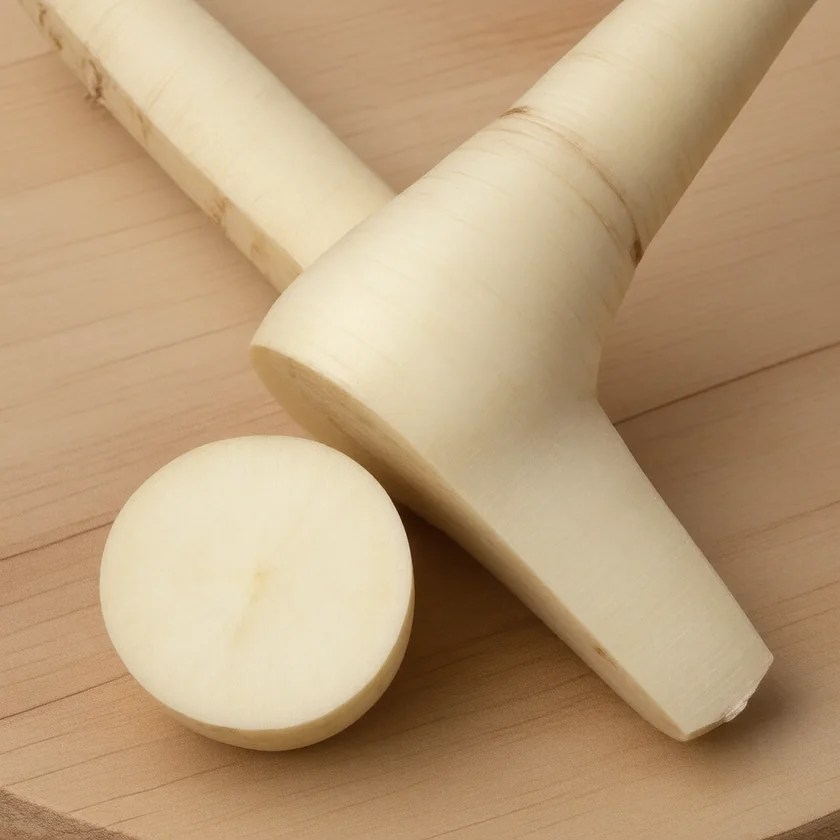
The parsnip (Pastinaca sativa) is a sweet, nutty, cream-colored root vegetable that looks like a pale carrot and, in fact, is a close cousin of one. Both belong to the carrot family (the Apiaceae, sometimes called the umbellifers), along with celery, parsley, fennel, and dill. What sets the parsnip apart is its honeyed, almost caramel flavor when roasted — a sweetness that deepens after the first frost of autumn, when cold weather nudges the root to convert some of its starch into sugar. For centuries before the potato arrived from the Americas, the parsnip was a dietary mainstay across Europe: cheap, filling, storable through winter, and reliably sweet. This page explains what a parsnip actually is, what nutrients it carries (good fiber, folate, vitamin C, potassium, and manganese, with more starch and calories than a carrot), what the preliminary research on its plant compounds does and does not show, and how to pick, cook, and store one. It also gives an honest safety note that trips people up: the parsnip plant — its leaves and sap, and especially wild parsnip — can cause nasty sun-triggered skin burns, even though eating the cultivated root is not linked to these burns.
Table of Contents
What a Parsnip Is
A parsnip is the swollen taproot of Pastinaca sativa, a biennial plant grown as an annual for its edible root. In shape it resembles a fat carrot, but its skin and flesh are a pale ivory-to-cream color rather than orange, and its flavor is distinctly sweeter and more aromatic — nutty, faintly spiced, with a honey note that comes forward when the root is roasted or caramelized. Botanically it sits squarely in the Apiaceae family, so it is a genuine relative of the carrot, celery, parsley, fennel, and dill. That family kinship matters later, because it also explains the plant's natural defensive chemistry.
One of the parsnip's most charming quirks is that it gets sweeter after frost. When temperatures drop, the plant protects itself by converting some of its stored starch into sugars, which lowers the freezing point of its tissues — a bit of natural antifreeze. The happy side effect for cooks is that a parsnip harvested after a cold snap, or even left in the ground through early winter, tastes noticeably sweeter. Traditional growers have long known to wait for the first frosts before pulling their best parsnips.
Historically, the parsnip was a heavyweight. Across medieval and early-modern Europe it was one of the main starchy staples — a source of dependable calories and sweetness that stored well in cellars through the lean winter months. It filled much the same role the potato would later take over. When the potato spread through Europe and proved even more productive, the parsnip was gradually demoted from staple to side dish, which is roughly where it sits on most tables today: a seasonal, comforting winter vegetable rather than an everyday one.
Nutritional Profile
Parsnips are more substantial than they look. Because they store their energy as starch, a parsnip carries more carbohydrate and more calories than a similar weight of carrot — roughly 75 calories per 100 grams raw, compared with about 40 for a carrot. That extra starch is exactly what made parsnips a filling staple, and it is worth keeping in mind if you are counting carbohydrates. In return for those calories, a parsnip delivers a genuinely useful spread of fiber, vitamins, and minerals rather than empty starch. The figures below are approximate values for the raw root and will shift a little with variety, growing conditions, and cooking.
The vitamins a parsnip supplies in worthwhile amounts include:
- Folate (vitamin B9) — one of the parsnip's real strengths, on the order of 65–70 micrograms per 100 grams, a solid contribution toward the daily target for a vegetable.
- Vitamin C — a meaningful amount for a root vegetable, roughly 15–17 milligrams per 100 grams raw, though some is lost with prolonged cooking.
- Vitamin E — a modest but notable amount (around 1.5 milligrams per 100 grams), which is more than many other common vegetables offer and adds to the antioxidant picture.
- Vitamin K — about 22.5 micrograms per 100 grams raw, according to the U.S. Department of Agriculture (USDA) FoodData Central record for raw parsnips.
- Smaller contributions of several B vitamins (thiamin, riboflavin, vitamin B6, and pantothenic acid).
On the mineral side, parsnips offer:
- Potassium — a generous amount, roughly 375 milligrams per 100 grams, the mineral most people fall short on and one tied to healthy blood pressure.
- Manganese — a reliable contribution of this trace mineral, which supports bone formation and antioxidant enzymes.
- Useful amounts of magnesium, phosphorus, copper, and iron (iron about 0.59 milligrams per 100 grams), plus a little zinc (also about 0.59 milligrams per 100 grams).
The single most defining nutritional feature, though, is fiber. A parsnip carries roughly 5 grams of fiber per 100 grams — high for a vegetable — and that fiber shapes much of what is good about it, from digestion to the way its starch affects blood sugar. Fiber gets its own section next.
Fiber and Digestion
At around 5 grams of fiber per 100 grams, a single medium parsnip can supply a meaningful slice of a day's fiber goal — and fiber is one of the few nutrients that nearly everyone in wealthy countries eats too little of. Parsnip fiber is a mix of insoluble and soluble types, and each does something different. The insoluble fiber adds bulk and helps move material through the gut, supporting regularity and comfortable digestion. The soluble fiber slows the stomach's emptying, contributes to a feeling of fullness, and, importantly, is fermented by the bacteria in the colon.
That fermentation is where a lot of fiber's quieter benefits come from. Beneficial gut microbes feed on soluble and fermentable fibers and, in doing so, produce short-chain fatty acids such as butyrate that nourish the cells lining the colon and help maintain a healthy gut environment. This is part of why diets rich in vegetables, whole grains, and legumes are so consistently linked with better digestive and metabolic health. A 2019 series of systematic reviews (Reynolds et al., Lancet) pooled 185 prospective studies and 58 clinical trials: people eating the most fiber had 15–30% lower rates of death from all causes and from heart disease, and of coronary heart disease, stroke, type 2 diabetes and colorectal cancer, than people eating the least. The trials showed lower body weight, systolic blood pressure and total cholesterol with more fiber, and the lower risk was greatest at 25–29 grams of fiber a day — and parsnips are a pleasant, naturally sweet way to add to the total. The catch, familiar to anyone who has eaten a big bowl of any high-fiber vegetable, is that a sudden large increase can cause gas or bloating; the usual approach is to raise fiber intake gradually, with enough water.
Folate
Folate — vitamin B9 — is one of the parsnip's most valuable contributions, and it is a nutrient worth understanding because its importance is unusually well established. Folate is essential for making and repairing DNA and for the rapid cell division that growth requires. That is why it matters most intensely at times of rapid tissue building: in infancy, and above all in the earliest weeks of pregnancy.
The strongest evidence in all of nutrition for a single vitamin's protective effect concerns folate and neural tube defects — serious birth defects of the brain and spine such as spina bifida. A landmark randomized trial coordinated by the UK Medical Research Council and published in 1991 ran at 33 centres in seven countries in 1,817 women who had had an earlier pregnancy affected by a neural tube defect. Folic acid around the time of conception gave a 72% protective effect (6 affected pregnancies in the folic acid groups versus 21 in the other groups; relative risk 0.28), while a mix of seven other vitamins showed no significant protection — a finding so decisive that it reshaped public-health policy worldwide and led many countries to fortify flour with folic acid. The neural tube closes very early — often before a woman knows she is pregnant — which is why anyone who could become pregnant is advised to get plenty of folate every day, not just after a positive test.
Whole foods like parsnips, leafy greens, legumes, and citrus are excellent natural sources of folate (the term "folate" comes from the same Latin root as "foliage"). For most people, a diet rich in these foods supplies ample amounts; the specific advice to take a folic-acid supplement is aimed at pregnancy planning, where the stakes and timing are the reason public-health advice uses a supplement. Either way, a serving of parsnips is a tasty deposit in your folate account.
Antioxidants and Falcarinol-Type Compounds
Beyond the familiar vitamins, parsnips — like their carrot-family relatives — contain a class of natural plant compounds called polyacetylenes, the best known of which is falcarinol (along with related molecules such as falcarindiol). These are the same bioactive compounds that have drawn research interest in carrots, celery, and parsley, and chemical surveys have measured them directly in parsnip root. In the laboratory, falcarinol-type polyacetylenes show antioxidant, anti-inflammatory, and anti-proliferative activity, and researchers have proposed them as one reason a vegetable-rich diet may be protective.
It is important to be honest about where this evidence stands. The intriguing findings come mostly from cell studies and animal experiments. In one frequently cited rat study, feeding carrots or purified falcarinol reduced the development of pre-cancerous lesions in the colon — a genuinely interesting result, but one in rodents, not people. Cell-culture work similarly shows that falcarinol can influence how intestinal cells grow. What we do not have is strong human trial evidence that eating parsnips (or the falcarinol in them) prevents any specific disease. The compounds are real, they are present in parsnips, and their laboratory activity is a plausible mechanism — but the sensible takeaway is that parsnips contribute to the broad antioxidant and phytochemical mix of a varied, plant-rich diet, not that they are a targeted medicine. Alongside these polyacetylenes, the vitamin C and vitamin E in parsnips add to their overall antioxidant contribution.
Parsnips and Blood Sugar
Because parsnips store energy as starch, they are a higher-carbohydrate root vegetable — closer to a potato than to a leafy green in that respect — and their natural sweetness (which frost intensifies) is a fair signal of the sugars inside. This does not rule them out, but it does mean people managing blood sugar or diabetes count them differently from a low-carb vegetable.
Two things soften the impact. First, that same starch comes packaged with a substantial dose of fiber, which slows digestion and blunts the rise in blood sugar compared with a refined starch eaten alone. Second, and more practically, parsnips are almost always eaten as part of a mixed meal — roasted alongside a protein, folded into a soup, or mashed with other vegetables. Pairing carbohydrate-containing foods with protein, healthy fat, and additional fiber flattens the overall glucose response of the meal. In meal planning for blood sugar, parsnips are usually counted as one of the starchy components (as a potato or a portion of grain would be) rather than as a free vegetable, with portion size mattering most for people who are carbohydrate-sensitive, and paired with protein and non-starchy vegetables. Eaten that way, they fit comfortably into a balanced plate.
How to Select, Cook, and Store
Choosing a good parsnip is mostly about size and firmness.
- Select: Good parsnips are firm, smooth, and fairly small-to-medium in size, with a creamy, unblemished skin. Very large parsnips are the ones cooks pass over — the biggest, thickest ones often develop a tough, fibrous, woody core that has to be cut out and can taste bland or overly starchy. Smaller-to-medium roots are more tender and sweeter throughout. Roots that are soft, shriveled, cracked, or spotted with mold or dark lesions are past their best.
- Store: Parsnips are commonly kept unwashed in the refrigerator, loosely bagged or in the crisper drawer, where they typically stay good for a couple of weeks or more, and they store far better than most vegetables, which is exactly why they were a winter staple. One storage finding matters here: in a 2002 German study, whole parsnips kept at refrigerator temperature (4 °C) built up the skin-sensitizing compounds described in the safety section, while frozen parsnips did not (details below). The leafy tops, if still attached, draw moisture from the root and are usually trimmed.
In the kitchen, parsnips shine with cooking methods that coax out their sugars:
- Roast: The classic treatment. Cut into wedges or batons, toss with a little oil, and roast until the edges caramelize to a deep golden brown. Roasting concentrates the parsnip's honeyed sweetness better than any other method.
- Mash or pureée: Boil or steam until soft and mash — on their own or blended with potatoes, carrots, or celery root — for a silky, sweet-savory side.
- Soup: Parsnips make a wonderfully creamy soup, alone or paired with apple, pear, leek, carrot, or warming spices; their starch gives body without needing much cream.
- Also: add chunks to roasted-vegetable medleys, stews, and pot roasts, or grate raw into fritters and slaws.
If you use very large parsnips, halve or quarter them lengthwise and cut away the hard central core before cooking. Peeling is optional for young, tender roots but usually worthwhile for larger ones.
Safety: The Plant Versus the Root You Eat
This is the part that surprises people, and it is worth getting right. The parsnip root on your cutting board is a safe, wholesome food. But the parsnip plant — its leaves, stems, and sap — and especially its escaped wild form carry a natural defensive chemistry that can genuinely hurt you if you handle the foliage in the sun. Understanding the difference keeps both the cook and the gardener safe.
Furanocoumarins and phototoxic burns
Parsnips, like many members of the carrot family, produce compounds called furanocoumarins (also written furocoumarins), including psoralens. These are made mainly in the green parts of the plant and the sap. On their own they are harmless on skin, but they are phototoxic: when they get on the skin and that skin is then exposed to sunlight (specifically the ultraviolet-A in sunlight), a chemical reaction damages skin cells and produces a delayed burn — redness, blistering, and often a lingering brown discoloration. Doctors call this reaction phytophotodermatitis, and the same mechanism causes the well-known "margarita burn" from lime juice and the far more serious burns from giant hogweed. Wild parsnip (feral Pastinaca sativa that has naturalized along roadsides and in fields across North America and Europe) is a common and potent cause: brushing against the crushed leaves or sap on a sunny day, as foragers, hikers, gardeners, and farm workers sometimes do, can lead to painful blistering a day or two later. Around parsnip greens or the wild plant, covered skin, and washing sap off promptly and keeping that skin out of the sun, are the protective steps described for this reaction.
Why the root you buy is still safe
Eating the root is a different matter from touching the plant. Freshly harvested cultivated roots held small amounts of these compounds — under 2.5 mg/kg in the 2002 German study — although a 1981 analysis (Ivie et al.) measured about 40 parts per million of psoralens in parsnip root and described human exposure through eating parsnip as “appreciable,” adding that no population data on its effects were available. Eating the root is not associated with phototoxic skin reactions — the burns come from skin contact with the sap and foliage combined with sunlight, not from a plate of roasted parsnips. There is one honest caveat that comes straight from the food-science literature: damaged, diseased, moldy, or badly stored parsnip roots can build up substantially higher levels of furanocoumarins as a stress response, and these compounds are concentrated near the skin and in blemished areas. Studies have shown that mold, microbial infection and poor storage raise furanocoumarin content, and the 1981 analysis found that these compounds are not destroyed by normal cooking (boiling or microwaving). The practical point that follows from these studies: sound, firm, unblemished roots carry the lowest levels, bruised or spoiled spots are what cooks cut away, and moldy or rotting parsnips are the ones in which the highest levels were measured. With sound roots, the parsnip is exactly what it appears to be — a safe, nourishing, comforting winter vegetable.
What the 2002 storage study found
Researchers in Germany (Ostertag et al., 2002) stored freshly harvested parsnips as whole roots, cubes, or purée, in a refrigerator at 4 °C or a freezer at −18 °C, and measured five furocoumarins:
- Fresh roots: generally under 2.5 mg/kg.
- Frozen at −18 °C for up to 50 days (whole, cubed, or puréed): no marked rise.
- Whole roots at 4 °C: a marked rise after 7 and 38 days, up to about 40 mg/kg. Cubes and purée at 4 °C did not show this rise.
- Whole market parsnips at room temperature for 53 days: visible mold, and levels up to 566 mg/kg.
- Baby foods containing parsnip from the German market: 0.41 mg/kg or less.
The authors recommended that harvested parsnips be kept at −18 °C or under other conditions that prevent microbial infection.
Key Research Papers
- Ivie GW, Holt DL, Ivey MC. Natural Toxicants in Human Foods: Psoralens in Raw and Cooked Parsnip Root. Science. 1981;213(4510):909–910. — the classic measurement of psoralen furanocoumarins in parsnip root (about 40 parts per million), finding they are not destroyed by normal cooking (boiling or microwave). — doi:10.1126/science.7256284
- Ostertag E, Becker T, Ammon J, Bauer-Aymanns H, Schrenk D. Effects of Storage Conditions on Furocoumarin Levels in Intact, Chopped, or Homogenized Parsnips. J Agric Food Chem. 2002;50(9):2565–2570. — whole roots stored at 4 °C and moldy roots built up furocoumarins, while roots frozen at −18 °C did not. — doi:10.1021/jf011426f
- Melough MM, Cho E, Chun OK. Furocoumarins: A review of biochemical activities, dietary sources and intake, and potential health risks. Food Chem Toxicol. 2018;113:99–107. — broad review of where dietary furanocoumarins come from (parsnip among them) and how much people typically ingest. — doi:10.1016/j.fct.2018.01.030
- Melough MM, Chun OK. Dietary furocoumarins and skin cancer: A review of current biological evidence. Food Chem Toxicol. 2018;122:163–171. — weighs the phototoxic and photocarcinogenic properties of these compounds against typical dietary exposure. — doi:10.1016/j.fct.2018.10.027
- Weber IC, Davis CP, Greeson DM. Phytophotodermatitis: the other "lime" disease. J Emerg Med. 1999;17(2):235–237. — a case of skin burns after contact with limes on a beach holiday; describes the general furocoumarin-plus-sunlight mechanism (phytophotodermatitis) that parsnip sap shares. — doi:10.1016/S0736-4679(98)00159-0
- Zidorn C, Jöhrer K, Ganzera M, et al. Polyacetylenes from the Apiaceae Vegetables Carrot, Celery, Fennel, Parsley, and Parsnip and Their Cytotoxic Activities. J Agric Food Chem. 2005;53(7):2518–2523. — measures falcarinol-type polyacetylenes directly in parsnip and tests their activity in cells. — doi:10.1021/jf048041s
- Christensen LP, Brandt K. Bioactive polyacetylenes in food plants of the Apiaceae family: occurrence, bioactivity and analysis. J Pharm Biomed Anal. 2006;41(3):683–693. — overview of the falcarinol-type compounds shared across carrot-family vegetables. — doi:10.1016/j.jpba.2006.01.057
- Christensen LP. Aliphatic C17-Polyacetylenes of the Falcarinol Type as Potential Health Promoting Compounds in Food Plants of the Apiaceae Family. Recent Pat Food Nutr Agric. 2011;3(1):64–77. — reviews the preliminary, mostly preclinical case that these compounds may be health-promoting. — doi:10.2174/2212798411103010064
- Kobaek-Larsen M, Christensen LP, Vach W, Ritskes-Hoitinga J, Brandt K. Inhibitory Effects of Feeding with Carrots or (-)-Falcarinol on Development of Azoxymethane-Induced Preneoplastic Lesions in the Rat Colon. J Agric Food Chem. 2005;53(5):1823–1827. — animal evidence that falcarinol reduced pre-cancerous colon lesions in rats (not yet shown in humans). — doi:10.1021/jf048519s
- Prevention of neural tube defects: results of the Medical Research Council Vitamin Study. MRC Vitamin Study Research Group. Lancet. 1991;338(8760):131–137. — the landmark trial establishing folate's protective effect, relevant to the folate parsnips supply. — doi:10.1016/0140-6736(91)90133-A
- Reynolds A, Mann J, Cummings J, Winter N, Mete E, Te Morenga L. Carbohydrate quality and human health: a series of systematic reviews and meta-analyses. Lancet. 2019;393(10170):434–445. — large evidence review linking high dietary fiber intake with lower disease risk. — doi:10.1016/S0140-6736(18)31809-9
- Aburto NJ, Hanson S, Gutierrez H, Hooper L, Elliott P, Cappuccio FP. Effect of increased potassium intake on cardiovascular risk factors and disease: systematic review and meta-analyses. BMJ. 2013;346:f1378. — context for the blood-pressure benefit of the potassium parsnips provide. — doi:10.1136/bmj.f1378