Bell Pepper Benefits: What the Evidence Actually Shows
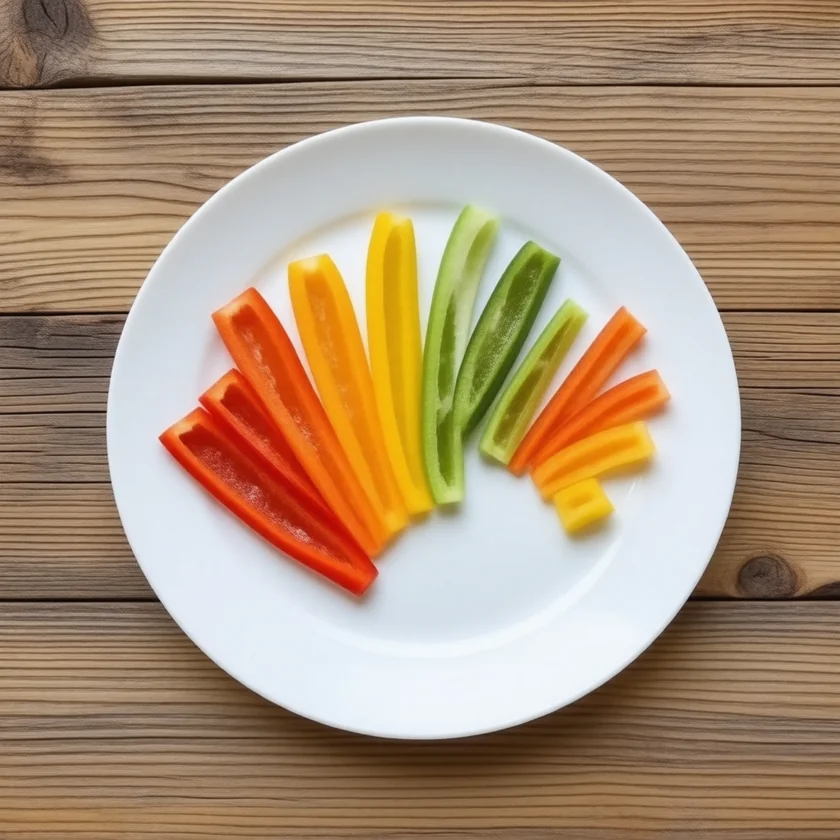
A bell pepper is 92% water and about 26 calories per 100 g, and inside that almost-nothing it carries more vitamin C per gram than any citrus fruit — 128 mg per 100 g for red, 184 mg for yellow, against 53 mg for an orange, by USDA's reference figures — along with a set of pigments that changes completely as the fruit ripens from green to red. That combination is what makes the pepper worth a serious look rather than a slogan. The honest picture has strong parts and thin parts. The composition is well measured; the vitamin C kinetics that tell us how much a person needs are among the best human data in nutrition; the feeding experiments on low-calorie-density foods are solid, and a pepper is a textbook example of one; the cohort evidence tying vegetable intake to less heart disease and longer life is large and consistent. But there are almost no human trials of bell peppers themselves, the eye-health trials tested a high-dose supplement rather than food, the "nightshades cause arthritis" belief has no controlled evidence after fifty years, and the one genuinely common problem — an itchy mouth in people with birch-pollen hay fever — is real and usually solved by cooking. The four deep dives below take each of those apart with the numbers and the named studies, and say plainly at every step which tier of evidence they rest on.
Deep-Dive Articles
Bell Pepper Vitamin C: Red Versus Green
USDA's vitamin C figures colour by colour (green 80 mg, red 128 mg, yellow 184 mg per 100 g) and why ripening raises them; the comparison with citrus done per serving rather than per slogan; the hospital depletion study behind the RDA and what it means that half a raw red pepper saturates your white blood cells; how much survives boiling, steaming, stir-frying and roasting; why food vitamin C is absorbed no better and no worse than a tablet; the cold trials reported as the null results they are; and the iron-absorption bonus of eating peppers with beans, lentils and greens.
Read the deep dive →Bell Pepper Carotenoids, Capsanthin, and Eye Health
What each colour's pigments are — capsanthin in red, zeaxanthin in orange, lutein in green — and the ripening chemistry that trades one for another; the human studies showing capsanthin is absorbed and cleared within days; the salad experiments in which fat-free dressing let almost no carotenoid through; what the macula does with lutein and zeaxanthin; and a careful reading of the AREDS2 trial, the Cochrane reviews and the beta-carotene-in-smokers disaster, ending with why a pepper is a good habit for the eyes and not a treatment.
Read the deep dive →Bell Peppers, Blood Sugar, Weight, and the Heart
The article that admits how little pepper-specific human evidence exists and then lays out what does: near-zero glycaemic load; the diabetes cohorts, in which leafy greens rather than peppers carry the signal; the energy-density feeding trials that make a raw pepper one of the best-tested weight strategies available; the 24-year cohort on individual vegetables; the two small studies of a special capsinoid pepper and why chilli research does not transfer; the fruit-and-vegetable mortality meta-analyses; and the blood-pressure trials of vitamin C and potassium at supplement doses.
Read the deep dive →Bell Peppers: Nightshades, Allergy, Pesticides, and Safety
The nightshade-and-arthritis belief against the evidence (none controlled) and the rheumatology guidelines (Mediterranean diet, no nightshade rule), with an honest self-test protocol; oral allergy syndrome, the profilin protein behind it, and why cooked pepper is usually fine; the actual pesticide-exposure arithmetic for bell peppers and what rinsing, baking soda, peeling and organic each achieve; the single gene that removes the heat; and the skin, digestion, FODMAP and other practical cautions.
Read the deep dive →Table of Contents
What Is Actually In a Bell Pepper
Before the mechanisms, the raw material. All figures are USDA FoodData Central reference values (SR Legacy) for raw sweet peppers, per 100 g — a little under a whole medium pepper:
- Calories: green 20, red 26, yellow 27. Water 92 to 94%. This is one of the lowest energy densities of any food, about 0.26 calories per gram.
- Carbohydrate: green 4.6 g, red 6.0 g, yellow 6.3 g, of which fibre is 1.7 g, 2.1 g and 0.9 g respectively. The digestible sugar in a whole pepper is a few grams, which is why the red ones taste sweet and why none of them moves blood sugar.
- Vitamin C: green 80 mg, red 128 mg, yellow 184 mg — 90 to 200% of the Daily Value in 100 g. The headline nutrient, and the reason the pepper is on this site at all.
- Vitamin A activity: red 157 µg RAE (about 17% of the Daily Value) from 1,620 µg of beta-carotene and 490 µg of beta-cryptoxanthin; green only 18 µg RAE; yellow 10 µg RAE. Colour is the whole story here.
- Lutein plus zeaxanthin: green 341 µg, red 51 µg. The green pepper wins this one by a wide margin, because ripening breaks lutein down while it builds the red pigments.
- Capsanthin, the red pigment, is not in the USDA table but is the dominant carotenoid of a ripe red pepper (about 8 µg per gram in one retail analysis) and is undetectable in green.
- Vitamin B6: red 0.29 mg (17% DV). Folate: red 46 µg. Vitamin E: red 1.6 mg (11% DV). Vitamin K: 5 to 7 µg — trivial.
- Potassium: green 175 mg, red 211 mg, yellow 212 mg — about 4 to 5% of the Daily Value; useful, not remarkable. Sodium 2 to 4 mg.
- Protein about 1 g and fat 0.2 to 0.3 g — effectively none of either.
- Capsaicin: none. Sweet peppers carry a broken copy of the Pun1 gene that makes it, so they are chillies with the heat pathway switched off, not chillies with the heat bred down.
Three things follow from that list. First, colour is a choice of nutrients: red for vitamin A activity, capsanthin and more vitamin C; yellow for the most vitamin C; green for lutein and the lowest sugar. Mixing colours on one plate is the way to get the whole set. Second, the pepper's nutrition is dense but narrow — vitamin C, carotenoids, some B6 and E, a modest potassium contribution — and it is not a source of protein, fibre in quantity, iron or calcium; eating peppers instead of beans, greens or whole grains would be a mistake, eating them with those foods is the point. Third, almost everything on these pages turns on how the pepper is eaten: raw keeps the vitamin C, cooked with fat releases the carotenoids, and a fat-free dressing throws the pigments away.
Key Research Papers: Vitamin C
- Sun T, Xu Z, Wu CT, Janes M, Prinyawiwatkul W, No HK (2007). Antioxidant activities of different colored sweet bell peppers (Capsicum annuum L.). Journal of Food Science. — PubMed PMID: 17995862
- Howard LR, Talcott ST, Brenes CH, Villalon B (2000). Changes in phytochemical and antioxidant activity of selected pepper cultivars (Capsicum species) as influenced by maturity. Journal of Agricultural and Food Chemistry. — PubMed PMID: 10820084
- Hwang IG, Shin YJ, Lee S, Lee J, Yoo SM (2012). Effects of different cooking methods on the antioxidant properties of red pepper (Capsicum annuum L.). Preventive Nutrition and Food Science. — PubMed PMID: 24471098
- Levine M, Conry-Cantilena C, Wang Y, et al. (1996). Vitamin C pharmacokinetics in healthy volunteers: evidence for a recommended dietary allowance. Proceedings of the National Academy of Sciences of the United States of America. — PubMed PMID: 8623000
- Carr AC, Vissers MC (2013). Synthetic or food-derived vitamin C — are they equally bioavailable? Nutrients. — PubMed PMID: 24169506
- Hemilä H, Chalker E (2013). Vitamin C for preventing and treating the common cold. Cochrane Database of Systematic Reviews. — PubMed PMID: 23440782
- Carr AC, Maggini S (2017). Vitamin C and immune function. Nutrients. — PubMed PMID: 29099763
- Hallberg L, Brune M, Rossander L (1989). The role of vitamin C in iron absorption. International Journal for Vitamin and Nutrition Research. Supplement. — PubMed PMID: 2507689
Key Research Papers: Carotenoids and Eye Health
- Ha SH, Kim JB, Park JS, Lee SW, Cho KJ (2007). A comparison of the carotenoid accumulation in Capsicum varieties that show different ripening colours: deletion of the capsanthin-capsorubin synthase gene is not a prerequisite for the formation of a yellow pepper. Journal of Experimental Botany. — PubMed PMID: 17728301
- Sommerburg O, Keunen JE, Bird AC, van Kuijk FJ (1998). Fruits and vegetables that are sources for lutein and zeaxanthin: the macular pigment in human eyes. British Journal of Ophthalmology. — PubMed PMID: 9828775
- Oshima S, Sakamoto H, Ishiguro Y, Terao J (1997). Accumulation and clearance of capsanthin in blood plasma after the ingestion of paprika juice in men. The Journal of Nutrition. — PubMed PMID: 9237940
- Brown MJ, Ferruzzi MG, Nguyen ML, et al. (2004). Carotenoid bioavailability is higher from salads ingested with full-fat than with fat-reduced salad dressings as measured with electrochemical detection. The American Journal of Clinical Nutrition. — PubMed PMID: 15277161
- Hammond BR Jr, Johnson EJ, Russell RM, et al. (1997). Dietary modification of human macular pigment density. Investigative Ophthalmology & Visual Science. — PubMed PMID: 9286268
- Ma L, Dou HL, Wu YQ, et al. (2012). Lutein and zeaxanthin intake and the risk of age-related macular degeneration: a systematic review and meta-analysis. British Journal of Nutrition. — PubMed PMID: 21899805
- Age-Related Eye Disease Study 2 (AREDS2) Research Group (2013). Lutein + zeaxanthin and omega-3 fatty acids for age-related macular degeneration: the Age-Related Eye Disease Study 2 (AREDS2) randomized clinical trial. JAMA. — PubMed PMID: 23644932
- Evans JR, Lawrenson JG (2023). Antioxidant vitamin and mineral supplements for slowing the progression of age-related macular degeneration. Cochrane Database of Systematic Reviews. — PubMed PMID: 37702300
- Alpha-Tocopherol, Beta Carotene Cancer Prevention Study Group (1994). The effect of vitamin E and beta carotene on the incidence of lung cancer and other cancers in male smokers. The New England Journal of Medicine. — PubMed PMID: 8127329
Key Research Papers: Weight, Blood Sugar and Heart
- Rolls BJ, Roe LS, Meengs JS (2004). Salad and satiety: energy density and portion size of a first-course salad affect energy intake at lunch. Journal of the American Dietetic Association. — PubMed PMID: 15389416
- Ello-Martin JA, Roe LS, Ledikwe JH, Beach AM, Rolls BJ (2007). Dietary energy density in the treatment of obesity: a year-long trial comparing 2 weight-loss diets. The American Journal of Clinical Nutrition. — PubMed PMID: 17556681
- Bertoia ML, Mukamal KJ, Cahill LE, et al. (2015). Changes in intake of fruits and vegetables and weight change in United States men and women followed for up to 24 years: analysis from three prospective cohort studies. PLoS Medicine. — PubMed PMID: 26394033
- Cooper AJ, Forouhi NG, Ye Z, et al. (2012). Fruit and vegetable intake and type 2 diabetes: EPIC-InterAct prospective study and meta-analysis. European Journal of Clinical Nutrition. — PubMed PMID: 22854878
- Snitker S, Fujishima Y, Shen H, et al. (2009). Effects of novel capsinoid treatment on fatness and energy metabolism in humans: possible pharmacogenetic implications. The American Journal of Clinical Nutrition. — PubMed PMID: 19056576 (purified capsinoids; weight result null)
- Aune D, Giovannucci E, Boffetta P, et al. (2017). Fruit and vegetable intake and the risk of cardiovascular disease, total cancer and all-cause mortality — a systematic review and dose-response meta-analysis of prospective studies. International Journal of Epidemiology. — PubMed PMID: 28338764
- Miller V, Mente A, Dehghan M, et al. (2017). Fruit, vegetable, and legume intake, and cardiovascular disease and deaths in 18 countries (PURE): a prospective cohort study. Lancet. — PubMed PMID: 28864331
- Juraschek SP, Guallar E, Appel LJ, Miller ER 3rd (2012). Effects of vitamin C supplementation on blood pressure: a meta-analysis of randomized controlled trials. The American Journal of Clinical Nutrition. — PubMed PMID: 22492364
- Aburto NJ, Hanson S, Gutierrez H, Hooper L, Elliott P, Cappuccio FP (2013). Effect of increased potassium intake on cardiovascular risk factors and disease: systematic review and meta-analyses. BMJ. — PubMed PMID: 23558164
Key Research Papers: Allergy, Residues and Safety
- England BR, Smith BJ, Baker NA, et al. (2023). 2022 American College of Rheumatology guideline for exercise, rehabilitation, diet, and additional integrative interventions for rheumatoid arthritis. Arthritis Care & Research. — PubMed PMID: 37227116
- Tedeschi SK, Frits M, Cui J, et al. (2017). Diet and rheumatoid arthritis symptoms: survey results from a rheumatoid arthritis registry. Arthritis Care & Research. — PubMed PMID: 28217907
- Jensen-Jarolim E, Santner B, Leitner A, et al. (1998). Bell peppers (Capsicum annuum) express allergens (profilin, pathogenesis-related protein P23 and Bet v 1) depending on the horticultural strain. International Archives of Allergy and Immunology. — PubMed PMID: 9652302
- Willerroider M, Fuchs H, Ballmer-Weber BK, et al. (2003). Cloning and molecular and immunological characterisation of two new food allergens, Cap a 2 and Lyc e 1, profilins from bell pepper (Capsicum annuum) and tomato (Lycopersicon esculentum). International Archives of Allergy and Immunology. — PubMed PMID: 12915767
- Price A, Ramachandran S, Smith GP, Stevenson ML, Pomeranz MK, Cohen DE (2015). Oral allergy syndrome (pollen-food allergy syndrome). Dermatitis. — PubMed PMID: 25757079
- Winter CK, Katz JM (2011). Dietary exposure to pesticide residues from commodities alleged to contain the highest contamination levels. Journal of Toxicology. — PubMed PMID: 21776262
- Krol WJ, Arsenault TL, Pylypiw HM Jr, Incorvia Mattina MJ (2000). Reduction of pesticide residues on produce by rinsing. Journal of Agricultural and Food Chemistry. — PubMed PMID: 11052716
- Stewart C Jr, Kang BC, Liu K, et al. (2005). The Pun1 gene for pungency in pepper encodes a putative acyltransferase. The Plant Journal. — PubMed PMID: 15918882
External Authoritative Resources
- USDA FoodData Central — the reference composition figures for raw sweet peppers, green, red and yellow, used throughout these pages
- NIH Office of Dietary Supplements — Vitamin C fact sheet, with the RDA and the kinetics behind it
- National Eye Institute — the AREDS and AREDS2 studies and the current supplement formula
- USDA Pesticide Data Program — the annual residue monitoring data the pesticide arguments are built from
- Monash University FODMAP programme — serving-size cut-offs for peppers by colour, for people with IBS
- PubMed: sweet pepper studies in humans
Connections
- All Food
- Bell Peppers
- Bell Peppers: Nutrient Profile
- Bell Pepper Vitamin C: Red Versus Green
- Bell Pepper Carotenoids, Capsanthin, and Eye Health
- Bell Peppers, Blood Sugar, Weight, and the Heart
- Bell Peppers: Nightshades, Allergy, Pesticides, and Safety
- Vitamin C
- Vitamin A
- Vitamin B6
- Beta-Carotene
- Lutein
- Zeaxanthin
- Tomatoes
- Carrots
- Spinach
- Oranges
- Age-Related Macular Degeneration
- Rheumatoid Arthritis