Asparagus Glutathione, Saponins, and Antioxidants
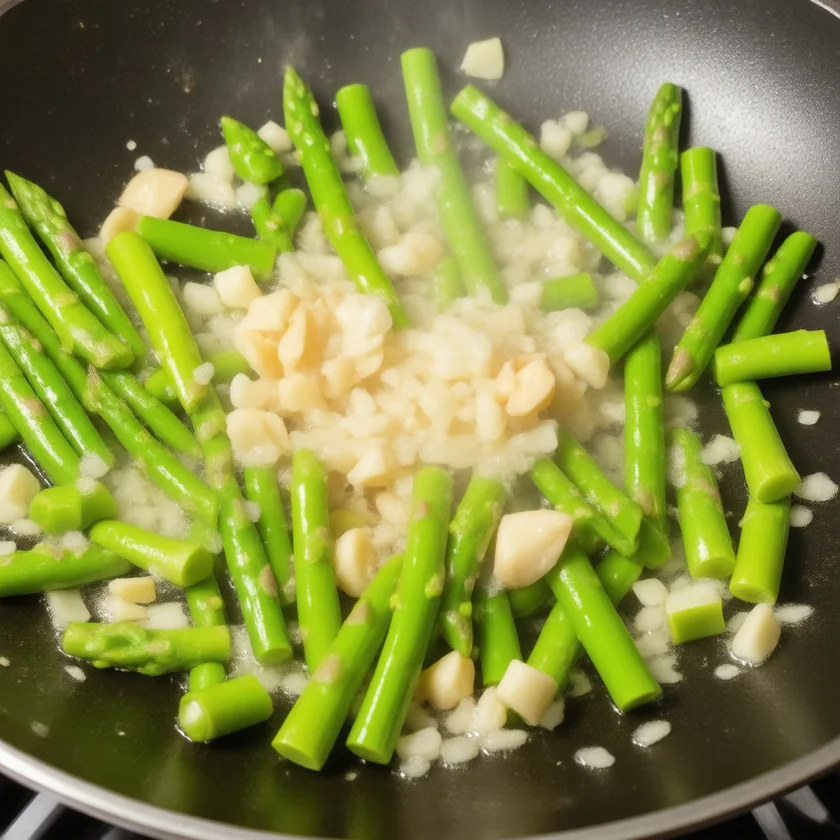
Asparagus is routinely described as one of the richest food sources of glutathione, the small sulfur-containing molecule that every cell uses as its master antioxidant, and as a notably good source of the flavonoid rutin and of a family of steroidal saponins led by protodioscin. All three claims are true as chemistry. Whether they matter once the spear is eaten is a harder question, and this page tries to answer it honestly: glutathione from food is mostly broken down in the gut, and the one long human trial that raised body glutathione used doses far above anything a vegetable supplies; the saponin and rutin studies are largely test-tube and animal work; and the widely repeated “asparagus cures hangovers” finding came from liver cells in a dish, using an extract of the leaves. Along the way it covers what the colours mean — green spears are the rutin ones, white the protodioscin ones, purple adds anthocyanins — and what chopping and boiling do to the lot, which has been measured.
Table of Contents
- Glutathione: What It Is and How Much Asparagus Has
- Does Eaten Glutathione Get In? The Human Evidence
- Rutin and the Flavonols
- Saponins and Protodioscin
- The Hangover Claim, Examined
- The Blood Sugar Claim, Examined
- Green, White and Purple
- Carotenoids, Vitamin E and Vitamin C
- What Chopping, Boiling and Storage Do
- Who Gets the Most From This, and Who Should Be Careful
- Key Research Papers
- Connections
- Featured Videos
Glutathione: What It Is and How Much Asparagus Has
Glutathione is a tripeptide — three amino acids, glutamate, cysteine and glycine, joined in an unusual way — that every cell in the body manufactures for itself. Its sulfur-bearing cysteine can give up an electron to neutralise a reactive oxygen species, then be recharged by an enzyme; it is also the molecule the liver attaches to drugs and toxins to make them water-soluble for excretion. Cells hold it at millimolar concentrations, higher than almost any other small molecule, and a fall in glutathione is one of the most consistent findings in ageing tissue, liver disease and heavy alcohol use. It is, in short, genuinely important.
Asparagus's reputation as a glutathione food traces to a 1992 survey by Jones and colleagues in Nutrition and Cancer, which measured glutathione in every food on the National Cancer Institute's food-frequency questionnaire, prepared the way Americans normally eat them. Its findings: dairy, cereals and breads are low; fruits and vegetables are moderate to high; fresh meat is relatively high; frozen foods are similar to fresh; and most other processing and preservation destroys much of it. Asparagus came out among the richest of the vegetables measured, which is where every “top glutathione foods” list since has got it from. Flagg and colleagues (1994) then estimated from that database that adults eat 13 to 110 mg of glutathione a day, averaging 35 mg, with fruit and vegetables supplying more than half of it and meat less than a quarter. A serving of asparagus is a meaningful fraction of a typical day's intake — a few tens of milligrams.
Does Eaten Glutathione Get In? The Human Evidence
This is the question the “top glutathione foods” lists skip, and the evidence is genuinely mixed — so here it is in tiers.
- Animal: Hagen and colleagues (1990) showed that rats absorb glutathione intact from the gut; plasma glutathione doubled after a dose, and blocking synthesis proved the rise came from absorption rather than the cell rebuilding it from amino acids. Encouraging — in rats.
- Human, single dose: Witschi and colleagues (1992) gave seven healthy volunteers a single 3 g oral dose — roughly a hundred servings of asparagus at once — and measured plasma glutathione, cysteine and glutamate over four and a half hours. None of them rose. The authors concluded that because the gut and liver enzyme gamma-glutamyltransferase hydrolyses glutathione, dietary glutathione “is not a major determinant of circulating glutathione”.
- Human, long term: Richie and colleagues (2015) ran a six-month randomised, double-blind, placebo-controlled trial in 54 non-smoking adults taking 250 or 1,000 mg of glutathione a day. This time glutathione stores did rise: by 30 to 35% in red cells, plasma and lymphocytes at six months on the high dose, and by 17 to 29% on the low dose, along with some improvement in immune markers. So steady daily intake over months can shift body stores even if a single dose does nothing measurable.
The two human results are not really in conflict. A single dose is hydrolysed and the pieces recycled; sustained intake appears to slowly lift the pool, probably by supplying the cysteine that is the rate-limiting ingredient for making glutathione. Flagg's 1994 population study found, if anything, small negative correlations between dietary and plasma glutathione — that is, no sign that people who eat more glutathione carry more in their blood.
What this means for asparagus is easy to state. The Richie trial's low dose, 250 mg a day, is about seven times the average total daily dietary intake and something like ten servings of asparagus every day for six months. A plate of spears is not a glutathione supplement, and the “detox” claims built on the 1992 table are not supported by anything measured in people. What a plate of spears does supply is cysteine and the other amino acids the body uses to make its own glutathione, plus the selenium (6.1 micrograms per 100 g, USDA) that the glutathione peroxidase enzymes need — which is the honest, and quite adequate, case for it.
Rutin and the Flavonols
The flavonoid story is on much firmer chemical ground. Rutin — quercetin with a rutinose sugar attached — is the dominant flavonoid in green asparagus, and asparagus is one of the richest common vegetable sources of it. Wang and colleagues (2003) mapped where it sits using LC/MS: rutin is concentrated in the youngest tissue at the top of the spear, at 0.03 to 0.06% of fresh weight (that is, 30 to 60 mg per 100 g), while the woody base is richer in protodioscin. Lee and colleagues (2010) confirmed the pattern with a dual-assay method: green spears, especially the upper portion, held 1.5 to 7.3 mg of rutin per gram of dry weight, white spears very little. Fuentes-Alventosa and colleagues (2008) profiled 97 green genotypes and found eight flavonol glycosides — derivatives of quercetin, isorhamnetin and kaempferol — with the traditional Spanish “triguero” landraces carrying distinctive extra glycosides that the commercial hybrids lack. Variety, colour and which end of the spear you eat all change the dose several-fold.
What rutin does in people is a subject with its own page on this site (see Connections). Quercetin glycosides are absorbed, though rutin's rutinose sugar has to be removed by colon bacteria first, so it is absorbed later and less completely than the glucosides in onions. Human trials of rutin itself are few and small; the better-evidenced effects — on capillary fragility and chronic venous insufficiency — come from trials of concentrated rutosides at doses of a gram or more a day, well beyond food amounts. The fair claim is that green asparagus tips are one of the better everyday sources of a flavonol that is plausibly useful and poorly studied at food doses.
Saponins and Protodioscin
Saponins are the soapy, bitter steroid- or triterpene-sugar compounds that foam when a plant is boiled; they are part of why asparagus water froths and part of its faint bitterness. The main one in asparagus is protodioscin, a furostanol saponin also found in fenugreek and in Tribulus terrestris, where it is the compound behind the supplement industry's testosterone claims (claims that have not held up in human trials, as it happens). In asparagus the distribution is the mirror image of rutin: Wang's group found protodioscin concentrated near the base of the spear at about 0.025% of fresh weight, and Lee's group found white spears and the crown rich in it — 2.6 to 10.4 mg per gram of dry weight. Jaramillo-Carmona and colleagues (2017) showed that wild asparagus species carry saponin profiles ten times more concentrated than commercial green hybrids, and different saponins altogether.
The biological interest comes from cell work. Shao and colleagues (1997) isolated protodioscin and methyl protodioscin from asparagus seeds and showed they inhibited the growth of human leukaemia (HL-60) cells in culture, irreversibly blocking DNA synthesis. Many similar in-vitro papers have followed for other cancer cell lines. This is real pharmacology and worth studying, and it has no demonstrated relevance to eating asparagus: the concentrations that kill cancer cells in a dish are not reached in blood after a meal, the compounds tested were often from seeds, roots or leaves rather than the spear, and no human study of asparagus saponins and cancer exists. This page reports the cell data as cell data.
The Hangover Claim, Examined
In 2009 a paper in the Journal of Food Science by Kim and colleagues generated headlines worldwide to the effect that asparagus cures hangovers. Here is what the study did. The researchers analysed the young shoots and the leaves of asparagus (the ferny foliage that is normally discarded), applied extracts of each to HepG2 human liver-cancer cells in culture, and measured oxidative stress and cell damage. The leaf extract suppressed more than 70% of hydrogen-peroxide-induced reactive oxygen species; both extracts reduced the cell toxicity of hydrogen peroxide, ethanol and carbon tetrachloride; and the activities of the two enzymes that metabolise alcohol, alcohol dehydrogenase and aldehyde dehydrogenase, increased. The amino acid and mineral content was much higher in the leaves than in the shoots.
That is an interesting cell-culture result about a part of the plant nobody eats. It is not a study of hangovers, of people, or even of the spears on your plate, and no human trial has since tested asparagus for hangover symptoms. The site's position is the plain one: alcohol is metabolised by your liver at a fixed rate, nothing eaten afterwards speeds it up in any demonstrated way, and the one hangover remedy with evidence is drinking less. Enjoy asparagus the morning after because it is good, not because it is medicine.
The Blood Sugar Claim, Examined
A second widely repeated claim — that asparagus helps control blood sugar — rests mainly on Hafizur and colleagues' 2012 rat study in the British Journal of Nutrition. Rats made diabetic with streptozotocin were given a methanol extract of asparagus seeds at 250 or 500 mg per kg of body weight for 28 days. The extract lowered fasting glucose in a dose- and time-dependent way, the higher dose raised serum insulin, and pancreatic beta-cells were better preserved. Again: a seed extract, in rats, at a dose that would translate to tens of grams of extract for an adult. There is no human trial of asparagus and glucose control. What can be said for the vegetable is unglamorous and true — at 22 calories and 4 g of carbohydrate per 100 g, with 2 g of fibre, it has almost no effect on blood glucose at all, which makes it a good food for anyone managing diabetes regardless of what its seeds do to rats.
Green, White and Purple
The three colours are one species grown three ways, and the chemistry follows the light. Pegiou and colleagues' 2019 review in Metabolites is the best single summary of how green and white spears differ, and notes that remarkably little direct comparison had been done for one of the world's twenty most-grown vegetables.
- Green spears grow in sunlight, make chlorophyll, and with it make carotenoids, vitamin K and — above all — rutin, which the plant produces as its own sunscreen. Green is the antioxidant-rich colour by every measure that has been made, and the tips are the richest part.
- White spears are the same plant grown under mounded soil so that no light reaches them. No chlorophyll, very little rutin or carotenoid, milder and slightly bitter — but, as Lee's measurements showed, the richer source of protodioscin, and with a broadly similar folate and mineral profile. White asparagus is a delicacy in Germany, the Netherlands and northern France for its texture, not its nutrition.
- Purple varieties (the Italian ‘Violetto d'Albenga’ and the modern ‘Purple Passion’) add anthocyanins, the pigments of berries and red cabbage, to a green-type profile. Sakaguchi and colleagues (2008) isolated the two major pigments from ‘Purple Passion’ peel — cyanidin 3-rutinoside and a cyanidin triglycoside — and showed high antioxidant capacity in the ORAC assay. Purple spears are usually sweeter, and the colour, being in the skin, largely disappears on cooking.
If antioxidants are the point, buy green, eat the tips, and cook briefly. If the point is a particular dish, buy whatever it calls for; the folate, potassium and fibre are much the same in all three.
Carotenoids, Vitamin E and Vitamin C
The compounds above get the attention, but the measured antioxidant nutrients in a cooked spear are worth listing, from USDA FoodData Central per 100 g boiled: 771 micrograms of lutein plus zeaxanthin, the yellow carotenoids concentrated in the retina; 604 micrograms of beta-carotene (50 micrograms of vitamin A activity); 1.5 mg of vitamin E as alpha-tocopherol, a tenth of the daily value; 7.7 mg of vitamin C, about 9% of the daily value after boiling; and 6.1 micrograms of selenium, 11% of the daily value, which is the mineral the glutathione peroxidase enzymes are built around. None of these is remarkable alone. Together they are why asparagus scores well on the crude total-antioxidant-capacity assays, and the carotenoids and vitamin E are fat-soluble — a further argument for the olive oil or butter the spears are traditionally served with.
What Chopping, Boiling and Storage Do
This has been measured directly. Makris and Rossiter (2001) subjected asparagus spears and onion bulbs to ordinary kitchen processing and tracked the flavonols. Chopping asparagus cost 18.5% of its rutin within 60 minutes — cutting releases enzymes that attack the flavonoid — whereas onion flavonols were unaffected by chopping. Boiling for 60 minutes destroyed 43.9% of asparagus flavonols (against 20.6% in onions) and measurably reduced antioxidant capacity; chopping alone did not change antioxidant capacity much. Nobody boils asparagus for an hour, but the direction is clear: cut just before cooking, and cook briefly.
Glutathione is more fragile still. Jones' 1992 survey found frozen foods held glutathione about as well as fresh, while canning and most other processing caused extensive loss; glutathione oxidises readily once tissue is damaged, which is why the freshness of the spear matters. Storage also matters for rutin and vitamin C, both of which decline over days in the refrigerator. The whole of the advice on this page therefore collapses into one sentence that is also the cook's advice: buy fresh green spears with tight tips, keep them cold, cut them at the last minute, and steam, grill, roast or sauté them for a few minutes with some fat. Raw asparagus, shaved thin into a salad with lemon and olive oil, is the maximal-antioxidant version and is very good.
Who Gets the Most From This, and Who Should Be Careful
Anyone eating for antioxidant variety gets a distinctive package from green asparagus — rutin, lutein, glutathione precursors and selenium — that overlaps little with berries or brassicas, which is the argument for eating many different vegetables rather than a lot of one.
People managing blood sugar get a near-zero-glycaemic, filling, nutrient-dense vegetable; that benefit is certain even though the “asparagus lowers blood sugar” claim is not.
People tempted by glutathione supplements should know that the one positive trial used 250 to 1,000 mg a day for six months, that a single dose does nothing, and that the raw materials for making your own — cysteine-containing protein, selenium, and plenty of vegetables — are the evidence-based route.
Who should be careful? Nobody, really, on this page's account. There is no toxicity from asparagus antioxidants at any food dose; the saponins are bitter enough to be self-limiting; the anthocyanins and carotenoids are harmless. The two genuine cautions for asparagus live on the other pages of this leg — a steady rather than seasonal intake for people on warfarin (the vitamin K), and portion awareness for people with irritable bowel (the fructans). Anyone told that asparagus, or an asparagus extract, will detox their liver, cure a hangover or treat a cancer is being told something the evidence does not say.
Key Research Papers
Author names, titles and journals are plain text; only the PMID is a link. Every PMID below was checked against PubMed before publication, and the abstract read to confirm it supports the sentence it is attached to. Animal and cell studies are labelled.
- Jones DP, Coates RJ, Flagg EW, et al. (1992). Glutathione in foods listed in the National Cancer Institute's Health Habits and History Food Frequency Questionnaire. Nutrition and Cancer. — PubMed PMID: 1574445
- Flagg EW, Coates RJ, Eley JW, et al. (1994). Dietary glutathione intake in humans and the relationship between intake and plasma total glutathione level. Nutrition and Cancer. — PubMed PMID: 8183721
- Hagen TM, Wierzbicka GT, Sillau AH, Bowman BB, Jones DP (1990). Bioavailability of dietary glutathione: effect on plasma concentration. The American Journal of Physiology. — PubMed PMID: 2221062 (animal study)
- Witschi A, Reddy S, Stofer B, Lauterburg BH (1992). The systemic availability of oral glutathione. European Journal of Clinical Pharmacology. — PubMed PMID: 1362956
- Richie JP Jr, Nichenametla S, Neidig W, et al. (2015). Randomized controlled trial of oral glutathione supplementation on body stores of glutathione. European Journal of Nutrition. — PubMed PMID: 24791752
- Wang M, Tadmor Y, Wu QL, Chin CK, Garrison SA, Simon JE (2003). Quantification of protodioscin and rutin in asparagus shoots by LC/MS and HPLC methods. Journal of Agricultural and Food Chemistry. — PubMed PMID: 14518934
- Lee EJ, Yoo KS, Patil BS (2010). Development of a rapid HPLC-UV method for simultaneous quantification of protodioscin and rutin in white and green asparagus spears. Journal of Food Science. — PubMed PMID: 21535581
- Fuentes-Alventosa JM, Jaramillo S, Rodríguez-Gutiérrez G, et al. (2008). Flavonoid profile of green asparagus genotypes. Journal of Agricultural and Food Chemistry. — PubMed PMID: 18656928
- Jaramillo-Carmona S, Guillen-Bejarano R, Jimenez-Araujo A, Rodriguez-Arcos R, Rodriguez-Gutierrez G (2017). Saponin Profile of Wild Asparagus Species. Journal of Food Science. — PubMed PMID: 28152205
- Shao Y, Poobrasert O, Kennelly EJ, et al. (1997). Steroidal saponins from Asparagus officinalis and their cytotoxic activity. Planta Medica. — PubMed PMID: 9225609 (cell study)
- Kim BY, Cui ZG, Lee SR, et al. (2009). Effects of Asparagus officinalis extracts on liver cell toxicity and ethanol metabolism. Journal of Food Science. — PubMed PMID: 19895471 (cell study)
- Hafizur RM, Kabir N, Chishti S (2012). Asparagus officinalis extract controls blood glucose by improving insulin secretion and β-cell function in streptozotocin-induced type 2 diabetic rats. The British Journal of Nutrition. — PubMed PMID: 22221560 (animal study)
- Pegiou E, Mumm R, Acharya P, de Vos RCH, Hall RD (2019). Green and White Asparagus (Asparagus officinalis): A Source of Developmental, Chemical and Urinary Intrigue. Metabolites. — PubMed PMID: 31881716
- Sakaguchi Y, Ozaki Y, Miyajima I, et al. (2008). Major anthocyanins from purple asparagus (Asparagus officinalis). Phytochemistry. — PubMed PMID: 18406435
- Makris DP, Rossiter JT (2001). Domestic processing of onion bulbs (Allium cepa) and asparagus spears (Asparagus officinalis): effect on flavonol content and antioxidant status. Journal of Agricultural and Food Chemistry. — PubMed PMID: 11453754
PubMed Topic Searches
Connections
- All Food
- Asparagus
- Asparagus Benefits: What the Evidence Actually Shows
- Asparagus: Nutrient Profile
- Asparagus Folate, Vitamin K, and Pregnancy
- Asparagus Inulin, Prebiotic Fibre, and the Gut
- Asparagus, the Diuretic Tradition, Kidneys, and Purines
- Glutathione
- Rutin
- Quercetin
- Lutein
- Type 2 Diabetes
- Onions