Chia Seeds for Alpha-Linolenic Acid (ALA) Omega-3
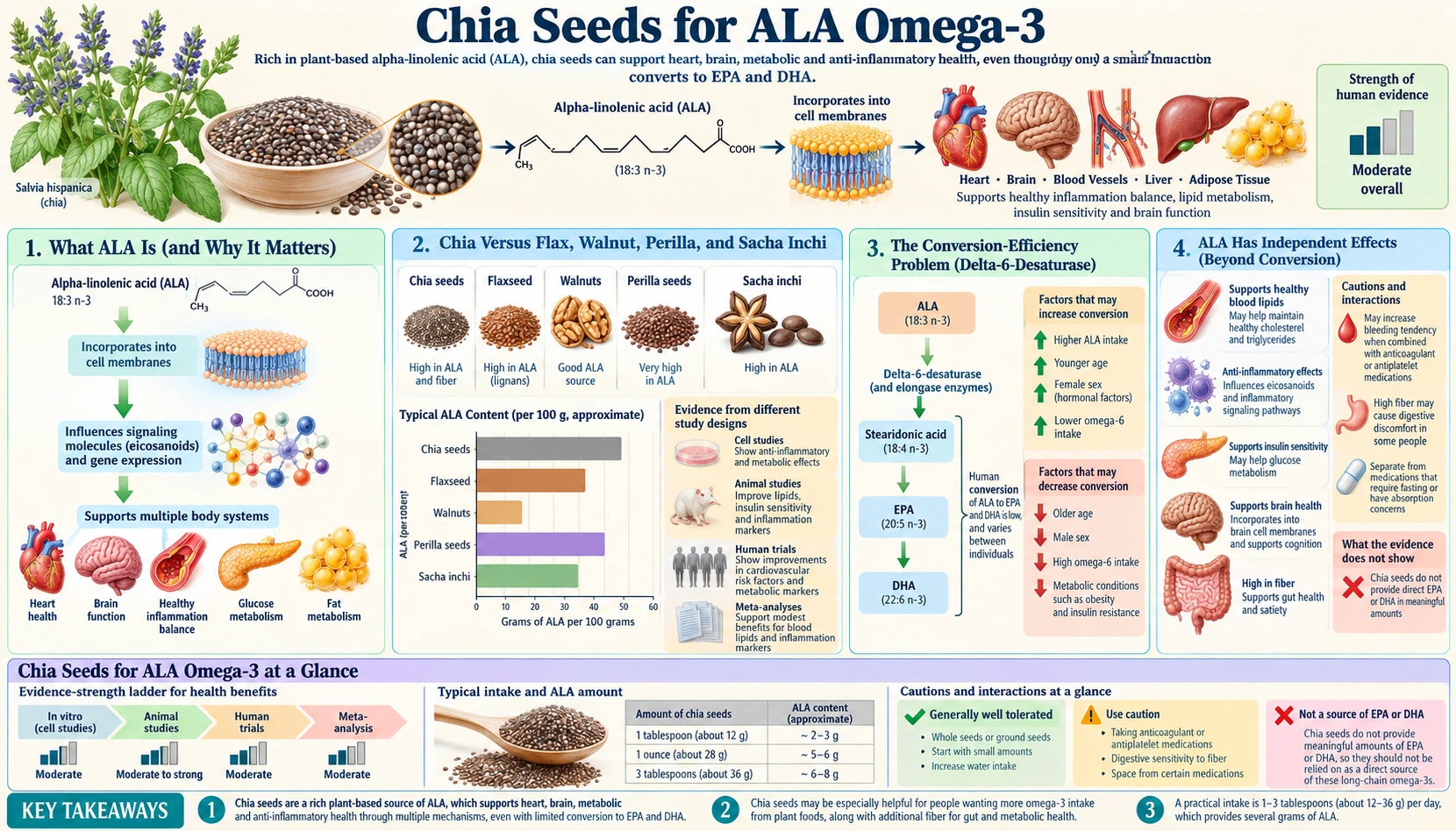
Chia seeds are the highest plant-source concentration of alpha-linolenic acid (ALA, the 18-carbon, 3-double-bond omega-3 precursor) of any commonly consumed food — roughly 17 g per 100 g of seed, or about 60% of total fat. That is more by weight than flax, perilla, or sacha inchi. Alpha-linolenic acid is the parent omega-3 from which the body synthesizes eicosapentaenoic acid (EPA) (eicosapentaenoic acid, 20:5n-3) and docosahexaenoic acid (DHA) (docosahexaenoic acid, 22:6n-3) through a sequence of elongation and desaturation steps. Conversion efficiency is low (5-8% alpha-linolenic acid to eicosapentaenoic acid, less than 1% to docosahexaenoic acid in most adults), but a growing body of research suggests alpha-linolenic acid itself has independent effects on cardiovascular risk independent of its role as eicosapentaenoic acid/docosahexaenoic acid precursor. This page covers the biochemistry, the conversion limits, the cardiovascular trial evidence, the case for and against fish-oil supplementation, and practical positioning of chia within an omega-3 strategy for vegetarians, vegans, and omnivores who want a plant complement to (or replacement for) fish oil.
Table of Contents
- What Alpha-Linolenic Acid Is (and Why It Matters)
- Chia Versus Flax, Walnut, Perilla, and Sacha Inchi
- The Conversion-Efficiency Problem (Delta-6-Desaturase)
- Alpha-Linolenic Acid Has Independent Effects (Beyond Conversion)
- The Lyon Diet Heart Study and the Alpha-Linolenic Acid Cardioprotection Signal
- PREDIMED and the Mediterranean Diet Pattern
- Blood Pressure Effects (Toscano 2014 Chia Trial)
- Chia Versus Fish Oil: When Each Wins
- The Vegan/Vegetarian Omega-3 Strategy
- The Omega-6 to Omega-3 Ratio Problem
- Practical Protocol: Dose, Form, Timing
- Cautions and Drug Interactions
- Key Research Papers
- Connections
- Featured Videos
What Alpha-Linolenic Acid Is (and Why It Matters)
Alpha-linolenic acid (ALA, formally 18:3n-3 or cis,cis,cis-9,12,15-octadecatrienoic acid) is an 18-carbon polyunsaturated fatty acid with three double bonds, the first counting from the methyl end at position 3 — which is what makes it an "omega-3." It is one of two fatty acids classified as essential for humans (the other being linoleic acid, 18:2n-6, the omega-6 essential), meaning the body cannot synthesize it and must obtain it from diet. Without dietary alpha-linolenic acid, the body cannot manufacture eicosapentaenoic acid and docosahexaenoic acid at all, and clinical deficiency develops with neurological, dermatological, and immune consequences.
The body uses alpha-linolenic acid in two ways. First, a small fraction is converted, through a sequence of desaturation and elongation steps catalyzed by the enzymes Delta-6-desaturase (encoded by FADS2), elongase ELOVL5, Delta-5-desaturase (FADS1), elongase ELOVL2, and a final peroxisomal beta-oxidation step, into the longer-chain omega-3s eicosapentaenoic acid (20:5n-3) and docosahexaenoic acid (22:6n-3). These longer-chain omega-3s are then incorporated into cell membrane phospholipids and serve as substrates for the production of anti-inflammatory and pro-resolving eicosanoids (resolvins, protectins, maresins). Second, the alpha-linolenic acid that is not converted is either beta-oxidized for energy or stored unchanged in adipose tissue triglycerides.
The minimum dietary requirement for alpha-linolenic acid in adults, established by the Institute of Medicine, is approximately 1.6 g/day for men and 1.1 g/day for women (Adequate Intake values). Most Western diets fall short of even these modest amounts because the agricultural revolution has reduced alpha-linolenic acid-rich foods (wild greens, grass-fed meat, flax, chia) and dramatically increased omega-6 vegetable oil consumption (soybean, corn, safflower, sunflower oils). A single 28 g serving of chia (one ounce, ~2 tablespoons) delivers approximately 4.9 g of alpha-linolenic acid — roughly 3 times the minimum daily requirement — making chia one of the easiest ways to address dietary omega-3 inadequacy without animal products.
Chia Versus Flax, Walnut, Perilla, and Sacha Inchi
Chia, flax, perilla, sacha inchi, and walnut are the five common plant foods that deliver clinically meaningful amounts of alpha-linolenic acid. Per 100 g of food:
- Chia seeds: ~17 g alpha-linolenic acid (~60% of total fat). High fiber, low oxalate, no cyanogenic glycosides, neutral flavor. The mucilage allows whole-seed consumption without grinding (in contrast to flax). Shelf-stable as whole seed for years due to high antioxidant content.
- Flax seeds (ground): ~22 g alpha-linolenic acid (~57% of total fat). Higher alpha-linolenic acid per gram than chia, but must be ground for digestion (whole flax passes intact) and ground flax oxidizes within weeks. Also contains lignans (phytoestrogens) with separate hormone-related effects.
- Perilla seed: ~58 g alpha-linolenic acid per 100 g of oil; the dominant culinary omega-3 source in Korean and Japanese cuisine. Hard to source in Western markets; oil has very short shelf life.
- Sacha inchi (Plukenetia volubilis): ~48 g alpha-linolenic acid per 100 g of seed. Peruvian "mountain peanut." Limited distribution and higher cost in North America.
- Walnuts: ~9 g alpha-linolenic acid per 100 g (~14% of total fat). Much less concentrated than chia or flax but enjoyable as a whole food. Walnut linoleic acid content is roughly 4× walnut alpha-linolenic acid, which dilutes the omega-3 effect when eaten in normal portions.
Practical comparison: a 28 g serving of chia gives ~4.9 g alpha-linolenic acid. A 28 g serving of ground flax gives ~6.2 g alpha-linolenic acid. A 28 g serving of walnuts (about a small handful, 7 halves) gives ~2.6 g alpha-linolenic acid. Chia and flax are roughly interchangeable from an alpha-linolenic acid standpoint; chia wins on shelf stability and digestibility without grinding, flax wins on lignan content and lower cost per gram of alpha-linolenic acid. Many practitioners recommend rotating both for a broader phytonutrient profile.
The Conversion-Efficiency Problem (Delta-6-Desaturase)
The single most important nuance in the alpha-linolenic acid story is that conversion to eicosapentaenoic acid and docosahexaenoic acid is inefficient in adult humans. The rate-limiting step is the first enzyme in the chain, Delta-6-desaturase (FADS2), which introduces a fourth double bond at position 6 to convert alpha-linolenic acid (18:3n-3) to stearidonic acid (18:4n-3). The same enzyme also acts on the omega-6 pathway, converting linoleic acid (18:2n-6) to gamma-linolenic acid (18:3n-6) — and because typical Western diets contain 10-20 times more linoleic acid than alpha-linolenic acid, the omega-6 substrate competes with and crowds out the omega-3 substrate at the enzyme's active site.
Stable-isotope tracer studies (Burdge and colleagues at the University of Southampton, summarized in Reproduction Nutrition Development 2005) have measured the conversion percentages with carbon-13-labeled alpha-linolenic acid fed to volunteers. The pooled findings:
- Alpha-linolenic acid → eicosapentaenoic acid conversion: approximately 5-8% in women, 0-4% in men (women appear to have higher Delta-6-desaturase activity, possibly due to estrogenic upregulation supporting fetal brain docosahexaenoic acid accumulation during pregnancy)
- Alpha-linolenic acid → DPA (22:5n-3): approximately 3-9%
- Alpha-linolenic acid → docosahexaenoic acid: less than 1% in most adults, with some studies finding effectively zero conversion in adult men
Several factors modulate conversion. FADS1/FADS2 genetic variants account for substantial inter-individual variability — carriers of certain SNPs convert alpha-linolenic acid at roughly twice the rate of non-carriers. High dietary linoleic acid intake competitively inhibits conversion. Insulin resistance and metabolic syndrome reduce Delta-6-desaturase activity. Conversely, low total energy intake, pregnancy, and lactation upregulate it.
The practical implication often quoted is that "alpha-linolenic acid cannot fully replace eicosapentaenoic acid and docosahexaenoic acid from fish for those targeting high circulating eicosapentaenoic acid/docosahexaenoic acid levels (for example, after a cardiac event)." But the implication often missed is that alpha-linolenic acid still produces meaningful clinical effects independent of conversion, covered in the next section.
Alpha-Linolenic Acid Has Independent Effects (Beyond Conversion)
For roughly two decades, the prevailing view in cardiology was that alpha-linolenic acid was useful only insofar as it converted to eicosapentaenoic acid/docosahexaenoic acid, and that fish oil was therefore strictly superior. That view has shifted as multiple large prospective cohort studies and meta-analyses have shown that alpha-linolenic acid intake independently predicts reduced cardiovascular events even after statistical adjustment for circulating eicosapentaenoic acid/docosahexaenoic acid. Mechanisms that do not depend on conversion include:
- Membrane fluidity and arrhythmia threshold — alpha-linolenic acid itself, before conversion, incorporates into cardiomyocyte membrane phospholipids and may directly modulate ion-channel function (particularly the late sodium current and the rapid delayed rectifier potassium current), reducing susceptibility to malignant ventricular arrhythmias. This is the proposed mechanism behind the dramatic sudden-cardiac-death reduction in the Lyon Diet Heart Study, where the intervention diet was rich in alpha-linolenic acid from canola-oil margarine.
- Reduced platelet aggregation — alpha-linolenic acid modestly inhibits platelet aggregation independent of conversion to eicosapentaenoic acid-derived thromboxane A3. The effect is smaller than aspirin's but is additive with low-dose aspirin.
- Blood pressure — alpha-linolenic acid-rich diets reduce systolic blood pressure by approximately 3-4 mmHg in hypertensive patients (Toscano 2014 chia trial), comparable to a single low-dose antihypertensive medication. The mechanism appears to involve improved endothelial function via increased nitric oxide bioavailability.
- Anti-inflammatory effect on hepatic acute-phase proteins — alpha-linolenic acid reduces serum C-reactive protein (CRP), interleukin-6, and tumor necrosis factor-alpha in clinical trials, suggesting genuine anti-inflammatory activity at the systemic level.
- Improved insulin sensitivity — observational and short-term interventional data suggest alpha-linolenic acid improves whole-body insulin sensitivity, possibly via PPAR-alpha activation in hepatocytes.
The Pan et al. 2012 meta-analysis (American Journal of Clinical Nutrition) pooled 27 prospective cohort studies and found that each additional 1 g/day of dietary alpha-linolenic acid was associated with approximately 10% lower risk of fatal cardiovascular disease. That effect size is independent of fish or eicosapentaenoic acid/docosahexaenoic acid intake in the same models. For practical perspective: 28 g of chia delivers ~4.9 g of alpha-linolenic acid, predicting a ~50% theoretical maximum reduction in fatal cardiovascular disease (CVD) risk if extrapolated linearly — though in reality dose-response curves plateau and the true marginal effect at higher intakes is smaller.
The Lyon Diet Heart Study and the Alpha-Linolenic Acid Cardioprotection Signal
The Lyon Diet Heart Study (de Lorgeril et al., Circulation 1999) is the foundational randomized clinical trial that established alpha-linolenic acid as cardioprotective. 605 patients who had survived a first myocardial infarction were randomized to either:
- A Mediterranean-style diet with explicit alpha-linolenic acid enrichment via canola-oil-based margarine (providing ~2 g alpha-linolenic acid/day from the spread alone, plus background diet contributions)
- Standard post-MI dietary advice from the patient's cardiologist (typically low-saturated-fat focused, with no specific omega-3 guidance)
The trial was stopped early at the recommendation of the safety monitoring board because of the magnitude of benefit in the intervention arm:
- ~70% reduction in cardiac death
- ~70% reduction in non-fatal myocardial infarction (MI)
- ~56% reduction in all-cause mortality
- No difference in plasma lipid levels between arms (the benefit was not mediated by cholesterol change)
The benefit appeared too rapidly to be explained by atherosclerosis modification (effect emerged within weeks of randomization), suggesting an electrophysiologic anti-arrhythmic mechanism. Membrane phospholipid analysis showed substantially higher alpha-linolenic acid, eicosapentaenoic acid, and docosahexaenoic acid incorporation in the intervention group. The effect sizes are larger than for almost any pharmacologic intervention in secondary cardiovascular prevention, including statins, beta-blockers, and angiotensin-converting enzyme inhibitors (ACE inhibitors) as single interventions.
The Lyon trial has been criticized for being underpowered for individual endpoints and for using a complex multi-component intervention that does not isolate the alpha-linolenic acid effect from other Mediterranean-diet components (olive oil, fish, vegetables, modest red wine). But the magnitude and rapidity of effect have not been replicated by any other dietary intervention, and alpha-linolenic acid enrichment was the single most distinctive feature of the intervention compared to standard care. The trial remains the strongest evidence that dietary alpha-linolenic acid at intakes achievable through whole foods produces clinically meaningful cardiovascular benefit.
PREDIMED and the Mediterranean Diet Pattern
The PREDIMED trial (Prevención con Dieta Mediterránea, Estruch et al. NEJM 2013 with corrections published 2018) is the largest randomized trial of a Mediterranean diet pattern. 7,447 high-cardiovascular-risk participants in Spain were randomized to one of three diets: Mediterranean diet plus extra-virgin olive oil supplementation, Mediterranean diet plus mixed nuts supplementation (15 g walnuts plus 7.5 g each almonds and hazelnuts daily), or a low-fat control diet.
Both Mediterranean-diet arms produced approximately a 30% reduction in the composite endpoint of myocardial infarction, stroke, and cardiovascular death over ~5 years of follow-up. The nut-supplemented arm provided substantial alpha-linolenic acid (the walnut component is particularly alpha-linolenic acid-rich), and substudies showed inverse association between plasma alpha-linolenic acid concentration and event rate.
Substudies relevant to alpha-linolenic acid include:
- Serum alpha-linolenic acid and cardiovascular events — participants in the highest tertile of baseline plasma alpha-linolenic acid had ~28% lower cardiovascular disease events than the lowest tertile, after adjustment for olive oil and eicosapentaenoic acid/docosahexaenoic acid intake
- Cognitive function — participants in the nut arm showed slowed cognitive decline over 4 years (Valls-Pedret et al. 2015)
- Atrial fibrillation — both Mediterranean arms had reduced incident atrial fibrillation, consistent with the proposed anti-arrhythmic effect of omega-3 fatty acids on cardiac electrophysiology
Although chia was not a study food in PREDIMED, it would substitute readily for walnuts in a similar diet pattern, delivering more alpha-linolenic acid per gram and a more favorable omega-6 to omega-3 ratio (walnut is ~4:1 omega-6 to omega-3; chia is ~1:3 omega-6 to omega-3, i.e., already omega-3 dominant).
Blood Pressure Effects (Toscano 2014 Chia Trial)
The Toscano et al. 2014 trial (Plant Foods for Human Nutrition) is the most cited clinical trial specifically of chia for blood pressure. 26 hypertensive subjects (some on antihypertensive medication, some untreated) were randomized to receive 35 g/day of chia flour (delivering approximately 6 g alpha-linolenic acid), placebo flour, or chia flour in untreated hypertensives, for 12 weeks.
Results: the chia group showed:
- Systolic blood pressure reduction of approximately 4-6 mmHg over baseline, and approximately 6-11 mmHg over placebo (depending on subgroup)
- Diastolic blood pressure reduction of approximately 3-5 mmHg
- The blood-pressure effect was independent of medication status
- Notably, the effect was equivalent in subjects on antihypertensive medication and in unmedicated subjects, suggesting additive effect with pharmacotherapy
- The plasma alpha-linolenic acid concentration approximately doubled in the chia group
For perspective, a 4-6 mmHg reduction in systolic blood pressure is in the same range as a low-dose angiotensin-converting enzyme inhibitor (ACE inhibitor) or angiotensin receptor blocker, and is associated with approximately 20% lower stroke risk and 14% lower coronary event risk based on epidemiologic dose-response data. This is a non-trivial clinical effect from a food intervention with no drug interactions and no notable adverse effects.
Mechanistically, the blood-pressure effect appears to involve improved endothelial function (chia alpha-linolenic acid increases endothelial nitric oxide synthase activity), reduced angiotensin-converting enzyme activity (in vitro and animal data), and possible direct vasodilatory effect of bioactive peptides released from chia protein during digestion. The trial did not separate these mechanisms, but the consistency with the broader alpha-linolenic acid literature supports the endothelial-function explanation.
For more on hypertension management, see our Hypertension page.
Chia Versus Fish Oil: When Each Wins
Chia and fish oil are not interchangeable. They occupy distinct niches in the omega-3 strategy, and the right choice depends on clinical context:
Fish oil (or fatty fish like sardines, mackerel, salmon, herring) wins when:
- Post-MI secondary prevention requires high circulating eicosapentaenoic acid/docosahexaenoic acid (the GISSI-Prevenzione trial used 850 mg/day combined eicosapentaenoic acid+docosahexaenoic acid)
- Severe hypertriglyceridemia (>500 mg/dL) requires prescription-strength omega-3 (Vascepa, Lovaza) at 2-4 g/day eicosapentaenoic acid ± docosahexaenoic acid
- Direct docosahexaenoic acid delivery to developing brain in pregnancy and infancy (docosahexaenoic acid is the dominant phospholipid omega-3 in neural membranes; alpha-linolenic acid conversion is insufficient to support fetal/infant central nervous system (CNS) development)
- Documented eicosapentaenoic acid/docosahexaenoic acid deficiency on RBC membrane fatty acid testing (omega-3 index <4%)
- Resolvin/protectin/maresin-mediated effects on chronic inflammatory disease (these specialized pro-resolving mediators are eicosapentaenoic acid/docosahexaenoic acid-derived, not alpha-linolenic acid-derived)
Chia (and other plant alpha-linolenic acid) wins when:
- Vegetarian/vegan diet excludes fish (chia is the most efficient practical plant alpha-linolenic acid source)
- Goal is general cardiovascular risk reduction in primary prevention (alpha-linolenic acid confers most of the benefit at modest intakes, without requiring high circulating eicosapentaenoic acid/docosahexaenoic acid)
- Hypertension management (the Toscano data are specifically for chia, not fish oil)
- Concern about heavy-metal contamination in fish or fish oil (chia has no mercury or PCBs)
- Concern about oxidative stability (whole chia seeds are stable at room temperature for 2-4 years due to high natural antioxidant content; fish oil oxidizes rapidly even refrigerated)
- Want the additional benefits of chia's fiber, calcium, and magnesium content (fish oil delivers only the fatty acids)
For most patients, the optimal strategy is both: 28 g chia daily delivers the baseline alpha-linolenic acid load, complemented by 2-3 servings per week of fatty fish (or 500-1000 mg/day combined eicosapentaenoic acid+docosahexaenoic acid from algal oil for vegans) to ensure adequate circulating eicosapentaenoic acid/docosahexaenoic acid. The two are complementary rather than competing.
The Vegan/Vegetarian Omega-3 Strategy
For strict vegans, fish and fish oil are off the table, and the question is how to ensure adequate omega-3 status from plants alone. The strategy has three components:
- Maximize alpha-linolenic acid intake — aim for 4-6 g/day of alpha-linolenic acid, achievable with 28-35 g of chia or ground flax daily, or a combination. This is roughly 3-4× the IOM Adequate Intake target and ensures saturation of the conversion pathway.
- Minimize omega-6 intake — the typical Western diet contains 10-20:1 omega-6 to omega-3 ratio; the goal is closer to 4:1 or less. Practically this means replacing soybean, corn, safflower, sunflower, and "vegetable" oils with olive oil, avocado oil, or culinary coconut oil; reducing reliance on commercial baked goods and fried foods cooked in omega-6-rich oils; and using nuts and seeds with naturally favorable ratios (chia, flax, walnut) rather than those with high omega-6 (sunflower seed, sesame, most almonds).
- Consider direct docosahexaenoic acid supplementation — vegan docosahexaenoic acid derived from algae (the original source from which fish accumulate it through the food chain) is now widely available at 200-500 mg/day doses. Brands like Nordic Naturals Algae Omega, Ovega-3, Future Kind, and others offer eicosapentaenoic acid+docosahexaenoic acid combinations from Schizochytrium sp. or Crypthecodinium cohnii algal cultures. This is particularly important during pregnancy, lactation, and infancy when docosahexaenoic acid demand is high and conversion from alpha-linolenic acid is insufficient.
Studies of long-term vegans show that alpha-linolenic acid-only intake produces lower plasma and erythrocyte docosahexaenoic acid concentrations than fish-eating omnivores, even when alpha-linolenic acid intake is generous. The omega-3 index (a marker of cardiovascular risk based on RBC membrane eicosapentaenoic acid+docosahexaenoic acid percentage) tends to run 2-3 percentage points lower in vegans than omnivores. Direct algal docosahexaenoic acid closes this gap and produces omega-3 index values comparable to omnivores eating fish twice weekly.
The Omega-6 to Omega-3 Ratio Problem
The absolute amount of alpha-linolenic acid in the diet is only half the story. The omega-6 to omega-3 ratio determines how much of the ingested alpha-linolenic acid actually makes it through the conversion pathway, because Delta-6-desaturase is shared between the two pathways. With excess linoleic acid (omega-6) flooding the enzyme, alpha-linolenic acid conversion to eicosapentaenoic acid falls dramatically.
The estimated ratio in the ancestral human diet (paleolithic, based on archaeological food-residue analysis and modern hunter-gatherer studies) was approximately 1:1 to 4:1 omega-6 to omega-3. The current US population averages approximately 15-20:1. This shift is driven almost entirely by the industrial-scale production and consumption of soybean oil, which alone now accounts for over 60% of US edible oil consumption and is approximately 50:1 omega-6 to omega-3.
Adding chia to a diet without reducing omega-6 intake provides some benefit but is not optimal. The Lyon Diet Heart Study's extraordinary effect was almost certainly enhanced by the simultaneous reduction in omega-6 oils (the canola margarine that delivered the alpha-linolenic acid also displaced soybean and corn oil from the diet). Practical steps to reduce the ratio:
- Replace soybean, corn, safflower, sunflower, and "vegetable" oils with olive oil for cooking
- Replace conventional commercial salad dressings (typically soybean-oil based) with homemade olive-oil dressings or commercial olive-oil-based brands
- Reduce frequency of restaurant and fast-food consumption (most restaurants use omega-6-rich oils for cost and shelf-stability reasons)
- Reduce ultra-processed snack foods (chips, crackers, baked goods are typically high-omega-6)
- Choose grass-fed or pasture-raised animal products where feasible (grain-finished animals have ~1:5 omega-3:omega-6 ratio; grass-finished are closer to 1:2)
A diet with reduced omega-6 plus added chia for omega-3 can shift the ratio toward 4:1 or better within weeks, which appears to be the threshold below which the anti-inflammatory and cardioprotective benefits become clinically apparent.
Practical Protocol: Dose, Form, Timing
Dose: 28-35 g/day (1-1.25 oz, approximately 2-2.5 tablespoons) delivers ~5-6 g alpha-linolenic acid, ~10-12 g fiber, and ~180 mg calcium. This is the dose used in most of the published clinical trials. Higher intakes (50-70 g/day) have been studied and are well tolerated but provide diminishing marginal benefit and increase fiber load that some individuals find uncomfortable.
Form:
- Whole seeds are well digested because the mucilage layer softens during gastric and small-intestinal transit, exposing the seed contents to enzymes. This is in contrast to flax, where the much harder seed coat causes whole flax to pass largely intact. Chia whole-seed digestibility studies (Vuksan group) show alpha-linolenic acid bioavailability roughly 80% of ground-seed bioavailability — close enough that the practical convenience of whole seeds usually wins.
- Pre-soaked chia gel (chia + water in 1:9 ratio, allowed to gel for 10-30 minutes) maximizes mucilage hydration and is the traditional Tarahumara preparation (iskiate). Particularly useful for endurance applications and for individuals who find dry chia adds palatability concerns.
- Ground chia (chia flour) maximizes alpha-linolenic acid bioavailability but oxidizes faster than whole seeds. Buy in small quantities and refrigerate.
- Chia oil delivers alpha-linolenic acid without fiber or other co-nutrients. Useful when adding to existing high-fiber diets but loses the broader nutrient benefits of whole-seed chia.
Timing: any time of day. For blood-pressure benefit, divide between two meals to maintain a more constant plasma alpha-linolenic acid. For postprandial glycemic effect (see the Soluble Fiber deep dive), consume immediately before or with meals containing carbohydrate. For endurance applications, see the Hydration and Endurance deep dive.
Storage: whole chia seeds in an airtight container in a cool dark place are stable for 2-4 years — the high antioxidant content of the seed coat prevents lipid oxidation. Ground chia and chia oil are more vulnerable: refrigerate and use within 1-3 months.
Cautions and Drug Interactions
- Esophageal obstruction with dry chia — isolated case reports describe esophageal impaction when a tablespoon or more of dry chia is consumed followed immediately by water, because the seeds gel in the esophagus before reaching the stomach. The Rawl et al. 2014 case report (American Journal of Gastroenterology) describes a healthy adult who required endoscopic disimpaction. Practical prevention: always pre-soak chia (allow 5-10 minutes minimum), or consume dry chia in small amounts mixed with food (yogurt, oatmeal) where the existing food matrix prevents bolus impaction.
- Anticoagulant interaction — alpha-linolenic acid modestly inhibits platelet aggregation. The effect is small individually but may compound with warfarin, dabigatran, rivaroxaban, apixaban, edoxaban, or with antiplatelet agents (aspirin, clopidogrel, ticagrelor). Most cardiologists consider chia at typical food doses (1-2 tablespoons daily) safe with these medications, but high-dose chia (3+ tablespoons daily) plus anticoagulation warrants conservatism and international normalized ratio (INR) monitoring for warfarin patients.
- Pre-surgical use — discontinue chia at least 1 week before elective surgery if the daily intake is >2 tablespoons, because of the potential additive antiplatelet effect.
- Blood pressure with antihypertensive medication — the additive effect of chia with prescription antihypertensives (angiotensin-converting enzyme inhibitors, angiotensin receptor blockers (ARBs), calcium channel blockers, beta-blockers, thiazides) is generally clinically welcome but warrants home blood pressure (BP) monitoring during initial weeks of high chia intake. Hypotension is the failure mode to watch for, particularly in elderly patients on multiple antihypertensives.
- Digestive tolerance — the high fiber load may cause bloating, gas, or constipation in fiber-naive individuals. Start with 1 teaspoon daily and titrate up over 2-4 weeks. Ensure adequate water intake (the soluble fiber requires water to function properly).
- Allergy — rare but documented; cross-reactivity with sesame is the most concerning allergy crossover. Anyone with sesame anaphylaxis should approach chia with medical supervision and an epinephrine auto-injector available for initial exposures.
- Diverticulitis caution — older guidance to avoid seeds in patients with diverticulosis has been largely retracted (Strate et al. 2008 JAMA showed no association between seed intake and diverticulitis), but during an active diverticulitis flare, low-residue diet remains standard and chia should be paused until resolution.
Key Research Papers
- de Lorgeril M et al. (1999). Mediterranean diet, traditional risk factors, and the rate of cardiovascular complications after myocardial infarction (Lyon Diet Heart Study). Circulation. doi:10.1161/01.cir.99.6.779. — PubMed PMID: 9989963
- Estruch R et al. (2018). Primary Prevention of Cardiovascular Disease with a Mediterranean Diet (PREDIMED). NEJM. doi:10.1056/NEJMoa1800389. — PubMed PMID: 29897866
- Pan A et al. (2012). alpha-Linolenic acid and risk of cardiovascular disease: a systematic review and meta-analysis. American Journal of Clinical Nutrition. doi:10.3945/ajcn.112.044040. — PubMed PMID: 23076616
- Toscano LT et al. (2014). Chia flour supplementation reduces blood pressure in hypertensive subjects. Plant Foods for Human Nutrition — PubMed PMID: 25403867
- Vuksan V et al. (2007). Supplementation with the novel grain Salba improves major and emerging cardiovascular risk factors in type 2 diabetes. Diabetes Care. doi:10.2337/dc07-1144. — PubMed PMID: 17686832
- Burdge GC, Calder PC (2005). Conversion of alpha-linolenic acid to longer-chain polyunsaturated fatty acids in human adults. Reproduction Nutrition Development. doi:10.1051/rnd:2005047. — PubMed PMID: 16188209
- Brenna JT et al. (2009). alpha-Linolenic acid supplementation and conversion to n-3 long-chain polyunsaturated fatty acids. Prostaglandins Leukot Essent Fatty Acids. doi:10.1016/j.plefa.2009.01.004. — PubMed PMID: 19269799
- Mozaffarian D, Wu JHY (2011). Omega-3 fatty acids and cardiovascular disease. Journal of the American College of Cardiology — Search PubMed
- Nieman DC et al. (2009). Chia seed does not promote weight loss or alter disease risk factors in overweight adults. Nutrition Research. doi:10.1016/j.nutres.2009.04.004. — Search PubMed
- Tavares Luiz M et al. (2017). Effect of chia consumption on cardiovascular risk factors in humans: a systematic review. Nutrición Hospitalaria — PubMed PMID: 26545644
- Rawl RM et al. (2014). Esophageal impaction by chia seeds. American Journal of Gastroenterology. PubMed
- Ayerza R Jr, Coates W (2005). Ground chia seed and chia oil effects on plasma lipids and fatty acids. Nutrition Research — Search PubMed
PubMed Topic Searches
Connections
- All Food
- Chia Seeds Overview
- Chia Seeds Benefits Hub
- Chia for Blood Sugar
- Chia for Calcium and Bone
- Chia for Hydration and Endurance
- Omega-3 Fatty Acids
- Flax Seeds (Alpha-Linolenic Acid)
- Walnuts (Alpha-Linolenic Acid)
- Salmon (Eicosapentaenoic Acid/Docosahexaenoic Acid)
- Sardines (Eicosapentaenoic Acid/Docosahexaenoic Acid)
- Cardiology
- Hypertension
- Atrial Fibrillation
- Anti-Inflammatory Foods
- History
- Nutrients