Heritage Pork Breeds
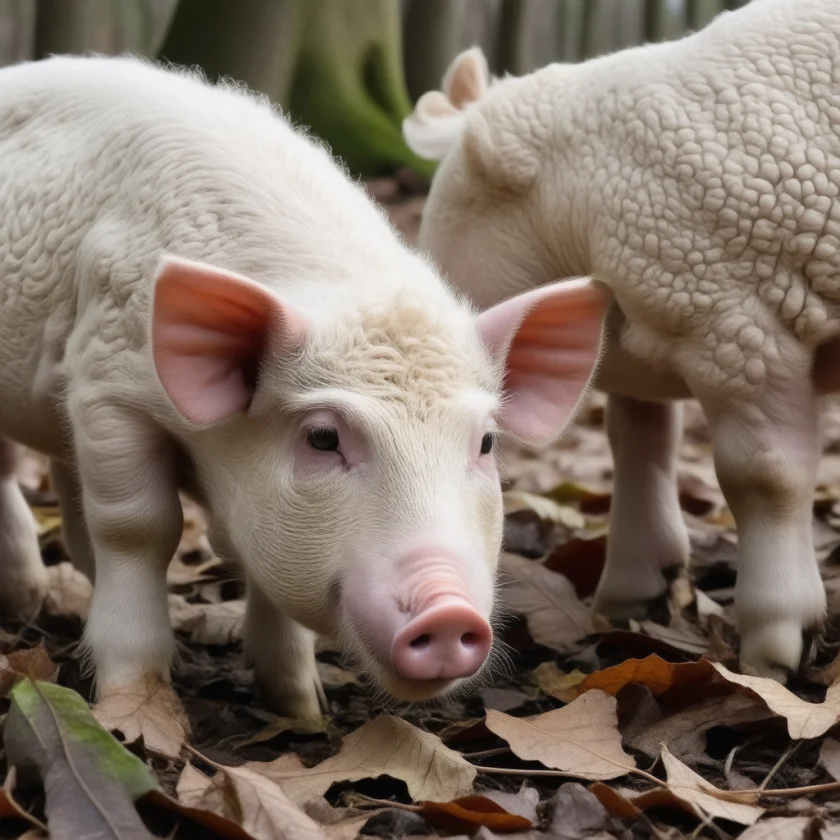
In 1987 the National Pork Board launched the “Pork. The Other White Meat” marketing campaign to position pork against chicken in a fat-phobic era. Industry breeding programs followed by selecting for pigs that grew to slaughter weight fast on cheap feed, with as little intramuscular fat as possible. The result was a pale, lean, dry commodity pork that bears little resemblance to what most of the world ate for the previous 9,000 years. Heritage breeds — Berkshire from Britain, Mangalitsa from Hungary, Tamworth from England (with Irish ancestry), Gloucestershire Old Spots, Red Wattle, Ossabaw Island Hog, the Iberico of Spain — survived in small numbers and have been revived by chefs and small farmers. Their meat is dramatically different: deep red color from higher myoglobin, marbled intramuscular fat, monounsaturated-fat-dominant lard (in a Hungarian review, Mangalica lard was over 60% unsaturated fat, mostly oleic acid), measurable vitamin D from sunlight exposure, and the flavor that made roast pork the celebration meat across European and Asian peasant traditions. This page covers the breeds, the science behind the differences, the meaningful nutritional contrasts, and the practical guidance on sourcing and preparing heritage pork.
Table of Contents
- Commodity Pork vs. Heritage Pork
- Heritage Breed Profiles
- Fat Composition Differences (Mangalitsa, Iberico)
- Vitamin D and Sunlight Exposure
- Omega-3 and Omega-6 in Pastured Pork
- CLA (Conjugated Linoleic Acid)
- Marbling, Color, and Flavor Chemistry
- Welfare and Production Ethics
- Sourcing, Cost, and Practical Guidance
- Key Research Papers
- Connections
- Featured Videos
Commodity Pork vs. Heritage Pork
The United States commercial pork industry centers on a small number of modern hybrid lines, dominated by the Yorkshire-Landrace cross (a maternal line) bred to a Duroc or Pietrain terminal sire. These hybrids were selected over four decades for:
- Maximum lean meat yield per kg of feed
- Minimum back-fat thickness
- Minimum intramuscular fat (the marbling)
- Fast time to market weight (~5 months from birth to 260 lb)
- Compatibility with confinement housing
The result is pork that looks pale and lean on the shelf and is well-suited to the “Other White Meat” marketing position. The trade-off is that the meat is dry when cooked above 145 degrees F (because the intramuscular fat that normally lubricates the muscle fibers during cooking is largely absent), bland in flavor, and nutritionally distinct from the meat of any heritage breed.
The commercial industry also introduced two intercurrent factors:
- The halothane / stress gene (RYR1 mutation) — some commercial lines carry a mutation in the ryanodine receptor that produces faster muscle growth but predisposes to porcine stress syndrome (sudden death under transport stress) and to pale, soft, exudative (PSE) meat that is watery and unappetizing after cooking. The mutation was partially bred out in the 2000s but residual presence persists.
- Ractopamine — a beta-2-adrenergic agonist fed to pigs in the final weeks before slaughter to repartition energy from fat to muscle. It is banned in the European Union, China, Russia, and Taiwan; it is permitted in the US. Heritage breed pork raised on pasture does not use ractopamine.
Heritage pork breeds were never selected against intramuscular fat, never bred for halothane sensitivity, and are typically not given growth-promoting drugs. The resulting meat retains the characteristics of pre-industrial pork.
Heritage Breed Profiles
The Livestock Conservancy maintains a registry of heritage breeds at varying levels of conservation concern. The most relevant for North American consumers:
- Berkshire (Japan's Kurobuta) — black-bodied with white feet and snout; originally from Berkshire County, England in the 1700s. Deep marbling, slightly sweet meat, the gold standard for Japanese kurobuta pork. Most widely available heritage breed in the US.
- Mangalitsa (Mangalica) — the “woolly pig” from Hungary, looks like a cross between a sheep and a wild boar with its curly coat. Extreme lard-type breed (Egerszegi 2003: generally 65–70% of the carcass is lard), with lard that is over 60% unsaturated fat, mostly oleic acid (43.6–44.8%) — figures close to commodity lard rather than to olive oil. Slow-growing (14-16 months to market vs. 5 months for commodity). Acorn-finished Mangalitsa is the equivalent of Spain's pata negra in fat quality.
- Tamworth — ginger-red, long-snouted, descended from Old English pig stock. Excellent foraging breed, ideal for pasture systems. Lean by heritage standards but with good flavor.
- Gloucestershire Old Spots — white with black spots, originally an orchard pig that ate windfall apples. Hardy, good mothers, dual-purpose meat-and-lard breed.
- Red Wattle — American heritage breed, distinguished by paired wattles hanging from the neck. Red coat, large size, lean by heritage standards but flavorful. In 1999 a search found only 42 breeding animals belonging to six breeders; the Livestock Conservancy still lists the breed as threatened.
- Ossabaw Island Hog — descendants of Spanish pigs landed on Ossabaw Island, Georgia in the 1500s. Small body size, extreme fat-storing genetics (an evolutionary adaptation to seasonal food scarcity on the island). Used as a research model for human obesity and type 2 diabetes; the same genetics that produce thrifty fat storage produce exceptionally flavorful pork.
- Large Black — all-black, hardy, excellent forager. Slow-growing, lean by heritage standards.
- Hereford pig — red with white face, similar to Hereford cattle in color pattern. American breed.
- Iberico (Pata Negra) — the black pig of Spain and Portugal, finished on acorns in dehesa oak savanna. The basis for jamon iberico de bellota, the most expensive ham in the world. Genetically distinct lineage that converts acorn oleic acid into intramuscular oleic acid in the meat.
Fat Composition Differences (Mangalitsa, Iberico)
The most consequential nutritional difference between heritage and commodity pork is the fat composition. Commodity pork (corn-soy fed, confinement) lard composition (approximate):
- Saturated fat: 39%
- Monounsaturated (mostly oleic): 45%
- Polyunsaturated (mostly linoleic): 12%
- Other / trace: 4%
Mangalica lard composition as reported in Egerszegi 2003 (pure- and crossbred Mangalica):
- Unsaturated fatty acids (total): over 60%
- Monounsaturated (oleic): 43.6–44.8%
- Polyunsaturated (linoleic): 10.6–11.5%
Iberico (acorn-finished) lard:
- Saturated fat: 36%
- Monounsaturated (oleic): 55%
- Polyunsaturated (linoleic): 6%
- Other / trace: 3%
For comparison, olive oil is approximately 14% saturated, 73% monounsaturated, 11% polyunsaturated. The Mangalica figures sit close to commodity lard (USDA: 45.1% monounsaturated, 11.2% polyunsaturated); the Iberico figures above sit between commodity lard and olive oil, with oleic acid as the dominant fatty acid.
The translation to clinical relevance: a Mediterranean diet whose principal animal fat is Iberico fat is biochemically closer to a Mediterranean diet centered on olive oil than to a Standard American Diet centered on commodity pork fat. A Spanish cohort study of cured ham in general (the SUN Project, 13,293 university graduates followed for up to 6 years) found no association between eating more than 4 servings a week and cardiovascular disease, compared with less than 1 serving a week (Ruiz-Canela 2009).
The pig achieves this fat profile through direct dietary incorporation. A pig fed acorns (which are ~60% monounsaturated fat by composition of the kernel oil) deposits much of that oleic acid directly into its body fat. A pig fed corn-soy (which is ~50% polyunsaturated linoleic) deposits more linoleic acid into its fat. The pig becomes biochemically what it eats more directly than any ruminant.
Vitamin D and Sunlight Exposure
Like humans, pigs synthesize vitamin D3 in their skin from 7-dehydrocholesterol when exposed to ultraviolet B (UVB) radiation. The synthesized cholecalciferol is stored in fat tissue. Pigs raised outdoors with regular sun exposure (heritage breeds in pasture systems) accumulate measurable vitamin D in their lard.
A 2017 University of Wyoming study (Larson-Meyer 2017) compared pigs given sun exposure (spring–summer or summer–fall) with pigs kept in standard confinement:
- Loin (lean meat) — total vitamin D (vitamin D3 plus 25-hydroxyvitamin D3) averaged about 1.0 mcg per 100 g in sun-exposed pigs and 0.35 mcg per 100 g in confined pigs
- Fat under the skin — sun exposure raised 25-hydroxyvitamin D, but vitamin D3 content was similar in the two groups
The study concludes that sunlight exposure increased the vitamin D content of the loin and that such pork “may provide an additional source of dietary vitamin D.” For scale, USDA lists ordinary lard at 2.5 mcg (102 IU) of vitamin D3 per 100 g, about 0.3 mcg (13 IU) per 12.8 g tablespoon.
Confinement pork is not free of vitamin D: the confined pigs in the Wyoming study ate a corn-soy feed with a vitamin D3 premix (1,239 IU/kg), and their loin held 0.35 mcg per 100 g. The synthesized vitamin D in pasture-raised pork comes paired with the cholesterol substrate, intermediates, and lipid environment that may modestly improve bioavailability compared to crystalline supplements.
For more on vitamin D pharmacology see our Vitamin D3 page.
Omega-3 and Omega-6 in Pastured Pork
The omega-6:omega-3 ratio in animal fat depends on the omega-6:omega-3 ratio in the animal's feed. Modern commodity hog feed is dominated by corn (omega-6 dominant) and soybean (omega-6 dominant), producing pork fat with an omega-6:omega-3 ratio in the range of 15:1 to 25:1.
Pastured heritage pigs that consume grass, clover, acorns, and forage (which contain meaningful alpha-linolenic acid, an omega-3) produce fat with a lower omega-6:omega-3 ratio, typically 5:1 to 10:1. Pigs supplemented with flaxseed or fish-oil-containing feed can produce ratios as low as 2:1, comparable to wild-caught fish.
The clinical relevance is the modern Western diet's skew toward omega-6 dominance (estimated ratio in typical US diet is 15-20:1, compared to estimated paleolithic ratio of 1-4:1). Excess omega-6 is associated with chronic inflammation, and swapping industrial seed oils for pastured animal fats is one dietary change used to lower the ratio.
Heritage pastured pork is not a substitute for fatty cold-water fish (salmon, sardines, mackerel) as the primary eicosapentaenoic acid (EPA)/docosahexaenoic acid (DHA) source — pig fat contains principally alpha-linolenic acid, with limited conversion to long-chain omega-3s. But pastured pork contributes to lowering the omega-6:omega-3 ratio of overall fat intake compared to commodity pork.
CLA (Conjugated Linoleic Acid)
Conjugated linoleic acid (CLA) is a family of fatty acid isomers produced primarily by ruminant bacteria in the rumen and incorporated into ruminant tissue. Pastured ruminants (grass-fed beef, lamb) are the principal dietary source.
Pigs are not ruminants, but pastured pigs do consume some CLA via grass and forage, and microbial production in the pig hindgut adds modest additional CLA. Pastured heritage pork therefore contains higher CLA than confinement commodity pork, though substantially less than equivalent grass-fed ruminant meat.
CLA has been studied for body composition effects (modest reduction in body fat in some trials), insulin sensitivity, and possible anticarcinogenic activity. The evidence base is mixed but generally supportive at the dietary intake levels found in pastured animal products.
Marbling, Color, and Flavor Chemistry
Two visible characteristics distinguish heritage pork from commodity pork:
- Color — heritage pork is markedly darker red than commodity pork. The pigment is myoglobin, the oxygen-storage protein of muscle. Heritage breeds have higher myoglobin content because they have more oxidative (type I) muscle fibers, which is itself a function of greater muscle activity in pasture systems and slower growth allowing more iron accumulation. Commodity pork is pale because of low myoglobin and high water content.
- Intramuscular fat (marbling) — visible white flecks of fat within the muscle tissue. Marbling melts during cooking, lubricating the muscle fibers and producing tender, juicy meat. Commercial breeding programs deliberately reduced intramuscular fat to meet consumer preferences for lean meat (driven by 1980s and 1990s fat-phobic dietary guidance). Heritage breeds retain natural marbling.
The flavor chemistry of pork is dominated by Maillard reaction products generated during browning, augmented by the volatile compounds released as fat melts. The intramuscular fat in heritage pork serves as both flavor carrier (lipid-soluble flavor compounds dissolve in melting fat) and substrate for Maillard-driven browning of the fat-protein interface. Lean commodity pork has neither the fat to carry flavor nor the marbling to brown internally.
The smell of properly cooked heritage pork — particularly Iberico ham or Mangalitsa pork chop — contains notes (nutty, sweet, slightly fruity) that are essentially absent from commodity pork. These come from fatty acid chain length distribution (a higher proportion of medium-chain fatty acids in acorn-finished pigs), specific volatile aldehydes generated from oleic acid oxidation during cooking, and the absence of off-flavors associated with rapid growth and confinement housing (sometimes “boar taint” from delayed castration in modern commercial practice, sometimes off-notes from high-soy feed).
Welfare and Production Ethics
Beyond nutrition, the production system differs sharply between commodity and heritage pork. Industrial pork production typically involves:
- Confinement housing (gestation crates for sows, often crowded barns for finishing pigs)
- Tail docking and tooth clipping to prevent injury from confinement-induced aggression
- Routine prophylactic antibiotic use to manage disease pressure in dense populations
- Castration of male piglets at days of age without anesthesia (US practice, banned or being phased out in EU)
- Slaughter age ~5-6 months at ~260 lb live weight
Heritage pasture-raised production typically involves:
- Outdoor pasture with shelter, rotational grazing
- Intact tails and teeth (the behaviors that necessitate docking are largely confinement-induced)
- Antibiotics used only therapeutically for sick animals, not routinely
- Slaughter age 12-18 months (heritage breeds grow more slowly to optimal carcass weight)
- Smaller-scale processing with longer chilling and aging
The welfare differences are documented. The environmental differences are mixed — pasture systems require more land per kg of meat but can sequester carbon in well-managed silvopasture and contribute to soil health. The price difference is substantial: heritage pork retails for 3-5x the price of commodity pork.
Sourcing, Cost, and Practical Guidance
Heritage pork is available through several channels:
- Whole or half pig direct from farmer — lowest per-pound cost, requires freezer space and willingness to use varied cuts. Local Heritage Pork associations and the Livestock Conservancy directory list participating farmers.
- Farmers markets — many small heritage pork producers sell direct at urban markets. Common at higher-end markets in major US cities.
- Specialty butchers and online mail-order — specialist heritage-pork suppliers and individual farm websites. Higher per-pound cost.
- Restaurant supply — many farm-to-table restaurants source heritage breed pork; the price is built into the restaurant pricing.
For people who cannot afford all-heritage pork, a mixed approach people describe is:
- Commodity pork for cured products (bacon, ham), where curing dominates the flavor anyway
- Heritage pork for showcase cuts (roasts, chops, pork belly), where the meat is the centerpiece
- Heritage pork lard rendered from a single bulk purchase of leaf fat (see our Lard Rendering page) — one rendering session produces 6-12 months of cooking fat
- Berkshire-cross pork from smaller commercial producers as a middle ground between full heritage and commodity
Cooking heritage pork: the higher intramuscular fat tolerates higher cooking temperatures without drying out than commodity pork. Heritage pork chops cook well to 145 degrees F (U.S. Department of Agriculture-revised safe internal temperature) with a pink center, retaining moisture and flavor. Slow-cooked applications (braised shoulder, pulled pork) particularly benefit from heritage breed fat, which doesn't render out as rapidly as commodity fat.
Key Research Papers
- Lopez-Bote CJ (1998). Sustained utilization of the Iberian pig breed. Meat Science. — PubMed PMID: 22060709
- Wood JD et al. (2008). Fat deposition, fatty acid composition and meat quality: a review. Meat Science. — PubMed PMID: 22062452
- Larson-Meyer DE, Ingold BC, Fensterseifer SR, Austin KJ, Wechsler PJ, Hollis BW, Makowski AJ, Alexander BM (2017). Sun exposure in pigs increases the vitamin D nutritional quality of pork. PLoS One. — PubMed PMID: 29136033
- Mayoral AI, Dorado M, Guillén MT, Robina A, Vivo JM, Vázquez C, Ruiz J (1999). Development of meat and carcass quality characteristics in Iberian pigs reared outdoors. Meat Science. — PubMed PMID: 22062581
- Egerszegi I et al. (2003). Mangalica - an indigenous swine breed from Hungary. Archiv fur Tierzucht. — doi:10.5194/aab-46-245-2003
- Lebret B (2008). Effects of feeding and rearing systems on growth, carcass composition and meat quality in pigs. Animal. — PubMed PMID: 22443914
- Estevez M (2011). Protein carbonyls in meat systems: a review. Meat Science. — PubMed PMID: 21621336
- Ruiz-Canela López M, Bes-Rastrollo M, Zazpe I, Martínez JA, Cuervo M, Martínez-González MA (2009). [Cured ham and incidence of cardiovascular events, arterial hypertension or weight gain]. Med Clin (Barc). — PubMed PMID: 19811792