Lentils for Plant Protein and Iron
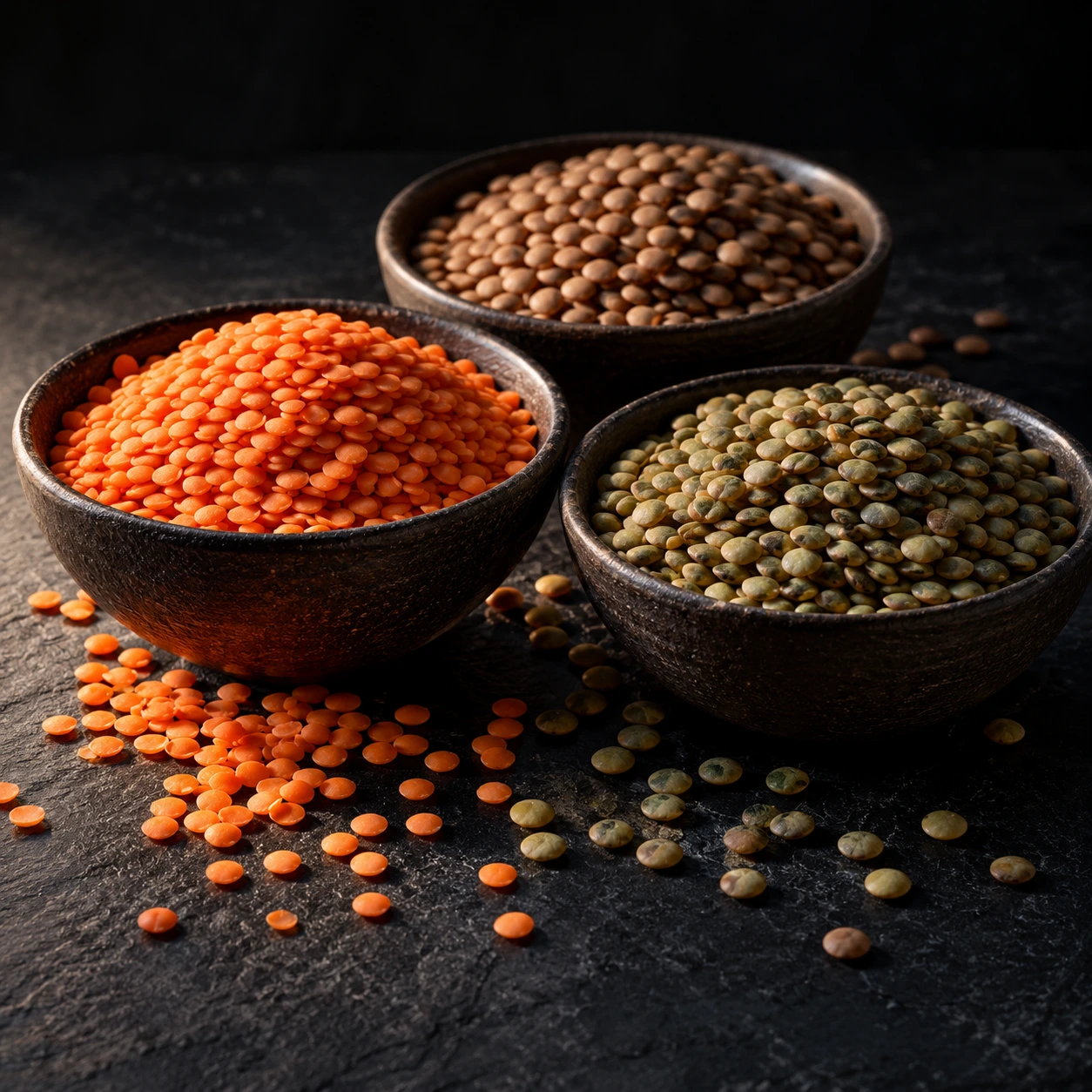
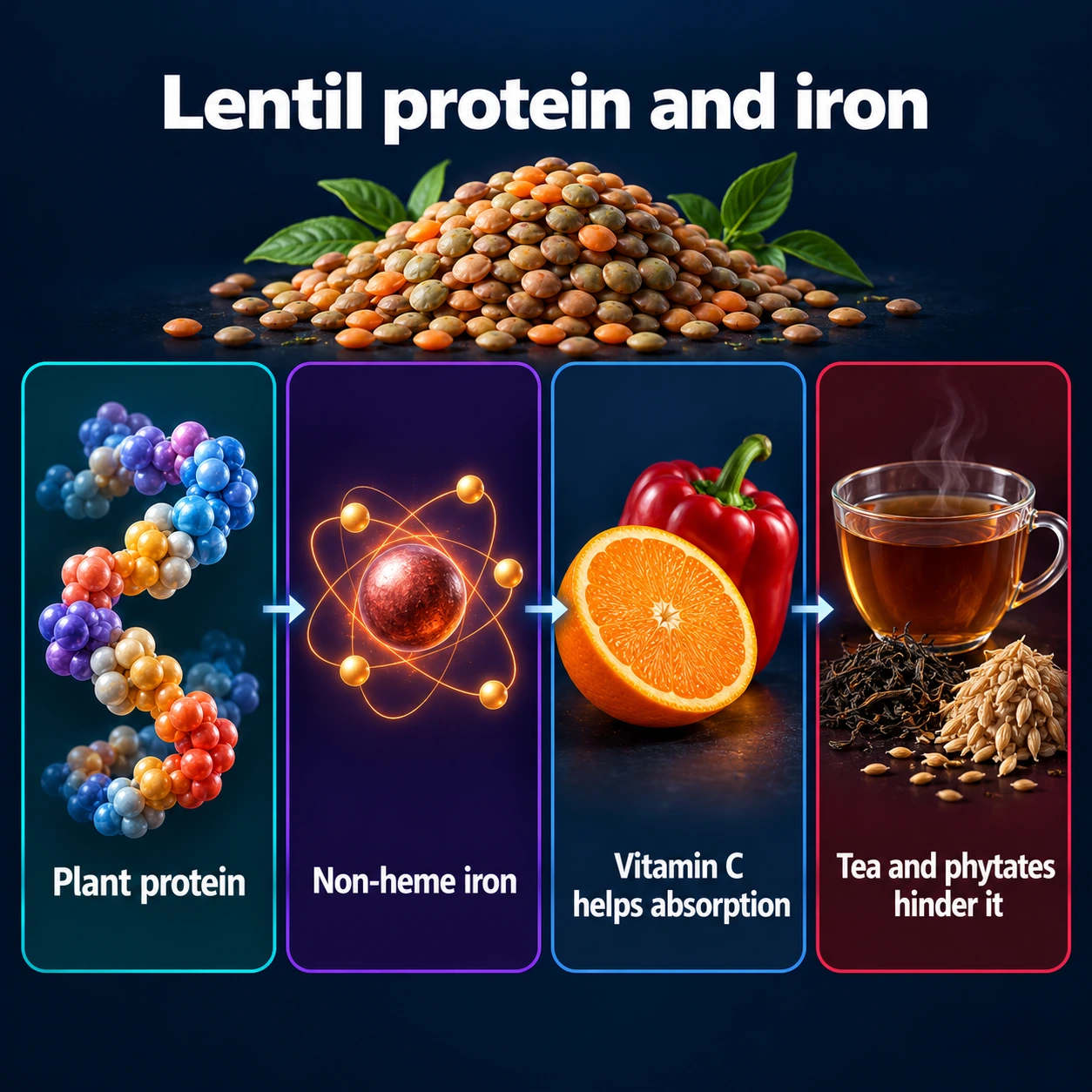
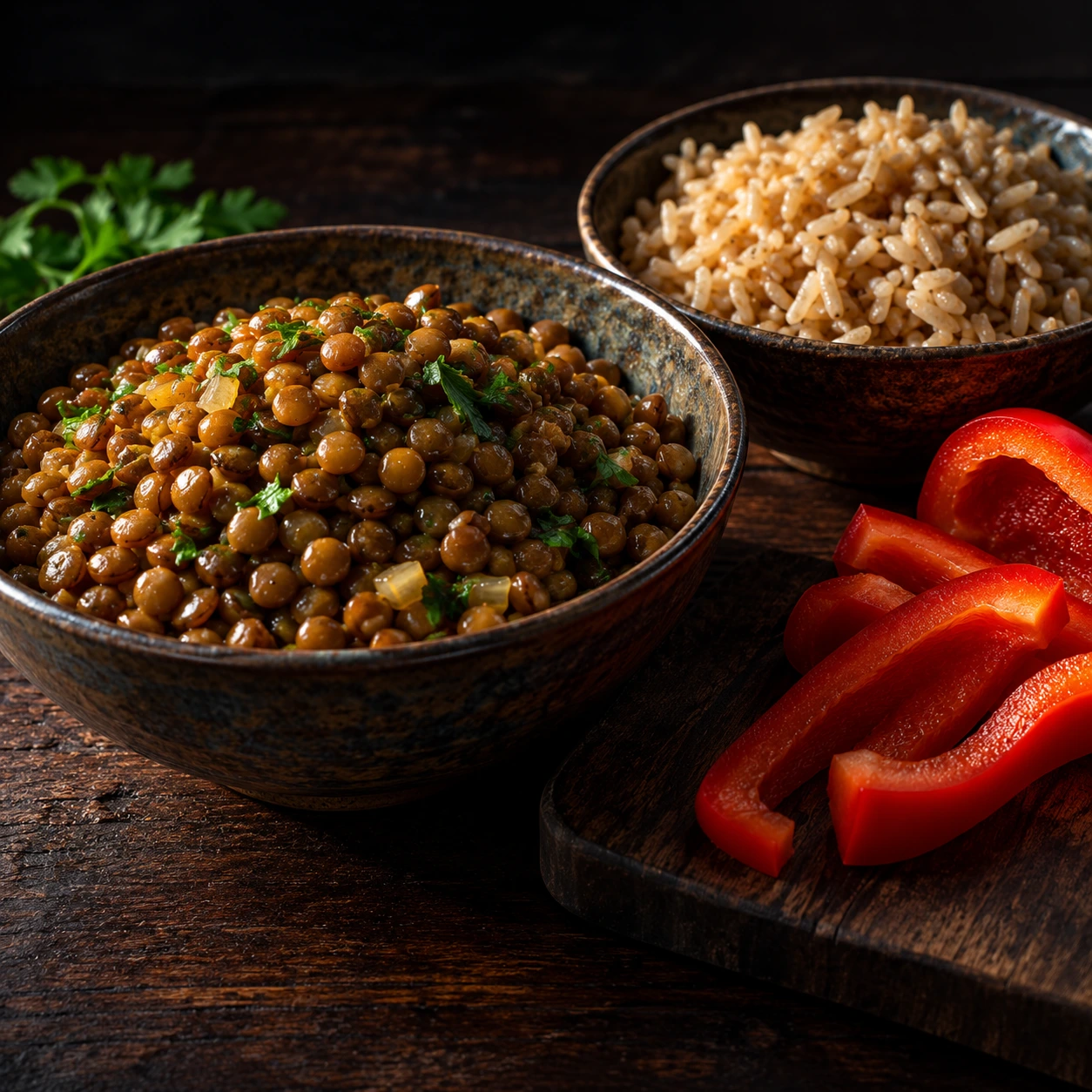
A single cooked cup of lentils delivers 18 grams of plant protein and 6.6 milligrams of non-heme iron — roughly the same protein as 2.5 ounces of chicken breast, and about 82% of the adult male iron Recommended Dietary Allowance (RDA) or 37% of the menstruating-female Recommended Dietary Allowance. The catch is that plant protein is amino-acid-incomplete in isolation, and non-heme iron is absorbed at only 5-10% efficiency versus 15-35% for heme iron from meat. Both limitations are largely met by old food pairings that predate modern nutrition science: lentils with rice or wheat, which supply more of the sulfur amino acid methionine, and lentils with a vitamin C source (citrus, tomato, bell pepper), which raises non-heme iron uptake from a meal. This page walks through the amino acid biochemistry, the iron-absorption modifiers, and the practical menu engineering needed for a lentil-based diet to deliver real protein and iron sufficiency.
Table of Contents
- The Protein Numbers: 18 g Per Cooked Cup
- Amino Acid Profile: Strong Lysine, Limiting Methionine
- Protein Complementation with Grains
- PDCAAS, DIAAS, and "Complete Protein" Reality
- The Iron Numbers: 6.6 mg Non-Heme Per Cup
- Heme vs Non-Heme Iron Absorption
- Vitamin C: the Dominant Enhancer
- Inhibitors: Tea, Coffee, Calcium, Phytates
- The Vegetarian Iron Deficit and the Practices Used to Close It
- Practical Menu Engineering
- Cautions
- Key Research Papers
- Connections
- Featured Videos
The Protein Numbers: 18 g Per Cooked Cup
The U.S. Department of Agriculture (USDA) FoodData Central entry for cooked lentils (mature seeds, boiled without salt) lists 17.9 g protein per 198 g cooked cup at 230 kcal. By comparison:
- One large egg: 6 g protein, 70 kcal
- One cup whole milk: 8 g protein, 150 kcal
- 3 oz cooked chicken breast: 27 g protein, 140 kcal
- 3 oz cooked salmon: 22 g protein, 175 kcal
- 1 cup cooked black beans: 15 g protein, 227 kcal
- 1 cup cooked chickpeas: 14.5 g protein, 269 kcal
On a protein-per-calorie basis, lentils outperform every other common plant-protein source except soy products and seitan, and on a protein-per-dollar basis they are typically the cheapest protein source available in any global market — the reason they remain a dietary staple across South Asia, the Middle East, North Africa, and the Mediterranean. Red split lentils cook in 15-20 minutes without soaking, brown and green lentils in 25-30 minutes, black beluga and French du Puy lentils in 25-35 minutes. None require the overnight soak that beans require, which is the practical reason they have remained more common than beans in weeknight cooking despite similar nutrition.
Amino Acid Profile: Strong Lysine, Limiting Methionine
Of the nine essential amino acids that humans cannot synthesize and must obtain from diet, lentil protein supplies all nine but in unequal proportions. The dominant feature of the lentil amino acid profile is high lysine and low methionine and cysteine (the sulfur amino acids). This is the standard legume pattern. Grains have the opposite pattern: lysine-poor, methionine-rich. The two food families are reciprocal in their amino acid deficits, which is the molecular basis for why every ancient agricultural civilization paired a legume with a grain in its staple dishes.
Per 100 g of cooked lentil protein, the essential amino acid content (in mg per g protein) is approximately:
- Lysine: about 70 mg/g, about 7% of the protein (USDA FoodData Central record 172421: 0.63 g lysine per 9.02 g protein in 100 g cooked lentils) (FAO requirement: 45 mg/g) — well above the requirement, the lysine-rich profile that complements grain proteins
- Leucine: 75 mg/g (requirement: 59) — well above
- Isoleucine: 41 mg/g (requirement: 30) — above
- Valine: 47 mg/g (requirement: 39) — above
- Threonine: 35 mg/g (requirement: 23) — above
- Phenylalanine + Tyrosine: 78 mg/g (requirement: 38) — well above
- Histidine: 28 mg/g (requirement: 15) — above
- Tryptophan: 9 mg/g (requirement: 6) — barely above, often a co-limiting amino acid with methionine
- Methionine + Cysteine: about 22 mg/g (USDA record 172421: 0.077 g methionine plus 0.118 g cystine per 9.02 g protein) (requirement: 22) — no margin above the FAO requirement, the smallest of any essential amino acid — the limiting amino acid
This thin sulfur-amino-acid margin, together with the digestibility correction described below, is what gives lentil protein a Protein Digestibility Corrected Amino Acid Score (PDCAAS) below 1.0 when scored as a sole protein source. Combining with even small quantities of grain (rice, wheat, corn) closes the gap completely.
Protein Complementation with Grains
The principle of protein complementation was popularized in the 1971 book Diet for a Small Planet by Frances Moore Lappe, which (somewhat incorrectly) suggested that complementary proteins had to be consumed in the same meal to count as "complete." The strict same-meal rule has since been walked back — the modern understanding is that the body maintains an amino acid pool over roughly 24 hours, so complementary proteins consumed across the day still meet requirements. But the same-meal rule is still a useful heuristic because the rice-and-lentil and bread-and-lentil dishes that resulted have been verified by centuries of human practice and are simply convenient.
Classic complementary dishes and their effective amino acid profiles:
- Indian dal-chawal — lentils with rice. Rice supplies methionine; lentils supply lysine. Combined PDCAAS approaches 1.0.
- Middle Eastern mujadara — lentils with rice and caramelized onions, often topped with yogurt. Lentil-rice complementation plus dairy lysine reinforcement.
- Ethiopian misir wat — spiced red lentil stew served on injera (teff flatbread). Teff is a complete grain on its own (one of the few that is), but the combination is still synergistic.
- French lentilles du Puy with crusty bread — wheat-and-lentil complementation, characteristic of Mediterranean Lent observance.
- Italian pasta e lenticchie — lentil-and-pasta soup, particularly common in southern Italy and Sicily, again a wheat-and-legume complementation.
- Mexican rice and beans, lentils and corn tortillas — the corn-legume complementation across all of Mesoamerica.
Notably, every one of these traditions also includes a vitamin C source (tomato, onion, lemon, lime, peppers, or cilantro) which has the secondary effect of dramatically enhancing iron absorption from the same meal — the topic of the next sections.
PDCAAS, DIAAS, and "Complete Protein" Reality
The Protein Digestibility Corrected Amino Acid Score (PDCAAS), adopted by the FAO/WHO in 1991, is the standard tool for evaluating protein quality. It compares the ratio of essential amino acids in a food to the human requirement, then multiplies by the true ileal digestibility. Scores range from 0 to 1.0; values above 0.75 are considered high-quality protein.
- Egg white: 1.0 (truncated; raw score 1.18)
- Whey protein: 1.0 (truncated; raw score 1.14)
- Soy protein isolate: 1.0
- Beef: 0.92
- Lentils (alone): approximately 0.52-0.63 — limited by methionine
- Lentils + Rice (~50/50 mix): approximately 0.93 — the practical demonstration of why complementation works
- Wheat (alone): approximately 0.42 — limited by lysine
The Digestible Indispensable Amino Acid Score (DIAAS), proposed by FAO in 2013 as a replacement for PDCAAS, gives slightly different and arguably more accurate scores by not truncating values above 1.0 and by using ileal rather than fecal digestibility data. The two methods agree on the bottom line: legume protein is medium-quality alone, near-complete-quality in combination with grain.
The practical implication is that an adult eating ~50 g lentil protein per day (about 3 cooked cups, or 280 g dry), alongside ordinary bread, rice, pasta, or other grain consumption, meets all essential amino acid requirements without animal protein. A child or pregnant woman, with higher per-kilogram requirements and slightly less flexibility in the amino acid pool, benefits from being more deliberate about including complementary proteins at most meals.
The Iron Numbers: 6.6 mg Non-Heme Per Cup
One cooked cup of lentils provides 6.6 mg of iron (USDA FoodData Central record 172421: 3.33 mg per 100 g, 198 g cup), which on paper supplies about 82% of the Recommended Dietary Allowance for adult males (8 mg/day) by itself and 37% of the Recommended Dietary Allowance for menstruating women (18 mg/day). The complication is that this is all non-heme iron, which is absorbed far less efficiently than the heme iron found in meat, fish, and poultry.
- Heme iron (from meat/fish/poultry) — absorbed at 15-35% efficiency. Absorbed intact as heme and largely unaffected by other meal components; the protein first reported as the heme transporter (HCP1) was shown in 2006 to work mainly as a folate transporter, so the main gut heme-uptake route is not firmly identified.
- Non-heme iron (from plants, dairy, eggs) — absorbed at 2-20% efficiency, highly variable, modulated by other meal components. Absorbed via the divalent metal transporter DMT1 after reduction from ferric (Fe3+) to ferrous (Fe2+) by duodenal cytochrome b (DCYTB).
For lentils specifically, in the absence of enhancers or inhibitors, the absorbed iron from a 1-cup serving is approximately 0.4-0.7 mg (about 6-10% of the 6.6 mg total). With strong enhancement (vitamin C in the same meal), absorbed iron can rise to 1.5-2.0 mg from the same serving — a 3-fold increase that brings the effective absorbed dose close to what would be obtained from a 3-oz serving of beef (about 1.5-2.0 mg absorbed).
This is why the absolute iron content per gram of food is misleading for vegetarian planning; what matters is absorbed iron, which requires deliberate meal-level food pairing.
Heme vs Non-Heme Iron Absorption
The mechanistic difference between heme and non-heme iron absorption explains why vegetarian iron status requires different planning than omnivore iron status.
Heme iron arrives in the duodenum still inside its porphyrin ring (the same molecular structure as the heme group in hemoglobin and myoglobin). The intact heme molecule is taken up by the gut-lining cells (enterocytes). The protein first proposed as the heme carrier, HCP1, was shown by Qiu and colleagues (2006) to be mainly a proton-coupled folate transporter (renamed PCFT/HCP1), so the main route of heme uptake is not firmly identified. Inside the enterocyte, heme oxygenase liberates the iron atom, which then enters the same intracellular ferritin storage pool as non-heme iron. The whole process bypasses the meal-environment modulators (vitamin C, polyphenols, calcium) that affect non-heme absorption.
Non-heme iron arrives in food as ferric (Fe3+) salts complexed with various organic ligands (phytic acid, polyphenols, organic acids). It must first be released from its ligands, then reduced from Fe3+ to Fe2+ by either dietary ascorbic acid or by the brush-border ferric reductase DCYTB, before it can be absorbed by the divalent metal transporter DMT1. Every step in this process is meal-environment-dependent — which is why a tea with the meal can cut absorption by 60-70% while a glass of orange juice can triple it.
The body partially compensates by upregulating non-heme iron absorption efficiency in iron-deficient states (DMT1 expression increases when ferritin is low, mediated by the hepcidin-IRP1/2 axis), but the regulatory range is bounded and does not fully close the gap during conditions of high iron demand (heavy menstruation, pregnancy, growth spurts, blood donation, endurance athletic training).
A 2010 review by Hurrell and Egli estimated, from intake data and isotope studies, that about 14-18% of the iron in a mixed diet is absorbed, against 5-12% from a vegetarian diet, in people with no iron stores. The same review found that a person's own iron status generally has a greater effect on iron absorption than the make-up of the diet, and that enhancers and inhibitors that act strongly in single test meals have a more modest effect in multi-meal studies with a varied diet.
Vitamin C: the Dominant Enhancer
Ascorbic acid (vitamin C) is the single most powerful enhancer of non-heme iron absorption. The mechanism is twofold:
- Reduction — ascorbic acid donates an electron to convert ferric Fe3+ to ferrous Fe2+, which is the form that the DMT1 transporter recognizes.
- Chelation — ascorbate forms a soluble ferrous-ascorbate complex that protects the iron from being re-complexed by inhibiting ligands (phytic acid, polyphenols) before it can be absorbed.
The size of the effect depends on how it is measured. In single test meals given to fasting volunteers, vitamin C has a pronounced enhancing effect on non-heme iron absorption. Over a whole diet the effect is far smaller: Cook and Reddy (2001, American Journal of Clinical Nutrition) fed 12 people a complete diet with a labeled wheat roll at every meal for three 5-day periods and found no significant difference in mean iron absorption between periods, even though daily dietary vitamin C ranged from 51 to 247 mg. Only after adjusting for each person's iron status and pooling the periods did absorption rise with vitamin C intake. The authors concluded that the boost from vitamin C in a complete diet is far less pronounced than in single meals, which may explain why long-term vitamin C supplements have shown little effect on iron status. The vitamin C acts on iron eaten in the same meal — absorption enhancement is not preserved across separate meals.
Practical vitamin C sources that pair well with lentils:
- Tomato (whole, sauce, or paste) — the basis of Italian, Mexican, and Indian lentil dishes
- Bell pepper (especially red — about 150 mg vitamin C per cup, more than oranges) — common in Mediterranean and Mexican lentil dishes
- Lemon or lime juice — squeezed over lentil soup at the table, traditional in Middle Eastern and Mexican cuisine
- Citrus salad alongside the meal
- Broccoli, Brussels sprouts, cauliflower — cruciferous side dishes
- Cilantro and parsley — raw garnish at the end of cooking preserves vitamin C content
- Sauerkraut and other fermented vegetables — fermentation preserves vitamin C, which is the historical reason Northern European populations used sauerkraut to prevent scurvy
Inhibitors: Tea, Coffee, Calcium, Phytates
Several common dietary components dramatically inhibit non-heme iron absorption when consumed in the same meal:
- Tea polyphenols (especially black tea tannins) — can reduce non-heme iron absorption by 60-70%. The effect is on iron eaten in the same meal; common dietary guidance describes a gap of about an hour between tea and an iron-rich meal.
- Coffee polyphenols (chlorogenic acid) — similar mechanism, somewhat less potent — can reduce absorption by 35-60%.
- Calcium — human studies show that calcium, whether as calcium salts or in dairy products, can inhibit iron absorption from a meal. A glass of milk with a lentil meal can reduce iron absorption by 30-50%. Where the block happens is not settled: it may act at the DMT1 uptake step, but in human gut cells grown in the lab (Caco-2 cells) calcium did not affect iron uptake or DMT1 and instead briefly reduced the iron exporter ferroportin, with a rebound by 4 hours. A review of human studies in which calcium intake was raised substantially for long periods found no change in blood counts or iron status, so the effect may be short-lived (Lonnerdal 2010).
- Phytic acid — inherent in lentils and other legumes/grains. Forms insoluble iron-phytate complexes. Largely addressable by soaking and sprouting — see Soaking and Phytates. In a 2010 stable-isotope study in young women (Petry and colleagues), only 2.5% of the iron in a whole red-bean porridge was absorbed; removing both the bean polyphenols and the phytic acid raised absorption 2.6-fold, while removing phytic acid did not increase absorption as long as the polyphenols remained. The authors concluded that lowering only one of the two inhibitors has a modest effect. The study used red beans, not lentils.
- Polyphenols in spinach, cocoa, red wine — the "spinach is high in iron" folk wisdom is partially wrong because spinach also contains oxalate and polyphenols that block most of the iron uptake. Spinach is a good vitamin K and folate source; it is a poor practical iron source.
A popular story says spinach's iron fame came from a misplaced decimal point in a 19th-century lab analysis. A 2014 study by Ole Bjørn Rekdal traced that story through the literature, found no record that the decimal-point error was ever made, and described it as an "academic urban legend" spread through scientific publications. USDA FoodData Central (record 168462) lists 2.7 mg of iron per 100 g of raw spinach; with the oxalate and polyphenols noted above, little of that iron is absorbed. Lentils, by contrast, deliver more iron per cooked cup and respond well to vitamin C co-consumption.
The Vegetarian Iron Deficit and the Practices Used to Close It
Several large studies (Haider et al. 2018 systematic review and meta-analysis; EPIC-Oxford cohort) have documented that vegetarians have on average lower serum ferritin (the body's iron-store marker) than omnivores. The 2018 meta-analysis by Haider and colleagues pooled 24 cross-sectional studies: adult vegetarians' serum ferritin was about 30 µg/L lower than that of non-vegetarians overall, and the gap was larger in men (about 62 µg/L lower) than in premenopausal women (about 18 µg/L lower). The deficit is not large enough to translate into a meaningful increase in iron-deficiency anemia in well-planned diets, but it is the gap the practices below aim at.
The practices most often described, in approximate order of the effect reported:
- Vitamin C with iron-rich plant meals — the practice with the largest single-meal effect (smaller over a whole diet, as described above). Examples: a glass of fresh orange juice with breakfast oatmeal-and-lentil-spread, tomato sauce with pasta-and-lentils, lemon juice over dal-and-rice.
- Coffee and tea kept at least an hour apart from iron-rich meals — coffee with breakfast may be reducing iron absorption from that breakfast by 50%.
- Sprouting, soaking, or sourdough fermentation of legumes and grains — reduces phytate. See Soaking and Phytates.
- Cast iron cookware — cooking acidic foods (tomato-lentil stew, lemon-spinach) in cast iron measurably increases iron content of the food. Trials suggest a 2-5x increase for some acidic preparations.
- Yearly serum ferritin and hemoglobin checks — commonly described for people who menstruate, are vegan, or train hard; a ferritin below 30 ng/mL is a common threshold at which supplementation is used, even when hemoglobin is normal.
- Iron supplementation in pregnancy — demand more than doubles, and most vegetarian women cannot meet the requirement from food alone. See Iron Deficiency Anemia.
Practical Menu Engineering
A real-world day of menu engineering for a vegetarian targeting both protein and iron sufficiency from a lentil-centered diet:
- Breakfast — whole-grain toast with smashed avocado and a sliced tomato; one glass of fresh orange juice (60-80 mg vitamin C); coffee taken at least an hour later, not with the meal.
- Lunch — mujadara (1 cup lentils + 1 cup rice) topped with caramelized onions, fresh parsley, and lemon juice; small side salad of red bell pepper and tomato. Provides ~22 g protein and the strongest single iron-absorption opportunity of the day.
- Snack — orange or kiwi (vitamin C); a small handful of nuts (additional methionine, magnesium, zinc).
- Dinner — lentil-tomato-spinach stew with crusty bread, finished with lemon zest.
- Daily totals (approximate) — 60-70 g protein (most adults need 50-70 g), 12-15 mg iron with absorption enhancers in place at most meals (effective absorbed iron 1.5-2.5 mg, near omnivore levels).
Cautions
- Hereditary hemochromatosis — individuals homozygous for the HFE C282Y mutation (1 in 200-400 of Northern European ancestry) absorb iron at greatly elevated rates and develop iron overload. For these individuals the vitamin-C pairing works the wrong way, because it raises iron uptake further; diet guidance for hemochromatosis describes keeping vitamin C apart from high-iron foods, and tea or coffee taken with iron-rich meals lowers absorption.
- Iron supplementation without confirmed deficiency — oral iron supplements are used to correct a low serum ferritin. Supplemental iron in the iron-replete is associated with oxidative stress and altered gut microbiome (suppression of Lactobacillus, expansion of pathogenic Enterobacteriaceae).
- Concurrent levothyroxine or fluoroquinolone antibiotics — calcium and iron bind both drugs in the gut, reducing drug absorption. The levothyroxine tablet label states that iron and calcium supplements and antacids can decrease its absorption and that it is not to be taken within 4 hours of these agents. The ciprofloxacin tablet label lists taking the antibiotic at least 2 hours before or 6 hours after products containing calcium, iron or zinc, and not with dairy products (like milk or yogurt) or calcium-fortified juices alone, although it may be taken with a meal that contains these products. The labels speak of supplements, antacids and dairy, not of iron-rich meals as such.
- Acute lentil overconsumption — the raffinose and stachyose oligosaccharides ferment rapidly in the colon, producing significant gas and bloating in those unaccustomed to high legume intake. A gradual introduction (for example 1/4 cup daily, increased weekly) is described as giving the gut microbiome time to adapt. Soaking and rinsing removes some of these oligosaccharides.
- Aflatoxin contamination — lentils are not a high-aflatoxin commodity (much less prone than peanuts or corn) but mold grows on lentils stored damp, and visibly moldy or off-smelling lentils are the ones where mold toxins are a concern.
Key Research Papers
- Young VR, Pellett PL (1994). Plant proteins in relation to human protein and amino acid nutrition. American Journal of Clinical Nutrition, 59(5 Suppl):1203S-1212S. — PubMed PMID: 8172124
- Hurrell R, Egli I (2010). Iron bioavailability and dietary reference values. American Journal of Clinical Nutrition, 91(5):1461S-1467S. — PubMed PMID: 20200263
- Cook JD, Reddy MB (2001). Effect of ascorbic acid intake on nonheme-iron absorption from a complete diet. American Journal of Clinical Nutrition, 73(1):93-98. — PubMed PMID: 11124756
- Hallberg L, Hulthen L (2000). Prediction of dietary iron absorption: an algorithm for calculating absorption and bioavailability of dietary iron. American Journal of Clinical Nutrition, 71(5):1147-1160. — PubMed PMID: 10799377
- Petry N et al. (2010). Polyphenols and phytic acid contribute to the low iron bioavailability from common beans in young women. Journal of Nutrition, 140(11):1977-1982. — PubMed PMID: 20861210
- Haider LM et al. (2018). The effect of vegetarian diets on iron status in adults: A systematic review and meta-analysis. Critical Reviews in Food Science and Nutrition, 58(8):1359-1374. — PubMed PMID: 27880062
- Hallberg L, Brune M, Rossander L (1989). The role of vitamin C in iron absorption. International Journal for Vitamin and Nutrition Research Supplement, 30:103-108. — PubMed PMID: 2507689
- Brune M, Rossander L, Hallberg L (1989). Iron absorption and phenolic compounds: importance of different phenolic structures. European Journal of Clinical Nutrition, 43(8):547-557. — PubMed PMID: 2598894
- Lonnerdal B (2010). Calcium and iron absorption — mechanisms and public health relevance. International Journal for Vitamin and Nutrition Research, 80(4-5):293-299. — PubMed PMID: 21462112
- FAO/WHO/UNU Expert Consultation (2007). Protein and amino acid requirements in human nutrition. WHO Technical Report Series 935. — PubMed PMID: 18330140
- Boye J, Wijesinha-Bettoni R, Burlingame B (2012). Protein quality evaluation twenty years after the introduction of the PDCAAS method. British Journal of Nutrition, 108(S2):S183-S211. — PubMed PMID: 23107529
- Qiu A, Jansen M, Sakaris A, Min SH, Chattopadhyay S, Tsai E, Sandoval C, Zhao R, Akabas MH, Goldman ID (2006). Identification of an intestinal folate transporter and the molecular basis for hereditary folate malabsorption. Cell, 127(5):917-928. — PubMed PMID: 17129779
- Rekdal OB (2014). Academic urban legends. Social Studies of Science, 44(4):638-654. — PubMed PMID: 25272616
- Mathai JK, Liu Y, Stein HH (2017). Values for digestible indispensable amino acid scores (DIAAS) for some dairy and plant proteins. British Journal of Nutrition, 117(4):490-499. — PubMed PMID: 28382889