Chickpea Protein, Fibre and Satiety
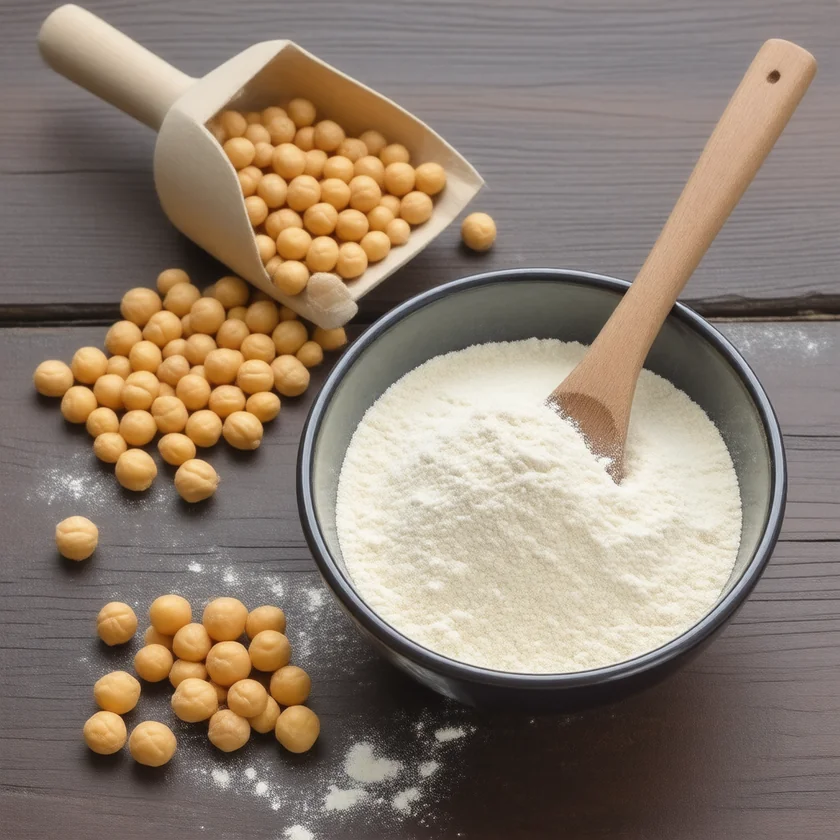
A cup of boiled chickpeas delivers about 14.5 g of protein and 12.5 g of fibre for 269 calories — a combination almost no other cheap, shelf-stable food can match. That pairing is the reason chickpeas fill you up, and the satiety trials bear it out: pulses raise fullness ratings by nearly a third against matched comparison meals. What they do not reliably do is make people eat less at the following meal, and the weight-loss trials show a real but small effect — about a third of a kilogram over six weeks when pulses are added to the diet. The protein itself is good but not complete on its own: it is short on the sulphur amino acids, which is exactly what a grain supplies, and the old pairing of chickpeas with rice, bread or couscous turns out to be sound nutrition. This article walks through how much protein and fibre a chickpea really holds, how good that protein is by the modern scoring systems, why the package fills you up, what the human trials found, and how cooking and processing change the picture.
Table of Contents
- How Much Protein Is in a Chickpea
- How Good the Protein Is: Amino Acids and Scores
- Completing the Protein: Chickpeas and Grains
- The Fibre, and the Starch That Behaves Like Fibre
- Why Protein and Fibre Together Fill You Up
- The Satiety Trials
- The Weight Trials: Small, Real, Honest
- What People Who Eat Beans Look Like
- Practical Amounts
- What Cooking and Processing Do to Protein and Fibre
- Who Benefits Most, and Who Should Be Careful
- Key Research Papers
- Connections
- Featured Videos
How Much Protein Is in a Chickpea
The figures below are USDA FoodData Central values for chickpeas, mature seeds, cooked, boiled, without salt. Per 100 g (a scant two-thirds of a cup, drained):
- Protein 8.86 g
- Fibre 7.6 g, out of 27.4 g total carbohydrate
- Fat 2.59 g, of which 1.16 g polyunsaturated, 0.58 g monounsaturated and 0.27 g saturated
- Energy 164 kcal
- Water 60 g — a cooked chickpea is three-fifths water, which is part of why it is bulky for its calories
Scaled to the USDA cup measure of 164 g, that is 14.5 g protein, 12.5 g fibre and 269 kcal. For scale, two large eggs carry about the same protein; so does about 50 g of cooked chicken breast. Chickpeas are not a concentrated protein the way meat or eggs are — 22% of their calories come from protein against roughly 70against roughly 70–80% for lean meatndash;80% for lean meat — but they are the rare protein source that brings a full serving of fibre along with it, and at a fraction of the cost.
Dried chickpeas roughly double in weight when soaked and cooked, so 100 g of dried beans yields about 200–250 g cooked. The cooked figures are the ones to use for anything you actually eat.
How Good the Protein Is: Amino Acids and Scores
Protein quality is about whether a food supplies all nine essential amino acids in the proportions the body needs, and how well it is digested. Two scoring systems are used: the older PDCAAS (protein digestibility-corrected amino acid score, capped at 100) and the newer DIAAS (digestible indispensable amino acid score, where 1.00 or above is "excellent" and 0.75–0.99 is "good").
A 2020 study measured both for chickpeas prepared three ways, using animal digestibility assays alongside laboratory methods. Boiled chickpea scored a PDCAAS of 75 and a DIAAS of 0.78; baked chickpea flour scored 80 and 0.84; extruded chickpea scored 84 and 0.82. In plain terms, cooked chickpea protein sits in the "good" band — clearly better than most cereals, clearly below eggs, milk or meat, and roughly level with other pulses.
The reason it is not higher is a single shortfall. Chickpea protein is generous in lysine — USDA lists 0.593 g per 100 g cooked, which works out to about 67 mg per gram of protein, well above the adult requirement pattern — but short on the sulphur amino acids, methionine (0.116 g per 100 g) and cystine (0.119 g). Together they come to roughly 26 mg per gram of protein, which is around the adult reference pattern and below the pattern used for young children, and once the digestibility correction is applied it is the fraction that limits the score. Tryptophan (0.085 g per 100 g) is adequate; the branched-chain amino acids leucine (0.631 g), isoleucine and valine are all present in useful amounts.
The pages on lysine and methionine explain what each does; the nutrient profile lists every amino acid in a chickpea by amount.
Completing the Protein: Chickpeas and Grains
The mirror image of the chickpea's profile is a grain's. Rice, wheat and corn are short on lysine and comparatively rich in methionine and cysteine. Eat the two together and each covers the other's gap — the phenomenon called protein complementation. It is why nearly every traditional cuisine that leans on pulses pairs them with a grain: hummus and flatbread, chana and rice, falafel and pita, chickpea stews with couscous or bulgur.
Two refinements from the research are worth knowing. First, a 1994 review by Vernon Young and Peter Pellett, the standard reference on plant protein, concluded that complementary proteins do not have to be eaten in the same mouthful or even the same meal; the body's free amino acid pool bridges gaps across a day, so a person eating a varied plant-based diet across the day gets the benefit without engineering each plate. Second, quantity matters more than pairing for adults eating enough calories: a mixed diet that reaches the protein target from several plant sources will meet essential amino acid needs without a calculator.
Where a grain is on the plate, brown rice is the better partner — it keeps more of its own protein, fibre, magnesium and B vitamins than white, and it holds the meal's glycaemic load down, which matters for the reasons the blood-sugar article covers. Whole-wheat flatbread over white does the same job.
The Fibre, and the Starch That Behaves Like Fibre
At 7.6 g per 100 g cooked, chickpeas are among the richest everyday sources of fibre. A cup gives 12.5 g — roughly 40% of the 25–38 g a day that most dietary guidelines aim for and that the average adult in the United States or Britain falls well short of. That fibre is a mixture:
- Insoluble fibre (cellulose, hemicellulose, lignin) from the seed coat and cell walls. It adds bulk, holds water, and speeds transit through the gut.
- Soluble fibre (pectins, gums and some hemicelluloses) that forms a viscous gel in the small intestine. This is the fraction that slows stomach emptying and binds bile acids, and it does most of the work behind the cholesterol and blood-sugar effects.
- Resistant starch, which is not counted as fibre on a label but acts like it. This is starch that survives digestion in the small intestine — because it is still locked in cells, or because it recrystallised as the beans cooled — and arrives in the colon as food for bacteria. A 2013 review in Advances in Nutrition summarised the evidence that resistant starch improves insulin sensitivity, feeds butyrate-producing bacteria and adds satiety, and pulses are among the richest whole-food sources.
- Oligosaccharides (raffinose, stachyose, verbascose): short chains of sugars that human enzymes cannot split. They are fermented in the colon — which is where the gas comes from, and also where the prebiotic effect comes from. The gut article covers both.
In the Pittaway 2008 trial, simply adding four cans of chickpeas a week to an ordinary diet raised participants' fibre intake by an average of 6.77 g a day, without any other instruction. Few single changes move fibre intake that far.
Why Protein and Fibre Together Fill You Up
Fullness after a meal comes from several signals arriving together, and chickpeas trigger most of them:
- Volume and weight. A cooked chickpea is 60% water bound up in a fibrous structure, so a 269-calorie cup occupies far more of the stomach than 269 calories of bread or cheese. Stretch receptors in the stomach wall register that bulk.
- Slow emptying. Viscous soluble fibre thickens stomach contents and slows their release into the small intestine, so the meal keeps registering for longer.
- Protein signalling. Of the three macronutrients, protein is the most satiating per calorie. Amino acids arriving in the small intestine stimulate the release of gut hormones (cholecystokinin, GLP-1 and PYY) that signal fullness to the brain and further slow emptying.
- A flatter glucose curve. The sharp rise-and-crash in blood sugar after a refined-carbohydrate meal is itself a hunger trigger; chickpeas avoid it.
- Fermentation products. Hours later, the short-chain fatty acids made by colonic bacteria from resistant starch and oligosaccharides appear to add a modest, delayed satiety signal — one candidate mechanism for the second-meal effect.
None of these is unique to chickpeas, but few foods deliver all five at once, which is why pulses sit near the top of most laboratory satiety rankings of common foods.
The Satiety Trials
Li and colleagues, 2014 (meta-analysis of 9 acute feeding trials). Pooling every trial that fed pulses against a matched comparison meal and measured fullness, pulses produced a 31% greater satiety area under the curve (ratio of means 1.31, 95% CI 1.09–1.58), with remarkably consistent results across trials. But pulses did not reduce food intake at the second meal (mean difference −20 kcal, not significant). The authors were candid that the trials were small and the participants narrow in age and weight. This is the central result of the field: people feel fuller, but that feeling has not been shown to translate reliably into eating less later.
Zafar and Kabir, 2017 (crossover, healthy women). A chickpea preload matched to white bread for energy, volume and available carbohydrate lowered appetite ratings and produced 83–98% energy compensation at the subsequent test meal — that is, participants ate correspondingly less. Appetite ratings tracked energy intake. This is one of the few chickpea-specific studies to show a later-meal reduction.
Mollard and colleagues, 2011 (crossover, 25 young men). Canned chickpeas, lentils or yellow peas, each providing 250 kcal in a pasta meal, against macaroni and cheese. Lentils and yellow peas lowered appetite over the following 260 minutes and reduced pizza intake at the test meal; chickpeas did not. A negative result for chickpeas specifically, in a well-run study.
Pittaway 2007 and Murty 2010 (crossover trials, 5 and 12 weeks, Tasmania). Over weeks rather than hours, some participants reported greater satiety on the chickpea diet in the 2007 study; in the 2010 study perceived satiation increased during the chickpea phase, and — more tellingly — participants' intake of foods from every other food group fell, especially cereals (P = 0.01). When they stopped eating chickpeas they drifted back toward processed snack foods (P = 0.09, a trend rather than a significant finding, but supported by what participants said in focus groups).
The honest summary: chickpeas make a meal more filling in the hours after it, most of the time. Whether that makes you eat less later depends on the person and the study, and the best pooled evidence says the average effect on the next meal is close to zero.
The Weight Trials: Small, Real, Honest
Kim and colleagues, 2016 (meta-analysis of 21 randomised controlled trials, 940 participants). Diets containing pulses at a median of 132 g a day — about one serving — produced a pooled weight loss of 0.34 kg (95% CI 0.04–0.63 kg) over a median of six weeks compared with diets without pulses. The loss was significant both in calorie-restricted weight-loss diets and in weight-maintaining diets, with little heterogeneity between studies. Six trials also suggested a reduction in body-fat percentage.
Three-tenths of a kilogram in six weeks is not a diet plan. It is, though, a genuine finding in trials where people were not told to eat less — the pulses were simply added or swapped in — and the direction is consistent. The likely explanation is the displacement effect that Murty documented: when a filling, low-energy-density food goes onto the plate, something else quietly comes off it.
McCrory and colleagues, 2010 (review). Their review of pulse consumption, satiety and weight management reached a similar conclusion: pulses plausibly aid weight control through satiety, low energy density and slowed absorption, but the long-term trials were too few and too short to quantify how much, and the effect depends on pulses replacing rather than joining energy-dense foods.
Rebello and colleagues, 2014 (review). A broader review of legumes and obesity-related conditions came to the same measured position, adding that the fibre and resistant starch fractions are the most likely active components and that legume consumption in most Western populations is far below the amounts used in trials.
What People Who Eat Beans Look Like
Survey data cannot prove that beans cause anything, but they show whether bean-eaters differ from everyone else in the way the trials would predict.
Papanikolaou and Fulgoni, 2008 (NHANES 1999–2002, US adults). Compared with non-consumers, adults who ate beans had higher intakes of fibre, potassium, magnesium, iron and copper; they had lower body weight (P = 0.008) and smaller waists (P = 0.043); and they had a 23% lower risk of an enlarged waist and a 22% lower risk of obesity. Baked-bean consumers also had lower systolic blood pressure. Bean-eaters may of course differ in other ways — the analysis adjusted for many of them, but not all — and the finding is consistent with, not proof of, the trial evidence.
The 2016 review by Wallace and colleagues on chickpeas and hummus specifically, and the 2012 review by Jukanti and colleagues on chickpea nutrition, both pull the composition, trial and survey strands together; they are the two best single overviews of the chickpea literature and are listed in the research section.
Practical Amounts
- One serving in the trials was 100–130 g cooked — between half and three-quarters of a cup, drained. That is about 9–12 g protein and 8–10 g fibre.
- A full cup (164 g) as the protein centre of a meal gives 14.5 g protein and 12.5 g fibre. Add a grain and a vegetable and the meal's protein is complete.
- Hummus: a quarter-cup of traditional hummus is roughly a third to a half of that, plus the fat and extra protein from tahini. Because it is energy-dense, hummus is a spread or dip rather than a way to eat large quantities of chickpeas.
- Roasted chickpeas: a cupped handful (about 30 g) is a crunchy, high-fibre snack that replaces crisps well. Dry-roasted beans concentrate protein and fibre per gram because the water is gone.
- Building up: anyone new to pulses should start with a quarter to half a cup and increase over two or three weeks; the fermentable carbohydrate that fills you up is the same material that causes gas until the gut adapts.
The food comes first. Chickpea protein powders and isolates exist, but they discard the fibre, the resistant starch, the folate and the minerals, and none of the satiety or weight trials was done with them.
What Cooking and Processing Do to Protein and Fibre
Boiling is essential and is mildly good for protein quality: heat unfolds the storage proteins so enzymes can reach them and inactivates the trypsin inhibitors that raw pulses carry. Some of the water-soluble B vitamins and a share of the minerals leach into the cooking water, as they do from any boiled vegetable. Cooking water discarded is nutrients discarded; a soup or stew that keeps the liquid keeps them.
Extrusion and baking, used to make chickpea snacks and flour products, scored slightly higher on the protein-quality tests than boiling (PDCAAS 84 and 80 versus 75), because the more intense heat further improves digestibility. Whole boiled chickpeas remain the better food overall because they keep their intact cell structure, which is what slows digestion and delivers resistant starch.
Milling to flour (besan, gram flour) leaves the protein content unchanged but opens the cell walls, so the starch digests faster and less of it resists digestion. Flour-based foods still carry the fibre and protein; they just lose part of the slow-release advantage.
Cooling increases resistant starch through retrogradation; a chilled chickpea salad delivers more of the fermentable fraction than the same beans hot.
Canning is a thorough cook. Canned chickpeas are nutritionally close to home-cooked, and most of the trials cited here used them. Rinsing removes surface starch and part of the added salt.
Who Benefits Most, and Who Should Be Careful
Vegetarians and anyone cutting back on meat get the most from chickpea protein, especially paired with a grain across the day. Older adults who struggle to eat enough protein find chickpeas easy to chew when well cooked and easy to purée when not.
People managing their weight should treat chickpeas as a swap, not an add-on. The trials that showed weight loss replaced other foods with pulses; the satiety benefit is real but the calories are real too, and a cup of hummus is roughly 400 kcal.
People with advanced kidney disease who have been given a protein or potassium limit should count chickpeas within it — a cup carries 477 mg potassium and 275 mg phosphorus by USDA figures — though for most people with mild kidney impairment, plant protein is considered gentler on the kidneys than animal protein.
People with a chickpea or legume allergy should avoid them entirely; the safety article covers what is known. People with irritable bowel syndrome can usually tolerate small servings of canned, rinsed chickpeas but should build up slowly.
Key Research Papers
Author names, titles and journals are plain text; only the PMID or DOI is a link. Every identifier below was checked against PubMed or Crossref before publication.
- Nosworthy MG, Medina G, Franczyk AJ, Neufeld J, et al (2020). Thermal processing methods differentially affect the protein quality of Chickpea (Cicer arietinum). Food Science & Nutrition. — PubMed PMID: 32566213
- Young VR, Pellett PL (1994). Plant proteins in relation to human protein and amino acid nutrition. The American Journal of Clinical Nutrition. — PubMed PMID: 8172124
- Jukanti AK, Gaur PM, Gowda CL, Chibbar RN (2012). Nutritional quality and health benefits of chickpea (Cicer arietinum L.): a review. The British Journal of Nutrition. — PubMed PMID: 22916806
- Wallace TC, Murray R, Zelman KM (2016). The Nutritional Value and Health Benefits of Chickpeas and Hummus. Nutrients. — PubMed PMID: 27916819
- Birt DF, Boylston T, Hendrich S, Jane JL, et al (2013). Resistant starch: promise for improving human health. Advances in Nutrition. — PubMed PMID: 24228189
- Li SS, Kendall CW, de Souza RJ, Jayalath VH, et al (2014). Dietary pulses, satiety and food intake: a systematic review and meta-analysis of acute feeding trials. Obesity. — PubMed PMID: 24820437
- Zafar TA, Kabir Y (2017). Chickpeas suppress postprandial blood glucose concentration, and appetite and reduce energy intake at the next meal. Journal of Food Science and Technology. — PubMed PMID: 28303049
- Mollard RC, Wong CL, Luhovyy BL, Anderson GH (2011). First and second meal effects of pulses on blood glucose, appetite, and food intake at a later meal. Applied Physiology, Nutrition, and Metabolism. — PubMed PMID: 21957874 (negative for chickpeas on appetite and later intake)
- Pittaway JK, Ahuja KD, Robertson IK, Ball MJ (2007). Effects of a controlled diet supplemented with chickpeas on serum lipids, glucose tolerance, satiety and bowel function. Journal of the American College of Nutrition. — PubMed PMID: 17906185
- Murty CM, Pittaway JK, Ball MJ (2010). Chickpea supplementation in an Australian diet affects food choice, satiety and bowel health. Appetite. — PubMed PMID: 19945492
- Pittaway JK, Robertson IK, Ball MJ (2008). Chickpeas may influence fatty acid and fiber intake in an ad libitum diet, leading to small improvements in serum lipid profile and glycemic control. Journal of the American Dietetic Association. — PubMed PMID: 18502235
- Kim SJ, de Souza RJ, Choo VL, Ha V, et al (2016). Effects of dietary pulse consumption on body weight: a systematic review and meta-analysis of randomized controlled trials. The American Journal of Clinical Nutrition. — PubMed PMID: 27030531
- McCrory MA, Hamaker BR, Lovejoy JC, Eichelsdoerfer PE (2010). Pulse consumption, satiety, and weight management. Advances in Nutrition. — PubMed PMID: 22043448
- Rebello CJ, Greenway FL, Finley JW (2014). A review of the nutritional value of legumes and their effects on obesity and its related co-morbidities. Obesity Reviews. — PubMed PMID: 24433379
- Papanikolaou Y, Fulgoni VL 3rd (2008). Bean consumption is associated with greater nutrient intake, reduced systolic blood pressure, lower body weight, and a smaller waist circumference in adults: results from the National Health and Nutrition Examination Survey 1999-2002. Journal of the American College of Nutrition. — PubMed PMID: 18845707
PubMed Topic Searches
Connections
- All Food
- Chickpeas
- Chickpea Benefits: What the Evidence Actually Shows
- Chickpeas: Nutrient Profile
- Chickpeas, Blood Sugar and Glycaemic Control
- Chickpeas, Cholesterol and Blood Pressure
- Chickpeas: Gut Bacteria, Gas, Antinutrients, Cooking and Safety
- Lentils
- Beans
- Brown Rice
- Sesame Seeds
- Lysine
- Methionine
- Potassium