Dark Chocolate: Nutrient Profile
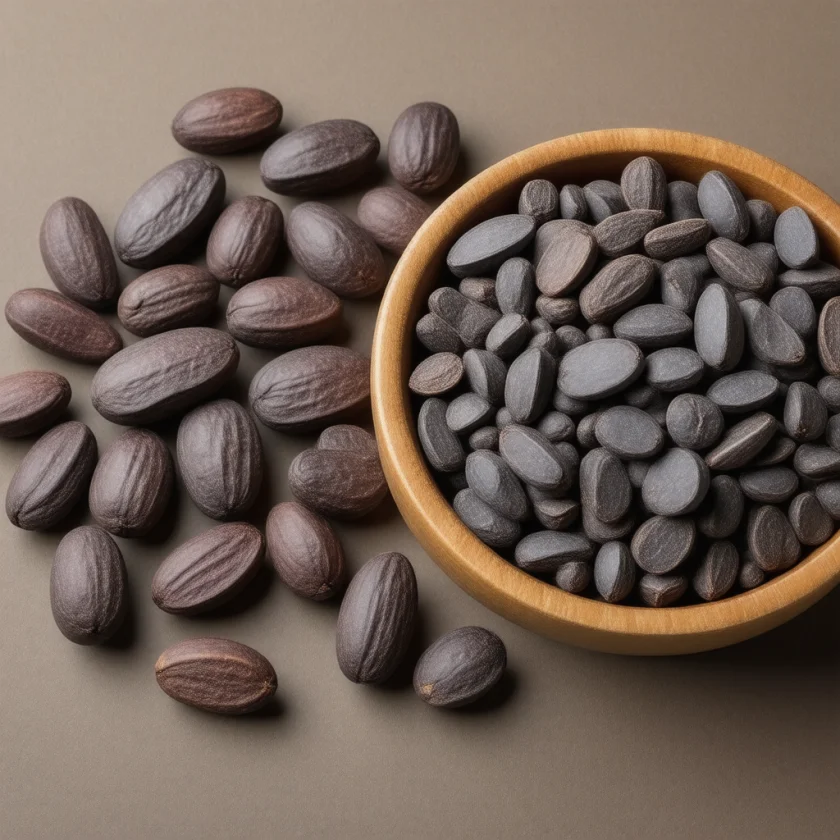
What is Dark Chocolate richest in? Below are the vitamins, minerals and amino acids that 100 g of Dark Chocolate delivers in the highest amounts. Each one links to that nutrient’s own page listing the best foods to get it from.
| Dark Chocolate: Richest Nutrients (per 100 g) | ||||
|---|---|---|---|---|
| Rank | Nutrient | Per 100 g | %DV / 100g | Purpose |
| Vitamins | ||||
| 1 | Vitamin B12 | 0.3 mcg | 🟡 12% | Nerves & red blood cells |
| Minerals | ||||
| 1 | Copper | 1.8 mg | 🟢 197% | Iron use; connective tissue |
| 2 | Manganese | 1.9 mg | 🟢 85% | Bone & metabolism |
| 3 | Iron | 12 mg | 🟢 66% | Carries oxygen in blood |
| 4 | Magnesium | 228 mg | 🟢 54% | Muscle, nerves & energy |
| 5 | Zinc | 3.3 mg | 🟡 30% | Immunity & healing |
| 6 | Phosphorus | 308 mg | 🟡 25% | Bones & cellular energy |
| 7 | Potassium | 715 mg | 🟡 15% | Blood pressure & fluid balance |
| 8 | Selenium | 6.8 mcg | 🟡 12% | Antioxidant & thyroid |
Values are per 100 g of the U.S. Department of Agriculture (USDA) FoodData Central record FDC 170273, “Chocolate, dark, 70-85% cacao solids” (SR Legacy). %DV is the amount per 100 g divided by the adult Daily Value in 21 CFR 101.9.
Other Notable Compounds per 100 g
The same USDA record (FDC 170273, dark chocolate with 70–85% cacao solids) also lists, per 100 g: 802 mg theobromine and 80 mg caffeine, 10.9 g dietary fibre, 24.0 g total sugars (all listed as sucrose) and 24.5 g saturated fat, with 598 kcal of energy.
Lead and Cadmium in Cocoa Products
A 2024 US analysis tested 72 dark chocolate and cocoa products bought in 2014, 2016, 2019 and 2022 for lead, cadmium and arsenic. It measured them against California’s Proposition 65 maximum allowable daily dose levels (0.5 mcg a day for lead, 4.1 mcg for cadmium and 10 mcg for arsenic). By those levels, 43% of the products were over for lead, 35% for cadmium and none for arsenic, while 97.2% (70 of 72) were under the US Food and Drug Administration’s interim reference level for lead.
The median level of each metal was below even the Proposition 65 levels, which the authors read as a sign that a few high-level products (outliers) have a large effect. They concluded that more than half of the products may pose no appreciable risk for the average person eating a single serving, but that some of the products, or more than one serving a day together with other, non-cocoa sources of these metals, could add up to exposure above the Proposition 65 levels. Products labelled “organic” were significantly more likely to carry higher levels of both cadmium and lead (Hands and colleagues, 2024).
What Large Studies Found
Three long-running US cohorts of nurses and other health professionals (the Nurses’ Health Study, Nurses’ Health Study II and Health Professionals Follow-Up Study) followed 192,208 people who had no type 2 diabetes, heart disease or cancer at the start; 111,654 of them were included in the analysis by type of chocolate. People who ate 5 or more servings a week of dark chocolate had a 21% lower risk of type 2 diabetes (95% confidence interval 5% to 34%) than people who never or rarely ate chocolate, and each weekly serving of dark chocolate went with a 3% lower risk. Milk chocolate showed no significant link with diabetes, and eating more milk chocolate, but not dark, was linked to long-term weight gain. These are observational studies: they show a link, not proof that chocolate caused the difference, and the authors call for randomized trials to test it (Liu and colleagues, 2024).
The COcoa Supplement and Multivitamin Outcomes Study (COSMOS) was a randomized, placebo-controlled trial in 21,442 older US adults (women aged 65 and over, men aged 60 and over). It tested a cocoa-extract supplement — 500 mg of cocoa flavanols a day, including 80 mg (-)-epicatechin, taken as a supplement, not as chocolate. Over a median of 3.6 years, 410 people taking cocoa extract and 456 taking placebo had a cardiovascular event; this difference was not statistically significant (hazard ratio 0.90, 95% confidence interval 0.78 to 1.02). Deaths from cardiovascular disease were 27% lower in the cocoa-extract group (hazard ratio 0.73, 95% confidence interval 0.54 to 0.98), and the trial found no safety concerns (Sesso and colleagues, 2022).
Key Research Papers
- Hands JM, Anderson ML, Cooperman T, Balsky JE, Frame LA (2024). A multi-year heavy metal analysis of 72 dark chocolate and cocoa products in the USA. Frontiers in Nutrition; 11:1366231. — PubMed PMID: 39144282
- Liu B, Zong G, Zhu L, Hu Y, Manson JE, Wang M, Rimm EB, Hu FB, Sun Q (2024). Chocolate intake and risk of type 2 diabetes: prospective cohort studies. BMJ; 387:e078386. — PubMed PMID: 39631943
- Sesso HD, Manson JE, Aragaki AK, Rist PM, Johnson LG, Friedenberg G, Copeland T, Clar A, Mora S, Moorthy MV, Sarkissian A, Carrick WR, Anderson GL; COSMOS Research Group (2022). Effect of cocoa flavanol supplementation for the prevention of cardiovascular disease events: the COcoa Supplement and Multivitamin Outcomes Study (COSMOS) randomized clinical trial. American Journal of Clinical Nutrition; 115(6):1490–1500. — PubMed PMID: 35294962