Phytate, Soaking and Germinated Brown Rice
The same bran that gives brown rice its magnesium, zinc and iron also holds the compound that makes some of those minerals harder to absorb. Phytate is the seed's phosphorus store, and because humans make essentially no phytase, a share of it passes through the gut still gripping the minerals it bound. This is the standard case against whole grains, and it is usually told badly — either as a reason to avoid brown rice entirely, or waved away as a non-issue. Neither is right. Phytate costs you something real, it costs different people very different amounts, it is also a genuinely useful compound in its own right, and it responds well to three cheap interventions: soaking, germinating and fermenting. Germinated brown rice, in particular, is a traditional Japanese preparation with a real literature behind it — and a marketing story around gamma-aminobutyric acid (GABA) that deserves a sceptical read.
Table of Contents
- What Phytate Is, and Why the Seed Makes It
- How Much Is in Brown Rice
- What It Binds, and What That Costs
- Who This Actually Matters For
- The Other Side: Phytate as a Useful Compound
- Soaking: The Simplest Intervention
- Germination: Sprouted Brown Rice
- The Gamma-Aminobutyric Acid Claim, Read Sceptically
- Fermentation, and Why Dosa Batter Is Clever
- What Else Is on the Plate
- Making Germinated Brown Rice at Home
- Putting It Together
- Key Research Papers
- Connections
- Featured Videos
What Phytate Is, and Why the Seed Makes It
Phytic acid is myo-inositol hexakisphosphate: a six-carbon sugar ring with a phosphate group hanging off every carbon. In the seed it exists as phytate salts, packed into microscopic globoids inside the aleurone layer of the bran.
The plant is not doing this to inconvenience you. A germinating seed needs phosphorus urgently — for DNA, for membranes, for the adenosine triphosphate (ATP) that powers the first days of growth — and it must carry that phosphorus in a stable, compact, chemically inert form that will not react with anything during months of dormancy. Phytate is an excellent solution. It also drags along the potassium, magnesium, iron and zinc the seedling will need, held in the same complex. When the seed germinates it switches on phytase, an enzyme that strips the phosphates off one by one and releases everything.
That last sentence is the whole strategy of this page: the seed already contains the tool for dismantling its own phytate. Every method below is a way of persuading it to switch that tool on.
How Much Is in Brown Rice
Schlemmer and colleagues' review is the standard tabulation of phytate across foods. Brown rice sits in the region of 0.6 to 1.1 g per 100 g — comparable to whole wheat, below most legumes and well below wheat bran, sesame seeds or Brazil nuts, which are the genuine heavyweights.
Two features specific to rice matter:
- It is almost entirely in the aleurone. Milling that layer off takes the phytate with it, which is why polished white rice retains only a trace. The phytate and the minerals are removed by the same stroke — you do not get to keep one without the other.
- Rice's own phytase activity is low compared with rye, wheat, barley and buckwheat. This is the single most important practical fact on this page: soaking rye flour destroys most of its phytate in a few hours, and the same treatment applied to rice does far less, because rice simply has less of the enzyme to work with. It is the reason germination, which induces phytase, is disproportionately effective for rice.
Perera and colleagues' 2018 review covers where phytate sits in the rice grain and the ongoing plant-breeding work on low-phytate rice lines — work that has to walk a line, because seeds bred too low in phytate germinate and store poorly.
The review gives the figures. In rice seeds, approximately 70% of the total seed phosphorus is found in the form of phytic acid, with approximately 80% or more of it in the aleurone and pericarp and less than 10% in the embryo. Among 24 japonica rice cultivars, the phytic acid content ranged from 0.68% to 1.03%. On breeding, the review notes that reduced germination, poor agronomic performance and yield reduction have been observed in mutant low-phytate rice lines.
What It Binds, and What That Costs
At the pH of the small intestine, phytate carries a strong negative charge across its six phosphate groups, and it chelates positively charged mineral ions into complexes that are insoluble and cannot be absorbed. Ruminants get around this because their gut microbes make phytase in quantity. Humans secrete essentially none.
The order of trouble is well established:
- Zinc is affected most. Zinc binds phytate tightly across the gut's pH range. Nutritionists use the phytate-to-zinc molar ratio as a practical predictor: above roughly 15 to 18, absorption is meaningfully impaired.
- Non-haem iron is affected substantially. The plant iron in grains and legumes is inhibited by phytate at quite low ratios. Haem iron from meat and fish is not affected at all — it is absorbed by a completely different route.
- Calcium is affected moderately, and matters mainly in diets where cereals are also the calcium source.
- Magnesium is affected least of the four, which is convenient given that magnesium is brown rice's most valuable mineral contribution.
Hurrell and colleagues demonstrated the size of the effect directly in adult volunteers, using radio-labelled iron. An added phytase enzyme fully broke down the phytic acid in cereal porridges, and when the porridges were made with water this raised iron absorption from rice porridge from 1.73% to 5.34% and from wheat porridge from 0.99% to 11.54%. The same study found two limits: making the wheat porridge with milk instead of water markedly decreased or completely removed the gain, and removing phytate did not raise iron absorption from high-tannin sorghum porridge. That is a large effect in the direction the theory predicts, and it is the strongest evidence that phytate reduction is worth doing where iron status is the concern.
Lopez and colleagues asked the question in their title — "is it a real problem for human nutrition?" — and their summary states that as the phytic acid content of the diet increases, the intestinal absorption of zinc, iron and calcium decreases, that the effects on magnesium or copper are more controversial, and that mineral bioavailability is hard to predict from the phytate content alone, because phytate is always eaten together with fibre, minerals and other food components. Gibson and colleagues' review of complementary foods in low-income countries covers the group where it matters most, which is young children being weaned onto cereal porridges.
Who This Actually Matters For
Being specific here saves a lot of unnecessary worry.
It matters if you are:
- A young child being weaned onto cereal-based foods, especially where the diet is mostly grains and legumes. This is the classic setting for phytate-driven zinc and iron shortfall, and it is what Gibson's work addresses.
- Eating a diet dominated by unrefined cereals and legumes with little meat, fish, eggs or dairy, and little vitamin C at meals.
- Already iron-deficient or zinc-deficient, or menstruating heavily, or pregnant — anyone whose margin is already thin.
- Eating brown rice, wholemeal bread, beans and nuts at nearly every meal, so that the phytate load is cumulative across the day rather than occasional.
It does not much matter if you are:
- Eating a mixed diet that includes some meat, fish, eggs or dairy;
- Getting vitamin C at meals from vegetables, fruit or a squeeze of lemon;
- Eating brown rice several times a week rather than three times a day;
- Not anaemic and not showing signs of zinc shortfall.
And the point that puts the whole question in proportion: the large cohort studies that associate whole grains with lower rates of diabetes, heart disease and death studied whole grains as eaten — phytate included. Whatever it costs, the net balance already came out favourable. Phytate is a reason to prepare brown rice thoughtfully, not a reason to eat white rice.
The Other Side: Phytate as a Useful Compound
Silva and Bracarense reviewed the case for phytic acid as a protective factor rather than an antinutrient, and it is stronger than most people expect.
- It is an iron chelator, and that cuts both ways. Free iron in the gut and in tissue drives Fenton chemistry, generating hydroxyl radicals. Phytate's grip on iron is precisely what makes it an antioxidant in that setting.
- It inhibits calcium oxalate and calcium phosphate crystallisation, and has been studied as a factor in kidney stone formation. People who form stones are a group for whom phytate is arguably an asset.
- It slows starch digestion somewhat, contributing modestly to the lower glycaemic response of whole grains.
- There is a substantial laboratory and animal literature on anti-cancer effects, particularly in colon models. That work is real but it is preclinical, and it is not a human finding. Nobody has shown that eating phytate prevents cancer in people.
Bohn and colleagues' review sets out the full ledger — nutritional, agronomic and environmental — and is a good corrective to the idea that phytate is simply a defect to be bred out.
So the research does not point toward zero phytate: reducing it matters where mineral status is at stake, and much less otherwise.
Soaking: The Simplest Intervention
Soaking works by two routes: some phytate simply leaches into the water, and some is broken down by the grain's own phytase once it is hydrated and warm.
The usual method: brown rice is covered with two or three times its volume of warm water and left 8 to 12 hours or overnight; then the soaking water is drained and discarded and the rice rinsed before cooking. Warm water works better than cold, because phytase is most active somewhere around 45–55 °C and effectively asleep in the fridge. A spoonful of lemon juice, vinegar or whey in the water lowers the pH toward the enzyme's optimum and helps a little more.
A 2020 study by Fukushima and colleagues measured the effect of soaking temperature on brown rice. Rice phytase held up to heat, and its activity peaked at 50 °C. After 36 hours of soaking, phytase activity was significantly higher and the phytic acid content significantly lower at 50 °C than at 30 °C. Zinc content did not differ between soaking temperatures, but the calculated total daily absorbed zinc was significantly higher in germinated brown rice than in non-soaked grain, and higher for grain germinated at 50 °C than at 30 °C.
The size of the effect is modest. Because rice's native phytase activity is low, plain soaking reduces rice phytate modestly — useful, not transformative. Soaking rye or buckwheat achieves far more in the same time. Where phytate is the main reason for soaking rice, germination is the method that actually delivers.
Soaking earns its place anyway, because it does four things at once:
- Cuts cooking time by roughly a third, which saves energy and improves texture;
- Removes some inorganic arsenic along with the soak water — see Arsenic and Safe Cooking;
- Softens the bran so the grain cooks evenly instead of staying chalky at the centre;
- Starts the phytase working, which is the first step toward germination if you want to go further.
Germination: Sprouted Brown Rice
Germinated brown rice — hatsuga genmai in Japanese, where it is a supermarket staple — is brown rice soaked warm for long enough that the embryo wakes up and pushes out a sprout half a millimetre long. It is then cooked normally. White rice cannot do this: the germ has been milled off, so there is nothing left to germinate.
Germination changes the grain substantially:
- Phytase is induced. This is the point. The seed switches the enzyme on because it needs the phosphorus, and phytate falls considerably more than soaking alone achieves.
- Free amino acids and gamma-aminobutyric acid rise sharply. Stored protein is mobilised, and glutamate decarboxylase converts glutamate into gamma-aminobutyric acid. Komatsuzaki and colleagues showed that soaking conditions — and particularly holding the grain under a low-oxygen atmosphere — markedly raise the gamma-aminobutyric acid content.
- Texture and cooking behaviour improve. The bran softens, the grain cooks in less time and more evenly, and the result is noticeably less chewy than ordinary brown rice. For many people this is the difference between tolerating brown rice and liking it.
- Some starch is converted to sugars, giving a faintly sweeter, nuttier taste.
- Bioactive compounds shift. Cho and Lim's review, and Ohtsubo and colleagues' analysis of pre-germinated brown rice, document changes in gamma-oryzanol, ferulic acid, tocotrienols and dietary fibre alongside the gamma-aminobutyric acid increase.
Imam and colleagues studied germinated brown rice's bioactive compounds and their effect on peroxisome proliferator-activated receptor gamma (PPAR-gamma) expression — a nuclear receptor central to insulin sensitivity and fat storage. That work was done in cultured cells (the HepG2 cell line) in the laboratory, not in animals or people: each of three single extracts raised the gene's expression, while all three combined lowered it. It belongs in the "mechanistically interesting" column rather than the "proven in people" one.
Small human trials do exist. A 2022 meta-analysis by Golzarand and colleagues pooled 13 randomized controlled trials in adults comparing brown rice with white rice. Pre-germinated brown rice lowered weight (-1.75 kg), total cholesterol (-24.22 mg/dl), triglyceride (-43.28 mg/dl), low-density lipoprotein (LDL) cholesterol (-20.05 mg/dl) and fasting blood glucose (fasting blood sugar, -15.83 mg/dl) compared with white rice. Plain brown rice reduced weight (-1.63 kg), body mass index and waist circumference compared with white rice, but had no significant effect on lipid profile and glycemic markers. The authors rated the certainty of the evidence as low and very low.
The Gamma-Aminobutyric Acid Claim, Read Sceptically
Germinated brown rice is marketed heavily on its gamma-aminobutyric acid content, usually with the implication that eating it calms you down, improves sleep or lowers blood pressure.
The gamma-aminobutyric acid increase is real. Germination genuinely raises gamma-aminobutyric acid in the grain by a large multiple, and the analytical work behind that is solid.
The leap to a brain effect is not. Gamma-aminobutyric acid is the main inhibitory neurotransmitter in the central nervous system, but whether gamma-aminobutyric acid eaten in food reaches the brain is unresolved. A 2015 review by Boonstra and colleagues notes that it has long been thought unable to cross the blood-brain barrier, but that the studies that have assessed this are often contradictory and range widely in their methods, and it concludes that the mechanism of action of gamma-aminobutyric acid food supplements is far from clear. The quantities in a bowl of rice are also modest against the amounts used in the supplement trials that report effects, and those trials are themselves small and mixed. Anyone telling you that germinated brown rice is a calming agent is several unsupported steps ahead of the evidence.
What germinated brown rice is genuinely good for stands on its own without the gamma-aminobutyric acid story: less phytate and therefore better mineral absorption, a softer texture and shorter cooking time, more free amino acids and better digestibility, and a better flavour than plain brown rice. That is a good enough list. It does not need embellishing.
Fermentation, and Why Dosa Batter Is Clever
Fermentation is the most effective phytate reduction method of all, for two reasons that stack. Lactic acid bacteria drop the pH into the range where the grain's own phytase works best, and the microbes contribute phytase of their own.
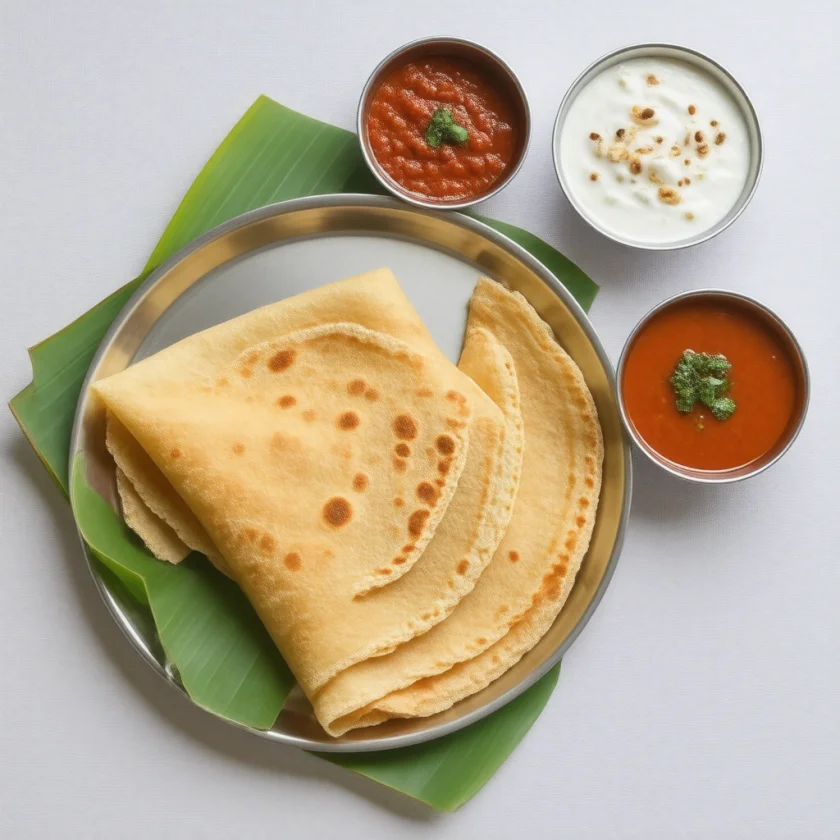
South Indian cooking arrived at this centuries before anyone measured it. Dosa and idli batter is rice and split black gram, soaked, ground and left to ferment overnight. The result is a rice-and-legume meal with much of its phytate already dismantled, its protein complemented (rice is short on lysine, pulses are generous with it), and its B vitamins increased by the microbes. The same logic runs through sourdough, through the long-fermented porridges of West Africa, and through fermented foods generally.
Ordinary boiling, by contrast, does very little to phytate — it is a heat-stable molecule. Pressure cooking does slightly more. Neither is a substitute for soaking, germinating or fermenting.
What Else Is on the Plate
You can change how much iron and zinc you absorb from brown rice without touching the rice at all.
- Vitamin C is the strongest lever. Ascorbate reduces ferric iron to the absorbable ferrous form and holds it soluble, and it counteracts phytate's inhibition of non-haem iron directly. Peppers, tomatoes, citrus, broccoli, cabbage, greens — or simply a squeeze of lemon over the rice.
- The "meat factor". Muscle tissue from meat, poultry or fish improves non-haem iron absorption from the rest of the meal, by a mechanism still not fully explained.
- Tea and coffee with the meal lower iron absorption. Their polyphenols inhibit non-haem iron absorption strongly — comparable to or greater than phytate. The effect is reported to fade when they are drunk an hour either side of the meal.
- Calcium supplements taken with the meal compete with iron and zinc. Calcium competes for absorption with both iron and zinc; taken at a different time of day, it does not meet them in the gut.
- Rice eaten with legumes gains enough total mineral content to offset the phytate the legumes bring with them, completes the protein, and is what every rice-eating culture already does. See Lentils and Beans.
Making Germinated Brown Rice at Home
It costs nothing but a bowl and a day's patience.
- Fresh brown rice is needed. The germ must be alive, so old or heat-treated rice will not sprout. Rice that shows no change in 24 hours is too old — which is also a useful freshness test.
- The rice is rinsed thoroughly, then covered with two or three times its volume of warm water at roughly 30–35 °C.
- It is kept warm, with the water changed every 6 to 8 hours and the grains rinsed each time. Warm wet grain is a growth medium, and frequent water changes are what keep it from souring.
- Sprouting takes 18 to 24 hours. The sign is the germ end swelling and a white tip about half a millimetre long appearing. Longer is not better — a long sprout uses up the grain's starch and the texture suffers.
- It is rinsed well and cooked as usual, in fresh water. It needs less water and less time than unsoaked brown rice — around 25 minutes is the usual point to start checking.
- Rice not cooked straight away is drained and refrigerated, and used within a day or two.
- The smell is the check. A good batch smells faintly sweet and grassy. Sour, musty or fermented smells mean the water was not changed often enough and the batch has spoiled.
If that is more effort than you want, germinated brown rice is sold ready to cook in Japanese and Korean groceries and in many health food shops, usually labelled hatsuga genmai, gamma-aminobutyric acid rice or sprouted brown rice. It costs more than plain brown rice and cooks like it.
Putting It Together
The one-paragraph version: brown rice's phytate is a genuine but modest cost, it is largely avoidable, and the best single method for rice specifically is germination because rice's own phytase needs waking up rather than merely hydrating.
The methods, in order of effort:
- Soaking overnight and discarding the water. Ten seconds of effort, and it also cuts arsenic and cooking time.
- Vitamin C on the plate, with tea and coffee kept to between meals.
- Rice eaten with legumes, which is both the traditional pairing and the nutritionally complete one.
- Germination, which matters most for people who eat brown rice often, or for whom iron or zinc status is a real concern.
- Fermentation, for anyone who already makes dosa, idli or a similar batter — the most effective method of all.
- Zero phytate is not the aim the research supports. Phytate has real protective properties, and the health benefits of whole grains were measured with it present.
Key Research Papers
- Schlemmer U, Frølich W, Prieto RM, Grases F. Phytate in foods and significance for humans: food sources, intake, processing, bioavailability, protective role and analysis. Molecular Nutrition & Food Research. 2009;53 Suppl 2:S330–S375. — doi:10.1002/mnfr.200900099
- Hurrell RF, Reddy MB, Juillerat MA, Cook JD. Degradation of phytic acid in cereal porridges improves iron absorption by human subjects. The American Journal of Clinical Nutrition. 2003;77(5):1213–1219. — doi:10.1093/ajcn/77.5.1213
- Gibson RS, Bailey KB, Gibbs M, Ferguson EL. A review of phytate, iron, zinc, and calcium concentrations in plant-based complementary foods used in low-income countries and implications for bioavailability. Food and Nutrition Bulletin. 2010;31(2 Suppl):S134–S146. — doi:10.1177/15648265100312S206
- Lopez HW, Leenhardt F, Coudray C, Remesy C. Minerals and phytic acid interactions: is it a real problem for human nutrition? International Journal of Food Science and Technology. 2002;37(7):727–739. — doi:10.1046/j.1365-2621.2002.00618.x
- Silva EO, Bracarense AP. Phytic acid: from antinutritional to multiple protection factor of organic systems. Journal of Food Science. 2016;81(6):R1357–R1362. — doi:10.1111/1750-3841.13320
- Bohn L, Meyer AS, Rasmussen SK. Phytate: impact on environment and human nutrition. A challenge for molecular breeding. Journal of Zhejiang University Science B. 2008;9(3):165–191. — doi:10.1631/jzus.B0710640
- Perera I, Seneweera S, Hirotsu N. Manipulating the phytic acid content of rice grain toward improving micronutrient bioavailability. Rice. 2018;11(1):4. — doi:10.1186/s12284-018-0200-y
- Komatsuzaki N, Tsukahara K, Toyoshima H, Suzuki T, Shimizu N, Kimura T. Effect of soaking and gaseous treatment on GABA content in germinated brown rice. Journal of Food Engineering. 2007;78(2):556–560. — doi:10.1016/j.jfoodeng.2005.10.036
- Cho DH, Lim ST. Germinated brown rice and its bio-functional compounds. Food Chemistry. 2016;196:259–271. — doi:10.1016/j.foodchem.2015.09.025
- Ohtsubo K, Suzuki K, Yasui Y, Kasumi T. Bio-functional components in the processed pre-germinated brown rice by a twin-screw extruder. Journal of Food Composition and Analysis. 2005;18(4):303–316. — doi:10.1016/j.jfca.2004.10.003
- Imam MU, Ismail M, Ithnin H, Tubesha Z, Omar AR. Effects of germinated brown rice and its bioactive compounds on the expression of the peroxisome proliferator-activated receptor gamma gene. Nutrients. 2013;5(2):468–477. — doi:10.3390/nu5020468
- Saji N, Francis N, Schwarz LJ, Blanchard CL, Santhakumar AB. Rice bran derived bioactive compounds modulate risk factors of cardiovascular disease and type 2 diabetes mellitus: an updated review. Nutrients. 2019;11(11):2736. — doi:10.3390/nu11112736
- Boonstra E, de Kleijn R, Colzato LS, Alkemade A, Forstmann BU, Nieuwenhuis S. Neurotransmitters as food supplements: the effects of GABA on brain and behavior. Frontiers in Psychology. 2015;6:1520. — doi:10.3389/fpsyg.2015.01520
- Golzarand M, Toolabi K, Eskandari Delfan S, Mirmiran P. The effect of brown rice compared to white rice on adiposity indices, lipid profile, and glycemic markers: a systematic review and meta-analysis of randomized controlled trials. Critical Reviews in Food Science and Nutrition. 2022;62(27):7395–7412. — doi:10.1080/10408398.2021.1914541
- Fukushima A, Uchino G, Akabane T, Aiseki A, Perera I, Hirotsu N. Phytic acid in brown rice can be reduced by increasing soaking temperature. Foods. 2020;10(1):23. — doi:10.3390/foods10010023
PubMed Topic Searches
Connections
- Brown Rice — the main page.
- Fibre, Magnesium and Manganese — the minerals phytate is holding on to.
- Arsenic and Safe Cooking — soaking helps there too.
- Zinc — the mineral phytate binds most tightly.
- Iron — non-haem iron is the vulnerable form.
- Magnesium — the least affected of the four.
- Phosphorus — phytate is where a seed keeps it.
- Fermented Foods — the most effective phytate reduction there is.
- Lentils — the traditional partner, and the lysine.
- Beans — same logic, more phytate, still worth it.
- Buckwheat — a grain whose own phytase does far more on soaking.
- White Rice — no phytate, and no minerals for it to bind.
- History