Prunes — Benefits Deep Dive
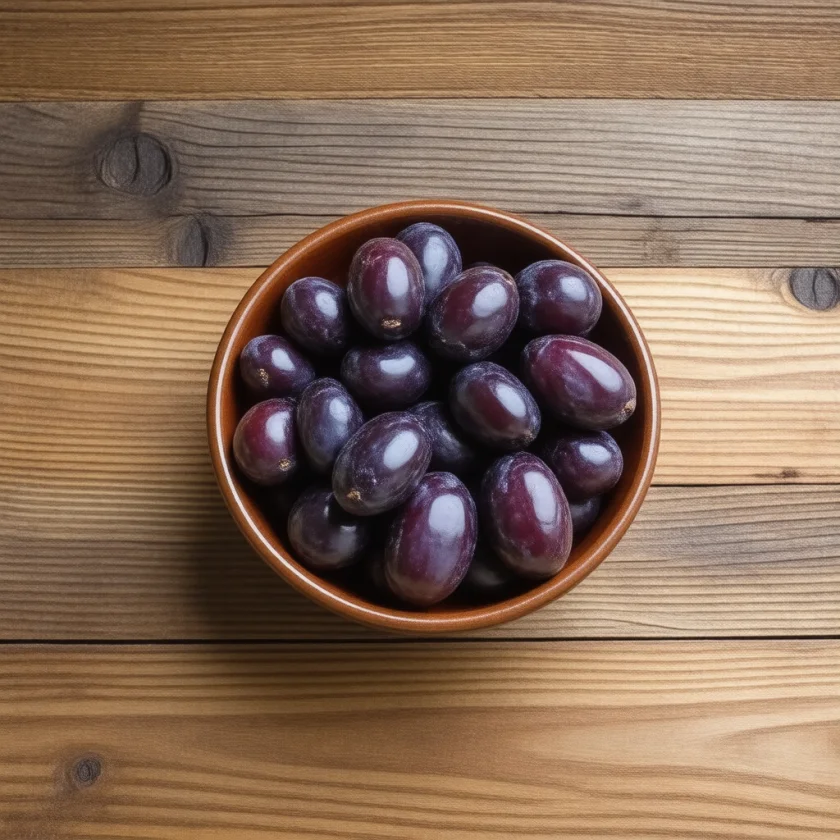
Prunes — simply dried plums (Prunus domestica) — are one of the most thoroughly studied whole foods for two everyday problems. First, they are an effective, gentle remedy for constipation: a head-to-head randomized trial found prunes worked better than psyllium at increasing the number of complete bowel movements, thanks to their unusual combination of sorbitol, dietary fiber, and natural plant compounds — making them a traditional food-based natural laxative that supports day-to-day regularity and healthy digestion. Second, clinical trials in postmenopausal women have tested 50–100 g a day for bone density: a 6-month trial found both 50 g and 100 g prevented loss of total-body bone density, and in the 12-month 2022 Prune Study 50 g a day preserved hip bone density, while the 100 g group did not differ from the control group and 41% of its women dropped out — a measurable effect on bone health relevant to osteoporosis. Prunes also lend modest support to the heart (soluble fiber and cholesterol, potassium and blood pressure) and bring a low-glycemic, very high antioxidant profile that helps with blood sugar and fullness. One honest caveat runs through all of it: prunes are a dried fruit, so they are calorie- and sugar-dense; the trials used 50–100 g a day, and prunes are a food, not a cure.
Deep-Dive Articles
Digestion, Bowel Movements & Constipation Relief
The prune's best-known power, explained. Sorbitol — the main driver — is a sugar alcohol the gut absorbs slowly, so it pulls water into the intestine and softens stool; fiber adds bulk and polyphenols add a mild stimulant effect. We walk through the landmark Attaluri randomized trial in which prunes beat psyllium for constipation, the amounts used in the trials, and the honest flip side — the same sorbitol and fructose are FODMAPs that can cause gas or loose stools in sensitive people.
Read the deep dive →Bone Health & Osteoporosis
Prunes are the rare food with real clinical trial evidence for the skeleton. Randomized controlled trials in postmenopausal women found prunes slowed bone loss; in the 12-month 2022 Prune Study, 50 g a day preserved hip bone mineral density while the control group lost it. The likely mechanism: prune polyphenols, plus boron and vitamin K, appear to dial down the bone-breakdown side of remodeling. An evidence-based look at the doses tested, who was studied, and what the trials found.
Read the deep dive →Heart Health & Cholesterol
The soluble fiber in prunes binds bile acids, and in a one-year trial dried plum lowered low-density lipoprotein (LDL) cholesterol by 8%, a change that was not statistically significant, while their high potassium and low sodium support healthy blood pressure. Prunes also carry one of the higher polyphenol and antioxidant loads of any common food, which contributes to their anti-inflammatory profile. The honest framing: the heart effects are modest and best seen as part of an overall fiber-rich, plant-forward diet — not a stand-alone treatment.
Read the deep dive →Blood Sugar, Weight & Antioxidants
Despite being sweet and dried, prunes have a relatively low glycemic index for a dried fruit, because their fiber and sorbitol slow sugar absorption so glucose rises gradually. Their fiber is filling, which can help with appetite and weight, and prunes rank near the top of common foods for total antioxidant (oxygen radical absorbance capacity, ORAC) content. The main caveat is that dried fruit is calorie- and sugar-dense.
Read the deep dive →Table of Contents
- Deep-Dive Articles
- Why Prunes Help Across So Many Systems
- Research Papers: Digestion & Constipation
- Research Papers: Bone Health & Osteoporosis
- Research Papers: Heart Health & Cholesterol
- Research Papers: Blood Sugar, Weight & Antioxidants
- External Authoritative Resources
- Connections
- Featured Videos
Why Prunes Help Across So Many Systems
Almost everything prunes do for the body traces back to a short list of components packed into one dried fruit. Each maps to a different measurable benefit, and several reinforce one another — which is why a small daily serving can help the gut, the skeleton, the heart, and blood sugar at the same time.
- Sorbitol — a naturally occurring sugar alcohol that the small intestine absorbs only slowly. The unabsorbed portion draws water into the bowel by osmosis, softening stool and helping produce a comfortable bowel movement. This is the single biggest reason prunes work for constipation relief and regularity. See Digestion, Bowel Movements & Constipation Relief.
- Dietary fiber — about 7 grams per 100 g, a mix of soluble fiber (which forms a gel, binds bile acids, and ferments in the colon) and insoluble fiber (which adds bulk). This one component drives regularity, the cholesterol benefit, and steadier blood sugar at once. See Heart Health & Cholesterol and Blood Sugar, Weight & Antioxidants.
- Polyphenols — prunes are exceptionally rich in plant antioxidants, chiefly chlorogenic and neochlorogenic acid, giving them one of the highest antioxidant contents of any common food. These compounds are anti-inflammatory and appear to help protect bone and blood vessels, contributing to the effects on the Bone Health and Heart Health pages.
- Boron, vitamin K, potassium, copper, and magnesium — prunes supply a cluster of bone- and heart-relevant minerals and vitamins. Boron and vitamin K support bone metabolism, while potassium (with very little sodium) supports healthy blood pressure. See Bone Health & Osteoporosis.
- Fructose — prunes are relatively high in fructose, a share of which is incompletely absorbed and adds to the osmotic, gentle laxative effect alongside the sorbitol. (This same feature is the high-FODMAP caveat covered on the Digestion page — in sensitive people it can mean gas or loose stools.)
The honest bottom line: prunes are a concentrated, nutrient-dense dried fruit and one of the few foods with genuine clinical trial evidence behind them — effective for constipation and helpful for bone density in postmenopausal women. But because drying removes the water, they are calorie- and sugar-dense, and the trials used 50–100 g a day. Prunes are a food, not a medicine or a cure, and their sorbitol and fructose can cause gas or loose stools in people prone to gas or with irritable bowel syndrome (IBS).
Research Papers: Digestion & Constipation
- Attaluri A, et al. Randomised clinical trial: dried plums (prunes) vs. psyllium for constipation. Alimentary Pharmacology & Therapeutics. 2011;33(7):822-8. — the landmark head-to-head trial: a single-blind crossover trial in 40 people with chronic constipation (37 women), 3 weeks per arm, comparing 50 g of prunes twice a day with 11 g of psyllium twice a day (6 g of fiber a day each). Complete spontaneous bowel movements and stool consistency improved more with prunes; straining and overall constipation symptoms did not differ. — doi:10.1111/j.1365-2036.2011.04594.x
- Lever E, et al. Systematic review: the effect of prunes on gastrointestinal function. Alimentary Pharmacology & Therapeutics. 2014. — a systematic review of four randomized trials, only one of them in constipation; the results were not pooled (the trials were too different for a meta-analysis). In that one constipation trial prunes improved stool frequency and consistency more than psyllium; the review rated the evidence for other outcomes, and for people without constipation, as weak. — doi:10.1111/apt.12913
- Lederle FA, et al. Cost-effective treatment of constipation in the elderly: a randomized double-blind comparison of sorbitol and lactulose. The American Journal of Medicine. 1990. — the classic trial showing sorbitol, the sugar alcohol abundant in prunes, relieves constipation as effectively as a standard laxative. — doi:10.1016/0002-9343(90)90177-f
- Yang J, et al. Effect of dietary fiber on constipation: a meta analysis. World Journal of Gastroenterology. 2012. — pooled trial evidence that increasing dietary fiber raises stool frequency in people with constipation. — doi:10.3748/wjg.v18.i48.7378
Research Papers: Bone Health & Osteoporosis
- De Souza MJ, et al. Prunes preserve hip bone mineral density in a 12-month randomized controlled trial in postmenopausal women: the Prune Study. The American Journal of Clinical Nutrition. 2022. — the 12-month trial in 235 women showing 50 g/day of prunes preserved hip bone mineral density while the control group lost bone; the 100 g/day group did not differ from control, and 41% of that group dropped out. — doi:10.1093/ajcn/nqac189
- Wallace TC. Dried Plums, Prunes and Bone Health: A Comprehensive Review. Nutrients. 2017. — a thorough review of the trial and mechanistic evidence behind prunes' bone-protective effects. — doi:10.3390/nu9040401
- Hooshmand S, et al. Comparative effects of dried plum and dried apple on bone in postmenopausal women. British Journal of Nutrition. 2011. — the earlier controlled trial in which dried plum improved bone mineral density more than dried apple in postmenopausal women. — doi:10.1017/S000711451100119X
- Hooshmand S, et al. The effect of two doses of dried plum on bone density and bone biomarkers in osteopenic postmenopausal women: a randomized, controlled trial. Osteoporosis International. 2016. — a dose-comparison trial finding even a smaller daily serving of prunes helped maintain bone in osteopenic women. — doi:10.1007/s00198-016-3524-8
- Koltun KJ, et al. Prunes preserve cortical density and estimated strength of the tibia in a 12-month randomized controlled trial. Osteoporosis International. 2024. — recent trial evidence that prunes also help preserve the density and estimated strength of the lower-leg bone. — doi:10.1007/s00198-024-07031-6
Research Papers: Heart Health & Cholesterol
- Chai SC, et al. Daily apple versus dried plum: impact on cardiovascular disease risk factors in postmenopausal women. Journal of the Academy of Nutrition and Dietetics. 2012. — a 1-year trial in 160 postmenopausal women in which dried apple (75 g/day) was the test food and dried plum the comparison food. Dried plum lowered total and LDL cholesterol by 3.5% and 8% at 12 months, changes that were not statistically significant; both dried fruits lowered C-reactive protein and lipid hydroperoxide. — doi:10.1016/j.jand.2012.05.005
- Threapleton DE, et al. Dietary fibre intake and risk of cardiovascular disease: systematic review and meta-analysis. BMJ. 2013. — higher dietary fiber intake is associated with lower cardiovascular disease risk, supporting fiber-rich foods like prunes. — doi:10.1136/bmj.f6879
- Kim Y, Je Y. Flavonoid intake and mortality from cardiovascular disease and all causes: a meta-analysis of prospective cohort studies. Clinical Nutrition ESPEN. 2017. — higher intake of the polyphenols found in fruit such as prunes tracks with lower cardiovascular and all-cause mortality. — doi:10.1016/j.clnesp.2017.03.004
Research Papers: Blood Sugar, Weight & Antioxidants
- Stacewicz-Sapuntzakis M, et al. Chemical composition and potential health effects of prunes: a functional food? Critical Reviews in Food Science and Nutrition. 2001. — the foundational review of prunes' sorbitol, fiber, and exceptionally high antioxidant (polyphenol) content and their metabolic effects. — doi:10.1080/20014091091814
- Muraki I, et al. Fruit consumption and risk of type 2 diabetes: results from three prospective longitudinal cohort studies. BMJ. 2013. — eating whole fruit was linked to lower type-2-diabetes risk, while fruit juice raised it. — doi:10.1136/bmj.f5001
- Bertoia ML, et al. Changes in intake of fruits and vegetables and weight change in United States men and women followed for up to 24 years. PLOS Medicine. 2015. — increasing intake of high-fiber fruits was associated with less long-term weight gain. — doi:10.1371/journal.pmed.1001878
- Reynolds A, et al. Carbohydrate quality and human health: a series of systematic reviews and meta-analyses. The Lancet. 2019. — higher fiber intake and low-glycemic-index foods, the category whole prunes belong to, are linked to better metabolic outcomes. — doi:10.1016/S0140-6736(18)31809-9
- Anderson JW, et al. Health benefits of dietary fiber. Nutrition Reviews. 2009. — a broad review of how dietary fiber improves blood sugar, cholesterol, weight, and bowel function. — doi:10.1111/j.1753-4887.2009.00189.x
External Authoritative Resources
- U.S. Department of Agriculture (USDA) FoodData Central — the authoritative per-100 g nutrient profile for prunes (fiber, sorbitol, potassium, boron, vitamin K).
- Harvard T.H. Chan School of Public Health — The Nutrition Source — evidence-based guidance on fruit, fiber, and a healthy diet.
- PubMed — research on dried plums (prunes) and health.