Mango, Beta-Carotene, and Vitamin A
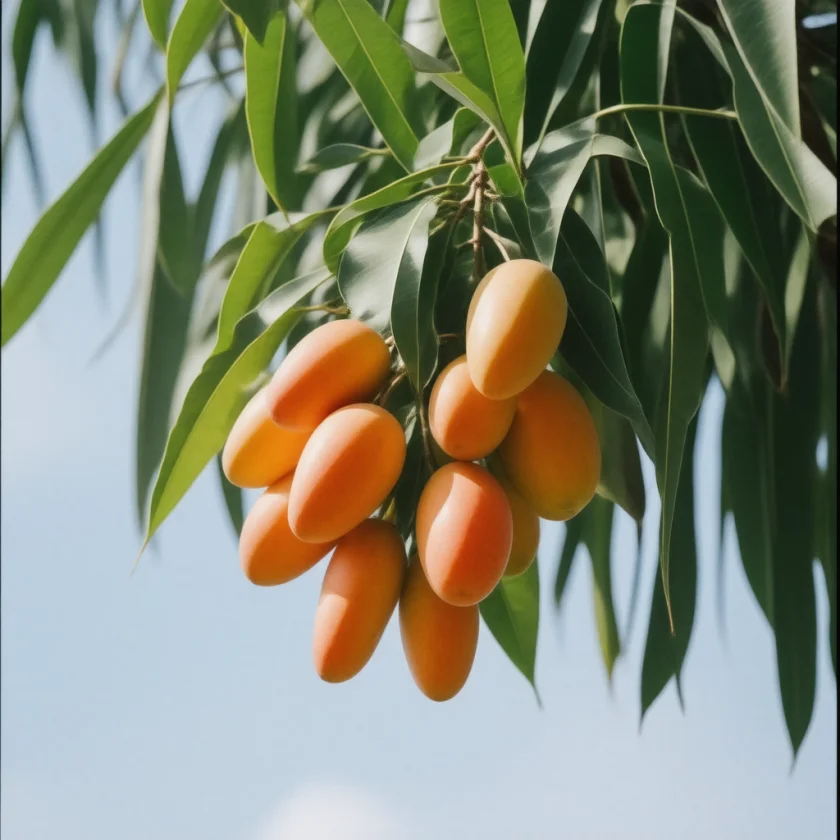
The orange of a ripe mango is not decoration. It is a working nutrient. That colour comes from carotenoids — mostly beta-carotene, with beta-cryptoxanthin and several others alongside — and your body can turn those pigments into vitamin A on demand, in the amount it needs and no more. That last part matters: unlike a high-dose retinol supplement, plant carotenoids do not stack up to a toxic level, because the enzyme that splits them is regulated by your own vitamin A status. For much of the world, deep-orange fruit is not a luxury item but the actual, practical answer to vitamin A deficiency — and mango, which fruits heavily in the hungriest months of the year across South Asia, West Africa and Latin America, is one of the few fruits that arrives in enough volume to matter. This page covers what is really in the fruit, why ripeness and cultivar change the number so much, why a little fat on the plate changes the outcome more than the mango does, and what a controlled trial that actually fed children mango found.
Table of Contents
- What "Provitamin A" Actually Means
- What Is in a Mango: The Carotenoid Mix
- Ripeness, Cultivar, and Why the Numbers Move
- Why a Little Fat on the Plate Changes Everything
- The Gambian Trial: Mango as a Public-Health Food
- Vitamin A Deficiency: The Problem This Solves
- What Vitamin A Does Day to Day
- Skin: A Trial With an Honest Surprise
- Dried, Juiced, Frozen, and Cooked
- How Much Mango, and Who Gains Most
- What Mango Cannot Do
- Key Research Papers
- Connections
- Featured Videos
What "Provitamin A" Actually Means
Vitamin A comes to you in two very different forms. Preformed vitamin A (retinol and retinyl esters) is the animal form — liver, egg yolk, butter, cod liver oil. It is ready to use the moment it is absorbed, which is why it is powerful and why it is the form that can build up to a toxic level. Provitamin A carotenoids are the plant form: beta-carotene, alpha-carotene and beta-cryptoxanthin, orange and yellow pigments that your intestinal cells cleave into retinal using an enzyme called beta-carotene 15,15'-dioxygenase.
The crucial detail is that this conversion is demand-driven. When your liver stores of vitamin A are full, the gene for that cleaving enzyme is turned down, and unconverted carotenoid simply passes through or is stored harmlessly in fat and skin. This is why you cannot poison yourself with mango, carrots or sweet potato the way you can with high-dose retinyl palmitate capsules or a large weekly serving of polar bear liver. The visible ceiling is cosmetic, not medical: eat enough carotenoid-rich food and your palms and soles may take on a faint orange tint (carotenodermia), which is harmless and fades.
The exchange rate is not one-for-one. Under the retinol activity equivalent (RAE) system used on nutrition labels and in dietary reference intakes, 12 micrograms of dietary beta-carotene counts as 1 microgram of retinol, and 24 micrograms of alpha-carotene or beta-cryptoxanthin counts as 1. Those ratios are conservative averages built to cover a mixed diet; the real efficiency for any one meal depends on the food matrix, the fat eaten with it, the person's own vitamin A status, and their genetics. Some carotenoids are also better absorbed than beta-carotene itself — a study pooling intake and blood data from its authors' own subjects (n = 633) and 22 other studies (n = 29,700) from countries with different dietary patterns found beta-cryptoxanthin and alpha-carotene showed greater apparent bioavailability than beta-carotene. That bears on mango only a little: USDA FoodData Central lists 10 micrograms of beta-cryptoxanthin per 100 grams of raw mango, against 640 micrograms of beta-carotene.
The exchange rate has also been argued over. A 2007 review notes that by the late 1990s the U.S. Institute of Medicine had revised the conversion factor for plant foods from 6:1 to 12:1 (micrograms of beta-carotene per microgram of retinol activity equivalent), and that West and colleagues put it at 21:1 for a mixed diet — 12:1 for fruits and 26:1 for vegetables. On those estimates, the beta-carotene in fruit such as mango counts for more vitamin A per microgram than the beta-carotene in vegetables.
What Is in a Mango: The Carotenoid Mix
In round numbers, one cup of diced ripe mango (about 165 grams) supplies roughly 89 micrograms RAE of vitamin A, close to 10% of the adult Daily Value, delivered entirely as carotenoids. That is a respectable but not spectacular figure on its own. What makes mango interesting is the company that vitamin A keeps: the same cup carries about 60 mg of vitamin C, roughly 70 micrograms of folate, about 1.5 mg of vitamin E, around 0.2 mg of copper and about 2.6 grams of fibre — a combination almost no other single fruit offers. See the main Mango page for the full profile.
The pigment mix itself is dominated by all-trans-beta-carotene, which in most commercial cultivars accounts for the majority of total carotenoid in the flesh. Behind it sit violaxanthin and its esters, neoxanthin, lutein, zeaxanthin and beta-cryptoxanthin, in proportions that shift by variety and by ripeness. Only some of these are provitamin A — lutein and zeaxanthin are not, but they matter for the eye in their own right (see Lutein and Zeaxanthin).
A 2025 survey of 25 mango cultivars did the obvious but useful thing: it measured flesh colour and full carotenoid profiles together and asked how well one predicts the other. Deeper orange flesh really does track higher total carotenoid, which is the rule of thumb every market shopper already uses, but the correspondence is imperfect — cultivars differ in which carotenoids they accumulate, not merely how much. So "buy the orangest one" is a decent heuristic and not a law.
The peel is a different story again. Profiling of the fruit peel across green, yellow and red cultivars identified eight carotenoids and 24 anthocyanins in the skin: yellow-skinned cultivars carried the highest carotenoid levels (mainly beta-carotene and violaxanthin), red-skinned ones the highest anthocyanin content, and peel carotenoids rose significantly as the fruit ripened. That is genuinely interesting chemistry, but mango peel is also where the fruit concentrates its irritant resorcinols — see Urushiol, Allergy, and Safety for what that means for eating it.
Ripeness, Cultivar, and Why the Numbers Move
If you have ever wondered why two nutrition tables disagree about mango, this section is the answer. Carotenoid content in mango is not a fixed property of the species. It rises sharply through ripening — the same fruit that is pale and starchy when hard becomes deeply pigmented as chloroplasts convert to chromoplasts and carotenoid synthesis accelerates. A green-shouldered, rock-hard mango eaten today and the same fruit eaten four days later on the counter are, nutritionally, different foods.
Cultivar is the second axis. The named varieties a reader is likely to meet — Alphonso, Kesar, Dasheri, Langra, Ataulfo (Honey), Tommy Atkins, Kent, Keitt, Haden, Nam Dok Mai, Carabao — differ severalfold in total carotenoid. Deep-orange, small-stone Indian and Mexican types tend to sit at the high end; the large, blush-red, fibre-light supermarket types bred for shipping tend to sit lower, because they were selected for shelf life, bruise resistance and appearance rather than pigment.
What these differences mean in practice is simpler than the variety lists suggest:
- Ripeness moves the number most. A mango bought firm ripens at room temperature; it is ripe when it gives slightly to gentle pressure at the stem end and smells sweet there. Refrigerating a hard mango stalls ripening and it may never develop its full colour or flavour.
- Flesh colour tells more than skin colour. Skin blush is largely a varietal trait and tells you little; some of the best-pigmented mangoes stay green outside.
- No single cultivar is needed. Any ripe mango is a good source. Mango eaten twice a week supplies more over a year than the best cultivar eaten twice a year.
Why a Little Fat on the Plate Changes Everything
Carotenoids are fat-soluble. To be absorbed, they must be released from the plant cell wall, dissolved into mixed micelles with bile salts and dietary fat, and then taken up by the intestinal lining. No fat in the meal means poor micelle formation and a large fraction of the pigment leaving in the stool.
This has been measured directly in mango. A digestion study using ‘Ataulfo’ mango pulp compared slightly ripe, moderately ripe and fully ripe fruit, with and without an added source of fat and protein, and then tested uptake by human intestinal cells. Two things increased the amount of beta-carotene that made it into the absorbable micelle fraction: riper fruit, and fat eaten with it. The authors traced part of the ripeness effect to the changes in mango pectin during ripening, which alters how efficiently the pigment can be released and packaged.
The kitchen version of that finding costs very little. Common ways mango is eaten with something that carries fat:
- a handful of cashews, almonds, pistachios or walnuts alongside;
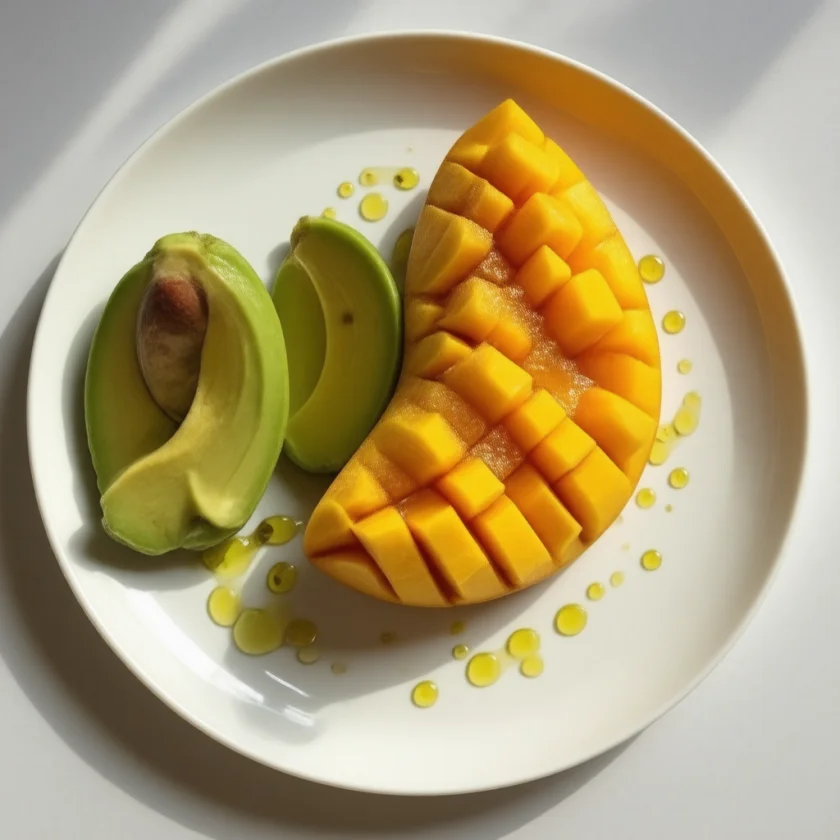
- diced with avocado, red onion and lime as a salsa;
- with full-fat yogurt or kefir;
- dressed into a salad that already carries olive oil;
- with a proper meal rather than alone as a mid-afternoon snack.
The amount of fat needed is small — a few grams is enough to make a real difference to carotenoid uptake. Pairing fruit with low-fat everything works against this: without fat, less of the fruit's fat-soluble pigment is absorbed.
The Gambian Trial: Mango as a Public-Health Food
Most claims about food and vitamin A rest on composition tables. The Gambian mango trial is one of the rare cases where somebody fed children the fruit and measured what happened in their blood.
Researchers randomised 176 Gambian children aged 2 to 7 into four groups for four months. Two groups ate 75 grams of dried mango five days a week — about 150 micrograms RAE per serving — either with 5 grams of added fat or without it. A third group got a single high-dose vitamin A capsule (60,000 micrograms) at the start, the standard public-health intervention. The fourth got a placebo capsule.
The results are worth reading precisely, because they are more instructive than a simple "mango works" headline:
- Plasma beta-carotene was higher than placebo in the mango-only group (P < 0.05), with a trend in the mango-with-fat group (P = 0.07) — the fruit's pigment was being absorbed.
- Plasma retinol — the actual vitamin A measure — was significantly higher than placebo in the capsule group and in the mango-with-fat group, but not in the mango-without-fat group (P < 0.01, after controlling for baseline plasma retinol, elevated acute-phase proteins and age). The 5 grams of fat was the difference between a measurable improvement in vitamin A status and none.
- The authors were candid that the increases in retinol were small in both groups.
Their conclusion was appropriately modest and is the right frame for this whole page: dried mango plus a fat source belongs among several concurrent strategies for maintaining vitamin A status in populations facing a severe seasonal shortage of carotenoid-rich food. It is not a replacement for supplementation programmes, and a fruit alone will not reverse established deficiency. But it is real food, locally grown, seasonally abundant, and it moved the biomarker — which is more than can be said for most foods marketed on their vitamin content.
A broader review of provitamin A bioavailability and homestead food production reaches the same conclusion from the other direction: growing and eating carotenoid-rich foods can make a genuine contribution to vitamin A status, provided the diet contains enough fat and the intake is regular rather than occasional.
Vitamin A Deficiency: The Problem This Solves
It is easy for a reader in a wealthy country to treat vitamin A as an abstraction. It is not. Vitamin A deficiency remains one of the major nutritional causes of preventable childhood blindness and death worldwide, concentrated in South Asia and sub-Saharan Africa — the same regions where mango grows in enormous quantity.
The clinical sequence is well described. Deficiency first shows up as night blindness, because retinal, the aldehyde form of vitamin A, is the light-absorbing part of rhodopsin in the rod cells. It progresses through conjunctival dryness and Bitot's spots to corneal xerosis, ulceration and keratomalacia — irreversible destruction of the cornea. Alongside the eye damage runs a less visible problem: vitamin A is required for the integrity of epithelial barriers and for normal immune-cell function, so deficient children get more severe measles, diarrhoea and respiratory infection.
The evidence that correcting it saves lives is unusually strong. A Cochrane review of vitamin A supplementation in children aged six months to five years, and the earlier systematic review and meta-analysis published in the BMJ, both found that supplementation reduced all-cause mortality and reduced the incidence of diarrhoea and measles in deficient populations. That is why the high-dose capsule campaigns exist, and why they remain the front line.
The 2022 Cochrane update gives the size of the effect. In 19 trials (1,202,382 children), vitamin A supplementation was followed by a 12% lower risk of death from any cause (risk ratio 0.88; high-certainty evidence), and in nine trials deaths from diarrhoea also fell by 12%. Supplementation reduced the incidence of measles (risk ratio 0.45) and night blindness (risk ratio 0.32). The review found no evidence of a difference in deaths from measles or respiratory disease, or in how often respiratory disease occurred, and vomiting in the first 48 hours after a dose was more common (risk ratio 1.97).
The problem has not gone away. A 2023 systematic review and modelling analysis (116 articles from 40 countries) estimated that in 2019 vitamin A deficiency affected 333.95 million children and adolescents in 165 low- and middle-income countries, a prevalence of 14.73%. It was highest in children aged 0-5 years (19.53%) and in low socio-demographic index regions (29.67%, against 5.17% in high-middle regions), and 68 of the 165 countries were classed as areas where deficiency is a moderate to severe public-health problem.
Where does fruit fit? Supplementation reaches children twice a year. Diet reaches them every day. The realistic role of mango, sweet potato, dark leafy greens and orange squash is to raise the dietary floor so that stores do not run down between campaigns — particularly in the pre-harvest hungry season, which in much of South Asia and West Africa coincides with the mango season. The Gambian trial was designed around exactly that logic.
What Vitamin A Does Day to Day
For readers who are not deficient, vitamin A is still doing continuous, unglamorous work:
- Vision in dim light. Retinal binds to opsin in rod cells to form rhodopsin. Light isomerises it, the cell fires, and the molecule must be recycled. Running short slows dark adaptation long before anything visible happens to the eye.
- Epithelial maintenance. Retinoic acid regulates the differentiation of the cells lining the airway, gut, urinary tract and skin. Deficiency drives those linings toward a dry, keratinised state — which is the mechanism behind both the eye damage and the increased infection risk.
- Immune regulation. Retinoic acid produced by gut dendritic cells imprints homing receptors on T and B cells and supports secretory immunoglobulin A (IgA) production at mucosal surfaces. This is a real, mechanistic link between what you eat and how well the gut lining defends itself — see Gut Health.
- Growth and development. Retinoic acid is a signalling molecule in embryonic patterning and bone remodelling. This is also why very high preformed vitamin A intake in pregnancy is a genuine hazard — and why carotenoids from food are the safe way to meet needs in pregnancy.
- Red blood cell production. Vitamin A supports the mobilisation of iron from stores into developing red cells, which is why vitamin A deficiency and anaemia so often travel together.
Mango contributes to all of this in the ordinary way — as one of several sources across a week, alongside sweet potatoes, carrots, spinach, butternut squash and, for those who eat it, liver. For the full picture of the nutrient itself, see Vitamin A.
Skin: A Trial With an Honest Surprise
Carotenoids accumulate in skin, where they absorb light and quench reactive oxygen species. That is a plausible route from eating mango to visible skin effects, and it has actually been tested — with a result that cuts against assuming more is better.
A randomised pilot study in postmenopausal women with fair skin compared two doses of Ataulfo mango, 85 grams or 250 grams, eaten four times a week for 16 weeks, and quantified facial wrinkles from standardised photographs. The lower dose reduced deep wrinkle severity at both 8 and 16 weeks. The higher dose went the other way — average wrinkle severity, average wrinkle length, fine wrinkle severity and emerging wrinkle severity all increased at 16 weeks. Cheek erythema increased in the 85-gram group as well.
This was a small pilot, it was unblinded by design, and it has not been replicated. But it is a useful corrective to a very common style of nutrition writing. The honest summary is: a modest serving of mango may be good for skin, a very large daily serving of a sugary fruit is not obviously better, and the dose-response was not a straight line. The authors themselves called for further studies at the 85-gram dose specifically.
Dried, Juiced, Frozen, and Cooked
Carotenoids are reasonably heat-stable but sensitive to oxygen, light and prolonged storage. What that means in practice varies by process:
- Dried mango. Drying concentrates carotenoid by weight — the Gambian trial used dried mango precisely because it packs a useful dose into 75 grams. But drying changes the carotenoid content, and not simply in step with heat: a study that dried two cultivars (Keitt and Osteen) at 50, 60 and 70 °C found carotenoids were more susceptible to drying at 60 °C, while antioxidant activity was best kept at 50 °C in Keitt and 60 °C in Osteen. Dried mango is also a concentrated sugar — a different food from fresh, not a portable equivalent.
- Juice. Processing ‘Ataulfo’ mango into juice was found to preserve the bioavailability and antioxidant capacity of its phenolic compounds. That is reassuring for the polyphenols, but juicing removes most of the fibre, so the blood-sugar behaviour changes considerably — see Fiber, Blood Sugar, and the Gut. A study of nutrient-extracted (whole-blended) versus intact fruit found blending lowered the postprandial glucose response, so "juiced" and "blended whole" are not the same thing either.
- Frozen. Freezing ripe mango is the kindest form of preservation for the pigments. Frozen chunks are picked and processed ripe, which is often more than can be said for the fresh fruit shipped green.
- Cooked. Heat softens cell walls and can increase the accessibility of carotenoid, the same reason cooked carrots deliver more absorbable beta-carotene than raw. Mango chutneys, mango cooked into a curry, or grilled mango are all legitimate ways to eat it.
How Much Mango, and Who Gains Most
There is no established "dose" of mango, and inventing one would be dishonest. What the evidence supports is modest and practical:
- One cup is the serving the figures on this page use. That is about 100 calories and around 10% of the Daily Value for vitamin A, plus two-thirds of a day's vitamin C. The trials that found metabolic benefit used 100 kcal/day of fresh mango over 12 weeks; the skin study's beneficial arm used 85 grams four times a week. A small 2025 randomised trial in adults with prediabetes gave about 300 grams of fresh mango a day (one average mango) for 24 weeks against a granola bar with the same calories; among the 23 people who completed it, the mango group had lower fasting blood glucose (p < 0.02) and better insulin sensitivity (QUICKI, p = 0.02). Nothing in the literature supports very large daily amounts.
- Fat on the plate matters most. In the Gambian trial, mango eaten with 5 grams of fat raised plasma retinol above placebo and mango alone did not — and a little fat costs almost nothing.
- Ripe beats unripe for carotenoid, though green mango has its own culinary and vitamin C merits.
- Other foods cover the rest of the year. Mango is seasonal almost everywhere. Sweet potato, carrot, pumpkin, dark leafy greens and orange squash carry the same job through the rest of the year.
The people who gain most are the ones whose baseline is lowest: children and pregnant women in regions where preformed vitamin A is scarce and the diet is largely plant-based; anyone with fat malabsorption from coeliac disease, pancreatic insufficiency or cholestatic liver disease, whose carotenoid absorption is impaired; and people eating very little fat, in whom the fruit is being wasted. For a reader eating a varied diet with eggs, dairy and the occasional liver, mango is a pleasant contributor rather than a critical one — which is a perfectly good reason to eat it.
What Mango Cannot Do
Three honest limits, because the internet will tell you otherwise:
- Mango will not treat established vitamin A deficiency on its own. Clinical deficiency with eye signs is a medical emergency treated with high-dose retinol under supervision. Food is prevention and maintenance, not rescue.
- Beta-carotene supplements are not the same as beta-carotene in fruit. Large trials of high-dose beta-carotene supplements in smokers and asbestos-exposed workers found increased lung cancer incidence — a finding that has never been reproduced for carotenoids eaten as food. The hazard in those trials belonged to the isolated pill, not the fruit.
- Vitamin A content is not why mango is interesting. At about 10% of the Daily Value per cup, a carrot beats it comfortably. Mango's distinctive contribution is the combination — vitamin C, folate, copper, vitamin E, fibre and polyphenols in one sweet package — not any single headline nutrient.
Key Research Papers
- Drammeh BS, Marquis GS, Funkhouser E, et al. A randomized, 4-month mango and fat supplementation trial improved vitamin A status among young Gambian children. The Journal of Nutrition. 2002;132(12):3693-3699. — doi:10.1093/jn/132.12.3693
- Ornelas-Paz J, Failla ML, Yahia EM, et al. Impact of the stage of ripening and dietary fat on in vitro bioaccessibility of beta-carotene in ‘Ataulfo’ mango. Journal of Agricultural and Food Chemistry. 2008;56(4):1511-1516. — doi:10.1021/jf072751r
- Takagi T, Hong H, Dillon N, et al. The association between the flesh colour and carotenoid profile of 25 cultivars of mangoes. Molecules. 2025;30(8):1661. — doi:10.3390/molecules30081661
- Ranganath KG, Shivashankara KS, Roy TK, et al. Profiling of anthocyanins and carotenoids in fruit peel of different colored mango cultivars. Journal of Food Science and Technology. 2018;55(11):4566-4577. — doi:10.1007/s13197-018-3392-7
- Imdad A, Mayo-Wilson E, Haykal MR, et al. Vitamin A supplementation for preventing morbidity and mortality in children from six months to five years of age. Cochrane Database of Systematic Reviews. 2022;(3):CD008524. — doi:10.1002/14651858.CD008524.pub4
- Mayo-Wilson E, Imdad A, Herzer K, et al. Vitamin A supplements for preventing mortality, illness, and blindness in children aged under 5: systematic review and meta-analysis. BMJ. 2011;343:d5094. — doi:10.1136/bmj.d5094
- de Pee S, Bloem MW. The bioavailability of (pro)vitamin A carotenoids and maximizing the contribution of homestead food production to combating vitamin A deficiency. International Journal for Vitamin and Nutrition Research. 2007;77(3):182-192. — doi:10.1024/0300-9831.77.3.182
- Olmedilla-Alonso B, Rodríguez-Rodríguez E, Beltrán-de-Miguel B, et al. Dietary beta-cryptoxanthin and alpha-carotene have greater apparent bioavailability than beta-carotene in subjects from countries with different dietary patterns. Nutrients. 2020;12(9):2639. — doi:10.3390/nu12092639
- Song P, Adeloye D, Li S, et al. The prevalence of vitamin A deficiency and its public health significance in children in low- and middle-income countries: a systematic review and modelling analysis. Journal of Global Health. 2023;13:04084. — doi:10.7189/jogh.13.04084
- Fam VW, Holt RR, Keen CL, et al. Prospective evaluation of mango fruit intake on facial wrinkles and erythema in postmenopausal women: a randomized clinical pilot study. Nutrients. 2020;12(11):3381. — doi:10.3390/nu12113381
- Fratianni A, Adiletta G, Di Matteo M, et al. Evolution of carotenoid content, antioxidant activity and volatile compounds in dried mango fruits (Mangifera indica L.). Foods. 2020;9(10):1424. — doi:10.3390/foods9101424
- Quirós-Sauceda A, Chen CY, Blumberg J, et al. Processing ‘Ataulfo’ mango into juice preserves the bioavailability and antioxidant capacity of its phenolic compounds. Nutrients. 2017;9(10):1082. — doi:10.3390/nu9101082
- Alkutbe R, Redfern K, Jarvis M, et al. Nutrient extraction lowers postprandial glucose response of fruit in adults with obesity as well as healthy weight adults. Nutrients. 2020;12(3):766. — doi:10.3390/nu12030766
- Basiri R, Dawkins K, Singar S, et al. Daily mango intake improves glycemic and body composition outcomes in adults with prediabetes: a randomized controlled study. Foods. 2025;14(17):2971. — doi:10.3390/foods14172971
- Saleem Dar M, Oak P, Chidley H, et al. Nutrient and flavor content of mango (Mangifera indica L.) cultivars. In: Nutritional Composition of Fruit Cultivars. 2016:445-467. — doi:10.1016/b978-0-12-408117-8.00019-2
PubMed Topic Searches
Connections
- Mango — the main topic page.
- Mango Benefits Deep Dive — the hub for this section.
- Mango: History and Origins — four thousand years from the Indo-Burma forests.
- Vitamin A — the nutrient in full.
- Beta-Carotene — the pigment itself.
- Lutein and Zeaxanthin — the non-provitamin carotenoids in mango.
- Vitamin C — mango's other headline vitamin.
- Vitamin E — unusually present in mango for a fruit.
- Sweet Potatoes and Carrots — the year-round carotenoid staples.
- Papaya — the closest tropical comparison.
- Butternut Squash — another deep-orange source.
- Spinach Benefits — leafy greens carry carotenoids too.
- Macular Degeneration — where carotenoids and the eye meet.
- Dry Eye Disease — epithelial health at the ocular surface.
- Gut Health — retinoic acid and mucosal immunity.
- Avocado — the easiest fat to pair with mango.