Blueberries — Benefits Deep Dive
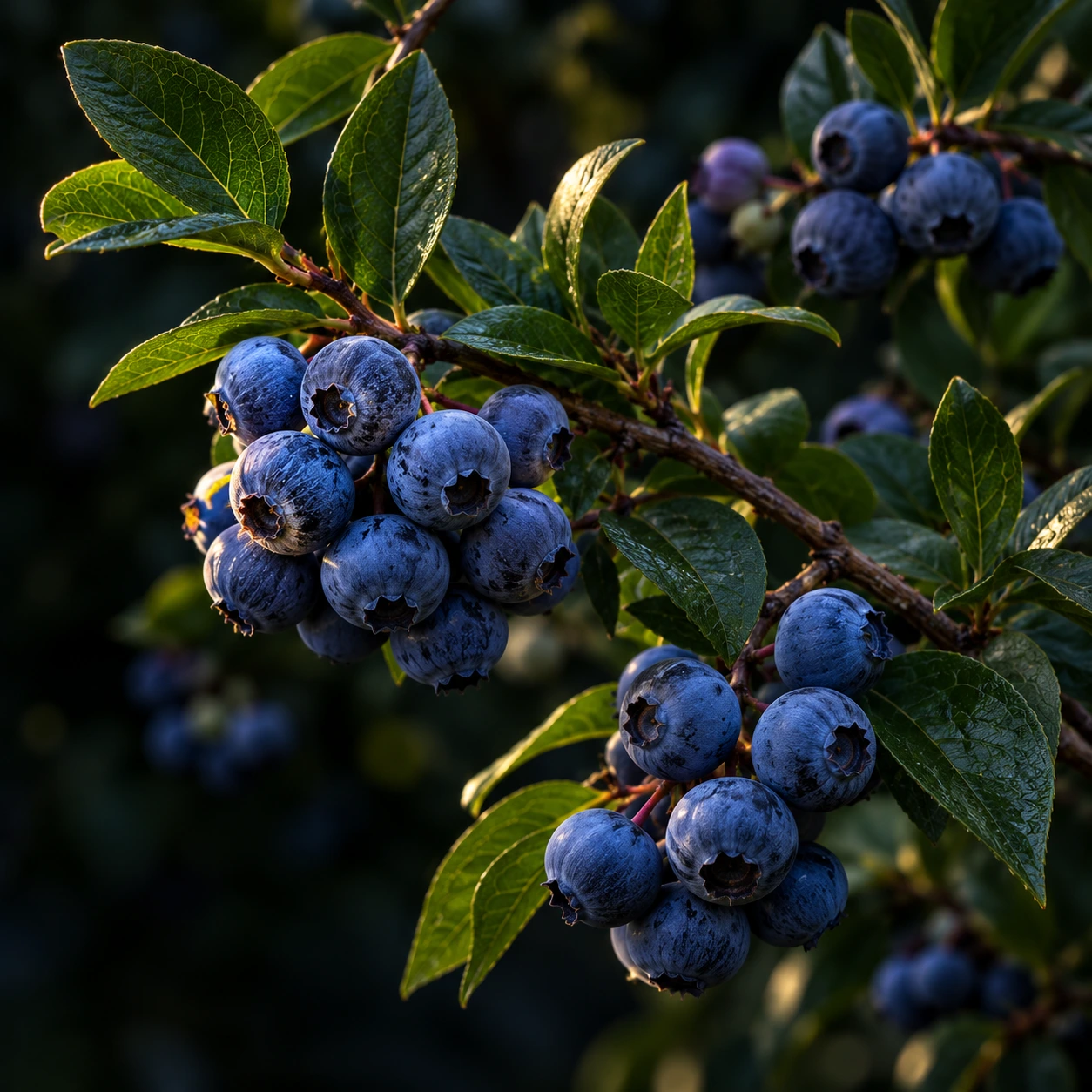
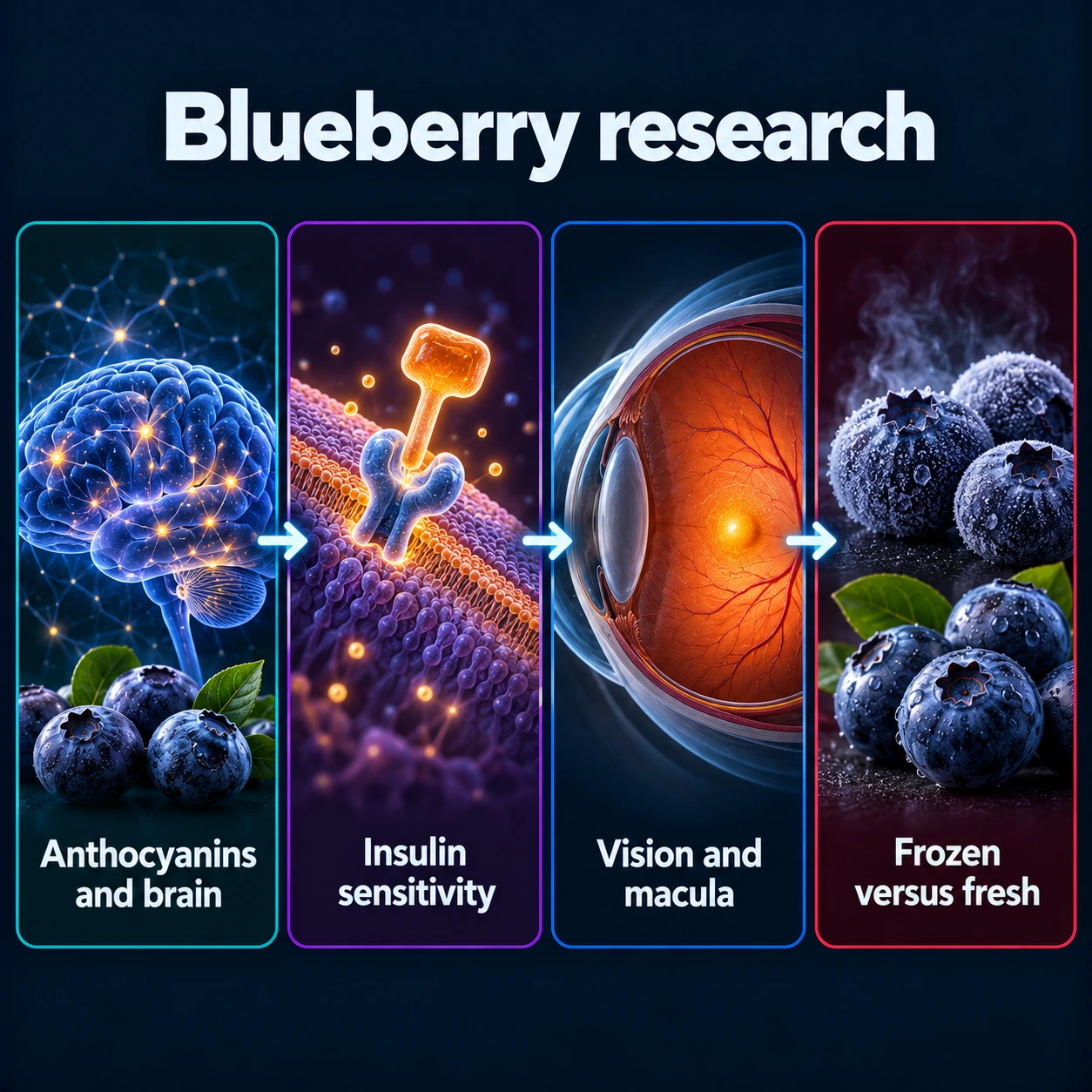
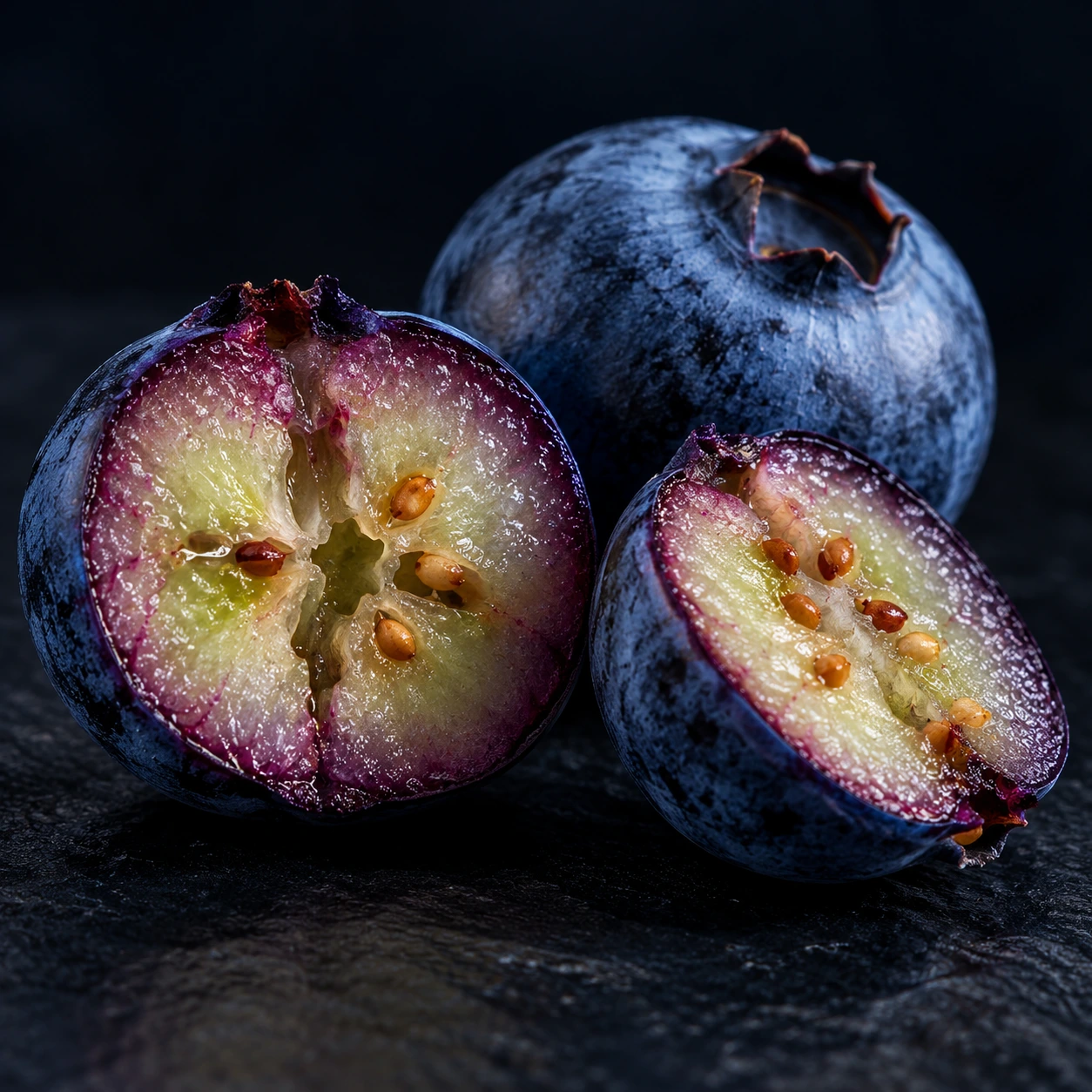
Blueberries (Vaccinium corymbosum highbush, V. angustifolium lowbush/wild) are the single most studied common fruit in modern human nutritional research, with more than 2,500 indexed clinical and mechanistic papers concentrated on a narrow class of pigment molecules called anthocyanins. The blue color is not incidental; it is the visible signature of the very molecules driving the measurable cognitive, vascular, glycemic, and ophthalmologic effects documented in randomized trials. Four benefit pages below explore the conditions where blueberries produce the largest documented clinical effect — age-related cognitive decline and hippocampal function, insulin sensitivity and post-prandial glucose handling, dark-adaptation and macular protection, and the practical question of whether frozen blueberries (often cheaper) deliver the same anthocyanin payload as fresh.
Deep-Dive Articles
Anthocyanins & Brain
How cyanidin-3-glucoside, delphinidin, and malvidin cross the blood-brain barrier in measurable nanomolar concentrations, accumulate in the hippocampus, upregulate brain-derived neurotrophic factor (BDNF), and improve episodic memory in older adults. Covers the Krikorian wild-blueberry trials in mild cognitive impairment, the Whyte Reading children's acute-dosing studies, and the proposed mechanisms (cerebral blood flow, neuroinflammation suppression, hippocampal neurogenesis).
Read the deep dive →Insulin Sensitivity
Why daily blueberry consumption improves insulin sensitivity by 22% in obese insulin-resistant adults (Stull 2010 Journal of Nutrition), the role of cyanidin-3-glucoside in GLUT4 translocation and hepatic gluconeogenesis suppression, blueberries' effect on hemoglobin A1c (HbA1c) in type-2 diabetes, and the dose-response curve from 75 g/day to 1 cup/day fresh equivalent.
Read the deep dive →Vision & Macula
The bilberry WWII-pilot legend (largely overstated), the modern evidence for anthocyanin-mediated rhodopsin regeneration and dark adaptation, lutein and zeaxanthin's small but real contribution in blueberries, eye fatigue from screen use, and how blueberries fit into the AREDS2-style approach to macular degeneration prevention.
Read the deep dive →Frozen vs Fresh
The single most common practical question. Frozen blueberries are flash-frozen at peak ripeness (often higher anthocyanin content than out-of-season fresh shipped 2,000 miles); in a 2004 storage study, frozen blueberries kept their anthocyanin level with no significant loss through three months of frozen storage. Storage time, cooking effects (baking destroys ~30%), wild lowbush vs cultivated highbush, organic premium, and the cost-per-anthocyanin calculation.
Read the deep dive →Table of Contents
- Deep-Dive Articles
- Why Blueberries Produce Effects Across So Many Systems
- Research Papers: Cognition & Brain
- Research Papers: Insulin & Glycemic Control
- Research Papers: Vision & Eye Health
- Research Papers: Cardiovascular & Endothelial Function
- Research Papers: Anthocyanin Bioavailability & Forms
- External Authoritative Resources
- Connections
- Featured Videos
Why Blueberries Produce Effects Across So Many Systems
Most foods studied for health benefits act through one principal mechanism — fiber on the gut, omega-3s on inflammation, polyphenols on oxidative stress. Blueberries are unusual because the anthocyanin pigment class operates through at least four distinct molecular mechanisms simultaneously, each of which maps to a documented clinical effect category.
- Direct radical scavenging in the vasculature — cyanidin and delphinidin glycosides have measured oxygen radical absorbance capacity (ORAC) values among the highest of any common food (~6,500 µmol Trolox equivalents (TE) per 100 g for wild lowbush blueberries). This drives the documented improvement in flow-mediated dilation of the brachial artery within hours of a blueberry-rich meal, and is one proposed explanation for the cardiovascular epidemiology. In the Nurses' Health Study II (93,600 women aged 25 to 42, followed for 18 years), the highest anthocyanin intake was linked to a lower risk of heart attack (myocardial infarction; hazard ratio 0.68, highest versus lowest fifth of intake). In men, the picture is weaker: in the Health Professionals Follow-up Study (43,880 men followed for 24 years, 4,046 heart attacks), anthocyanin intake was not linked to total or fatal heart attacks, only to a borderline lower risk of nonfatal ones (hazard ratio 0.87; 95% confidence interval 0.75 to 1.00).
- Nuclear receptor and transcription factor modulation (Nrf2, NF-kB) — anthocyanin metabolites (protocatechuic acid, phloroglucinaldehyde) activate the nuclear factor erythroid 2-related factor 2 (Nrf2) antioxidant response pathway and suppress nuclear factor kappa B (NF-kB)-driven inflammatory gene expression. This is the dominant mechanism behind the cognitive effects discussed in Anthocyanins and Brain and the insulin-sensitivity effects in Insulin Sensitivity.
- Direct enzyme inhibition (alpha-glucosidase, alpha-amylase, dipeptidyl peptidase-4, DPP-4) — the anthocyanins compete with glucose for binding at the brush-border carbohydrate-cleaving enzymes, blunting post-prandial glucose rise. This mimics the mechanism of the diabetes drug acarbose but at lower potency and without gastrointestinal (GI) side effects.
- Direct interaction with rhodopsin regeneration in retinal rod cells — the long-standing claim that anthocyanins accelerate dark-adaptation has mixed clinical evidence but a defensible biochemical basis (anthocyanin-mediated regeneration of the 11-cis-retinal chromophore). Covered in Vision and Macula.
The therapeutic complication for blueberries is the opposite of most supplements: there is no toxicity ceiling at culinary doses. Animal lethal-dose studies show no acute toxicity for any reasonable human consumption, and the only documented adverse reactions are oxalate-related (a concern raised for people prone to calcium oxalate kidney stones) and the tannin-driven gastrointestinal discomfort some individuals experience with large servings. The fourth deep-dive page explores why frozen blueberries often deliver more anthocyanin per dollar than fresh — in a 2004 storage study, frozen blueberries showed no significant loss of anthocyanins over three months, and the harvest timing for frozen processing favors peak ripeness.
Research Papers: Cognition & Brain
- Krikorian R et al. (2010). Blueberry supplementation improves memory in older adults. J Agric Food Chem — PubMed: Krikorian 2010
- Cheatham CL, Canipe LG 3rd, Millsap G, Stegall JM, Chai SC, Sheppard KW, Lila MA (2023). Six-month intervention with wild blueberries improved speed of processing in mild cognitive decline: a double-blind, placebo-controlled, randomized clinical trial. Nutr Neurosci 26(10):1019-1033 — PubMed PMID: 36066009
- Whyte AR et al. Wild blueberry intervention and cognitive performance in children — PubMed: Whyte children trials
- Bowtell JL et al. Enhanced task-related brain activation and resting cerebral blood flow after 12 weeks of blueberry supplementation — PubMed: Bowtell CBF
- Andres-Lacueva C et al. Anthocyanins in aged blueberry-fed rats are found centrally and may enhance memory — PubMed: Anthocyanins in brain
- Williams CM et al. Blueberry-induced changes in spatial working memory correlate with changes in hippocampal CREB phosphorylation and BDNF levels — PubMed: Williams BDNF
- Devore EE et al. Dietary intakes of berries and flavonoids in relation to cognitive decline — PubMed: Devore Nurses' Health Study
- Miller MG et al. Dietary blueberry improves cognition among older adults in a randomized, double-blind, placebo-controlled trial — PubMed: Miller RCT cognition
- Joseph JA, Shukitt-Hale B, Denisova NA, Bielinski D, Martin A, McEwen JJ, Bickford PC (1999). Reversals of age-related declines in neuronal signal transduction, cognitive, and motor behavioral deficits with blueberry, spinach, or strawberry dietary supplementation. J Neurosci 19(18):8114-21 — PubMed PMID: 10479711
- Galli RL et al. Blueberry supplemented diet reverses age-related decline in hippocampal HSP70 neuroprotection — PubMed: Galli HSP70
- Curtis PJ, van der Velpen V, Berends L, Jennings A, Haag L, Minihane AM, Chandra P, Kay CD, Rimm EB, Cassidy A (2024). Chronic and postprandial effect of blueberries on cognitive function, alertness, and mood in participants with metabolic syndrome - results from a six-month, double-blind, randomized controlled trial. Am J Clin Nutr 119(3):658-668 — PubMed PMID: 38432713
Two six-month trials show who the brain effect has been seen in so far. In a 2023 double-blind trial, older adults with memory and thinking complaints who took wild blueberry powder every day (44 people, against 42 on a placebo powder) got faster at processing information, back to the level of a comparison group without such complaints; the gain was most marked at ages 75 to 80. In a 2024 double-blind trial in adults with metabolic syndrome but without thinking problems, six months of freeze-dried blueberry powder did not change memory, thinking, mood, alertness or sleep; the one change was an 11.6% rise in self-rated calmness in the 24 hours after 1 cup of blueberries.
Research Papers: Insulin & Glycemic Control
- Stull AJ et al. (2010). Bioactives in blueberries improve insulin sensitivity in obese, insulin-resistant men and women. J Nutr — PubMed: Stull 2010
- Stote KS et al. Effect of blueberry consumption on cardiometabolic health parameters in men with type 2 diabetes — PubMed: Stote diabetes
- Curtis PJ et al. Blueberries improve biomarkers of cardiometabolic function in participants with metabolic syndrome — PubMed: Curtis metabolic syndrome
- Liu Y et al. Effect of blueberry supplementation on glycemic control: meta-analysis — PubMed: Glycemic meta-analysis
- Hoggard N et al. A single supplement of a standardised bilberry (Vaccinium myrtillus) extract improves glucose metabolism — PubMed: Bilberry post-prandial
- Cyanidin-3-glucoside and GLUT4 translocation in skeletal muscle — PubMed: C3G and GLUT4
- Anthocyanins and alpha-glucosidase inhibition (Adisakwattana, Ruangkittisakul) — PubMed: Alpha-glucosidase inhibition
- Bell L et al. A study of glycaemic effects following acute anthocyanin-rich blueberry supplementation in healthy adults — PubMed: Bell acute glycemic
- Wedick NM et al. Dietary flavonoid intakes and risk of type 2 diabetes in US men and women — PubMed: Wedick flavonoids and T2D
- Mauray A et al. Bilberry anthocyanin-rich extract alters expression of genes related to atherosclerosis development — PubMed: Mauray gene expression
Research Papers: Vision & Eye Health
- Kalt W et al. Recent research on the health benefits of blueberries and their anthocyanins (vision section) — PubMed: Kalt review
- Matsumoto H et al. Stimulatory effect of cyanidin 3-glycosides on the regeneration of rhodopsin — PubMed: Matsumoto rhodopsin
- Nakaishi H et al. Effects of black currant anthocyanoside intake on dark adaptation and VDT work-induced transient refractive alteration — PubMed: Nakaishi dark adaptation
- Canter PH, Ernst E (2004). Anthocyanosides of Vaccinium myrtillus (bilberry) for night vision--a systematic review of placebo-controlled trials. Surv Ophthalmol 49(1):38-50 — PubMed PMID: 14711439
- Riva A et al. The effect of a natural, standardized bilberry extract on dry eye — PubMed: Bilberry and dry eye
- Yamashita SI et al. Bilberry extract attenuates retinal ischemia-reperfusion injury — PubMed: Yamashita retinal protection
- Ozawa Y et al. Bilberry extract supplementation for preventing eye fatigue in video display terminal workers — PubMed: Ozawa eye fatigue
- Anthocyanin distribution in ocular tissue after oral dosing (Matsumoto, Kalt) — PubMed: Ocular distribution
- Wild blueberry and macular pigment optical density (MPOD) — PubMed: Blueberry and MPOD
Research Papers: Cardiovascular & Endothelial Function
- Rodriguez-Mateos A et al. Intake and time dependence of blueberry flavonoid-induced improvements in vascular function — PubMed: Rodriguez-Mateos FMD
- Cassidy A et al. High anthocyanin intake is associated with a reduced risk of myocardial infarction in young and middle-aged women — PubMed: Cassidy NHS-II
- Cassidy A et al. Habitual intake of anthocyanins and flavanones and risk of cardiovascular disease in men — PubMed: Cassidy HPFS
- Basu A et al. Blueberries decrease cardiovascular risk factors in obese men and women with metabolic syndrome — PubMed: Basu metabolic syndrome
- Johnson SA et al. Daily blueberry consumption improves blood pressure and arterial stiffness in postmenopausal women with pre- and stage 1-hypertension — PubMed: Johnson postmenopausal BP
- Curtis PJ et al. Blueberries improve flow-mediated dilation and reduce arterial stiffness in metabolic syndrome — PubMed: Curtis vascular function
- Riso P et al. Effect of a wild blueberry-based confectionery product on post-prandial glycemia, insulinemia, and antioxidant status — PubMed: Riso post-prandial
- McAnulty SR et al. Effect of blueberry ingestion on natural killer cell counts, oxidative stress, and inflammation in runners — PubMed: McAnulty NK cells
- Erlund I et al. Favorable effects of berry consumption on platelet function, blood pressure, and HDL cholesterol — PubMed: Erlund berry trial
- Riso P et al. Blueberry phenolics activate Nrf2 pathway and lower platelet aggregation — PubMed: Blueberry Nrf2
Research Papers: Anthocyanin Bioavailability & Forms
- Kalt W et al. Anthocyanins and their C6-C3-C6 metabolites in humans and animals (review) — PubMed: Kalt metabolite review
- Czank C et al. Human metabolism and elimination of the anthocyanin cyanidin-3-glucoside: a 13C-tracer study — PubMed: Czank C-13 tracer
- de Ferrars RM et al. The pharmacokinetics of anthocyanins and their metabolites in humans — PubMed: de Ferrars PK
- Wild lowbush (Vaccinium angustifolium) vs cultivated highbush (V. corymbosum) anthocyanin content — PubMed: Wild vs cultivated
- Frozen vs fresh blueberry anthocyanin retention (Lohachoompol, Srivastava) — PubMed: Frozen vs fresh
- Effect of cooking and baking on blueberry anthocyanin content — PubMed: Cooking degradation
- Wallace TC. Anthocyanins in cardiovascular disease (Advances in Nutrition review) — PubMed: Wallace ACN
- Cyanidin-3-glucoside and gut microbiome conversion to protocatechuic acid — PubMed: Microbiome conversion
- Anthocyanin transport across the blood-brain barrier — PubMed: BBB transport
- Lohachoompol V, Srzednicki G, Craske J (2004). The Change of Total Anthocyanins in Blueberries and Their Antioxidant Effect After Drying and Freezing. J Biomed Biotechnol 2004(5):248-252 — PubMed PMID: 15577185
The frozen-versus-dried numbers from the 2004 storage study: highbush blueberries kept at −20 °C showed no significant drop in anthocyanins over three months, while cabinet-drying cut anthocyanins by 41% (49% with an osmotic pre-treatment before drying). The antioxidant activity of the anthocyanin extracts did not differ significantly between fresh, dried and frozen blueberries. The study measured the amount of anthocyanin in the fruit, not how much the body absorbs.
External Authoritative Resources
- Linus Pauling Institute — Flavonoids Micronutrient Information Center (covers anthocyanin biology in detail)
- U.S. Department of Agriculture (USDA) FoodData Central — Blueberries Raw (full nutrient profile, anthocyanin breakdown)
- Blueberry growers' trade association — Research Library (industry-supported list of trials)
- PubMed — All Vaccinium anthocyanin research (~2,500 papers)
- PubMed — Blueberry human clinical trials
Connections
- All Food
- Blueberries (Main Page)
- Blueberries for Brain & Cognition
- Blueberries for Insulin Sensitivity
- Blueberries for Vision & Macula
- Frozen vs Fresh Blueberries
- Strawberries
- Raspberries
- Blackberries
- Alzheimer's Disease
- Type 2 Diabetes
- Metabolic Syndrome
- Macular Degeneration
- Vitamin C
- Antioxidants
- History
- Nutrients