Apples
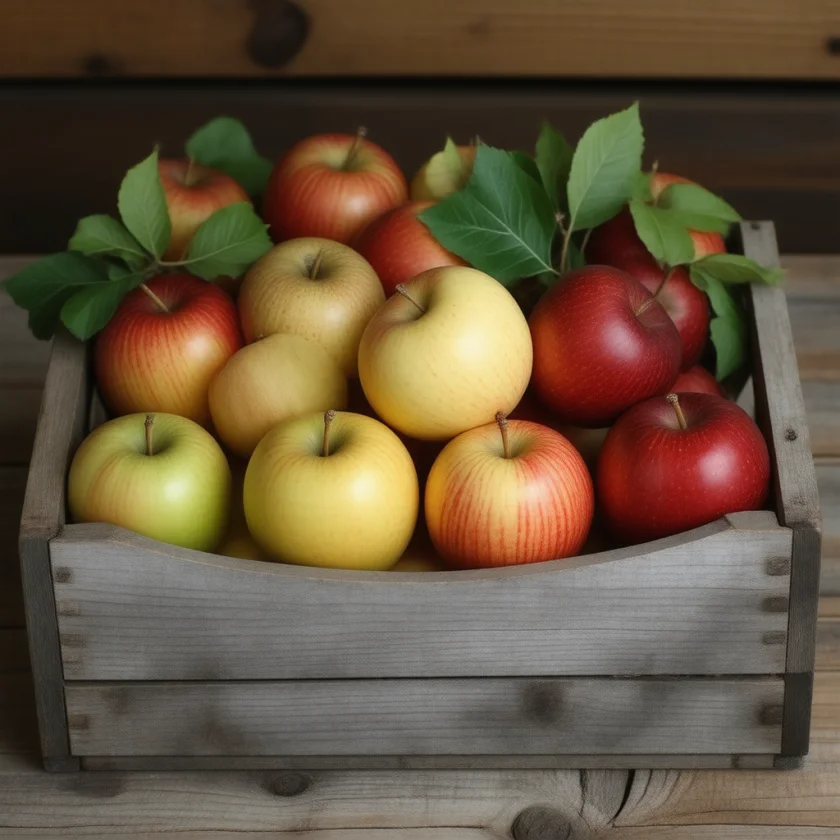
Apples (Malus domestica) are one of the most widely eaten fruits in the world, and they have earned a genuinely good reputation. They are crunchy, portable, cheap, and a solid source of fiber, vitamin C, potassium, and plant compounds called polyphenols. The honest summary is this: an apple is a low-calorie food that fits into almost any healthy eating pattern, and there is real research linking apples and apple-type flavonoids to better heart and blood-sugar markers. But an apple is not a miracle cure, and most of its best stuff lives in or just under the skin — so how you eat it matters more than which variety you pick.
Table of Contents
Nutritional Profile
A raw apple eaten with the skin is mostly water (about 85%) and is low in calories — roughly 52 calories per 100 grams, or about 95 calories for a medium apple. What you get for those calories is genuinely useful.
- Dietary fiber — about 2.4 grams per 100 grams (around 4 grams in a medium apple). A meaningful share of this is soluble fiber, especially pectin, the same gelling fiber used to set jam. There is also insoluble fiber for bulk.
- Vitamin C — a modest amount (roughly 5 mg per 100 grams). Apples are not a vitamin C powerhouse like citrus, but it adds up.
- Potassium — about 100–110 mg per 100 grams, contributing to your daily intake of this heart- and blood-pressure-relevant mineral.
- Polyphenols — a rich and varied mix of plant compounds, including the flavonoid quercetin (concentrated in the skin), catechins (the same family found in tea), chlorogenic acid, and procyanidins. These are the antioxidants behind much of the apple's research interest.
The single most important practical fact about apple nutrition: most of the polyphenols and a large share of the fiber are in the skin and the layer just beneath it. Peeling an apple throws away a meaningful portion of the very compounds that make it worth eating. The flesh is still good food, but the skin is where the action is concentrated.
Heart Health & Cholesterol
Apples show up repeatedly in heart-health research, and the signal is real if modest. Two threads support them.
First, controlled trials. In a randomized crossover trial, mildly high-cholesterol adults who ate two apples a day for eight weeks lowered their total and low-density lipoprotein (LDL) ("bad") cholesterol and triglycerides compared with a matched apple-flavored control drink. The effect was modest — low-density lipoprotein fell by a small amount — and it used a polyphenol-rich apple variety and a fairly large daily dose, so it is best read as "apples nudge cholesterol in the right direction," not "apples replace medication." The likely mechanism is a one-two combination: soluble fiber (pectin) binds cholesterol-related compounds in the gut, while polyphenols support healthier blood-vessel function.
Second, population studies. Large observational studies consistently find that people who eat more apples — and more flavonoids generally — tend to have lower rates of heart disease and lower cardiovascular death. Pooled analyses of flavonoid intake estimate roughly a 10–15% lower risk of dying from cardiovascular disease in the highest-intake groups versus the lowest. These are associations, not proof: people who eat lots of fruit also tend to exercise more, smoke less, and eat better overall, and studies try but cannot fully untangle that. Still, the trial evidence and the population evidence point the same direction, which is reassuring.
Bottom line: in the research, apples have a genuine but modest measurable effect on cholesterol, with good observational backing for lower cardiovascular risk.
Blood Sugar & Gut Health
Whole apples are friendlier to blood sugar than their sweetness suggests. Although an apple contains natural sugars, its fiber slows how fast that sugar is absorbed, so a whole apple has a relatively low-to-moderate glycemic impact — it produces a gentler rise in blood sugar than many other sweet snacks. In a large set of long-running studies following over 180,000 US health professionals, eating more whole fruits including apples was linked to a lower risk of developing type 2 diabetes, while drinking more fruit juice was linked to a higher risk.
That juice contrast is the key takeaway. A whole apple is not the same as apple juice. Juicing strips out the fiber, leaving concentrated sugar in a form your body absorbs quickly — closer to a soft drink than to fruit. The whole apple, with its skin and fiber intact, is the version the science supports.
The fiber does double duty in the gut. Pectin is a prebiotic: it passes undigested to the large intestine, where your beneficial gut bacteria ferment it. This feeds a healthier microbial community and produces short-chain fatty acids (like butyrate) that nourish the cells lining your colon. Much of the detailed microbiome work so far is laboratory and fermentation-based rather than long-term human trials, so the gut benefits are well-grounded and promising rather than fully nailed down — but "fiber feeds good bacteria" is solid, basic nutrition science.
Weight & Satiety
For people watching their weight, apples have a simple advantage: the combination of fiber and water makes them filling for very few calories. They take time to chew, add bulk to your stomach, and satisfy a craving for something sweet without much energy cost.
There is also some evidence that eating a whole apple before a meal can modestly reduce how much you eat overall. In a small controlled study, people who ate a whole apple before lunch consumed about 15% fewer total calories at that meal than when they had no preload — and notably, the whole apple beat both applesauce and apple juice, even when calories were matched. Solid fruit is more filling than puree, which is more filling than juice.
Keep this in proportion: this is one small, short-term lab study, not proof that apples cause weight loss. Reaching for an apple instead of chips, or having one before a meal, is a low-risk habit with some supporting data.
"An Apple a Day" — What's True
The proverb "an apple a day keeps the doctor away" is more than a century old. So how does it hold up? The honest answer: apples are genuinely healthy, but the proverb is folk wisdom, not a medical claim.
A delightful real study tested it directly. Researchers analyzed a nationally representative sample of US adults — 8,399 eligible participants, of whom 753 ate at least one small apple a day — and compared daily apple eaters with everyone else. The finding, reported with a wink: after accounting for other factors, apple eaters were not significantly more likely to stay away from the doctor. They did remain marginally more likely to avoid prescription medications (odds ratio 1.27, 95% confidence interval 1.00–1.63). The authors' tongue-in-cheek conclusion was that the evidence does not support the proverb, although the small fraction of US adults who eat an apple a day do appear to use fewer prescription medications.
That fits the wider picture of apples. They are a nutritious, fiber-rich, polyphenol-rich fruit with real associations to better heart and metabolic health. They are one good fruit among many — berries, citrus, and others bring their own strengths — and no single food keeps the doctor away. Variety and an overall healthy pattern matter far more than any one fruit.
Choosing & Eating Apples
Getting the most out of apples is refreshingly simple.
- The whole fruit, with the skin on. This is the most important point. The skin and the layer just beneath it hold most of the polyphenols (including quercetin) and a big share of the fiber. Peeling discards much of the benefit.
- Whole apples versus juice. Whole fruit keeps the fiber and gives a gentler blood-sugar response; juice concentrates the sugar and removes the fiber.
- Variety matters less than you might think — any apple is a good apple. That said, more tart and deeply colored varieties (think Granny Smith or red-skinned types) tend to be a bit higher in polyphenols than mild, pale ones.
- Washing. Apples regularly appear near the top of the Environmental Working Group's "Dirty Dozen" list of produce with the most pesticide residues. This does not make them unsafe — the benefits of eating fruit clearly outweigh this concern — but rinsing under running water (and gently rubbing) reduces surface residue. Organic apples are another option some people choose, and they still have skin worth eating.
Considerations
Apples are very safe for almost everyone. A few practical cautions:
- Apple seeds contain amygdalin, a compound that releases small amounts of cyanide when the seeds are crushed or thoroughly chewed. In normal life this is a non-issue: accidentally swallowing a few whole seeds is harmless, because an intact seed passes through you without releasing meaningful cyanide. The point worth knowing is that crushing or chewing the seeds is what releases the cyanide, so deliberately crushing and eating large quantities of seeds — for example, blending many apple cores into smoothies — is how apple seeds could cause harm. It would take the well-chewed seeds of many apples to approach a dangerous dose.
- Choking hazard for young children. A bite of raw apple is firm and can block a small airway. For toddlers and young children, apples are commonly cut into thin slices or grated rather than given as a whole fruit or large chunks.
- Juice and cider are high in sugar. They lack the fiber of the whole fruit and are easy to overconsume, and in the large US cohort studies described above, more fruit juice was linked to a higher risk of type 2 diabetes while whole fruit was linked to a lower one. (Many people enjoy a little honey or whole fruit instead of sweetened drinks.)
- Oral allergy syndrome. Some people who are allergic to birch pollen get an itchy or tingly mouth and throat when eating raw apples, because a protein in the apple resembles the pollen allergen. It is usually mild and limited to the mouth. Cooking the apple typically destroys the protein, so applesauce or baked apples are often tolerated. A less common type of apple allergy, linked to a different protein (lipid transfer protein) and often to peach allergy, causes more severe whole-body reactions: in a 2006 European study of 389 people with apple allergy, more than 35% of the Spanish patients had such systemic reactions. Throat swelling, trouble breathing, widespread hives or fainting after eating are signs of a severe allergic reaction (anaphylaxis) that hospitals treat as an emergency.
Key Research Papers
- Koutsos A, Tuohy KM, Lovegrove JA. Apples and cardiovascular health—is the gut microbiota a core consideration? Nutrients. 2015;7(6):3959–3998. — A thorough review of how apple fiber and polyphenols may benefit the heart, highlighting the gut microbiota as a likely link. — doi:10.3390/nu7063959
- Koutsos A, Riccadonna S, Ulaszewska MM, et al. Two apples a day lower serum cholesterol and improve cardiometabolic biomarkers in mildly hypercholesterolemic adults: a randomized, controlled, crossover trial. Am J Clin Nutr. 2020;111(2):307–318. — A human trial showing two whole apples daily modestly lowered LDL cholesterol and triglycerides versus a control drink. — doi:10.1093/ajcn/nqz282
- Muraki I, Imamura F, Manson JE, et al. Fruit consumption and risk of type 2 diabetes: results from three prospective longitudinal cohort studies. BMJ. 2013;347:f5001. — In over 180,000 adults, eating whole fruits including apples was linked to lower type 2 diabetes risk, while fruit juice was linked to higher risk. — doi:10.1136/bmj.f5001
- Kim Y, Je Y. Flavonoid intake and mortality from cardiovascular disease and all causes: a meta-analysis of prospective cohort studies. Clin Nutr ESPEN. 2017;20:68–77. — Pooling many cohorts, higher flavonoid intake (the family of compounds apples are rich in) was associated with about 14% lower cardiovascular mortality. — doi:10.1016/j.clnesp.2017.03.004
- Flood-Obbagy JE, Rolls BJ. The effect of fruit in different forms on energy intake and satiety at a meal. Appetite. 2009;52(2):416–422. — A whole apple eaten before a meal was more filling and cut total calories more than applesauce or apple juice. — doi:10.1016/j.appet.2008.12.001
- Davis MA, Bynum JPW, Sirovich BE. Association between apple consumption and physician visits. JAMA Intern Med. 2015;175(5):777–783. — A famous tongue-in-cheek study of 8,399 US adults: after adjustment, daily apple eaters did not visit doctors significantly less, though they were marginally more likely to avoid prescription medications (odds ratio 1.27). — doi:10.1001/jamainternmed.2014.5466