U.S. Food and Drug Administration (FDA) Proposal to Make Generally Recognized as Safe (GRAS) Notices Mandatory (2026)

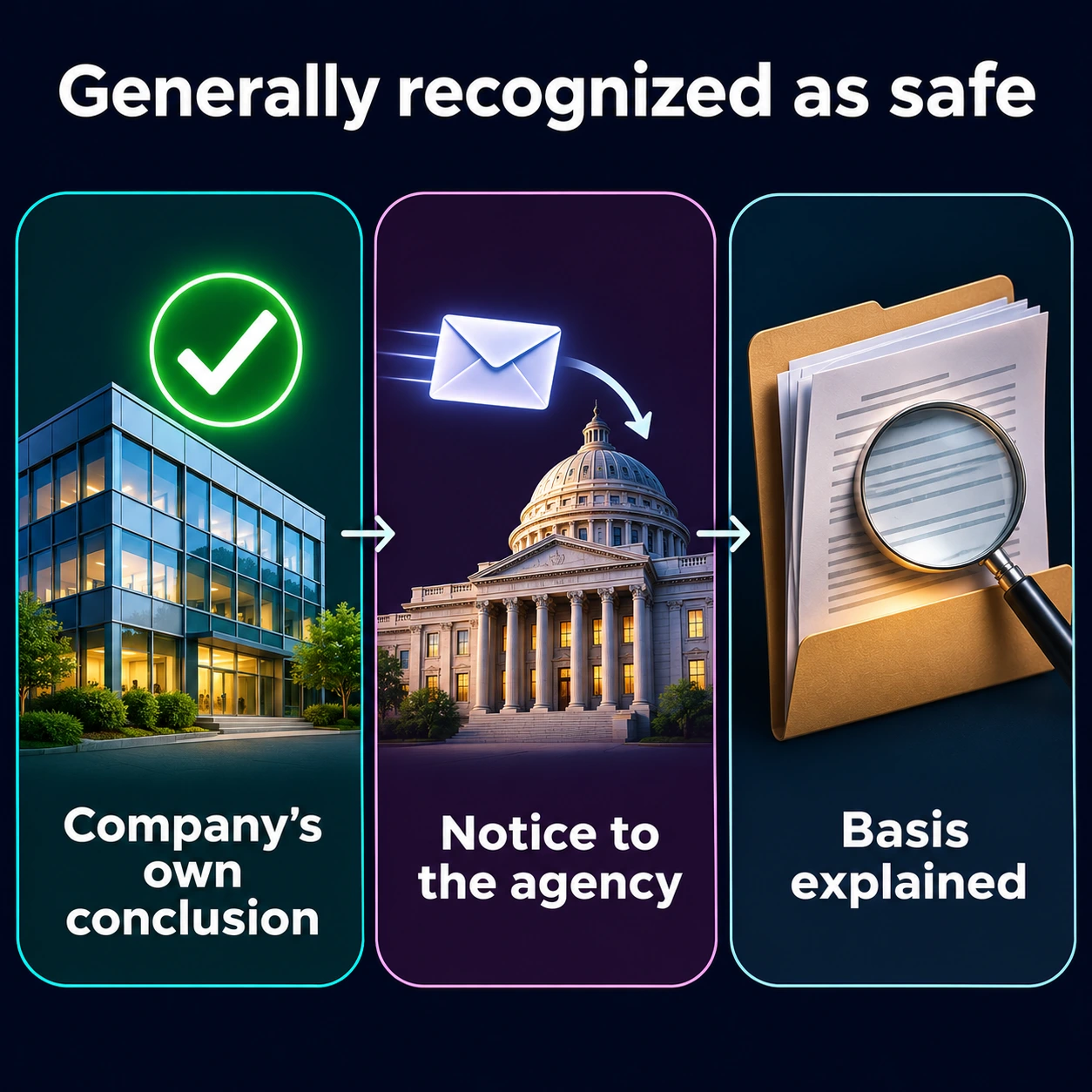

On Tuesday 11 August 2026 the U.S. Food and Drug Administration published a proposed rule, “Substances Generally Recognized as Safe,” at 91 FR 51834 (FR Doc. 2026-16296, Docket No. FDA-2025-N-3262). If it is finalized, any company that adds a substance to human or animal food on the basis of its own conclusion that the substance is “generally recognized as safe” (generally recognized as safe, GRAS) would have to notify the U.S. Food and Drug Administration (FDA) and explain the basis for that conclusion. Today such notification is voluntary. Public comments are open until 9 December 2026.
This page reports what the proposed rule and the accompanying Department of Health and Human Services (HHS) announcement say: what generally recognized as safe means, what would change, the exceptions and the one-year pathway for ingredients already on the market, what the proposal does not do, its estimated costs, its dates and legal status as of 11 October 2026, and how it fits more than sixty years of earlier U.S. Food and Drug Administration actions on food ingredients. Background on additives themselves is on the site’s Food Additives page.
Table of Contents
- What the U.S. Food and Drug Administration Proposed
- What Generally Recognized as Safe Means and How the Current System Works
- What the Proposal Would Change
- The Exceptions to the Notice Requirement
- The One-Year Pathway for Ingredients Already on the Market
- What Falls Outside Generally Recognized as Safe: Dietary Supplement Ingredients and Other Categories
- The Reasons the U.S. Food and Drug Administration Gives
- What the Proposal Does Not Do
- Estimated Costs and Effects
- Dates and Legal Status as of 11 October 2026
- The Same-Day Ultra-Processed Food Definition Step
- How the Proposal Fits Earlier U.S. Food and Drug Administration Actions on Food Ingredients
- Primary Documents
- Key Research Papers
- Connections
- Featured Videos
1. What the U.S. Food and Drug Administration Proposed
The document is a proposed rule, the stage of federal rulemaking at which an agency publishes the text of a regulation it is considering and invites public comment before deciding whether to adopt it. It appeared in the Federal Register, the U.S. government’s daily journal of agency rules and notices, on 11 August 2026 at volume 91, pages 51834–51881. Comments are collected in a public docket — an online file where the rule, supporting documents and every public comment are kept — numbered FDA-2025-N-3262. The rule carries Regulation Identifier Number (RIN) 0910-AJ02.
The rule’s summary states that the U.S. Food and Drug Administration “is proposing to require the submission of generally recognized as safe (GRAS) notices for the use of a human or animal food substance purported to be generally recognized as safe under the conditions of its intended use.” It would amend two parts of the Code of Federal Regulations: 21 CFR part 170 (human food) and 21 CFR part 570 (animal food). The rule notes that “food substances” include both ingredients and substances that reach food indirectly, such as from food packaging.
U.S. Department of Health and Human Services announced the proposal the day before, on 10 August 2026, in a press release titled “Secretary Kennedy Announces Landmark Food Policy Reforms to Advance President Trump’s MAHA Agenda.” The White House Office of Information and Regulatory Affairs has classed the proposal as an “economically significant regulatory action” under Executive Order 12866, the label given to rules expected to have an annual effect of $100 million or more or a material effect on a sector of the economy, public health or safety.
2. What Generally Recognized as Safe Means and How the Current System Works
The 1958 law. The Food Additives Amendment of 1958 created a premarket review and approval process for “food additives”: before such a substance can be added to food, the U.S. Food and Drug Administration must authorize it. In defining a food additive, however, Congress excluded substances that are “generally recognized as safe” by qualified experts under the conditions of their intended use. A substance that is generally recognized as safe for a particular use is therefore not subject to U.S. Food and Drug Administration premarket approval for that use. The rule describes this as a balance: Congress exempted generally recognized as safe uses from premarket approval but gave the U.S. Food and Drug Administration authority to review substances on the market, including those purported to be generally recognized as safe, to decide whether they are in fact food additives that need approval.
Self-GRAS, or “independent conclusions.” Under current regulations a company that concludes a use of a substance is generally recognized as safe “may, but is not required to, notify U.S. Food and Drug Administration of this conclusion.” A conclusion reached without telling the U.S. Food and Drug Administration is what the rule calls an “independent conclusion of generally recognized as safe status”; it is commonly called self-GRAS. The rule states that a company’s conclusion (or a claim that it has independently “certified” a substance as generally recognized as safe) “does not necessarily mean that such a use is generally recognized as safe,” and that the U.S. Food and Drug Administration may determine otherwise on the evidence.
The voluntary notification program. The U.S. Food and Drug Administration first proposed its generally recognized as safe notification program in 1997, ran it as an interim pilot (its human food center filed the first notice in 1998), and finalized it in a 2016 rule (81 FR 54960). When a notice is filed, the U.S. Food and Drug Administration evaluates whether the data support the company’s conclusion and generally answers in one of three ways:
- a “no questions” letter, meaning the agency does not question the basis for the generally recognized as safe conclusion;
- a letter stating that the notice does not provide a sufficient basis for a generally recognized as safe conclusion (for example, because key data are missing or not publicly available);
- a letter confirming that the U.S. Food and Drug Administration has ceased to evaluate the notice at the company’s request.
The rule also states that under the current program there is no requirement that a company wait for the U.S. Food and Drug Administration’s response before selling the substance.
3. What the Proposal Would Change
The rule’s executive summary lists its major provisions. If finalized, it would:
- Make notification mandatory. Any person introducing a substance into interstate commerce under the generally recognized as safe provision would have to notify the U.S. Food and Drug Administration of the basis for concluding it is generally recognized as safe under its intended conditions of use, unless an exception applies (section 4 below). This would be set out in a rewritten 21 CFR 170.205 for human food and 570.205 for animal food.
- Treat a missing notice as a review priority. If the notice requirement is not met for a substance’s intended use, the U.S. Food and Drug Administration says it would “consider such noncompliance as a factor in its prioritization of food substances for post-market review.”
- Create a time-limited, streamlined option for certain uses of substances already on the market, in place of a full notice (section 5 below).
- Require electronic filing. Generally recognized as safe notices would be submitted electronically through the U.S. Food and Drug Administration’s Centralized Online Submission Module (proposed 170.210), and material in other languages would need English translations (proposed 170.220).
- Revise the “threshold of regulation” exemption for human food, a shortened review for substances present in the diet at very low levels, to reflect updated scientific guidance and to cover substances used in food as well as food-contact substances (proposed 170.39).
- Remove an outdated section (170.285) on generally recognized as safe affirmation petitions still pending in 2016; the rule states none remain.
The U.S. Department of Health and Human Services announcement adds that the proposal would expand the public inventory of submitted generally recognized as safe notices. The rule’s stated purpose is “greater transparency about substances that are added to food,” so that the U.S. Food and Drug Administration can more efficiently decide whether a use is in fact a food additive use that needs its approval.
4. The Exceptions to the Notice Requirement
Proposed 21 CFR 170.205(b) lists seven situations in which no new generally recognized as safe notice would be required for human food, because, in the U.S. Food and Drug Administration’s words, a notice would be “unnecessary or unwarranted”:
- An existing “no questions” letter already covers the substance under the same conditions of use. The rule notes that a significantly different identity, manufacturing process or use (food categories, use levels, specifications) may fall outside the earlier letter.
- The substance is listed or affirmed as generally recognized as safe in U.S. Food and Drug Administration regulations (21 CFR parts 182, 184 or 186) for that use.
- Long-standing foods and affirmed substances: a food ingredient of natural biological origin widely consumed for its nutrients in the United States before 1 January 1958, conventionally processed, with no known hazard (21 CFR 170.30(d)); or a use not significantly different from one affirmed in part 184 or 186 with no limit other than good manufacturing practice.
- An established U.S. Food and Drug Administration consultation process has already considered the use — the voluntary premarket consultations for foods from new plant varieties developed through biotechnology, or the consultations for foods from cultured animal cells — and did not identify a need for a generally recognized as safe notice. Informal U.S. Food and Drug Administration advice does not qualify.
- A threshold-of-regulation exemption covers the use.
- An effective food-contact notification covers the use, for the manufacturer or supplier named in that notification only.
- A streamlined submission for an ingredient already on the market has been made and appears on the U.S. Food and Drug Administration’s public list, unless the U.S. Food and Drug Administration later determines that a full notice or a food additive petition is needed.
The animal food version (570.205(b)) does not include the threshold-of-regulation and food-contact exceptions, because there is no threshold-of-regulation exemption or food-contact notification program for animal food. It adds two exceptions of its own: uses already cleared through an established U.S. Food and Drug Administration animal food ingredient consultation, and feed ingredients listed in, and used according to, the ingredient definitions published by the association of state feed-control officials (2024 edition), where the U.S. Food and Drug Administration has not publicly raised a concern about their generally recognized as safe status.
5. The One-Year Pathway for Ingredients Already on the Market
The rule acknowledges that “many persons have relied on” the current law to market substances on the basis of self-GRAS conclusions, and that requiring full notices for all of them “would likely overburden” the U.S. Food and Drug Administration’s review resources. It therefore proposes a new subpart F of part 170 with a shorter, one-time submission for substances introduced into commerce under the generally recognized as safe provision before a final rule takes effect.
Under proposed 21 CFR 170.305, a streamlined submission would have to include:
- the name and address of the submitter;
- the name of the substance;
- its conditions of intended use — the foods it is used in or in contact with, the levels of use, and the purposes;
- evidence that the substance was on the market for that use before the final rule’s effective date;
- the generally recognized as safe notice file number, if the U.S. Food and Drug Administration earlier stopped evaluating a notice for the same use at the company’s request.
The submission would not have to include the underlying safety data. The pathway would be closed to uses the U.S. Food and Drug Administration has already found not generally recognized as safe and to uses that received an “insufficient basis” letter; those would need a full notice or a food additive petition.
Under proposed 170.305(c)(3), submissions must be made electronically within one year after the final rule’s effective date and “will not be accepted beyond one year.” The U.S. Food and Drug Administration would post the information on a public list and states that a listing “does not mean that we have reviewed the generally recognized as safe status” of the use. The agency could ask submitters questions and could decide that a full generally recognized as safe notice or a food additive petition is required for a listed use.
6. What Falls Outside Generally Recognized as Safe: Dietary Supplement Ingredients and Other Categories
The law excludes six categories from the definition of “food additive,” and the rule explains that because they are not food additives, they cannot be the subject of a generally recognized as safe notice and are not eligible for generally recognized as safe classification (proposed 170.205(c)):
- pesticide chemical residues in or on raw or processed food;
- pesticide chemicals;
- color additives, which have their own separate approval process;
- substances used under a sanction or approval granted before 6 September 1958;
- new animal drugs;
- ingredients described in section 201(ff) of the Federal Food, Drug, and Cosmetic Act in, or intended for use in, a dietary supplement.
The last point means that ingredients in dietary supplements are governed by the separate supplement law, not by this generally recognized as safe rule. The U.S. Food and Drug Administration’s separate 2026 public meeting on what counts as a dietary ingredient is described on the dietary ingredient page.
7. The Reasons the U.S. Food and Drug Administration Gives
The Secretary’s directive. The rule states that on 10 March 2025 the Secretary of Health and Human Services, Robert F. Kennedy Jr., directed the U.S. Food and Drug Administration to explore rulemaking “to eliminate the pathway for firms to introduce purported generally recognized as safe uses of substances into the market without notifying U.S. Food and Drug Administration,” and that this aligns with the Administration’s Make America Healthy Again initiative.
Information gaps. The U.S. Food and Drug Administration writes that the voluntary program leaves gaps in what both the agency and the public know about substances added to food. It cites a 2010 U.S. Government Accountability Office (GAO) report, “Food Safety: U.S. Food and Drug Administration Should Strengthen Its Oversight of Food Ingredients Determined to be Generally Recognized as Safe (GRAS),” which found that the U.S. Food and Drug Administration generally has no information about generally recognized as safe determinations not submitted to it, described one company that made about five such determinations a year without notifying the U.S. Food and Drug Administration, and recommended a strategy to require basic information on every generally recognized as safe determination.
Scale. The rule cites estimates that, as of January 2011, more than 10,000 additives were used in food, including about 1,000 human food substances for which companies had claimed independent generally recognized as safe conclusions. By its own count, the U.S. Food and Drug Administration’s human food program had filed over 1,200 generally recognized as safe notices as of 25 March 2025, and its veterinary center 75 notices as of 28 March 2025.
Timing of safety action. The U.S. Food and Drug Administration states that companies “are introducing substances into food without publicly disclosing the underlying safety information,” and that it “sometimes becomes aware of the need to take action regarding unsafe substances in food only after adverse public health events occur.” It compares the present to the years before 1958, when “numerous substances with unknown safety profiles” were being added to food, and says that today “an unknown number of substances” enter the market under the generally recognized as safe provision.
The benefits it expects. A mandatory program, the rule says, would give the U.S. Food and Drug Administration, state regulators, consumers, industry and consumer groups more information, help the U.S. Food and Drug Administration confirm that generally recognized as safe conclusions have a scientific basis and are documented, and allow earlier engagement with companies when questions arise.
8. What the Proposal Does Not Do
- It is not a premarket approval system. The rule states that the proposed program and 170.205(a) “do not establish a premarket review program for purportedly generally recognized as safe substances.” A company could keep selling a purported generally recognized as safe substance before submitting a notice, or after submitting one but before the U.S. Food and Drug Administration files it, and could reach a generally recognized as safe conclusion about a new use and sell it before notifying. Generally recognized as safe uses remain outside the premarket approval requirements for food additives under section 409 of the law.
- Filing is not a safety finding. The rule says the filing of a notice “does not mean that the substance … is generally recognized as safe,” and a listing under the one-year pathway does not mean the U.S. Food and Drug Administration has reviewed it.
- It is not final. As a proposal it has no legal effect yet. Nothing changes on food labels or store shelves in 2026 as a result of it.
- It does not cover dietary supplement ingredients, color additives, pesticides or the other categories excluded from the definition of food additive (section 6).
- It does not publish a definition of ultra-processed food. That separate step is at the White House budget office as a white paper, not a rule (section 11).
9. Estimated Costs and Effects
The rule’s preliminary economic analysis estimates the present value of costs at about $89.6 million over 10 years (range $34.9 million to $210.0 million), discounted at 3 percent in 2024 dollars, or about $82.3 million at a 7 percent discount rate. Annualized, that is about $10.5 million a year at 3 percent (range $4.1 to $24.6 million) and $11.7 million at 7 percent.
For companies, the listed one-time costs are reading the rule, revising internal procedures and, for those who choose it, preparing streamlined submissions for ingredients already on the market (including translation costs for manufacturers abroad). Recurring costs are preparing notices for new uses that would previously have been self-GRAS. For the U.S. Food and Drug Administration, costs are reviewing the one-time submissions and evaluating the ongoing stream of notices.
The U.S. Food and Drug Administration also notes possible shifts of market share between manufacturers: if a notice leads to a finding that there is an insufficient basis for a generally recognized as safe conclusion, products using that substance could be affected. The agency says it cannot estimate the size of such effects. The benefits it describes are informational — more knowledge for the U.S. Food and Drug Administration and the public about substances in human and animal food — and the rule says it is intended in part to “strengthen public confidence in U.S. Food and Drug Administration’s ability to oversee the safety of the U.S. food supply.”
10. Dates and Legal Status as of 11 October 2026
- Status: proposed rule, open for comment. Not in effect.
- Published: 11 August 2026 (announced by U.S. Department of Health and Human Services on 10 August 2026).
- Comment deadline: 9 December 2026, for the rule itself and for the separate Paperwork Reduction Act comments on its information-collection burden. Electronic comments are accepted at regulations.gov under Docket No. FDA-2025-N-3262 until 11:59 p.m. Eastern Time that day; paper comments go to the U.S. Food and Drug Administration’s Dockets Management Staff (HFA-305), 5630 Fishers Lane, Rm. 1061, Rockville, MD 20852. The rule states that late comments will not be considered and that electronic comments are posted publicly, unchanged.
- U.S. Food and Drug Administration webinar: the U.S. Food and Drug Administration lists a webinar on the proposed rule for 15 October 2026.
- Proposed timing if finalized: a final rule would take effect 60 days after publication. The mandatory notice requirement (170.205 and 570.205) would have a compliance date 18 months after that effective date. The one-year window for streamlined submissions would run from the effective date.
The U.S. Food and Drug Administration also asks for comment on alternatives that could reduce burden — for example, allowing streamlined submissions for all purported generally recognized as safe substances — provided they still meet its goals of preventing unsafe additives and increasing transparency.
11. The Same-Day Ultra-Processed Food Definition Step
The U.S. Department of Health and Human Services release of 10 August 2026 paired the generally recognized as safe proposal with a second step: U.S. Department of Health and Human Services and the U.S. Department of Agriculture submitted the first proposed federal definition of ultra-processed foods for final review. The definition itself was not released.
The federal regulatory review website lists the item as “White Paper: Proposed Definition of Ultra-Processed Food,” RIN 0910-ZD60, from U.S. Department of Health and Human Services/U.S. Food and Drug Administration, received on 3 August 2026 for review under Executive Order 12866, at the stage “Notice.” As of 11 October 2026 it is a pending white paper, not a proposed or final rule, and its text is not public. What the research literature says about these foods is on the site’s Ultra-Processed Foods page.
12. How the Proposal Fits Earlier U.S. Food and Drug Administration Actions on Food Ingredients
The rule’s background section traces the following history:
- 1950–1952: the Delaney Committee. A House committee chaired by Representative James Delaney investigated chemicals in food and reported in June 1952 that substances were being used “without adequate and sufficient testing of their possible long-range injurious effects,” recommending premarket safety review.
- 1958: the Food Additives Amendment. Congress created premarket approval for food additives, with the generally recognized as safe exclusion, for human and animal food alike.
- 1969–1972: the cyclamate episode and the generally recognized as safe review. On 21 October 1969 the U.S. Food and Drug Administration removed cyclamate sweeteners from the generally recognized as safe list after they were implicated in bladder tumors in rats. The President then directed the U.S. Food and Drug Administration to re-examine every substance on the generally recognized as safe list; the agency announced a comprehensive study in December 1970, revoked informal generally recognized as safe opinion letters issued before 9 April 1970, and in 1972 created the generally recognized as safe affirmation petition process.
- 1997–2016: from affirmation to voluntary notice. The U.S. Food and Drug Administration proposed replacing the resource-heavy affirmation petitions with a voluntary notification procedure in 1997, ran a pilot from 1998, and finalized the voluntary program on 17 August 2016.
- 2010: the GAO report recommending that the U.S. Food and Drug Administration require basic information on all generally recognized as safe determinations.
- 10 March 2025: the U.S. Department of Health and Human Services Secretary directs the U.S. Food and Drug Administration to explore ending undisclosed self-GRAS.
- 11 August 2026: this proposed rule.
The same year brought other U.S. Food and Drug Administration steps on food chemicals, described on the food dye actions and BHA, BHT and ADA reassessments pages. How U.S. additive rules compare with Europe’s is covered on the US vs EU Food Safety page, and the August announcement was reported in the site’s news article of 10 August 2026.
13. Primary Documents
- Food and Drug Administration, U.S. Department of Health and Human Services (2026). Substances Generally Recognized as Safe; Proposed Rule. Federal Register 91:51834–51881, 11 August 2026. Docket No. FDA-2025-N-3262; RIN 0910-AJ02 — FR Doc. 2026-16296 (official PDF)
- Public docket FDA-2025-N-3262 — regulations.gov FDA-2025-N-3262
- U.S. Department of Health and Human Services (2026). Secretary Kennedy Announces Landmark Food Policy Reforms to Advance President Trump’s MAHA Agenda. U.S. Department of Health and Human Services press release, 10 August 2026 — hhs.gov press room
- Office of Information and Regulatory Affairs (2026). White Paper: Proposed Definition of Ultra-Processed Food. U.S. Department of Health and Human Services/FDA, RIN 0910-ZD60, received 3 August 2026, EO 12866 review pending, stage: Notice — reginfo.gov review record
- U.S. Food and Drug Administration (2026). Webinar: U.S. Food and Drug Administration’s Generally Recognized as Safe (GRAS) Proposed Rule, 15 October 2026 — fda.gov webinar page
Key Research Papers
- Burdock GA, Carabin IG (2004). Generally recognized as safe (GRAS): history and description. Toxicology Letters 150(1):3-18 — PubMed PMID: 15068820
- Neltner TG, Alger HM, O'Reilly JT, Krimsky S, Bero LA, Maffini MV (2013). Conflicts of interest in approvals of additives to food determined to be generally recognized as safe: out of balance. JAMA Internal Medicine 173(22):2032-2036 — PubMed PMID: 23925593
- Neltner TG, Alger HM, Leonard JE, Maffini MV (2013). Data gaps in toxicity testing of chemicals allowed in food in the United States. Reproductive Toxicology 42:85-94 — PubMed PMID: 23954440
- Maffini MV, Alger HM, Olson ED, Neltner TG (2013). Looking back to look forward: a review of FDA's food additives safety assessment and recommendations for modernizing its program. Comprehensive Reviews in Food Science and Food Safety 12(4):439-453 — PubMed PMID: 33412683
- Maffini MV, Neltner TG, Vogel S (2017). We are what we eat: regulatory gaps in the United States that put our health at risk. PLoS Biology 15(12):e2003578 — PubMed PMID: 29261673
- Trasande L, Shaffer RM, Sathyanarayana S; Council on Environmental Health (2018). Food additives and child health. Pediatrics 142(2):e20181410 — PubMed PMID: 30037972
- Matouskova K, Neltner TG, Maffini MV (2023). Out of balance: conflicts of interest persist in food chemicals determined to be generally recognized as safe. Environmental Health 22(1):59 — PubMed PMID: 37670318
These papers are independent academic and professional-society analyses of the generally recognized as safe system and of U.S. food additive oversight; they are not cited in the proposed rule’s reference list.
PubMed Topic Searches
Connections
- U.S. Food and Drug Administration Actions in 2026
- U.S. Food and Drug Administration and Regulation
- U.S. Food and Drug Administration Food Dye Actions in 2026
- U.S. Food and Drug Administration Safety Reassessments of BHA, BHT and ADA (2026)
- U.S. Food and Drug Administration Public Meeting on What Counts as a Dietary Ingredient (2026)
- The Generally Recognized as Safe Loophole: What the U.S. Food and Drug Administration’s New Rule Would Actually Change
- Food Additives
- US vs EU Food Safety
- Ultra-Processed Foods
- Ultra-Processed Foods and Weight Gain