⚠ Evidence warning: Clinical trials or other evidence do not support the claim that disruption of the dorsomedial thalamus severs the cortical-subcortical loop needed to consolidate new memories. This page keeps it as a report of what people, websites or other media say.
Korsakoff Syndrome
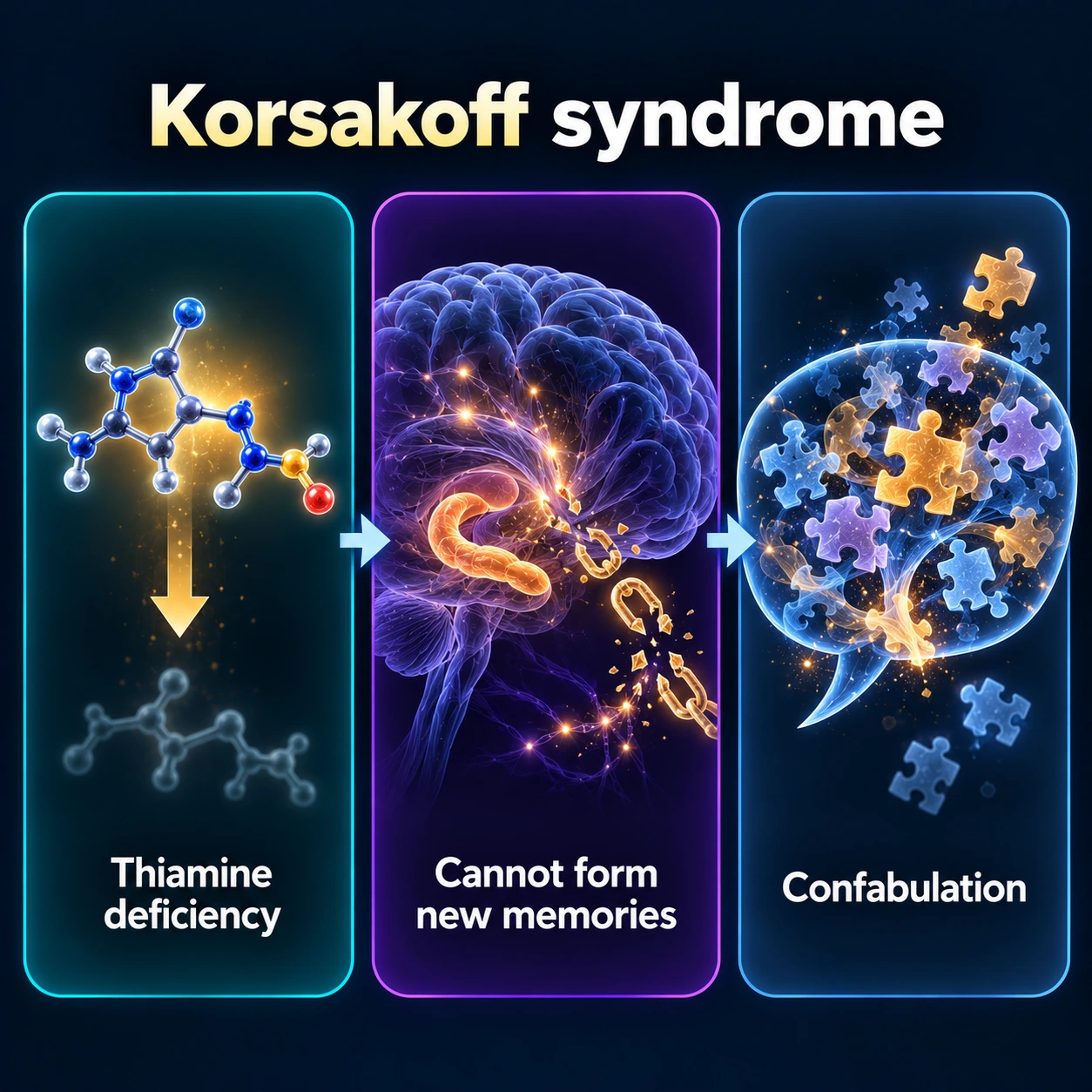
Korsakoff Syndrome is a severe, chronic disorder of memory caused by thiamine (vitamin B1) deficiency — most often the lasting aftermath of untreated or inadequately treated Wernicke's Encephalopathy. Its hallmark is a profound and permanent inability to form new memories, combined with a striking tendency to fill memory gaps with plausible but invented details the patient believes to be true — a phenomenon called confabulation. Unlike dementia, thinking speed, personality, and conversation abilities may appear surprisingly intact. Korsakoff Syndrome is largely preventable: it develops only when the underlying thiamine deficiency goes unrecognized or undertreated. This page covers the brain structures damaged, how to distinguish Korsakoff from other memory disorders, the realistic outlook for recovery, and how to support patients and families living with this condition.
Interactive Visualization What Alcohol Actually Does Inside Your Liver Ethanol becomes acetaldehyde becomes acetate — and the reduced nicotinamide adenine dinucleotide (NADH) that piles up shuts down fat burning, stalls your blood sugar and drives uric acid up. Nothing speeds it up. Launch →
Table of Contents
- What Korsakoff Syndrome Is — and Is Not
- The Brain Structures Behind the Memory Loss
- Confabulation: Why Patients "Remember" Things That Never Happened
- Causes: Alcoholic and Non-Alcoholic
- Distinguishing Korsakoff from Dementia and Other Memory Disorders
- Diagnosis
- Treatment and Prognosis
- Living With Korsakoff Syndrome: Rehabilitation and Family Support
- Key Research Papers
- Connections
- Featured Videos
What Korsakoff Syndrome Is — and Is Not
Korsakoff Syndrome is a chronic amnestic disorder: its core defect is severe anterograde amnesia — an inability to form new memories after the onset of the illness — paired with variable retrograde amnesia, the loss of memories laid down before the illness struck. It sits at the chronic end of the Wernicke-Korsakoff spectrum: Wernicke's Encephalopathy is the acute, potentially reversible phase; Korsakoff Syndrome is the enduring consequence when the acute phase was not treated, not treated promptly enough, or not treated with adequate doses of thiamine.
Many patients develop Korsakoff Syndrome silently — without a recognized episode of Wernicke's Encephalopathy. Repeated subclinical episodes of thiamine deficiency, each too mild to be clinically dramatic, can accumulate enough damage over years to produce the full Korsakoff picture. By the time the syndrome is recognized, the window for acute treatment has already passed.
Understanding what is preserved is as important as understanding what is lost:
- Preserved: Immediate and working memory (a patient can repeat a phone number back moments after hearing it); procedural and implicit memory (motor skills, habits, learned routines); language; general intellectual ability; social manner and conversational fluency; personality — often largely intact
- Impaired: Declarative and episodic memory — the ability to learn and retain new facts and personal experiences; disorientation in time and place; severe retrograde amnesia spanning years to decades before onset
A crucial clinical point: many patients with Korsakoff Syndrome lack insight into their own memory impairment — a condition called anosognosia. They are not in denial. Their brain genuinely cannot perceive its own deficit. This means a patient may confidently describe what they "did this morning" when in fact they have no accurate memory of the day at all. Families often find this deeply confusing and sometimes interpret it as deliberate deception — it is not.
The Brain Structures Behind the Memory Loss
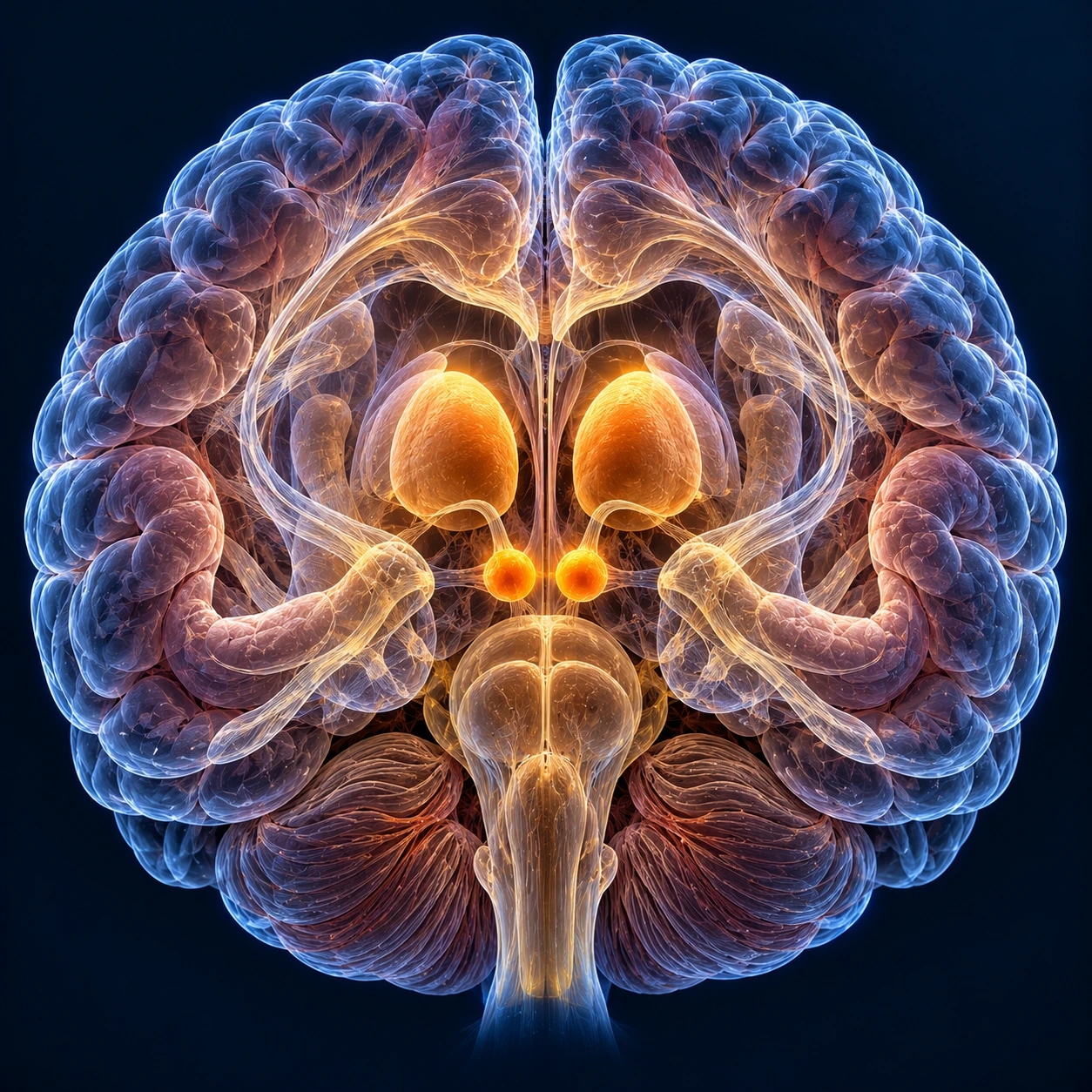
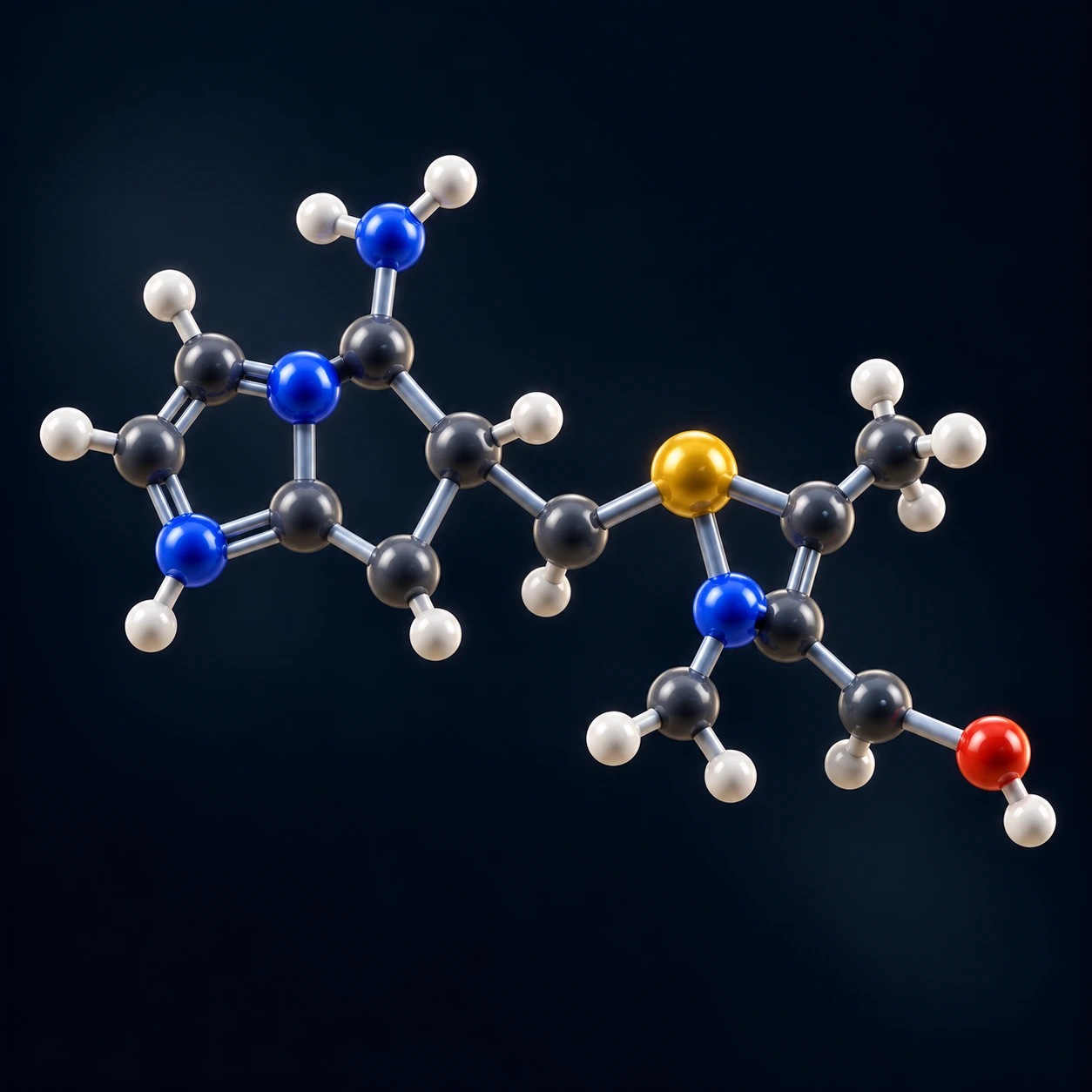
The memory failure in Korsakoff Syndrome is not global brain damage — it results from selective, metabolic injury to a small number of structures that are disproportionately vulnerable to thiamine deficiency. The mechanism is straightforward: thiamine pyrophosphate (TPP) is an essential cofactor for the enzyme alpha-ketoglutarate dehydrogenase in the tricarboxylic acid (TCA) cycle. Without enough thiamine, these high-energy-demand regions suffer metabolic failure and then glutamate-mediated excitotoxic neuronal death.
The key lesion sites are:
- Mamillary bodies: Small paired structures at the base of the hypothalamus that are critical relays in the Papez circuit — the neural loop running: hippocampus → fornix → mamillary bodies → anterior thalamus → cingulate cortex → entorhinal cortex → back to hippocampus. Mamillary body atrophy is visible on coronal magnetic resonance imaging (MRI) and is the most widely recognized structural marker of Korsakoff Syndrome. In a post-mortem study that counted neurons (Harding and colleagues, 2000), however, neuron loss in the mamillary bodies was substantial in heavy drinkers with Wernicke's encephalopathy whether or not they had amnesia, so this damage on its own does not explain the memory loss.
- Dorsomedial (mediodorsal) nucleus of the thalamus: This nucleus connects the prefrontal cortex with the limbic memory circuit and is damaged in Korsakoff Syndrome. The dorsomedial thalamus connects prefrontal cortex and the limbic memory circuit; its disruption severs the cortical-subcortical loop needed to consolidate new memories. It was once considered the most critical lesion for the dense anterograde amnesia, but Harding and colleagues found its neuron loss to be just as substantial in drinkers without amnesia as in those with it. Kopelman's 2009 review concludes that lesions in the mamillary bodies, the mamillothalamic tract and the anterior thalamus may be more important to memory loss than lesions in this nucleus.
- Anterior thalamic nuclei and the mamillothalamic tract: In the Harding study, neuron loss in the anterior thalamic nuclei was found consistently only in people with alcoholic Korsakoff syndrome. It was the first lesion shown to separate drinkers with amnesia from those without, and it supports the view that damage to the thalamic relay stations of the memory circuit is central to the disorder. The mamillothalamic tract is the bundle of nerve fibers carrying signals from the mamillary bodies to the anterior thalamus.
- Frontal lobe (secondary/associated dysfunction): Not a primary lesion site of thiamine deficiency, but metabolic stress and downstream disconnection produce frontal executive dysfunction — impairing source monitoring, temporal ordering of memories, and error-checking — which contributes substantially to confabulation.
Importantly, the hippocampus is relatively spared in Korsakoff Syndrome compared with Alzheimer's disease. Harding's group reported the hippocampus unaffected in both amnesic and non-amnesic alcoholics, while the prefrontal cortex and the cholinergic basal forebrain were damaged to the same extent in both groups. This explains a striking clinical paradox: a patient who cannot remember what they ate for breakfast, what year it is, or whether a family member visited yesterday can hold a fluid, contextually appropriate conversation — because language, social cognition, working memory, and procedural skills all depend on cortical and striatal systems largely untouched by the thalamo-mamillary lesions.
Confabulation: Why Patients "Remember" Things That Never Happened
Confabulation is one of the most striking and misunderstood features of Korsakoff Syndrome: the spontaneous production of fabricated, distorted, or misplaced memories — without any intent to deceive. The patient is not lying. They genuinely believe the confabulated memory is real.
There are two clinically recognized types:
- Provoked (momentary) confabulation: Emerges when the patient is directly questioned about recent events they cannot accurately recall. The brain fills the gap with plausible, often internally consistent content drawn from old memories or general knowledge. This is the more common form.
- Spontaneous (fantastic) confabulation: Elaborate, unprompted invented memories — for example, a bedridden patient describing in detail how they just returned from a fishing trip. This form is rarer, more dramatic, and is associated with more severe frontal lobe dysfunction superimposed on the amnestic core.
The neurological mechanism involves three converging failures:
- Failed source monitoring: The brain cannot reliably distinguish between a real past experience and something imagined, read, heard, or dreamed.
- Failed temporal tagging: Events cannot be placed in their correct time sequence — old memories intrude as if they were recent.
- Impaired error-checking: Frontal executive dysfunction means the brain does not flag the confabulation as implausible before it is expressed.
Confabulation typically diminishes over time as the condition stabilizes — spontaneous confabulation especially tends to recede, leaving mainly provoked confabulation — but the underlying amnesia generally does not resolve. For families, the most important message is that confabulation is neurological, not moral. Clinicians and carers report that arguing with a patient about the accuracy of their memories distresses the patient without changing the memory, and that gentle, matter-of-fact redirection works better.
Causes: Alcoholic and Non-Alcoholic
The single necessary cause is sustained thiamine (vitamin B1) deficiency. The population at risk is broader than many clinicians realize.
Alcoholic Korsakoff Syndrome accounts for roughly 80% of cases in Western countries. Chronic heavy alcohol use impairs thiamine absorption, reduces dietary thiamine intake, and accelerates thiamine depletion. In most cases there is no single dramatic Wernicke's episode — instead, insidious accumulation of subclinical damage over years eventually crosses the threshold of irreversibility. Alcohol may also contribute independent direct neurotoxicity to the frontal lobes, compounding the thiamine-deficiency-driven amnestic core.
Non-Alcoholic Causes (~20% of cases) include:
- Bariatric and gastric bypass surgery: Now the most common non-alcoholic cause. Altered anatomy and post-surgical vomiting impair thiamine absorption. Cases can emerge weeks to months after surgery.
- Hyperemesis gravidarum: Prolonged intractable vomiting in pregnancy depletes thiamine within 3–4 weeks. Wernicke-Korsakoff in pregnancy is a medical emergency.
- Prolonged "nothing by mouth" (NPO) status or total parenteral nutrition (TPN) without thiamine supplementation: An iatrogenic cause; standard TPN formulations include thiamine for this reason.
- Refeeding syndrome: Rapid carbohydrate loading in malnourished patients drives cellular thiamine uptake and can precipitate acute deficiency.
- Malignancy: Gastrointestinal and hematological cancers can reduce intake, absorption, and utilization.
- Anorexia nervosa and prolonged starvation
- Acquired immunodeficiency syndrome (AIDS)/human immunodeficiency virus (HIV) with malabsorption
- Renal dialysis: Thiamine is removed by dialysis; supplementation is standard.
- Magnesium deficiency: A secondary risk factor — magnesium is required for the conversion of thiamine to its active form TPP; severe hypomagnesemia can impair thiamine utilization even with adequate intake.
Korsakoff syndrome without alcohol: A systematic review of 623 published cases of Wernicke's encephalopathy or Wernicke-Korsakoff syndrome in people without an alcohol-use disorder (Scalzo and colleagues, 2015) found a wide range of illnesses behind them. Korsakoff syndrome or ongoing memory impairment was reported in 25% of these cases, although many reports did not describe memory at all; where the length of memory problems was recorded, 56% had memory loss that lasted beyond the acute illness. Compared with alcohol-related cases, these patients were more often women and younger, had a shorter precipitating illness and survived more often. The authors concluded that thiamine deficiency without alcohol can cause the full spectrum of the syndrome, including Korsakoff syndrome.
Distinguishing Korsakoff from Dementia and Other Memory Disorders
The clinical presentation of Korsakoff Syndrome — dense amnesia paired with relatively intact conversation and personality — is distinctive, but it overlaps enough with other conditions to require careful differential diagnosis.
Korsakoff Syndrome vs. Alzheimer's Disease: Alzheimer's causes global cognitive decline — language, visuospatial function, executive function, and memory all deteriorate together and progressively. Korsakoff patients have a narrow amnestic profile with strikingly preserved language and social skills. Age of onset for Korsakoff typically skews younger. The precipitant (alcohol, malnutrition, surgery) is identifiable in Korsakoff. Magnetic resonance imaging in Alzheimer's shows diffuse cortical and hippocampal atrophy; in Korsakoff, mamillary body atrophy with a relatively spared cortex.
Korsakoff Syndrome vs. Alcohol-Related Dementia (ARD): The distinction is real but not always clean. ARD involves broader cognitive impairment including executive function, attention, and visuospatial processing — beyond memory alone. The two conditions can co-exist in a patient with long-standing heavy alcohol use.
Korsakoff Syndrome vs. Transient Global Amnesia (TGA): TGA is a self-limited episode of amnesia that resolves completely within 24 hours. It is the opposite of Korsakoff in trajectory. Patients with TGA are distressed, repetitive in their questions, and then return to normal. TGA can come back: a 2022 meta-analysis of 36 studies with 4,514 TGA cases counted 544 recurrences (12.73%), about 1 in 8 people, and recurrence was more likely in people with a history of migraine (about 2 times) or depression (about 4 times) and when sexual activity came before the episode. Korsakoff memory loss, by contrast, is long-lasting in most patients, with substantial recovery in only a minority (see Treatment and Prognosis).
Korsakoff Syndrome vs. Hippocampal Amnesia (e.g., post-anoxic): Both can present with severe anterograde amnesia. The key anatomical difference: Korsakoff primarily damages the thalamus and mamillary bodies with a relatively spared hippocampus, while post-anoxic amnesia damages the hippocampus directly. Procedural memory tends to be better preserved in Korsakoff because the basal ganglia and cerebellum, which support motor learning, are unaffected.
Frontotemporal Dementia (FTD): FTD presents with prominent behavioral changes (disinhibition, apathy, social inappropriateness) or progressive language dysfunction; memory is often relatively preserved in the early stages — the opposite of Korsakoff's pattern.
Diagnosis
Korsakoff Syndrome is primarily a clinical diagnosis built from history, neuropsychological testing, and supportive imaging. There is no single confirmatory biomarker.
History: A clear precipitant for thiamine deficiency (chronic alcohol use, recent bariatric surgery, prolonged vomiting, malnutrition, TPN without thiamine) combined with gradual or step-wise onset of dense amnesia is the essential clinical signal. A history of a recognized or suspected Wernicke's episode — acute confusion, ophthalmoplegia, and ataxia — before the amnesia crystallized is highly informative but is absent in many cases.
Neuropsychological testing: Formal testing confirms the characteristic pattern: dense anterograde amnesia (severely impaired performance on verbal memory tasks such as Logical Memory and Word Lists, and visual memory tasks) with relatively preserved working memory (digit span normal), procedural learning (intact), and general intellectual function. Confabulation may be elicited formally or observed during the assessment.
Magnetic resonance imaging brain: The pathognomonic but often subtle finding is mamillary body atrophy, best visualized on coronal T1-weighted sequences. Thalamic signal change on FLAIR may be seen in the subacute setting. Magnetic resonance imaging may be normal in mild or early cases. Cortical atrophy and white matter change may reflect co-existing alcohol-related brain damage.
Laboratory workup:
- Serum thiamine: Often normal by the time Korsakoff Syndrome is established, because the acute deficiency phase has already resolved or been partially treated. A normal thiamine level does not exclude the diagnosis.
- Vitamin B12 and methylmalonic acid / homocysteine: To exclude concurrent B12 deficiency, which can co-occur in malnourished patients and heavy alcohol users, and causes its own neurological syndrome.
- Serum magnesium: Low magnesium impairs thiamine utilization; correction is required alongside thiamine replacement.
- Complete blood count (CBC) and liver function tests: Macrocytosis (folate, B12, alcohol effect), thrombocytopenia, and liver disease are common in the alcoholic population and inform the broader clinical picture.
Treatment and Prognosis
The central point of treatment is immediate thiamine replacement whenever Wernicke's Encephalopathy is suspected — before Korsakoff Syndrome becomes established. The 2010 European Federation of Neurological Societies (EFNS) guideline states that thiamine should be given before any carbohydrate, 200 mg three times daily, preferably intravenously; this recommendation carries its lowest evidence grade (Level C). Some hospital protocols use higher doses, such as 500 mg three times daily for at least three days. See the Wernicke's Encephalopathy page for the full acute dosing protocol.
For established Korsakoff Syndrome — where the acute phase has already caused irreversible thalamo-mamillary lesions — thiamine replacement stabilizes the condition and prevents further progression but does not reverse the neuronal loss already sustained. Ongoing oral thiamine supplementation is nonetheless maintained to prevent additional deficiency injury.
Recovery statistics from long-term follow-up studies:
- Approximately 25% of patients achieve substantial or complete recovery of functional memory over months to years.
- Approximately 50% of patients show partial improvement — better orientation, reduced confabulation, improved day-to-day independence — but with residual significant amnesia.
- Approximately 25% of patients show no meaningful improvement and require long-term supervised care.
Recovery, when it occurs, unfolds over months to years. Most improvement that will occur is seen within the first two years; the functional plateau reached by that point is generally what remains. The following factors are associated with better or worse outcomes:
- Favorable: Early thiamine treatment, shorter duration of deficiency before intervention, younger age, absence of severe magnetic resonance imaging mamillary body atrophy, sustained alcohol abstinence
- Unfavorable: Delayed or inadequate thiamine treatment, severe and bilateral mamillary body atrophy on magnetic resonance imaging, continued alcohol use, prolonged antecedent malnutrition
Sustained alcohol abstinence is central to recovery; Kopelman's 2009 review calls abstinence "the cornerstone of any rehabilitation programme". Continued drinking prevents recovery and causes further brain injury. Structured alcohol treatment — including pharmacotherapy (naltrexone, acamprosate) and behavioral support — is described as an integral part of Korsakoff management, not an optional add-on.
Magnesium deficiency is corrected alongside thiamine; without adequate magnesium, thiamine cannot be effectively converted to its active TPP form, and thiamine replacement works less well.
What the trials show, and long-term outlook: Thiamine has been the treatment of choice for more than 50 years, but the trial evidence on dosing is thin. A Cochrane review (Day and colleagues, 2013) found only two randomized trials, and only one (107 people given one of five intramuscular doses for 2 days) had usable data; it concluded that trial evidence is insufficient to set the dose, frequency, route or duration of thiamine for preventing or treating Wernicke-Korsakoff syndrome in people who misuse alcohol, so current guidelines rest on case reports and clinical experience. On the long term, Kopelman's review notes that there are few long-term follow-up studies, but that people with Korsakoff syndrome are reported to have a normal life expectancy if they remain abstinent from alcohol.
Living With Korsakoff Syndrome: Rehabilitation and Family Support
Because the episodic memory deficit in Korsakoff Syndrome is permanent in the majority of patients, rehabilitation focuses on compensatory strategies rather than attempting to rebuild declarative memory. The goal is maximizing function, safety, and quality of life within the constraints of the deficit.
External memory aids and structured routines:
- Written diaries and notebooks: The patient writes key events, appointments, names, and observations immediately after they occur and reviews the notebook regularly. This circumvents the failed encoding by offloading memory to an external record the patient can check.
- Smartphones and digital tools: Alarms, calendar reminders, voice memos, and photos can serve as practical memory prosthetics for appointments, medication schedules, and names.
- Rigid daily routines: Consistency of environment, schedule, and sequence of activities reduces reliance on episodic memory. The more an activity becomes habitual procedure, the more reliably the procedurally-intact brain can perform it without conscious memory recall.
- Familiar environments: Novel settings are profoundly disorienting for Korsakoff patients. Home is safer and less cognitively demanding than a hospital ward or new residence.
Specialized rehabilitation techniques:
- Errorless learning: Skills and information are taught in ways that eliminate trial-and-error mistakes, because amnestic patients cannot learn from errors — they cannot remember having made them. Step-by-step guided practice with immediate correction prevents wrong responses from becoming habitual.
- Spaced retrieval: Gradually increasing the interval at which a target piece of information is recalled and rehearsed — exploiting preserved procedural and implicit learning mechanisms.
- Procedural learning for ADLs: Activities of daily living (dressing, cooking simple meals, personal hygiene routines) can often be retained as procedural sequences even when the patient cannot consciously recall having practiced them.
New learning is possible: Kopelman's 2009 review reports that people with Korsakoff syndrome are capable of new learning, particularly if they live in a calm and well-structured environment and if new information is cued (prompted with hints). Implicit memory — learning shown by doing rather than by conscious recall — is preserved, while the learning of new facts varies from person to person. The same review notes a shortage of suitable long-term care places for these patients, although research has shown that good practice has beneficial effects; patients often stay for long periods in acute hospital beds.
Family education is as important as patient rehabilitation:
- Confabulation is neurological and involuntary — not lying, not manipulation. Carers report that arguing with confabulated memories distresses the patient and changes nothing, and that gentle, matter-of-fact redirection works better.
- The patient's apparent conversational normality can be deeply misleading to families. A fluent, socially appropriate exchange does not mean the patient has remembered the conversation. Apparent comprehension in the moment does not translate to later recall.
- Caregiver burden in Korsakoff Syndrome is high, comparable to caring for someone with advanced dementia. Respite care, carer support groups, and brain-injury charities (for example Headway in the UK and the Brain Injury Alliance in the US) are among the supports families use.
- Clinicians describe setting realistic expectations early. The goal is plateau management and quality of life — not cure. Many families grieve the loss of the person as they were, which is a legitimate and recognized process.
Placement and safety: Many patients with Korsakoff Syndrome cannot live independently. The inability to learn new safety information — not to touch a hot stove, not to leave a gas ring on, not to take medication twice — makes unsupervised living dangerous. Supervised residential care or intensive home support is often necessary for long-term management.
Key Research Papers
- Kopelman MD. The Korsakoff syndrome. Br J Psychiatry. 1995;166(2):154–173. Comprehensive clinical and neuropsychological review of Korsakoff Syndrome covering anatomy, memory systems, confabulation, and prognosis; a standard reference for the syndrome. — PubMed PMID: 7728359 · doi:10.1192/bjp.166.2.154
- Victor M, Adams RD, Collins GH. The Wernicke-Korsakoff syndrome. A clinical and pathological study of 245 patients, 82 with post-mortem examinations. Contemp Neurol Ser. 1971;7:1–206. The landmark monograph establishing the neuropathological basis of the Wernicke-Korsakoff spectrum and its relationship to thiamine deficiency. — PubMed PMID: 5162155
- Galvin R, et al. EFNS guidelines for diagnosis, therapy and prevention of Wernicke Encephalopathy. Eur J Neurol. 2010;17(12):1408–1418. European Federation of Neurological Societies evidence-based guidelines; covers acute thiamine dosing, prevention, and the critical importance of treating WE aggressively to prevent Korsakoff Syndrome. — PubMed PMID: 20642790 · doi:10.1111/j.1468-1331.2010.03153.x
- Caine D, et al. Operational criteria for the classification of chronic alcoholics: identification of Wernicke's encephalopathy. J Neurol Neurosurg Psychiatry. 1997;62(1):51–60. Proposes clinical criteria for Wernicke's encephalopathy (WE) requiring two of four signs (dietary deficiency, eye-movement abnormality, cerebellar dysfunction, and altered mental state or mild memory impairment), tested on 106 alcoholics from a large post-mortem sample; notes that most patients do not show all three signs of the classical triad, and that WE was under-recognized only when it occurred with hepatic encephalopathy (50% sensitivity). — PubMed PMID: 9010400 · doi:10.1136/jnnp.62.1.51
- Harding A, Halliday G, Caine D, Kril J. Degeneration of anterior thalamic nuclei differentiates alcoholics with amnesia. Brain. 2000;123(Pt 1):141–154. Post-mortem study showing that it is neuronal loss in the anterior thalamic nuclei, not mamillary body damage alone, that separates alcoholics who became amnesic from those who did not. — PubMed PMID: 10611128 · doi:10.1093/brain/123.1.141
- Kopelman MD, Thomson AD, Guerrini I, Marshall EJ. The Korsakoff syndrome: clinical aspects, psychology and treatment. Alcohol Alcohol. 2009;44(2):148–154. Concise review of clinical features, neuropsychological profile, treatment options, and realistic prognosis; useful for clinicians unfamiliar with the syndrome. — PubMed PMID: 19151162 · doi:10.1093/alcalc/agn118
- Nahum L, Bouzerda-Wahlen A, Guggisberg A, Ptak R, Schnider A. Forms of confabulation: dissociations and associations. Neuropsychologia. 2012;50(10):2524–2534. Separates spontaneous confabulation, which tracks orbitofrontal reality-filtering failure, from the provoked confabulation that any amnesic patient may produce — which is why not all Korsakoff patients confabulate to the same degree. — PubMed PMID: 22781813 · doi:10.1016/j.neuropsychologia.2012.06.026
- Pitel AL, et al. Genuine episodic memory deficits and executive dysfunctions in alcoholic subjects early in abstinence. Alcohol Clin Exp Res. 2007;31(7):1169–1178. Characterizes the episodic memory and executive function deficits in alcohol-dependent patients early in abstinence, distinguishing Korsakoff-spectrum impairment from general alcoholic cognitive decline. — PubMed PMID: 17511749 · doi:10.1111/j.1530-0277.2007.00418.x
- Scalzo SJ, Bowden SC, Ambrose ML, Whelan G, Cook MJ. Wernicke-Korsakoff syndrome not related to alcohol use: a systematic review. J Neurol Neurosurg Psychiatry. 2015;86(12):1362–1368. Systematic review of non-alcoholic WE and Korsakoff Syndrome; documents the full range of causes including bariatric surgery, hyperemesis, TPN, dialysis, and cancer. — PubMed PMID: 25589780 · doi:10.1136/jnnp-2014-309598
- Fama R, Marsh L, Sullivan EV. Dissociation of remote and anterograde memory impairment and neural correlates in alcoholic Korsakoff syndrome. J Int Neuropsychol Soc. 2004;10(3):427–441. Characterizes the memory signature of Korsakoff Syndrome, separating the dense anterograde amnesia from the graded loss of remote memory and relating each to a different pattern of brain damage. — PubMed PMID: 15147600 · doi:10.1017/S135561770410310X
- Day E, Bentham PW, Callaghan R, Kuruvilla T, George S. Thiamine for prevention and treatment of Wernicke-Korsakoff Syndrome in people who abuse alcohol. Cochrane Database Syst Rev. 2013;(7):CD004033. Cochrane review finding trial evidence insufficient to set thiamine dose, frequency, route or duration. — PubMed PMID: 23818100 · doi:10.1002/14651858.CD004033.pub3
- Hernández MA, Arena JE, Alessandro L, Allegri RF, Calandri IL. Transient Global Amnesia Recurrence: Prevalence and Risk Factor Meta-analysis. Neurol Clin Pract. 2022;12(4):e35–e48. Meta-analysis of 36 studies (4,514 cases) finding a 12.73% recurrence rate. — PubMed PMID: 36382126 · doi:10.1212/CPJ.0000000000001181
- Latt N, Dore G. Thiamine in the treatment of Wernicke encephalopathy in patients with alcohol use disorders. Intern Med J. 2014;44(9):911–915. Evidence review supporting high-dose parenteral thiamine for WE treatment; underlines that oral thiamine is insufficient for acute WE due to impaired absorption in alcohol-dependent patients. — PubMed PMID: 25201422 · doi:10.1111/imj.12522