Vitamin B9 (Folate): Food Sources & Daily Intake
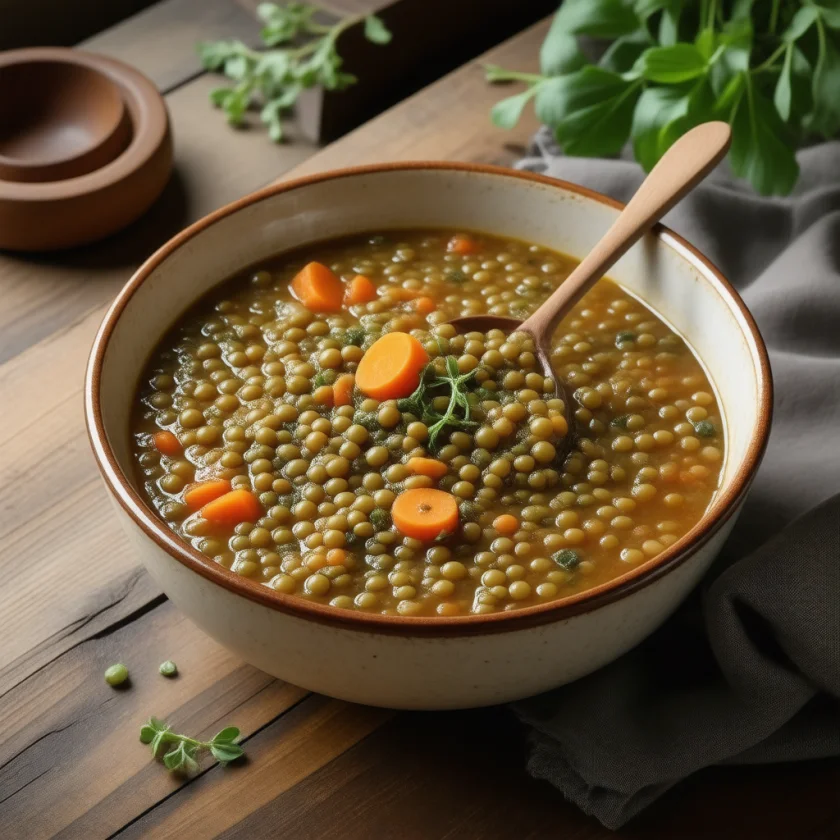
Vitamin B9 (folate) is a water-soluble B vitamin the body needs to build DNA, divide cells and make red blood cells — which is why the demand is highest when tissue is growing fastest, above all in early pregnancy. “Folate” is the natural form in food (the name comes from foliage); folic acid is the synthetic form used in supplements and to fortify grains. Among the richest whole-food sources are organ meats such as beef liver, followed by legumes (lentils, chickpeas, beans), leafy greens (spinach, romaine), asparagus, broccoli, avocado and oranges.
| Vitamin B9 (Folate): Food Sources & Daily Intake | ||||||
|---|---|---|---|---|---|---|
| Rank | Food (serving) | Per 100 g | %DV / 100g | Glucose | Fructose | Notes |
| 1 | Chicken Organ Meats 3 oz / 85 g | 257 mcg DFE | 🟢 64% | 0 | 0 | Nutrient-dense organ meat (giblets). |
| 2 | Beef Liver 3 oz / 85 g | 253 mcg DFE | 🟢 63% | 0 | 0 | One of the richest whole-food folate sources — a 3 oz (85 g) serving gives about 215 mcg DFE, about 54% of the Daily Value. |
| 3 | Spinach, Raw 1 cup / 30 g | 194 mcg DFE | 🟡 48% | 0.1 | 0.1 | |
| 4 | Lentils ½ cup / 99 g | 181 mcg DFE | 🟡 45% | — | — | The standout plant source; half a cup covers about half the day. |
| 5 | Chickpeas (Garbanzo Beans) ½ cup / 82 g | 172 mcg DFE | 🟡 43% | — | — | |
| 6 | Black Beans ½ cup / 86 g | 149 mcg DFE | 🟡 37% | — | — | |
| 7 | Asparagus ½ cup / 90 g | 149 mcg DFE | 🟡 37% | 0.4 | 0.8 | Steaming loses less of the folate than boiling. |
| 8 | Spinach ½ cup / 90 g | 146 mcg DFE | 🟡 36% | — | — | Cooked spinach is far denser in folate than raw, cup for cup. |
| 9 | Romaine Lettuce, Raw 1 cup shredded / 47 g | 136 mcg DFE | 🟡 34% | 0.4 | 0.8 | |
| 10 | Kidney Beans ½ cup / 89 g | 130 mcg DFE | 🟡 32% | — | — | |
| 11 | Broccoli ½ cup / 78 g | 108 mcg DFE | 🟡 27% | 0.5 | 0.7 | |
| 12 | Peanuts, Dry- 1 oz / 28 g | 97 mcg DFE | 🟡 24% | 0 | 0 | A handful is a useful plant top-up. |
| 13 | Beef Organ Meats 3 oz / 85 g | 83 mcg DFE | 🟡 21% | 0 | 0 | Nutrient-dense organ meat. |
| 14 | Avocado 1 cup / 150 g | 81 mcg DFE | 🟡 20% | 0.4 | 0.1 | |
| 15 | Green Peas ½ cup / 80 g | 63 mcg DFE | 🟡 16% | 0.1 | 0.4 | |
| 16 | Brussels Sprouts ½ cup / 78 g | 60 mcg DFE | 🟡 15% | — | — | |
| 17 | Brown Rice 1 cup / 195 g | 9.0 mcg DFE | ⚪ 2% | 0 | 0 | Common staple. |
| 18 | Pork Organ Meats 3 oz / 85 g | 41 mcg DFE | 🟡 10% | — | — | Nutrient-dense organ meat. |
Table of Contents
How to Read These Tables
- Folate vs folic acid — and what DFE means. Folate here is given as Dietary Folate Equivalents (DFE), and so is the requirement. DFE exist because the body absorbs synthetic folic acid (in supplements and fortified foods) roughly 1.7× more efficiently than the natural folate in whole foods. So 1 mcg of folic acid eaten with food counts as about 1.7 mcg DFE, which lets a single number compare a bowl of lentils and a plate of spinach fairly.
- %DV vs Recommended Dietary Allowance (RDA). The %DV column compares a serving against the U.S. Food and Drug Administration (FDA) Daily Value of 400 mcg DFE. The individual target (the Recommended Dietary Allowance) is 400 mcg DFE for most adults, rising sharply to 600 mcg DFE in pregnancy and 500 mcg DFE while breastfeeding — see the second table.
- Per 100 g vs per serving. Per-100 g lets you compare foods fairly; the serving size shown beside each food is what you actually eat. A serving of liver covers about half the Daily Value, and half a cup of lentils or cooked spinach covers a large share of it.
Recommended Intakes & Upper Limits
Your personal target depends on age, sex and pregnancy. The Daily Value used for the %DV column above is a single label figure; the table below is the age-specific guidance.
| Life stage | Recommended Dietary Allowance / Adequate Intake (mcg DFE/day) | Upper limit (mcg/day) |
|---|---|---|
| Infants 0–6 mo | 65* (Adequate Intake) | Not set |
| Infants 7–12 mo | 80* (Adequate Intake) | Not set |
| Children 1–3 y | 150 | 300 |
| Children 4–8 y | 200 | 400 |
| Children 9–13 y | 300 | 600 |
| Males 14–18 y | 400 | 800 |
| Males 19+ y | 400 | 1,000 |
| Females 14–18 y | 400 | 800 |
| Females 19+ y | 400 | 1,000 |
| Pregnancy | 600 | 800–1,000 |
| Lactation | 500 | 800–1,000 |
Bioavailability & Absorption
Bioavailability is the whole reason this nutrient is measured in DFE. Folic acid from supplements and fortified grains is absorbed very efficiently — about 85% when taken with food and close to 100% on an empty stomach — whereas the natural folate in whole foods is only around 50% available, because it must be broken down from its bound (polyglutamate) form before the gut can take it up. That 1.7-fold gap is exactly what the DFE conversion corrects for, so the figures on this page already put food folate and fortification on a level footing. A practical note: high-dose folic acid can mask the blood signs of a vitamin B12 deficiency while nerve damage continues, so the two B vitamins are best considered together.
Cooking & Storage
Folate is one of the most fragile vitamins in the kitchen. It is sensitive to heat, light and oxygen, and because it is water-soluble it readily leaches into cooking water — prolonged boiling can destroy or wash away half or more of the folate in vegetables and legumes. Steaming or microwaving loses less than boiling, and less is lost with little water, the shortest cooking time, folate-rich produce eaten raw, and cooking liquid reused in soups and sauces. Long storage at room temperature and reheating also take a steady toll. (Folic acid added to fortified foods is more stable than natural food folate.)
Vegetarian & Vegan Sources
Folate is one of the easiest nutrients for plant-based eaters — most of the best sources are plants. The standouts are lentils, chickpeas, black and kidney beans, spinach and other leafy greens, asparagus, broccoli, Brussels sprouts, avocado and oranges, plus whole and enriched grains. Anyone eating a normal variety of legumes and vegetables comfortably meets the Recommended Dietary Allowance, with no animal-source gap to plan around (liver, one of the richest foods, is simply optional). The one form to be aware of is the related vitamin B12, which folate works alongside but cannot replace — B12, not folate, is the nutrient plant-only diets lack.
Who Needs to Pay Attention
The most important group is pregnancy. Adequate folate before conception and in the first weeks of pregnancy — often before a person knows they are pregnant — sharply lowers the risk of neural tube defects such as spina bifida and anencephaly, in which the brain or spinal cord fails to close properly. That is why many countries fortify grain products with folic acid and why the US Preventive Services Task Force recommends that all persons planning to or who could become pregnant take a daily supplement containing 400–800 mcg of folic acid. Other groups at higher risk of low folate: people with heavy alcohol use (which impairs folate absorption and use), those with malabsorption (celiac or inflammatory bowel disease), and people on certain medications. Deficiency causes megaloblastic anemia — large, immature red blood cells, with fatigue and weakness. On safety: the Tolerable Upper Intake Level of 1,000 mcg/day applies only to folic acid from supplements and fortified foods, chiefly because high folic acid can hide a B12 deficiency; natural folate from food is not capped — you cannot reach harmful amounts by eating ordinary food.
Key Research Papers
- NIH Office of Dietary Supplements — Folate Fact Sheet (DV, RDA in DFE, UL for folic acid)
- Linus Pauling Institute — Folate Micronutrient Information Center
- PubMed — folate, folic acid, bioavailability and neural tube defect prevention. — Search PubMed