Nutritional Yeast
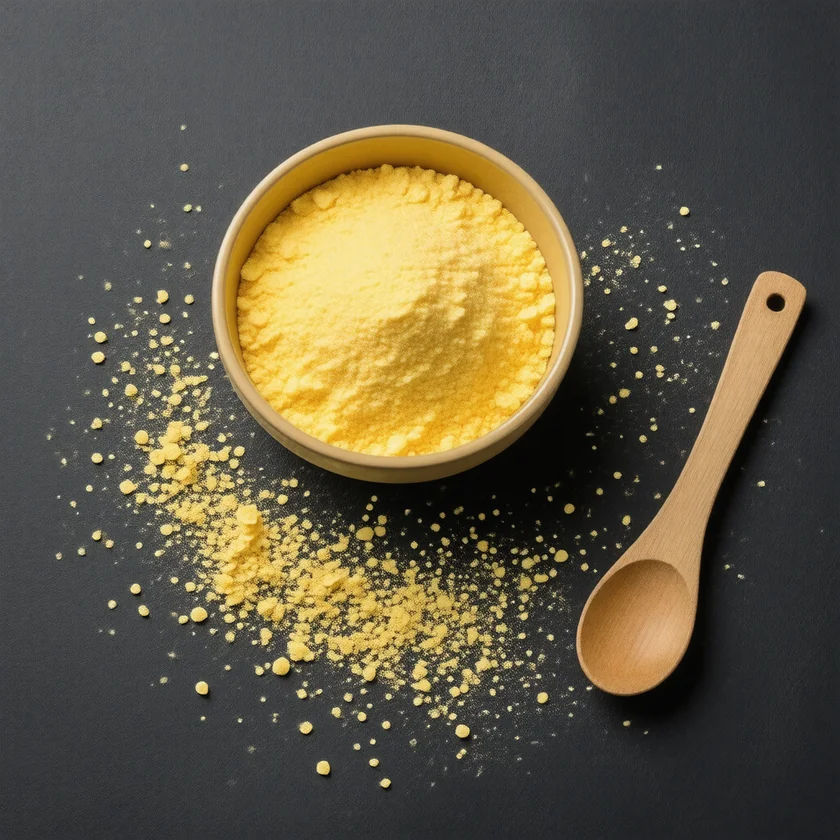
Nutritional yeast is Saccharomyces cerevisiae — the same species as baker’s and brewer’s yeast — usually grown on molasses, then killed and dried into savoury, cheese-flavoured yellow flakes. Its best-supported benefit depends entirely on the label: fortified flakes are an easy, reliable source of vitamin B12 for vegans, while unfortified flakes contain essentially none. The popular claims that it “heals nerves” and “reduces anxiety” hold only where a B-vitamin deficiency is being corrected, and trials of purified yeast beta-glucan capsules show mixed effects on colds. Large helpings of fortified flakes can pass the upper limits for added niacin and folic acid, and dried yeast is among the most purine-dense foods measured — which matters if you have gout.
Table of Contents
- What It Is: Nutritional, Brewer’s and Baker’s Yeast
- Traditional and Historical Use
- What Is Actually in It: Fortified vs Unfortified
- Vitamin B12: The Real Benefit, Only When Fortified
- Protein and Amino Acids
- Beta-Glucans, Immunity and Colds
- Nerves and Anxiety: What B Vitamins Can and Cannot Do
- How to Use It
- Myths and Overclaims in the Popular Videos
- Safety, Interactions and Who Should Avoid It
- Key Research Papers
- Connections
- Featured Videos
What It Is: Nutritional, Brewer’s and Baker’s Yeast
Nutritional yeast is a single-celled fungus, Saccharomyces cerevisiae, sold as a food. Makers grow it the way baker’s yeast is grown commercially: in large, aerated tanks fed a sugary medium, usually cane or beet molasses — the dark syrup left behind when sugar is crystallised out of cane or beet juice (its grocery-shelf cousin is blackstrap molasses). When the batch is ready, the yeast is harvested, washed, inactivated with heat and dried into flakes or powder.
The word that matters is inactive. A 2022 review of yeast as a food describes commercial food yeast as “dead yeast cells with no leavening power” (Jach 2022), and many labels simply list the single ingredient as “inactive yeast” or “dried yeast.” Nutritional yeast cannot raise bread, ferment sugar or grow in your gut.
The same species turns up under several names, and they are not interchangeable:
- Active baker’s yeast is alive. It is sold to leaven dough, and the heat of the oven kills it. It is not meant to be eaten by the spoonful.
- Brewer’s yeast is recovered from beer-making after it has done its work — a by-product of the fermentation industry (Jach 2022). It tends to taste bitter and is sold mainly as a powder or tablet supplement.
- Nutritional yeast is grown for its own sake, to be eaten, then inactivated. It tastes savoury, nutty and faintly cheesy, which is why people sprinkle it on popcorn and stir it into sauces in place of cheese. It is sold fortified (vitamins added) or unfortified, and the difference is large (see below).
- Yeast extract is a different product again: yeast cells are left to digest themselves (autolysis) and the soluble part is concentrated into dark, salty spreads and flavourings. It matters here mainly because of the MAOI warning in the safety section.
Nutritional yeast is also not a probiotic. Probiotic yeast supplements contain living cells chosen to survive the gut; nutritional yeast contains none. See Probiotics for the live kind.
Traditional and Historical Use
Yeast earned its reputation as a health food in the fight against pellagra, the niacin-deficiency disease of rough, reddened skin, diarrhoea and mental changes. In the first half of the twentieth century pellagra reached epidemic levels in the American South: at its peak, at least 250,000 cases and 7,000 deaths a year, for several decades, in 15 southern states (Bollet 1992). Investigators at the U.S. Public Health Service, led by Joseph Goldberger, found that yeast contained what they called the “pellagra-preventive factor” and that it was the most potent source of it they had — the factor was later identified as nicotinic acid, one form of niacin (vitamin B3). Doctors began treating pellagra with yeast, which was especially valuable for patients whose painful mouth sores kept them from swallowing ordinary food.
The most striking episode came in 1927. When the Mississippi River flooded, Goldberger arranged for the Red Cross to ship large quantities of yeast into the flood-stricken areas. The expected outbreak of pellagra did not happen — cases fell below their usual seasonal level — and after the emergency, when the yeast stopped, pellagra returned to its usual level (Bollet 1992). The disease itself is covered on our Pellagra page.
Two lessons from that history still apply. First, it is a story about correcting a deficiency: yeast worked because the people eating it were starved of niacin, not because it did anything special for people who were already well fed. Second, later efforts to turn fast-growing microbes, yeast among them, into a bulk protein food for a hungry world ran into a practical limit: their high nucleic-acid content, which the body breaks down to uric acid. Reviews of yeast protein note that microbial protein destined for food or feed should have its nucleic acids reduced to about 1%, because high intakes can cause gout and kidney stones in susceptible people (Jach 2022). That is one good reason to treat nutritional yeast as a seasoning rather than a staple.
Today nutritional yeast is best known as a seasoning in vegetarian and vegan kitchens, and the same 2022 review singles it out as a useful supplement food for vegan and vegetarian diets (Jach 2022).
Evidence tier: historical public-health experience with deficiency disease, later explained by the discovery of niacin.
What Is Actually in It: Fortified vs Unfortified
“Nutritional yeast” is really two products sold under one name. Unfortified flakes contain only what the yeast cell itself made or took up while it grew. Fortified flakes have vitamins added — typically thiamine, riboflavin, niacin, vitamin B6, folic acid and vitamin B12, which is what the ingredient lists in USDA’s label database show. The two are very different.
What the yeast itself supplies (unfortified)
USDA’s FoodData Central has no generic record for nutritional yeast. Its closest is SR Legacy record FDC 175043, “Leavening agents, yeast, baker’s, active dry” — the same species, dried and unfortified — which gives a fair picture of what the yeast cell itself contains. Scaled from its per-100 g values to 10 g, it lists:
- Protein: 4.0 g, with 2.7 g of fibre
- Thiamine (B1): 1.1 mg — about a full day’s adult requirement (the RDA is 1.2 mg for men and 1.1 mg for women)
- Riboflavin (B2): 0.40 mg (RDA 1.3 mg for men, 1.1 mg for women)
- Niacin (B3): 4.0 mg (RDA 16 mg for men, 14 mg for women)
- Vitamin B6: 0.15 mg (RDA 1.3 mg for adults aged 19–50)
- Folate: 234 µg, all of it natural food folate — more than half the RDA of 400 µg
- Vitamin B12: 0.007 µg — a trace. The adult RDA is 2.4 µg, so you would need more than 3 kg of dried yeast a day to meet it.
The RDAs above are the U.S. Institute of Medicine’s (Institute of Medicine 1998). Unfortified yeast is therefore a genuinely rich natural source of thiamine and folate, a moderate source of riboflavin and niacin, and not a source of vitamin B12.
What fortified labels declare
For fortified flakes, the best public source is the label data manufacturers submit to FoodData Central’s Branded Foods collection. We looked at eight plain, fortified nutritional yeast products listed there (label records published in 2023) and converted each label to a common 10 g amount. Ten grams is roughly two to three tablespoons of large flakes or about one tablespoon of powder: labels put a tablespoon at anywhere from about 3 g for large flakes to about 10 g for powder. Per 10 g, the eight labels declared:
- Thiamine: 0.9–7.9 mg, with six of the eight at 6–8 mg — up to six or seven times the RDA
- Riboflavin: 1.8–8.3 mg
- Niacin: 23–44 mg — from about two-thirds to one and a quarter times the adult upper limit for added niacin (35 mg a day)
- Vitamin B6: 1.4–8.5 mg (seven of the eight labels listed it)
- Vitamin B12: 4.4–37.5 µg, with four of the eight at about 15 µg — roughly 2 to 16 times the RDA
- Folic acid: 470–717 µg, in the three labels that listed it separately
- Protein: 4–6 g
Per labelled serving, which ranged from 5 g to 16 g, the same eight labels declared 17–70 mg of niacin, 1.7–13.6 mg of vitamin B6 and 2.2–60 µg of vitamin B12, and one product declared about 1,075 µg of folic acid in a quarter cup (15 g). Recipes change, and these are the manufacturers’ own declarations, so read the panel on the package you actually buy.
How to tell which you have: check the Nutrition Facts panel, not the front of the bag. If vitamin B12 is not listed on the panel, assume the product contains essentially none. Do not rely on the ingredient list alone: in USDA’s database, two products whose ingredients read only “dried yeast” or “inactive yeast” still declared B12 on the panel.
Evidence tier: food-composition data — USDA laboratory analysis for the unfortified yeast, manufacturers’ label declarations for fortified products.
Vitamin B12: The Real Benefit, Only When Fortified
This is the benefit worth having, and it belongs to the fortified product alone. Vitamin B12 is needed to make healthy red blood cells and to keep nerves working. Running short causes a large-cell (megaloblastic) anaemia and nerve damage that can become serious and permanent if it is missed (Institute of Medicine 1998). Diets without animal foods are naturally low in B12 (Miller 2024), and yeast does not make meaningful amounts of its own — USDA’s analysis of dried yeast found only a trace. Fortified nutritional yeast, whose added B12 is often listed as cyanocobalamin, is one of a handful of fortified foods that can fill that gap without a pill.
The evidence
The only study we found that tested nutritional yeast itself for B12 status is small. Researchers measured 49 adults who had followed a mostly raw vegan diet for at least two years; most had followed it for two to four years. Three in four (37 people, 76%) had blood B12 below 221 pmol/L (300 pg/mL), and almost half (23 people, 47%) had raised urinary methylmalonic acid, a sign that their cells were already short of B12. When those with abnormal results were followed up, sublingual B12 tablets and nutritional yeast both significantly lowered the group’s methylmalonic acid; a probiotic supplement did not (Donaldson 2000). Because yeast carries essentially no B12 of its own, the improvement almost certainly came from B12 added to the yeast.
Evidence tier: a small, uncontrolled follow-up study — weak on its own, but it points the same way as the well-established physiology of B12 and the measured B12 content of fortified products.
What to do with this
- If you are vegan and counting on nutritional yeast for B12, buy a fortified product, check that B12 is on the panel, and eat it regularly. One tablespoon (about 5 g) of a typical fortified flake declaring 15 µg per 10 g supplies about 7.5 µg — roughly three times the adult RDA.
- A B12 blood test is the way to know where you stand; see Vitamin B12 Test. For the vegan side of the story, see Vitamin B12 for Vegans and Absorption Issues.
- Unfortified flakes are a fine seasoning, but they are not a B12 source, however they are marketed.
Protein and Amino Acids
Nutritional yeast is about half protein by weight. The plain products in USDA’s label data declared 40–60 g of protein per 100 g, which works out to about 3–5 g in two tablespoons of flakes and 5–8 g in a quarter cup.
The quality is good. USDA’s record for dried yeast (FDC 175043) lists all nine essential amino acids — the ones the body cannot make for itself — which is the everyday meaning of a “complete” protein. Per 100 g it lists 3.28 g of lysine, 2.92 g of leucine, 2.31 g of valine, 1.99 g of threonine, 1.89 g of isoleucine, 1.75 g of phenylalanine, 0.91 g of histidine, 0.59 g of methionine and 0.54 g of tryptophan. Lysine is the standout: it is the essential amino acid that grains run short of, so a sprinkle of yeast over brown rice or other whole grains complements them well. Methionine is present in much smaller amounts. More on lysine: Lysine.
Keep the amounts in perspective. At seasoning quantities, nutritional yeast adds a few grams of protein to a meal — useful, especially in plant-based cooking, but not a replacement for beans, eggs, fish or meat. Eating it by the quarter-cup to chase protein also runs straight into the purine and fortification limits described under Safety.
Evidence tier: food-composition data (USDA laboratory analysis and manufacturers’ labels), not outcome trials.
Beta-Glucans, Immunity and Colds
Beta-glucans are long chains of glucose found in the cell walls of yeasts and mushrooms. Purified, insoluble beta-glucan extracted from yeast is sold as an immune supplement, on the proposed idea that immune cells lining the gut recognise the particles and are primed to respond faster to infection. What matters is what happened in people:
- Fewer colds in one trial. In a multicentre trial, 162 healthy adults who caught colds often took 900 mg a day of an insoluble yeast beta-glucan or a placebo for 16 weeks. Among those who completed the study as planned, the beta-glucan group had 25% fewer colds. Their symptom scores were 15% lower, a difference that was not statistically significant, and they reported less cold-related sleep trouble (Auinger 2013).
- No fewer colds in a larger one. In a trial of 299 adults who had had at least three colds the previous year, 900 mg a day through 16 winter weeks did not change how many people caught a confirmed cold (71 on beta-glucan, 70 on placebo) or the overall severity of their colds. Physical symptoms were somewhat milder during the first week of a cold (Dharsono 2019).
Two cautions keep these results in their place. First, both trials tested a purified extract in capsules, not nutritional yeast flakes, and we found no trial of nutritional yeast itself for colds. Whole yeast does carry beta-glucan in its cell walls, but we found no study measuring how much a tablespoon of flakes delivers, or whether the intact cell wall behaves in the body like the processed extract. Second, the trials disagree: a benefit in one, no change in the number of colds in the other, larger one.
Evidence tier: randomised controlled trials in humans of an isolated beta-glucan extract, with mixed results; nutritional yeast itself untested. For what does help with colds, see Common Cold. Oat beta-glucan is a different, soluble fibre studied mainly for cholesterol; see Oats for Beta-Glucan and Cholesterol.
Nerves and Anxiety: What B Vitamins Can and Cannot Do
The popular videos say nutritional yeast “heals nerves” and “reduces anxiety.” There is a true version of that claim and a false one, and the difference is whether you are short of a B vitamin to begin with.
When you are deficient, B vitamins matter a great deal
Nerves and brain depend on B vitamins, and a real shortage shows. Lack of thiamine causes beriberi; lack of niacin causes pellagra, whose symptoms include mental changes; and lack of vitamin B12 damages nerves, sometimes permanently if it is missed (Institute of Medicine 1998). Correcting a genuine deficiency — with food, fortified food or a supplement — is effective medicine, and for a vegan the B12 in fortified yeast is a sensible way to prevent the problem in the first place. If you have numbness, tingling, balance trouble or unexplained low mood, the useful step is a blood test, not a bigger spoon; see Vitamin B12 Deficiency and Peripheral Neuropathy.
When you are not deficient, extra does little
- Nerves. A Cochrane review of 13 trials in 741 people with nerve damage from alcohol or diabetes concluded that the evidence was “insufficient to determine whether vitamin B is beneficial or harmful”; the trials were small and short-term (Ang 2008).
- Anxiety. A meta-analysis of 16 randomised trials (2,015 people) that gave at least three B vitamins daily for at least four weeks found a small benefit for stress, a trend for depressive symptoms that did not reach significance, and no effect on anxiety (Young 2019).
- The vitamin B6 study behind many headlines. A 2022 trial gave young adults, mostly students, 100 mg of vitamin B6 (as pyridoxine), 1,000 µg of vitamin B12 or a placebo every day for about a month; 478 were recruited in all. Anxiety scores fell from 24.8 to 21.5 on B6 and from 25.1 to 23.9 on placebo. The drop within the B6 group was statistically significant, but the direct comparison of the two groups’ changes was not (Field 2022). The dose was also 77 times the adult RDA and equal to the U.S. upper limit — about 12 to 70 times what 10 g of fortified flakes supplies.
The twist: too much B6 harms nerves
Vitamin B6 is the one B vitamin where more can damage the very nerves the videos promise to heal. Sensory neuropathy is the harm the U.S. upper limit of 100 mg a day is built on, and the first reported cases had taken 2,000 to 6,000 mg a day for months (Institute of Medicine 1998). A serving of fortified yeast will not get anywhere near that on its own, but people who stack a B-complex, a multivitamin and several spoonfuls of fortified flakes should add up their B6. See Vitamin B6 Toxicity.
Evidence tier: deficiency effects — established clinical medicine; extra B vitamins in people who are not deficient — systematic reviews showing little or no effect on anxiety or nerve damage; nutritional yeast itself — we found no trial for either claim.
How to Use It
In the kitchen
- Sprinkle over popcorn popped in olive oil — the classic use; see Corn.
- Toss with roasted broccoli, cauliflower or sweet potatoes, or rub onto kale leaves with a little olive oil before baking them into chips.
- Stir into a bowl of brown rice and vegetables, into soups and stews, or over scrambled eggs.
- Blend into a savoury sauce with olive oil, garlic and lemon for a cheese-like dressing over pasta or vegetables.
How much
- A tablespoon or two a day is a normal seasoning amount. For a vegan using a fortified product for B12, one tablespoon of a typical fortified flake covers the day’s requirement several times over.
- Heaped quarter-cups of fortified flakes are where added niacin and folic acid start to pass their upper limits (see Safety). If you like large amounts for flavour, unfortified flakes plus a separate, reliable source of B12 is the cleaner combination.
- Children have much lower upper limits for added niacin — 10 mg a day at ages 1–3 and 15 mg at ages 4–8 (Institute of Medicine 1998) — while 10 g of fortified flakes declares 23–44 mg. For young children, use unfortified flakes or just a pinch of fortified ones.
- Store it sealed in a cool, dry cupboard.
Choosing a product
- Vegans relying on it for B12: fortified, with B12 on the Nutrition Facts panel.
- People who eat animal foods or already take a multivitamin: either works, and unfortified avoids piling up added niacin and folic acid.
- Compare serving sizes in grams, not tablespoons — flake size makes a tablespoon weigh anything from about 3 g to 10 g.
Myths and Overclaims in the Popular Videos
- “Nutritional yeast heals your nerves.” Only in one sense: fortified yeast supplies B12, and B12 prevents and corrects the nerve damage of B12 deficiency. In people who are not deficient, a Cochrane review found the evidence insufficient to say whether B vitamins help nerve damage at all — and too much vitamin B6 can itself cause neuropathy.
- “It reduces anxiety.” Pooled trials of B-vitamin supplements show no effect on anxiety. The much-quoted B6 study used 100 mg a day, many times what yeast supplies, and its B6-versus-placebo comparison was not statistically significant. We found no trial testing nutritional yeast for anxiety. In the larger beta-glucan cold trial one mood subscore (“joy”) rose — a single secondary result among many, from a capsule extract.
- “The real benefit is the B12, in every bag.” The first half is right; the second is wrong. B12 is present only when it has been added. Unfortified flakes contain a trace.
- “Its beta-glucans boost immunity and stop colds.” The trials used 900 mg a day of a purified extract in capsules, with mixed results; the larger one found no fewer colds. Flakes have not been tested.
- “It’s a complete protein, so it can replace meat.” It does contain all nine essential amino acids, but seasoning amounts supply a few grams, and main-course quantities run into purine and vitamin limits.
- “It’s yeast, so it causes yeast infections.” It is inactive — dead cells — and cannot grow in your body. A genuine yeast allergy, or Crohn’s disease that seems to flare with yeast, is a separate matter (see Safety).
- “More is better, it’s a superfood.” Fortified flakes behave more like a multivitamin than a vegetable. Large helpings pass the upper limits for added niacin (flushing) and folic acid, and yeast is among the most purine-dense foods measured.
Safety, Interactions and Who Should Avoid It
For most people, nutritional yeast in seasoning amounts is a safe food. The cautions below come from its purine content, from the doses of vitamins added to fortified products, and from a few specific medical conditions.
Gout, high uric acid and kidney stones
Yeast is rich in nucleic acids — roughly 5–8% of the biomass of most yeasts, and 8.1% RNA in one analysis of spent brewer’s yeast — and their purines are broken down in the body to uric acid (Jach 2022). Japanese researchers who measured purines in 270 foods found dried brewer’s yeast sold as a supplement at 2,995.7 mg per 100 g, in their highest category; chicken liver, for comparison, measured 312.2 mg. They advised people with gout or high uric acid to avoid such supplements, and noted that Japanese guidelines keep dietary purines below 400 mg a day (Kaneko 2014). Nutritional yeast itself was not in the study, but it is the same organism, dried whole; if its content is similar, a 10 g serving carries around 300 mg of purines. Reviews of yeast protein warn that high nucleic-acid intake can cause gout and kidney stones in people whose purine metabolism is impaired (Jach 2022). If you have gout, high uric acid or kidney stones, keep yeast to occasional pinches or skip it; see also Uric Acid Test.
Niacin flushing from fortified flakes
The U.S. upper limit for niacin added to foods or taken as supplements is 35 mg a day for adults. It was set because of flushing — a burning, tingling, itching sensation with redness, mainly on the face, arms and chest — seen at 50 mg a day. Flushing is temporary, but it can be alarming. It comes from nicotinic acid; the other form, nicotinamide, appears not to cause it (Institute of Medicine 1998). On U.S. ingredient lists, “niacin” means nicotinic acid and “niacinamide” means nicotinamide (21 CFR 184.1530), and the fortified products in USDA’s database that named their added vitamins all listed “niacin.” With 23–44 mg in 10 g, a generous helping can pass the adult limit on its own.
The limits for children and teenagers are lower: 10 mg a day (ages 1–3), 15 mg (4–8), 20 mg (9–13) and 30 mg (14–18). The Institute of Medicine also named people with liver disease, diabetes, active peptic ulcer, gout, heart-rhythm problems, inflammatory bowel disease, migraine or alcoholism as especially sensitive to excess niacin, and possibly not protected by the general limit (Institute of Medicine 1998). See Niacin Toxicity.
Folic acid is not the same as folate
Yeast naturally contains food folate — about 234 µg in 10 g of unfortified dried yeast. Fortified flakes add folic acid, the synthetic form, which is absorbed better: 1 µg of folic acid taken with food counts as 1.7 µg of dietary folate equivalents. The adult upper limit of 1,000 µg a day applies to folic acid from fortified foods and supplements, not to natural food folate (Institute of Medicine 1998). The fortified labels that listed folic acid separately declared 470–717 µg per 10 g, and one declared about 1,075 µg in a quarter cup — over the limit in a single serving.
The limit exists because large amounts of folic acid can correct the anaemia of vitamin B12 deficiency while the nerve damage carries on unnoticed (Institute of Medicine 1998). A 2024 review adds that people with low B12 and high folate have higher levels of homocysteine and methylmalonic acid (markers of B12 shortage) and lower cognitive test scores than people with low B12 alone, while stressing that this evidence is mostly correlational; it names people on vegan or vegetarian diets, older adults and people with B12 malabsorption as groups to watch (Miller 2024). Fortified nutritional yeast carries B12 as well as folic acid, so on its own it does not create that mismatch. The risk lies in combinations — for example, a vegan who uses unfortified flakes, takes folic-acid supplements and has no reliable B12 source. See Folate (Vitamin B9).
Crohn’s disease and anti-yeast antibodies
Many people with Crohn’s disease carry antibodies against mannan, a sugar on the cell wall of Saccharomyces cerevisiae; they are called ASCA (anti-Saccharomyces cerevisiae antibodies). In a study of stored blood samples from Israeli military recruits, ASCA were present in 10 of 32 people (31%) before their Crohn’s disease was diagnosed — on average 38 months earlier — and in none of 95 matched controls; after diagnosis, 54.5% were positive (Israeli 2005). What that does and does not mean:
- Known: ASCA are a well-established marker of Crohn’s disease and can appear years before symptoms.
- Some evidence: in a small 1992 trial, 19 people with stable Crohn’s disease followed a yeast-free diet for two months, taking baker’s yeast capsules for one month and placebo capsules for the other. Disease-activity scores were slightly but significantly higher while taking yeast (107.9 vs 102.1), and 13 of the 15 patients with raised yeast antibodies tended to score higher on yeast (Barclay 1992).
- Not known: whether eating yeast helps cause Crohn’s disease, whether the antibodies are a response to yeast in food at all, or whether avoiding yeast changes the course of the disease over years. We found no larger trial.
A marker is not a cause, and there is no evidence that nutritional yeast harms people who do not have Crohn’s disease. If you do have it and notice that yeast-containing foods seem to worsen your symptoms, a trial without them is reasonable, ideally planned with your gastroenterologist or dietitian. See Crohn’s Disease.
MAOI antidepressants and tyramine
Older antidepressants called monoamine oxidase inhibitors (MAOIs) can cause a dangerous rise in blood pressure when combined with foods rich in tyramine. The yeast product with a well-documented warning is concentrated yeast extract, the dark spread: an evidence-based MAOI diet lists it among the few foods to avoid entirely, alongside aged cheese, aged or cured meats, sauerkraut, soy sauce and tap beer (Gardner 1996). Nutritional yeast is whole dried yeast, not an extract, and is not on that list, but we found no published measurement of its tyramine content. If you take an MAOI, ask your prescriber before using it regularly.
Yeast allergy
Some people are allergic to yeast proteins. Serious allergic reactions are reported only rarely, and people who regularly breathe in yeast are particularly at risk (Jach 2022). If yeast-containing foods have ever given you hives, swelling or breathing trouble, avoid nutritional yeast and ask about allergy testing.
Who should avoid it or take extra care
- People with gout, high uric acid or kidney stones.
- People with Crohn’s disease whose symptoms seem to worsen with yeast.
- Anyone with a known yeast allergy.
- People taking an MAOI antidepressant, until they have checked with their prescriber.
- Young children, if the product is fortified — use unfortified flakes or small pinches.
- People with liver disease, diabetes, active peptic ulcer, heart-rhythm problems, inflammatory bowel disease, migraine or alcohol dependence, who should keep fortified niacin modest.
Evidence tier for the harms: food-composition analysis (purines), official intake limits (niacin, folic acid, vitamin B6), an antibody study and one small trial (Crohn’s disease), an evidence-based diet review (MAOIs) and a review statement (allergy) — enough to act on sensibly, without turning a seasoning into a hazard.
Key Research Papers
- Bollet AJ (1992). Politics and pellagra: the epidemic of pellagra in the U.S. in the early twentieth century. The Yale Journal of Biology and Medicine. — PubMed PMID: 1285449
- Jach ME, Serefko A, Ziaja M, Kieliszek M (2022). Yeast Protein as an Easily Accessible Food Source. Metabolites. — PubMed PMID: 35050185
- Institute of Medicine (US) Standing Committee on the Scientific Evaluation of Dietary Reference Intakes and its Panel on Folate, Other B Vitamins, and Choline (1998). Dietary Reference Intakes for Thiamin, Riboflavin, Niacin, Vitamin B6, Folate, Vitamin B12, Pantothenic Acid, Biotin, and Choline. National Academies Press (US). — PubMed PMID: 23193625
- Donaldson MS (2000). Metabolic vitamin B12 status on a mostly raw vegan diet with follow-up using tablets, nutritional yeast, or probiotic supplements. Annals of Nutrition & Metabolism. — PubMed PMID: 11146329
- Miller JW, Smith A, Troen AM, Mason JB, Jacques PF, Selhub J (2024). Excess Folic Acid and Vitamin B12 Deficiency: Clinical Implications? Food and Nutrition Bulletin. — PubMed PMID: 38987872
- Auinger A, Riede L, Bothe G, Busch R, Gruenwald J (2013). Yeast (1,3)-(1,6)-beta-glucan helps to maintain the body's defence against pathogens: a double-blind, randomized, placebo-controlled, multicentric study in healthy subjects. European Journal of Nutrition. — PubMed PMID: 23340963
- Dharsono T, Rudnicka K, Wilhelm M, Schoen C (2019). Effects of Yeast (1,3)-(1,6)-Beta-Glucan on Severity of Upper Respiratory Tract Infections: A Double-Blind, Randomized, Placebo-Controlled Study in Healthy Subjects. Journal of the American College of Nutrition. — PubMed PMID: 30198828
- Ang CD, Alviar MJ, Dans AL, Bautista-Velez GG, Villaruz-Sulit MV, Tan JJ, et al. (2008). Vitamin B for treating peripheral neuropathy. Cochrane Database of Systematic Reviews. — PubMed PMID: 18646107
- Young LM, Pipingas A, White DJ, Gauci S, Scholey A (2019). A Systematic Review and Meta-Analysis of B Vitamin Supplementation on Depressive Symptoms, Anxiety, and Stress: Effects on Healthy and 'At-Risk' Individuals. Nutrients. — PubMed PMID: 31527485
- Field DT, Cracknell RO, Eastwood JR, Scarfe P, Williams CM, Zheng Y, et al. (2022). High-dose Vitamin B6 supplementation reduces anxiety and strengthens visual surround suppression. Human Psychopharmacology. — PubMed PMID: 35851507
- Kaneko K, Aoyagi Y, Fukuuchi T, Inazawa K, Yamaoka N (2014). Total purine and purine base content of common foodstuffs for facilitating nutritional therapy for gout and hyperuricemia. Biological & Pharmaceutical Bulletin. — PubMed PMID: 24553148
- Israeli E, Grotto I, Gilburd B, Balicer RD, Goldin E, Wiik A, et al. (2005). Anti-Saccharomyces cerevisiae and antineutrophil cytoplasmic antibodies as predictors of inflammatory bowel disease. Gut. — PubMed PMID: 16099791
- Barclay GR, McKenzie H, Pennington J, Parratt D, Pennington CR (1992). The effect of dietary yeast on the activity of stable chronic Crohn's disease. Scandinavian Journal of Gastroenterology. — PubMed PMID: 1502481
- Gardner DM, Shulman KI, Walker SE, Tailor SA (1996). The making of a user friendly MAOI diet. The Journal of Clinical Psychiatry. — PubMed PMID: 8617704