Chicken Food Safety: Campylobacter, Salmonella, and Safe Handling
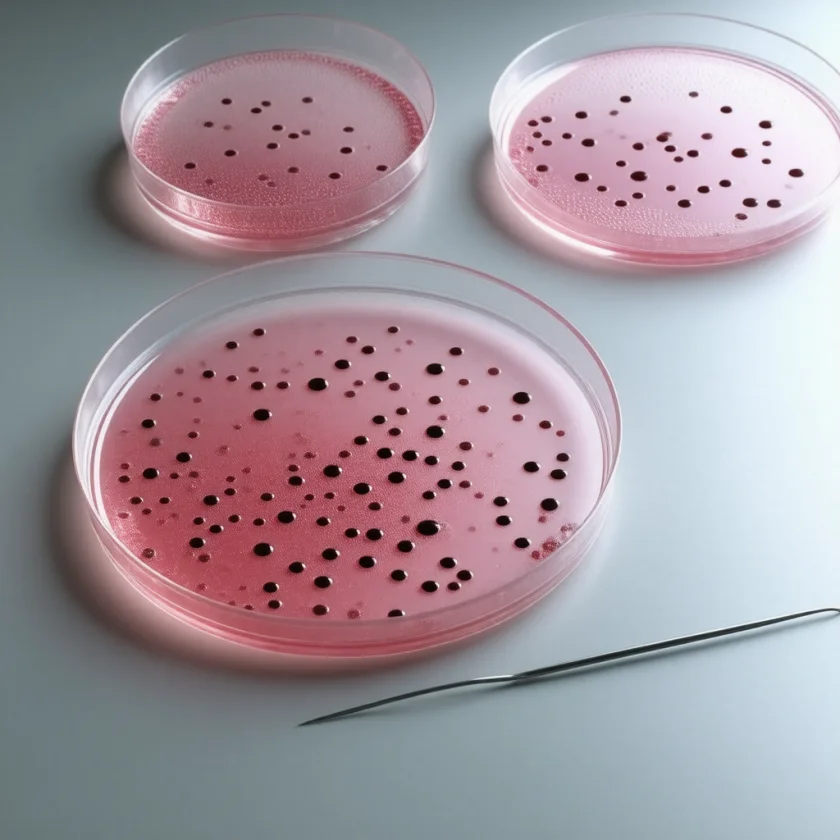
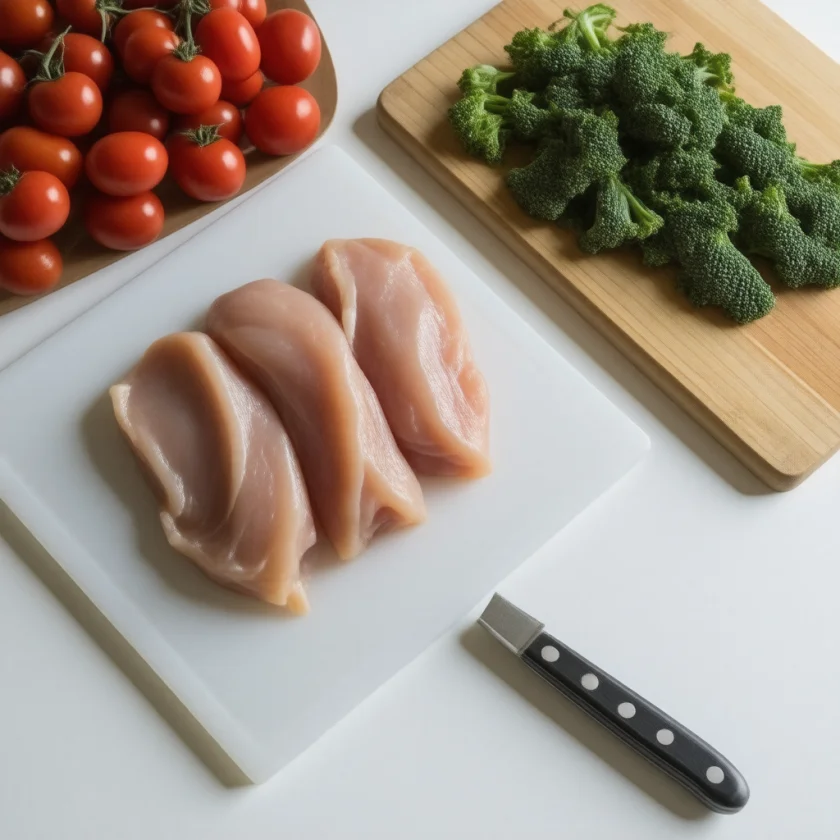
Of everything on this site about chicken, this is the page most likely to change what happens in your kitchen tonight. Chicken is the single most important food vehicle for Campylobacter, which is the most commonly reported bacterial cause of gastroenteritis in most high-income countries, and it is a leading vehicle for Salmonella as well. The good news is that the entire risk is controlled by four unglamorous habits, one of which is the opposite of what most people were taught: food safety agencies advise against washing raw chicken. Washing does not remove bacteria. It spreads them onto the sink, the taps, the worktop and clothes. Everything below explains why, and what the alternatives are.
Table of Contents
- What Is Actually on Raw Chicken
- Campylobacter: The Most Common One
- Guillain-Barré Syndrome: The Rare, Serious Sequel
- Salmonella
- Why Food Agencies Advise Against Washing Raw Chicken
- 74°C / 165°F — and Why Colour Lies
- Cross-Contamination: Boards, Cloths, Hands and Sinks
- Shopping, Storing, Thawing and Leftovers
- Who Gets Hurt Worst
- Antimicrobial Resistance, Honestly
- When It Goes Wrong: What Illness Looks Like
- The Practical Kitchen Routine
- Key Research Papers
- Connections
- Featured Videos
What Is Actually on Raw Chicken
Chickens carry Campylobacter and Salmonella in their intestines without being ill. During slaughter and processing, gut contents inevitably reach some carcasses, and because birds are processed in shared water and equipment, contamination spreads between them. Retail surveys across many countries consistently find Campylobacter on a substantial share of fresh chicken — in some national surveys, the majority of packs — and Salmonella on a smaller but far from trivial share.
Two features make this more manageable than it sounds:
- The organisms are on the surface and in the juices, not deep inside intact muscle. A whole, unpunctured chicken breast is essentially sterile inside. That is why surface heat and surface hygiene do most of the work. It is also why minced or mechanically tenderised chicken is a different problem: grinding moves surface organisms throughout the mass, so the centre of a chicken burger has to reach a safe temperature in a way that the centre of a whole roast joint does not need to be treated so carefully.
- Neither organism survives proper cooking. Both are killed comfortably by the temperatures a cooked chicken has to reach anyway. There is no heat-stable toxin involved, no spore that survives, nothing that makes a properly cooked bird unsafe. Every real-world case comes down to undercooking or to raw material touching something that will not be cooked.
So the question is never "is there anything on this chicken" — there may well be — but "where did the raw juices go, and did the meat get hot enough".
Campylobacter: The Most Common One
Campylobacter jejuni is a slender, spiral bacterium that lives happily in the bird gut at the chicken's body temperature and is, in most wealthy countries, the leading laboratory-confirmed bacterial cause of diarrhoeal illness. The World Health Organization's global foodborne disease burden study placed it among the leading foodborne causes of illness worldwide, with tens of millions of cases each year, and poultry is repeatedly identified as the dominant source.
Three properties of this organism explain almost everything about how people get infected:
- The infectious dose is small. In controlled human volunteer studies, infection was established at doses as low as several hundred to about a thousand organisms — far fewer than are needed for many other foodborne bacteria. A smear of raw juice on a salad leaf can carry that. In the classic 1988 study, 111 adult volunteers swallowed doses ranging from 8×10² to 2×10⁹ organisms: rates of infection increased with dose, but whether a person became ill did not show a clear dose relation. Volunteers who became ill were protected from illness, but not from infection, when they met the same strain again.
- It does not need to multiply in your kitchen. Campylobacter is fussy: it prefers reduced oxygen and warm-bird temperatures, and it does not grow at room temperature on a worktop the way Salmonella can. That sounds reassuring but is not, because with a dose that low it does not have to grow. It only has to be transferred.
- It is fragile. It is killed readily by heat, dies off under drying, and is reduced substantially by freezing. Countries that have required freezing of high-risk poultry batches have seen human case numbers fall. This is why "get it cooked and keep it away from everything else" works so completely.
Illness typically starts two to five days after exposure with fever, headache and general misery, then abdominal pain that can be severe enough to be mistaken for appendicitis, then diarrhoea that is often bloody. Most people recover in a week or so without antibiotics. Rehydration matters more than anything else.
Guillain-Barré Syndrome: The Rare, Serious Sequel
This is the part worth knowing, and it is the reason Campylobacter is not simply "a bad week".
Guillain-Barré syndrome is an acute autoimmune attack on peripheral nerves. It usually begins with tingling and weakness in the feet and legs, ascends over hours to days, and in severe cases reaches the muscles of breathing and swallowing, requiring intensive care and ventilation. Most people recover substantially, but recovery takes months, and a meaningful minority are left with lasting weakness. It is rare — in the region of one to two cases per 100,000 people per year in the general population — but it is a serious illness whenever it happens.
Campylobacter infection is the most commonly identified preceding infection in Guillain-Barré syndrome. The mechanism is a well-worked-out case of molecular mimicry: the sugar structures on the outer surface of certain C. jejuni strains closely resemble the gangliosides — GM1 and GD1a in particular — that coat human peripheral nerve membranes. The immune system makes antibodies against the bacterium, and those antibodies cross-react with the nerve. In the axonal forms of the syndrome, the resulting attack falls on the nerve fibre itself.
The absolute risk after any one infection is small. Estimates place it in the region of one case of Guillain-Barré syndrome per one to two thousand Campylobacter infections. Put another way: this is not a reason to be afraid of chicken. It is a reason to take the four minutes of kitchen hygiene seriously rather than treating food poisoning as an inconvenience that only ever costs you a bad weekend.
Campylobacter can also be followed by reactive arthritis — joint pain and swelling appearing days to weeks after the gut illness — and by post-infectious irritable bowel syndrome, in which the bowel does not settle back to normal for months after the infection has cleared.
Salmonella
Non-typhoidal Salmonella is the other major poultry-associated pathogen, and although it is usually reported less often than Campylobacter in wealthy countries, it causes proportionally more hospital admissions and deaths, and it drives most large multi-state and multi-country outbreaks.
Differences from Campylobacter that matter practically:
- It grows at room temperature. Left on a warm worktop or in a slowly cooling pan, Salmonella multiplies. Time and temperature control — getting cooked food into the fridge promptly — matters for Salmonella in a way it does not for Campylobacter.
- It has more routes in. Eggs, other meats, produce contaminated by irrigation water or manure, spices, nuts, flour, reptiles and amphibians, and live backyard poultry are all documented sources. Source-attribution studies consistently split human salmonellosis across several food groups, with poultry and eggs prominent but far from alone.
- It has serovars with different behaviour. Some are associated with particular animal reservoirs and some with particular resistance patterns, which is why outbreak investigations name a serovar rather than just "Salmonella".
According to the U.S. Centers for Disease Control and Prevention (CDC), symptoms usually start 6 hours to 6 days after infection and usually last 4 to 7 days, with fever, cramping and diarrhoea. Most people recover without antibiotics. The risk of invasive disease — the organism entering the bloodstream — is concentrated in infants, older adults, pregnant women and anyone immunocompromised.
Why Food Agencies Advise Against Washing Raw Chicken
This is the counter-intuitive one, and it is the single highest-value change most households can make.
Rinsing a raw chicken under the tap does not remove the bacteria. They adhere to the skin and sit in the crevices; a few seconds of cold water does essentially nothing to them. What the water does do is generate spray. Droplets carrying raw chicken juice land on the sink, the taps, the draining board, the worktop beside the sink, the washing-up brush, the tea towel and whatever else is in range. The largest filmed kitchen study found that the sink itself mattered most: bacteria transferred to the sink from the chicken, its packaging or contaminated hands were "a larger cause for concern than is splashing contaminated chicken fluids onto the counter". Anything that then touches those surfaces before they are cleaned — a colander of salad leaves, a chopping board, a child's hand — picks up the contamination.
So the practice is worse than useless: it converts a contained problem on a piece of meat that is about to be cooked into a distributed problem across surfaces that are not.
Food safety agencies have said so for years. The UK's Food Standards Agency has run a public campaign against washing chicken since 2014, and the U.S. Department of Agriculture's Food Safety and Inspection Service gives the same advice. Yet surveys keep finding that a large fraction of people do it anyway — a 2020 online survey of 524 Canadians found that 64% often or always washed their poultry before cooking it, while 64% owned a food thermometer and nearly 45% of those owners often or always used it to check doneness. Habit had the largest influence on both behaviours. The habit is cultural and inherited, and it survives because "rinsing things clean" is intuitive in a way that "surface bacteria are killed by heat, not water" is not.
The alternative: the chicken goes from the packet straight into the pan, dish or marinade, and is cooked. Skin patted dry with kitchen paper browns well, and paper that goes straight into the bin carries nothing further — a tea towel that is picked up again does. A brined bird can be drained rather than rinsed. The one situation where a rinse is defensible is a wet-cured or heavily brined product where a recipe genuinely requires the salt removed; a bowl of water splashes less than a running tap, and the sink and everything around it then need cleaning and sanitising before anything else goes near.
A 2022 study filmed 300 home cooks who said they wash poultry. Of these, 142 first received three e-mail messages carrying the U.S. Department of Agriculture's poultry-handling information, including its advice against washing chicken, and 158 did not. Afterwards 93% of those who received the messages did not wash the chicken, compared with 39% of the comparison group. The chicken had been marked with a traceable, harmless strain of E. coli, and high levels of it were found in the sink and on the salad lettuce. Among the cooks who washed the chicken, 26% (comparison group) and 30% (message group) of the lettuce was contaminated; among those who did not wash it, 31% and 15%. The researchers suspect hands carried much of this, and concluded that the "don't wash your poultry" message needs to focus on preventing contamination of sinks and on hand washing and the cleaning and sanitising of surfaces.
74°C / 165°F — and Why Colour Lies
The target is simple: 74°C (165°F) in the thickest part of the meat, measured with a probe thermometer, for all poultry — whole birds, pieces, minced chicken, stuffing and leftovers being reheated. At that temperature both Salmonella and Campylobacter are killed essentially instantly, with a wide safety margin built in.
The margin is genuinely wide. Laboratory work on thermal inactivation in chicken breast and thigh meat shows that the time needed to kill Salmonella falls steeply as temperature rises: at temperatures well below 74°C the organism is already dying within minutes, and by the time meat reaches 74°C the kill is effectively immediate. Campylobacter is even more heat-sensitive than Salmonella. The 74°C figure is set where it is precisely so that it works even with a mediocre thermometer, an uneven oven and a cook who checks in the wrong place.
Why you cannot judge this by eye. Two independent failures make appearance unreliable in both directions:
- Pink meat that is fully cooked. Poultry — especially young birds, and especially near the bone — frequently stays pink at and above 74°C. Haemoglobin from the bone marrow leaches into the surrounding meat, and myoglobin can be chemically stabilised in a pink form by naturally occurring nitrite and by the pH of the meat. A pink thigh that has been probed at 74°C is done. Throwing it back in the oven overcooks it for no reason.
- Brown meat that is not. The reverse failure — meat losing its pinkness before it is hot enough — is well documented in ground meat and is exactly the failure that makes "cook until it is no longer pink" a dangerous rule for burgers, including chicken burgers.
The old test of pressing the joint to see whether the juices run clear fails for the same reasons. Juice colour tracks the same pigments and the same chemistry, not the temperature.
How probing works. The probe goes into the thickest part of the meat without touching bone — for a whole bird, the inner thigh next to but not against the joint, which is the last part to come up to temperature. Readings in two or three places are more reliable than one. The middle of the stuffing matters too, if the bird is stuffed, because stuffing insulates and is often the coldest point in the whole roast. An inexpensive instant-read digital thermometer is the key piece of kitchen safety equipment here, and it also prevents overcooking chicken breast into dryness.
Sous-vide and other low-temperature methods are safe, but by a different rule: pathogen kill is a function of temperature and time together, so a chicken breast held at a lower temperature for long enough is pasteurised just as thoroughly as one taken briefly to 74°C. That only works with a properly controlled bath and a published time-and-temperature table — it is not a licence to guess.
Cross-Contamination: Boards, Cloths, Hands and Sinks
Almost all domestic chicken-related illness is a transfer problem. Studies that have filmed people preparing raw chicken in real and simulated kitchens find the same routes over and over.
- Chopping boards. Bacteria transfer readily from raw chicken to a board and from a board to whatever is cut next. Experimental work has confirmed transfer of Campylobacter from raw chicken to cooked chicken via both wooden and plastic boards, and of Salmonella from chicken to lettuce under ordinary handling scenarios. A separate board for raw meat — a different colour or a different shape, so nobody has to remember which is which — closes this route, and hot soapy water cleans a board in a way a rinse does not.
- Hands. The commonest single failure is handling raw chicken and then opening the fridge, picking up the salt, answering the phone or touching the tap. Washing hands with soap and warm water for twenty seconds after touching raw poultry and its packaging closes this route; a tap handle turned on with contaminated hands is then contaminated too.
- Cloths and sponges. A damp cloth used to wipe up chicken juice becomes a distribution device that then gets wiped over everything else, and it stays wet, which is the one condition Campylobacter tolerates well. Kitchen paper used on raw meat spills and then binned does not spread them further.
- The sink and its surroundings. See the section above. A sink that has held raw chicken or its packaging carries its bacteria until the sink and taps are cleaned.
- Packaging and shopping bags. Leaking packs contaminate other groceries and the bag itself. Raw meat bagged separately and kept on the bottom shelf of the fridge cannot drip onto ready-to-eat food.
- Marinades and basting. A marinade that has held raw chicken contains everything the chicken did, and carries its bacteria into a sauce unless it is boiled first. The same applies to the basting brush and the plate — carrying the roast back to the plate it came in on is a classic way to reinoculate a perfectly cooked bird.
Shopping, Storing, Thawing and Leftovers
- Buying. Chilled chicken picked up last, carried home cold and refrigerated promptly spends the least time warm. Fresh chicken keeps in a domestic fridge for a day or two; chicken that will not be cooked in that window keeps when frozen on the day it is bought.
- Storing. Bottom shelf, in a sealed container or on a plate that will catch drips, below everything that will be eaten raw.
- Thawing. The slow method is in the fridge, on a plate, with plenty of time — a large whole bird can take a full day or more. On the worktop the surface warms into the growth range long before the middle thaws. The faster methods are a sealed bag under cold running water, or the microwave immediately before cooking. Refreezing raw chicken that has thawed at room temperature is a recognised risk, because its surface has already spent time in the growth range.
- Cooling and leftovers. The time limit for getting cooked chicken into the fridge is two hours, and much less in a hot kitchen. A big pot or a whole carcass divided into shallow containers cools quickly rather than sitting for hours in the danger zone at its centre. Refrigerated leftovers keep for three to four days, and thorough reheating means back to 74°C, steaming hot throughout, not merely warm.
- Stock and carcasses. A stockpot left on the back of the stove overnight is a genuine and recognised risk. Stock that is strained and chilled fast avoids it.
- Frozen raw breaded products. Frozen crumbed chicken products that look cooked because the coating is browned are a recognised outbreak vehicle. They are raw chicken, and need cooking to the temperature on the pack; the pack also states whether microwaving is suitable.
Who Gets Hurt Worst
For most healthy adults, chicken-associated infection is a miserable week. For some people the same organism is genuinely dangerous; these are the people for whom it causes the most serious illness:
- Infants and young children — higher reported infection rates, and greater vulnerability to dehydration.
- Adults over about 65 — higher rates of hospitalisation and of invasive Salmonella disease.
- Pregnancy — the specific concern with poultry is less Salmonella than Listeria monocytogenes, which is why cold cooked chicken from a deli counter, chicken in ready-made sandwiches and pre-cooked chilled chicken are advised against in pregnancy while a hot, freshly cooked chicken is fine.
- Immunosuppression — chemotherapy, transplant medication, advanced human immunodeficiency virus (HIV), high-dose steroids. Invasive disease risk rises sharply.
- Reduced stomach acid — proton pump inhibitors and antacids raise gastric pH, and gastric acid is a real part of the defence against an ingested dose of bacteria.
- Inflammatory bowel disease and recent antibiotic courses — a disturbed gut community offers less colonisation resistance.
Antimicrobial Resistance, Honestly
Antibiotic use in poultry production has changed what happens when a poultry-associated infection needs treating, and the clearest case is fluoroquinolone resistance in Campylobacter.
The sequence is documented rather than inferred. Fluoroquinolones were introduced into veterinary medicine during the 1980s, and in the Netherlands the drug enrofloxacin came into extensive use in poultry. Dutch testing of 883 Campylobacter strains collected between 1982 and 1989 from human stools and poultry products found quinolone resistance rising from 0% to 14% in poultry products and from 0% to 11% in people over that period; the researchers attributed it mainly to the use of enrofloxacin in the poultry industry. Within a short period, fluoroquinolone-resistant Campylobacter was being reported from both poultry products and human stool samples — the finding was first published in The Lancet in 1990. Similar rises followed elsewhere as veterinary fluoroquinolone use spread, and the association between animal drug use and resistant human infection was argued through the following decade. The United States withdrew approval for the poultry fluoroquinolone enrofloxacin in 2005 on exactly these grounds.
What this means in practice for a person with a Campylobacter infection: ciprofloxacin, which would once have been the obvious first choice, can no longer be assumed to work, and a macrolide such as azithromycin is often preferred. Most infections need no antibiotic at all, so this changes treatment for a minority — but that minority is the severely ill and the immunocompromised, which is exactly the group who can least afford a failed first-line drug.
The larger picture is that global antimicrobial use in food animals is enormous and, on the best available projections, still growing as meat production expands in middle-income countries. Europe's ban on growth-promoting antibiotics from 2006 and the tightening of US rules from 2017 — both described on the history page — have reduced routine non-therapeutic use in those regions, and monitoring in the Scandinavian countries that led the way found resistance falling afterwards without production collapsing.
Two honest qualifications. First, "raised without antibiotics" labelling addresses drug use on the farm; it does not mean the meat is free of Campylobacter or Salmonella, and it does not change a single thing about how the meat needs handling. Second, resistant bacteria on meat are killed by cooking exactly as sensitive ones are. Resistance is an argument about how infections are treated and how drugs are used in agriculture. It is not an argument for a different kitchen procedure — the kitchen procedure was already the right one.
When It Goes Wrong: What Illness Looks Like
Knowing the shape of these illnesses helps you judge when to wait it out and when to get help.
Typical course. Campylobacter: two to five days after exposure, fever and aching, then cramping abdominal pain, then diarrhoea often with blood, settling over about a week. Salmonella: faster onset, often within a day, fever and cramps and diarrhoea, settling over four to seven days. In both, the treatment that matters is fluid and electrolyte replacement.
Signs of a more serious illness include a high fever, blood in the stool, diarrhoea lasting beyond about three days without improvement, signs of dehydration (little urine, dizziness on standing, dry mouth, lethargy), severe abdominal pain, or any diarrhoeal illness in an infant, a frail older person, a pregnant woman or someone immunocompromised.
Signs hospitals treat as urgent are new weakness, tingling or numbness starting in the feet and moving upward, or for difficulty walking, swallowing or breathing, in the days or weeks after a gut infection. That is the presentation of Guillain-Barré syndrome, it is time-critical, and it is worth knowing about precisely because nobody connects a neurological symptom to a bout of food poisoning three weeks earlier unless they have been told the link exists.
The Practical Kitchen Routine
Everything above reduces to a routine that takes no extra time once it is habit:
- No washing. Straight from pack to pan. Skin patted dry with kitchen paper crisps well, and the paper goes in the bin.
- Separation. Its own board, its own plate, its own space. Nothing raw and ready-to-eat shares a surface with it.
- Probing. 74°C / 165°F in the thickest part, away from bone. Colour and juice clarity mislead in both directions.
- Clean-up in the right order. Hands, then board and knife in hot soapy water, then the sink and taps, then the worktop — and only then the cooked food.
- Fast chilling. Leftovers into shallow containers and into the fridge within two hours; eaten within three to four days; reheated until properly hot.
With those five things in place chicken is one of the safest foods in the kitchen. Without the first and third it is one of the riskiest. That is genuinely the whole of it.
Key Research Papers
- Havelaar AH, Kirk MD, Torgerson PR, et al. World Health Organization Global Estimates and Regional Comparisons of the Burden of Foodborne Disease in 2010. PLOS Medicine. 2015;12(12):e1001923. — doi:10.1371/journal.pmed.1001923
- Kirk MD, Pires SM, Black RE, et al. World Health Organization Estimates of the Global and Regional Disease Burden of 22 Foodborne Bacterial, Protozoal, and Viral Diseases, 2010: A Data Synthesis. PLOS Medicine. 2015;12(12):e1001921. — doi:10.1371/journal.pmed.1001921
- Black RE, Levine MM, Clements ML, et al. Experimental Campylobacter jejuni Infection in Humans. Journal of Infectious Diseases. 1988;157(3):472-479. — doi:10.1093/infdis/157.3.472
- Nachamkin I, Allos BM, Ho T. Campylobacter Species and Guillain-Barré Syndrome. Clinical Microbiology Reviews. 1998;11(3):555-567. — doi:10.1128/cmr.11.3.555
- Yuki N, Hartung H. Guillain-Barré Syndrome. New England Journal of Medicine. 2012;366(24):2294-2304. — doi:10.1056/nejmra1114525
- Willison HJ, Jacobs BC, van Doorn PA. Guillain-Barré syndrome. The Lancet. 2016;388(10045):717-727. — doi:10.1016/s0140-6736(16)00339-1
- Young I, Sekercioglu F, Meldrum R. Determinants of Food Thermometer Use and Poultry Washing among Canadian Consumers. Journal of Food Protection. 2020;83(11):1900-1908. — doi:10.4315/jfp-20-148
- Cardoso MJ, Ferreira V, Truninger M, et al. Cross-contamination events of Campylobacter spp. in domestic kitchens associated with consumer handling practices of raw poultry. International Journal of Food Microbiology. 2021;338:108984. — doi:10.1016/j.ijfoodmicro.2020.108984
- Haysom I, Sharp K. Cross-contamination from raw chicken during meal preparation. British Food Journal. 2004;106(1):38-50. — doi:10.1108/00070700410515190
- Tang JYH, Nishibuchi M, Nakaguchi Y, et al. Transfer of Campylobacter jejuni from raw to cooked chicken via wood and plastic cutting boards. Letters in Applied Microbiology. 2011;52(6):581-588. — doi:10.1111/j.1472-765x.2011.03039.x
- Ravishankar S, Zhu L, Jaroni D. Assessing the cross contamination and transfer rates of Salmonella enterica from chicken to lettuce under different food-handling scenarios. Food Microbiology. 2010;27(6):791-794. — doi:10.1016/j.fm.2010.04.011
- Oscar TP. Initial Contamination of Chicken Parts with Salmonella at Retail and Cross-Contamination of Cooked Chicken with Salmonella from Raw Chicken during Meal Preparation. Journal of Food Protection. 2013;76(1):33-39. — doi:10.4315/0362-028x.jfp-12-224
- Juneja VK. Thermal inactivation of Salmonella spp. in ground chicken breast or thigh meat. International Journal of Food Science & Technology. 2007;42(12):1443-1448. — doi:10.1111/j.1365-2621.2006.01362.x
- Murphy RY, Marks BP, Johnson ER, et al. Inactivation of Salmonella and Listeria in Ground Chicken Breast Meat during Thermal Processing. Journal of Food Protection. 1999;62(9):980-985. — doi:10.4315/0362-028x-62.9.980
- Pires SM, Vieira AR, Hald T, et al. Source Attribution of Human Salmonellosis: An Overview of Methods and Estimates. Foodborne Pathogens and Disease. 2014;11(9):667-676. — doi:10.1089/fpd.2014.1744
- Ortiz BT, Rodríguez D, Restrepo S. Prevalence and risk factors of Campylobacter jejuni and Campylobacter coli in fresh chicken carcasses from retail sites in Bogotá, Colombia. Heliyon. 2024;10(4):e26356. — doi:10.1016/j.heliyon.2024.e26356
- Endtz HP, et al. Fluoroquinolone resistance in Campylobacter spp isolated from human stools and poultry products. The Lancet. 1990;335(8692):787. — doi:10.1016/0140-6736(90)90897-e
- Endtz HP, Ruijs GJ, van Klingeren B, et al. Quinolone resistance in campylobacter isolated from man and poultry following the introduction of fluoroquinolones in veterinary medicine. Journal of Antimicrobial Chemotherapy. 1991;27(2):199-208. — PubMed PMID: 2055811
- Shumaker ET, Kirchner M, Cates SC, et al. Observational Study of the Impact of a Food Safety Intervention on Consumer Poultry Washing. Journal of Food Protection. 2022;85(4):615-625. — doi:10.4315/JFP-21-397
- U.S. Centers for Disease Control and Prevention. Symptoms of Salmonella Infection. — cdc.gov/salmonella/signs-symptoms
- Threlfall EJ. Fluoroquinolone-resistant Campylobacter infections and animal drug use. International Journal of Infectious Diseases. 2004;8(3):190-192. — doi:10.1016/j.ijid.2004.02.002
- Van Boeckel TP, Brower C, Gilbert M, et al. Global trends in antimicrobial use in food animals. Proceedings of the National Academy of Sciences. 2015;112(18):5649-5654. — doi:10.1073/pnas.1503141112
- Further reading on post-infectious irritable bowel syndrome after bacterial gastroenteritis — PubMed: post-infectious IBS
- Further reading on freezing as a Campylobacter control in poultry — PubMed: freezing and Campylobacter
Connections
- Chicken — the main topic page
- Chicken — Benefits Deep Dive
- Chicken: History and Origins — where the antibiotic-in-feed story comes from
- Cooking Chicken — the other half of "cook it properly"
- Campylobacter jejuni
- Campylobacter Symptoms and Overview
- Preventing Campylobacter: Poultry Safety, Water and Food Hygiene
- Salmonella Typhimurium
- Salmonella Treatment and Prevention
- Listeria monocytogenes — the pregnancy-specific concern with cold cooked chicken
- Guillain-Barré Syndrome
- Bacteria — Pathogens, Infections and Antimicrobial Resistance
- How Bacteria Beat Antibiotics — interactive animation
- Eggs — the other Salmonella vehicle from the same bird
- Chicken Liver — carries the same organisms and needs the same handling
- Gut Health
- Infections