Flaxseed Lignans and Hormone-Related Cancers
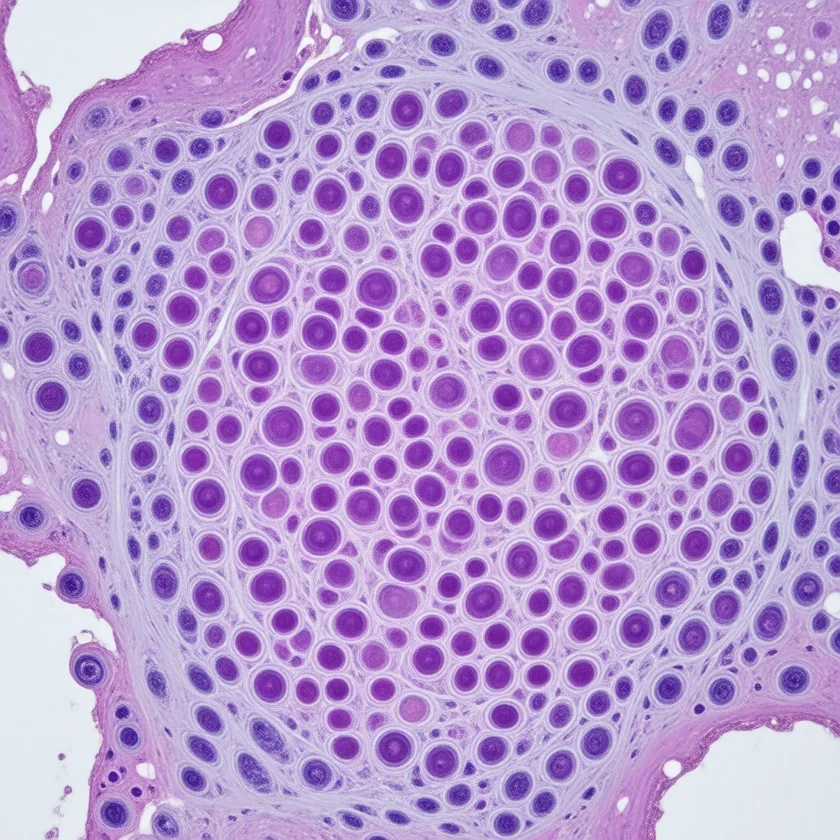
Of everything said about flaxseed, the cancer claims are the ones people most want to be true and the ones that most need careful handling. The chemistry is real: flaxseed is the richest food source of lignans by a wide margin, gut bacteria turn those lignans into compounds that sit in the same receptors as oestrogen, and in short pre-surgery trials a daily dose of ground flaxseed measurably slowed the rate at which breast and prostate tumour cells were dividing. The limits are equally real: those trials lasted about a month, measured cells under a microscope rather than whether anyone lived longer, and the large population studies that do look at survival can show association but not cause. This article walks through the mechanism, each human study by design and size, and what a reasonable person should take from it.
Table of Contents
- What Lignans Are and Where Flaxseed Stands
- How Gut Bacteria Make Enterolactone
- What Flaxseed Does to Hormones in Women
- The Toronto Breast Cancer Pre-Surgery Trial
- Breast Cancer Risk: Case-Control Studies and Meta-Analyses
- Lignans and Survival After a Breast Cancer Diagnosis
- Prostate Cancer: The Trials and the Null Cohort Data
- Hot Flashes: A Well-Run Trial That Found Nothing
- The Honest Limits
- How Much, in What Form, and Who Should Be Careful
- Key Research Papers
- Connections
- Featured Videos
What Lignans Are and Where Flaxseed Stands
Lignans are a family of plant polyphenols built from two linked phenylpropane units. Plants make them as part of their defence and structural chemistry, and small amounts turn up in whole grains, seeds, beans, berries, nuts and some vegetables. Flaxseed is different in degree, not kind: its main lignan, secoisolariciresinol diglucoside (SDG), is stored in the seed coat at concentrations no other common food approaches.
The best single reference is the Canadian food database built by Thompson and colleagues (2006), who analysed 121 foods prepared as normally eaten. Grouped by food type, "nuts and oilseeds" topped the lignan ranking, and flaxseed was the reason; cereals and breads came next, then legumes, fruits and vegetables. The gap is large enough that a single tablespoon of ground flaxseed delivers more lignan precursor than most people otherwise eat in a day. In processed foods the lignan content tracks the flaxseed percentage closely — Nesbitt and Thompson (1997) found a near-perfect correlation in home-made products and breakfast cereals — so a bread that lists flax among its last ingredients is not a meaningful source.
Two other lignans, matairesinol and smaller amounts of pinoresinol and lariciresinol, are present too, but SDG is around 95% of the total and is the compound the trials below are effectively studying.
How Gut Bacteria Make Enterolactone
SDG itself is not the active molecule. It reaches the large intestine largely intact, where bacteria strip off its sugars and remodel it, first into enterodiol and then into enterolactone. These two "enterolignans" (sometimes called mammalian lignans, because they are only made inside an animal) are what get absorbed into the blood, and enterolactone is the one that lingers.
Kuijsten and colleagues (2005) gave twelve healthy volunteers a single measured dose of purified SDG and tracked what happened. Enterolignans did not appear in the blood until 8 to 10 hours after the dose — the time it takes food to reach the colon. Enterodiol peaked at around 15 hours and enterolactone at around 20 hours. Enterolactone had a half-life of about 12.6 hours against 4.4 hours for enterodiol, and roughly twice the total exposure. Within three days up to 40% of the SDG dose had been excreted in urine as enterolignans, most of it as enterolactone. Two practical facts follow: the response builds over a day rather than hours, and a regular daily habit keeps blood levels up in a way an occasional dose does not.
Because the conversion depends on gut bacteria, it varies between people, and antibiotics suppress it. That variability is one reason studies that measure blood or urine enterolactone sometimes disagree with studies that estimate lignan intake from food questionnaires.
Once in the blood, enterolactone and enterodiol are structurally close enough to oestradiol to bind oestrogen receptors weakly. Depending on the tissue and on how much of the body's own oestrogen is around, that can act as a faint oestrogen signal or, by occupying receptors, as a brake on a stronger one. They also raise sex hormone-binding globulin and have effects on enzymes of oestrogen metabolism that do not involve the receptor at all. None of that is a "cure" mechanism; it is the reason the hormone-related cancers were the natural place to look.
What Flaxseed Does to Hormones in Women
Three small controlled feeding studies in postmenopausal women measured the hormonal effect of food amounts of flaxseed directly.
- Hutchins and colleagues (2001) — randomised crossover, 28 postmenopausal women aged 52 to 82, three seven-week periods eating their usual diet plus 0, 5 or 10 g of ground flaxseed a day. Flaxseed significantly lowered serum oestradiol (by 3.26 pg/mL) and oestrone sulphate, and raised prolactin slightly. These are modest shifts, in the direction that would be expected to lower breast cancer risk if sustained, from one to two teaspoons a day.
- Haggans and colleagues (1999) — the same design in 28 women, measuring how oestrogen was being broken down. Flaxseed raised the excretion of 2-hydroxyoestrogens and the 2-to-16-alpha-hydroxyoestrone ratio in a dose-dependent way, without changing 16-alpha-hydroxyoestrone. At the time that ratio was widely used as a breast cancer risk marker; it is now regarded as a weaker predictor than it once was, but the direction of change is consistent with the other findings.
- Sturgeon and colleagues (2008) — 48 postmenopausal women, a before-and-after study (no control group) of 7.5 g a day for six weeks then 15 g for six more. Oestradiol, oestrone and testosterone all drifted down but the changes were not statistically significant overall; only in overweight and obese women did oestrone fall significantly. This is the honest counterweight: the hormone effect of food amounts is small, and a study of 48 women could not confirm it.
Taken together: flaxseed at one to two tablespoons a day nudges a postmenopausal woman's oestrogen exposure downward by a small amount. That is a plausible route to lower risk, not evidence of lower risk. Evidence tier: small randomised crossover feeding studies and one uncontrolled study.
The Toronto Breast Cancer Pre-Surgery Trial
The single most important human study is Thompson and colleagues (2005), from the University of Toronto and Princess Margaret Hospital. It used a "window of opportunity" design: women newly diagnosed with breast cancer have a gap of a few weeks between the biopsy that finds the tumour and the operation that removes it, and tissue from both ends can be compared.
- Design: randomised, double-blind, placebo-controlled. 32 postmenopausal women with newly diagnosed breast cancer ate one muffin a day containing either 25 g of ground flaxseed (19 women) or no flaxseed (13 women). Average time on the muffins was 32 days in the flaxseed group and 39 in the placebo group.
- Primary outcome: the Ki-67 labelling index, a stain that counts what fraction of tumour cells are actively dividing.
- Result: in the flaxseed group, Ki-67 fell by 34.2% (P = 0.001), expression of the c-erbB2 (HER2) growth-factor receptor fell by 71% (P = 0.003) and the apoptotic index — the fraction of tumour cells undergoing programmed death — rose by 30.7% (P = 0.007). None of these changed significantly in the placebo group. Urinary lignan excretion rose 1,300% in the flaxseed group, confirming they had eaten it, and the amount of flaxseed eaten correlated with the size of the HER2 and apoptosis changes.
What this shows is that a food amount of flaxseed, eaten for about a month, changed the biology of existing breast tumours in a direction every oncologist would call favourable. What it does not show is any effect on recurrence, spread or survival — the trial ended at surgery. It was also small, and it has not been repeated at scale in the two decades since. The 2014 systematic review by Flower and colleagues, which searched four databases and found only two randomised trials of flax in breast cancer, reached the same conclusion: promising biomarker evidence, no outcome evidence. Evidence tier: one small double-blind RCT with a tissue endpoint.
A related point that is often asked about: the animal work from the same Toronto group (Chen and colleagues 2007) found that in mice carrying human oestrogen-receptor-positive breast tumours, 10% dietary flaxseed did not interfere with tamoxifen and, combined with it, shrank tumours more than tamoxifen alone. That is reassuring about the specific worry that a phytoestrogen might work against an anti-oestrogen drug, but it is a mouse study and cannot be written up as a human result.
Breast Cancer Risk: Case-Control Studies and Meta-Analyses
Does eating flaxseed over years go with less breast cancer? The population data are consistent in direction and consistent in their weakness.
- Lowcock, Cotterchio and Boucher (2013) — the Ontario Women's Diet and Health Study, a case-control study of 2,999 women with breast cancer and 3,370 healthy controls. About 21% of the control women ate flaxseed or flax bread at least weekly. Flaxseed consumption was associated with an 18% lower odds of breast cancer (OR 0.82, 95% CI 0.69–0.97) and flax bread with 23% lower (OR 0.77, 0.67–0.89), and none of 19 candidate confounders explained it away. It is the only study to ask about flaxseed itself rather than total lignan intake. Case-control studies ask people to remember their diet after diagnosis, which is their weakness.
- Buck and colleagues (2010) — meta-analysis of 21 studies (11 prospective cohorts, 10 case-control). Across all women, lignan exposure was not significantly associated with breast cancer (RE 0.92, 0.81–1.02). Among postmenopausal women only, high lignan intake went with a 14% lower risk (13 studies; RE 0.86, 0.78–0.94), with no heterogeneity between studies. Blood or urine enterolactone, by contrast, was not associated with risk.
- Velentzis and colleagues (2009) — an independent meta-analysis of 23 studies reaching almost the same numbers: no overall association (OR 0.93), a 15% reduction in postmenopausal women (OR 0.85, 0.78–0.93), and no association with blood enterolactone.
- Zaineddin and colleagues (2012) — a German case-control study of 2,884 cases and 5,509 controls that specifically found no significant association between dietary lignans or estimated enterolignans and postmenopausal breast cancer. Reported here because it exists; the meta-analyses above include it.
The pattern is one nutrition researchers see often: a consistent, modest association in the subgroup where the mechanism makes most sense (postmenopausal women, whose oestrogen exposure is lowest and most easily shifted), disappearing when premenopausal women are included, and not confirmed by the biomarker studies. A 14–15% relative reduction is real but small, and diets high in lignans are also diets high in whole grains, seeds and vegetables, so some of it is probably the company flaxseed keeps. Evidence tier: case-control and cohort studies, pooled.
Lignans and Survival After a Breast Cancer Diagnosis
Two cohort studies followed women who already had breast cancer and asked whether lignan exposure predicted how they fared. Both found that it did, and both are observational.
- Buck and colleagues (2011), Journal of Clinical Oncology — 1,140 postmenopausal German women aged 50 to 74 diagnosed between 2002 and 2005, with serum enterolactone measured after diagnosis and vital status followed to the end of 2009 (median 6.1 years; 162 deaths). Each 10 nmol/L increase in enterolactone was associated with a 6% lower hazard of death (HR 0.94, P = 0.04), and women in the highest quartile had a 42% lower hazard than the lowest (HR 0.58, 95% CI 0.34–0.99). Median enterolactone was 17.0 nmol/L in women who died and 21.4 in those alive.
- McCann and colleagues (2010) — the Western New York Exposures and Breast Cancer study, 1,122 women with confirmed breast cancer, diet in the one to two years before diagnosis assessed by questionnaire, followed to the end of 2006 (160 deaths). Among postmenopausal women, the highest quartile of dietary lignan intake was associated with about half the all-cause mortality (HR 0.49, 0.26–0.91) and 71% lower breast-cancer mortality (HR 0.29, 0.11–0.76). No such association was seen for fruit, vegetable or grain intake, which makes it less likely that lignans were simply a marker of a generally good diet.
These are striking numbers and they should be read carefully. Both studies are prospective from the point of diagnosis, which is a strength, but neither randomised anyone, and a woman with a high enterolactone level differs from one with a low level in ways beyond her diet — gut health, antibiotic use, body weight and the treatment she received all influence the measurement. Nobody has yet run the trial that would settle it: randomising women after diagnosis to daily flaxseed or not and following survival for years. Until someone does, the correct summary is that higher lignan exposure is associated with better survival in postmenopausal breast cancer in two independent cohorts, and that this is a reason to consider flaxseed a sensible addition, not a treatment. Evidence tier: prospective cohorts.
Prostate Cancer: The Trials and the Null Cohort Data
The prostate work comes mainly from Wendy Demark-Wahnefried's group at Duke, in a series of pre-surgery studies that grew in rigour over a decade.
- 2001 pilot — 25 men awaiting prostatectomy ate a low-fat diet with 30 g of flaxseed a day and were compared with matched historical cases. PSA, testosterone and cholesterol fell and tumour apoptosis was higher than in the comparison group. Uncontrolled, and the low-fat diet and the flaxseed were confounded.
- 2004 pilot — 15 men with a suspicious earlier biopsy but no cancer followed the same diet for six months. PSA fell from 8.47 to 5.72 ng/mL (P = 0.0002) and proliferation in benign prostate tissue fell. Again no control group.
- 2008 randomised trial — the study that untangled the two. 161 men scheduled for prostatectomy at least three weeks away were randomised to usual diet, 30 g flaxseed a day, a low-fat diet, or both, for an average of 30 days. Tumour proliferation (Ki-67) was significantly lower in the two flaxseed arms (P < 0.002) and was not lowered by fat restriction on its own — hence the title, "Flaxseed supplementation (not dietary fat restriction) reduces prostate cancer proliferation rates". A follow-on analysis of 147 of those men (Azrad and colleagues 2013) found that the more enterolactone a man was excreting, the lower his tumour's Ki-67 (correlation −0.23, P = 0.007), tying the effect to the lignans specifically.
That randomised trial is good evidence that a month of flaxseed slows the division of prostate cancer cells. It is also worth noting for this site's whole-food stance that the low-fat arm did nothing on its own: it was the seed, not the fat restriction.
The long-term population data do not support a protective effect on getting prostate cancer in the first place. Perez-Cornago and colleagues (2018) pooled individual participant data from seven prospective studies — 2,828 prostate cancer cases and 5,593 controls with blood lignans measured before diagnosis — and found no association between circulating enterolactone and prostate cancer risk. There is also a separate question about flaxseed's fat rather than its lignans: several older studies linked high alpha-linolenic acid intake with more prostate cancer, and the heart article works through those three meta-analyses. The short version is that the association has weakened with each better study and now sits at the edge of significance. Evidence tier: one RCT with a tissue endpoint, two uncontrolled pilots, one large pooled cohort analysis (null for risk).
Hot Flashes: A Well-Run Trial That Found Nothing
Because lignans are phytoestrogens, flaxseed was long recommended for menopausal hot flashes, and small early studies encouraged it. The definitive test was a phase III trial run through the North Central Cancer Treatment Group (Pruthi and colleagues 2012): 188 postmenopausal women, with or without a history of breast cancer, randomised double-blind to a daily flaxseed bar providing 410 mg of lignans or an identical placebo bar for six weeks, keeping daily hot-flash diaries. The mean hot flash score fell by 4.9 in the flaxseed group and by 3.5 in the placebo group — a difference that was not statistically significant. Flaxseed did not treat hot flashes.
A one-year trial from Quebec points the same way. Dodin and colleagues (2005) randomised 199 menopausal women to 40 g of flaxseed a day or a wheat-germ placebo for twelve months. Menopausal symptom scores improved substantially in both groups with no difference between them, and bone density did not differ either. (Flaxseed did lower total cholesterol modestly in that trial, which is covered in the heart article.)
This deserves saying plainly because it is still repeated: the phytoestrogen mechanism is real, but at the doses a person can eat, it is too weak to relieve hot flashes. Evidence tier: two randomised placebo-controlled trials, both negative for symptoms.
The Honest Limits
- No trial has measured a hard outcome. Recurrence, metastasis and survival have only been studied observationally. Ki-67 and apoptosis are good surrogates, but surrogates have misled oncology before.
- The trials were short. About a month in both the breast and prostate studies. Whether the slowing of cell division persists, or matters, over years is unknown.
- The population studies cannot separate flaxseed from the diet it comes in. Lignan-rich eaters also eat more fibre, more whole grains and more vegetables. Only the Ontario study asked about flaxseed by name.
- Biomarker studies disagree with intake studies. Both breast cancer meta-analyses found the protective association with estimated lignan intake but not with measured blood enterolactone. Either the questionnaires are capturing something beyond lignans, or a single blood measurement is a poor summary of years of exposure, or both.
- Prostate risk data are null in the largest pooled analysis, and the ALA-prostate question is not fully closed.
- The symptom claims are disproven. Hot flashes did not respond in a 188-woman phase III trial.
Against all that, the direction of every finding is the same, no study has found flaxseed made a hormone-related cancer worse, and the intervention is a tablespoon of a cheap food. That is the reasonable position: worth doing, not worth relying on.
How Much, in What Form, and Who Should Be Careful
Amount. The trials that changed tumour biology used 25 g (breast) and 30 g (prostate) a day — roughly three to four level tablespoons of ground seed. The hormone studies in women used 5 to 10 g, one to two teaspoons heaped to a tablespoon. Somewhere between one and three tablespoons a day covers the studied range; there is no evidence that more is better, and the blood-sugar article describes a trial in which 13 g outperformed 26 g.
Form. It has to be ground. Kuijsten and colleagues (2005) showed whole seed delivered only 28% of the enterolignans that ground seed did. Baking is fine: Nesbitt, Lam and Thompson (1999) found flaxseed baked into muffins or bread gave the same lignan excretion as raw. Flaxseed oil contains almost no lignans and is irrelevant to everything on this page. Concentrated SDG extracts and "lignan supplements" exist and have been used in a few trials, but nothing on this page depends on them and the food is the studied form.
Who should be careful.
- Women with an oestrogen-receptor-positive breast cancer taking tamoxifen or an aromatase inhibitor sometimes ask whether a phytoestrogen is safe. The human trial evidence above is in exactly this population and found favourable tumour changes; the mouse work found no interference with tamoxifen. The reasonable position is that food amounts appear safe alongside treatment, and that concentrated lignan supplements have not been tested in that setting and are best avoided.
- Pregnancy: the lignan hormone effects are the reason for caution here, and the evidence is discussed in the safety article. Food amounts in a normal diet are not a concern; a daily large supplemental dose is a different matter.
- Anyone on antibiotics will convert less SDG for a while; nothing to do about it, just an explanation for the variability.
Key Research Papers
Author names, titles and journals are plain text; only the PMID or DOI is a link. Every identifier below was checked against PubMed before publication.
- Thompson LU, Chen JM, Li T, Strasser-Weippl K, Goss PE (2005). Dietary flaxseed alters tumor biological markers in postmenopausal breast cancer. Clinical Cancer Research. — PubMed PMID: 15897583
- Demark-Wahnefried W, Polascik TJ, George SL, et al. (2008). Flaxseed supplementation (not dietary fat restriction) reduces prostate cancer proliferation rates in men presurgery. Cancer Epidemiology, Biomarkers & Prevention. — PubMed PMID: 19064574
- Azrad M, Vollmer RT, Madden J, et al. (2013). Flaxseed-derived enterolactone is inversely associated with tumor cell proliferation in men with localized prostate cancer. Journal of Medicinal Food. — PubMed PMID: 23566060
- Demark-Wahnefried W, Price DT, Polascik TJ, et al. (2001). Pilot study of dietary fat restriction and flaxseed supplementation in men with prostate cancer before surgery: exploring the effects on hormonal levels, prostate-specific antigen, and histopathologic features. Urology. — PubMed PMID: 11445478
- Demark-Wahnefried W, Robertson CN, Walther PJ, Polascik TJ, Paulson DF, Vollmer RT (2004). Pilot study to explore effects of low-fat, flaxseed-supplemented diet on proliferation of benign prostatic epithelium and prostate-specific antigen. Urology. — PubMed PMID: 15134976
- Lowcock EC, Cotterchio M, Boucher BA (2013). Consumption of flaxseed, a rich source of lignans, is associated with reduced breast cancer risk. Cancer Causes & Control. — PubMed PMID: 23354422
- Buck K, Zaineddin AK, Vrieling A, Linseisen J, Chang-Claude J (2010). Meta-analyses of lignans and enterolignans in relation to breast cancer risk. The American Journal of Clinical Nutrition. — PubMed PMID: 20463043
- Velentzis LS, Cantwell MM, Cardwell C, Keshtgar MR, Leathem AJ, Woodside JV (2009). Lignans and breast cancer risk in pre- and post-menopausal women: meta-analyses of observational studies. British Journal of Cancer. — PubMed PMID: 19337250
- Zaineddin AK, Buck K, Vrieling A, et al. (2012). The association between dietary lignans, phytoestrogen-rich foods, and fiber intake and postmenopausal breast cancer risk: a German case-control study. Nutrition and Cancer. — PubMed PMID: 22591208
- Buck K, Vrieling A, Zaineddin AK, et al. (2011). Serum enterolactone and prognosis of postmenopausal breast cancer. Journal of Clinical Oncology. — PubMed PMID: 21900115
- McCann SE, Thompson LU, Nie J, et al. (2010). Dietary lignan intakes in relation to survival among women with breast cancer: the Western New York Exposures and Breast Cancer (WEB) Study. Breast Cancer Research and Treatment. — PubMed PMID: 20033482
- Perez-Cornago A, Appleby PN, Boeing H, et al. (2018). Circulating isoflavone and lignan concentrations and prostate cancer risk: a meta-analysis of individual participant data from seven prospective studies including 2,828 cases and 5,593 controls. International Journal of Cancer. — PubMed PMID: 29971774
- Hutchins AM, Martini MC, Olson BA, Thomas W, Slavin JL (2001). Flaxseed consumption influences endogenous hormone concentrations in postmenopausal women. Nutrition and Cancer. — PubMed PMID: 11588903
- Haggans CJ, Hutchins AM, Olson BA, Thomas W, Martini MC, Slavin JL (1999). Effect of flaxseed consumption on urinary estrogen metabolites in postmenopausal women. Nutrition and Cancer. — PubMed PMID: 10368815
- Sturgeon SR, Heersink JL, Volpe SL, et al. (2008). Effect of dietary flaxseed on serum levels of estrogens and androgens in postmenopausal women. Nutrition and Cancer. — PubMed PMID: 18791924
- Pruthi S, Qin R, Terstreip SA, et al. (2012). A phase III, randomized, placebo-controlled, double-blind trial of flaxseed for the treatment of hot flashes: North Central Cancer Treatment Group N08C7. Menopause. — PubMed PMID: 21900849
- Dodin S, Lemay A, Jacques H, Légaré F, Forest JC, Mâsse B (2005). The effects of flaxseed dietary supplement on lipid profile, bone mineral density, and symptoms in menopausal women: a randomized, double-blind, wheat germ placebo-controlled clinical trial. The Journal of Clinical Endocrinology and Metabolism. — PubMed PMID: 15613422
- Flower G, Fritz H, Balneaves LG, et al. (2014). Flax and Breast Cancer: A Systematic Review. Integrative Cancer Therapies. — PubMed PMID: 24013641
- Kuijsten A, Arts IC, Vree TB, Hollman PC (2005). Pharmacokinetics of enterolignans in healthy men and women consuming a single dose of secoisolariciresinol diglucoside. The Journal of Nutrition. — PubMed PMID: 15795437
- Kuijsten A, Arts IC, van't Veer P, Hollman PC (2005). The relative bioavailability of enterolignans in humans is enhanced by milling and crushing of flaxseed. The Journal of Nutrition. — PubMed PMID: 16317125
- Nesbitt PD, Lam Y, Thompson LU (1999). Human metabolism of mammalian lignan precursors in raw and processed flaxseed. The American Journal of Clinical Nutrition. — PubMed PMID: 10075344
- Nesbitt PD, Thompson LU (1997). Lignans in homemade and commercial products containing flaxseed. Nutrition and Cancer. — PubMed PMID: 9457743
- Thompson LU, Boucher BA, Liu Z, Cotterchio M, Kreiger N (2006). Phytoestrogen content of foods consumed in Canada, including isoflavones, lignans, and coumestan. Nutrition and Cancer. — PubMed PMID: 16898863
- Adlercreutz H (2007). Lignans and human health. Critical Reviews in Clinical Laboratory Sciences. — PubMed PMID: 17943494
- Chen J, Power KA, Mann J, Cheng A, Thompson LU (2007). Dietary flaxseed interaction with tamoxifen induced tumor regression in athymic mice with MCF-7 xenografts by downregulating the expression of estrogen related gene products and signal transduction pathways. Nutrition and Cancer. — PubMed PMID: 17640162 (animal study)
PubMed Topic Searches
Connections
- All Food
- Flaxseed
- Flaxseed Benefits: What the Evidence Actually Shows
- Flaxseed: Nutrient Profile
- Flaxseed ALA Omega-3 and Heart Health
- Flaxseed Fibre, Constipation and Blood Sugar
- Ground vs Whole Flaxseed, Flax Oil, Cyanogens and Safety
- Breast Cancer
- Prostate Cancer
- Sesame Seeds
- Pumpkin Seeds
- Antioxidants
- Gut Health