Bilberry — Benefits Deep Dive
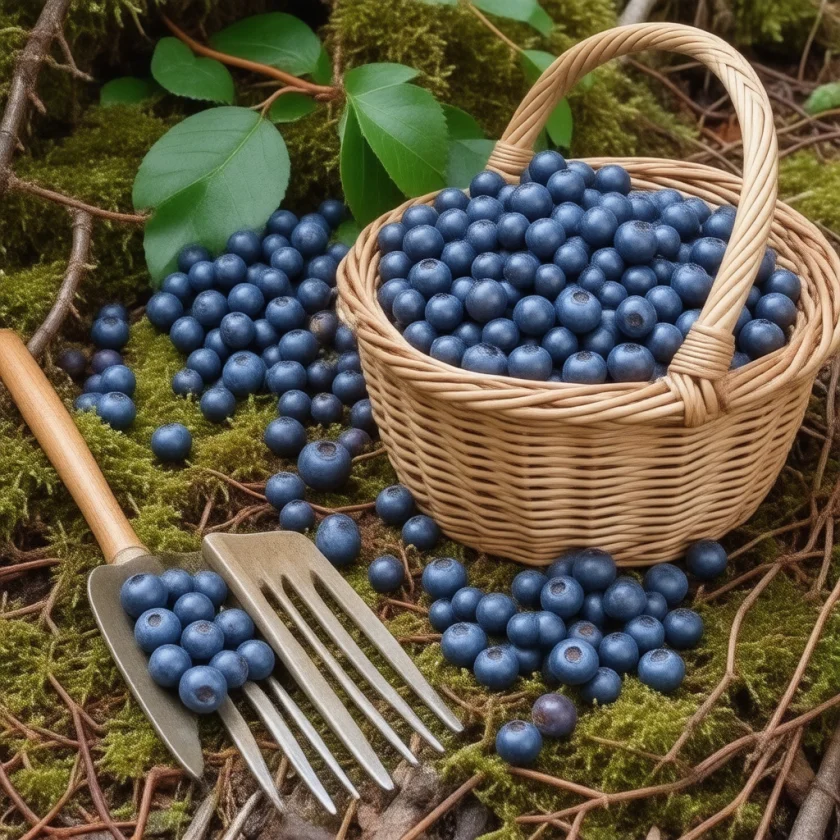
Bilberry (Vaccinium myrtillus) is the small, dark, wild European cousin of the cultivated blueberry, and it is described in the research literature as one of the richest natural sources of anthocyanins. Those blue-black pigments — delphinidin and cyanidin glycosides that stain the flesh all the way through, not just the skin — are the reason bilberry has been studied for the eye, the small blood vessels, and blood-sugar handling. This hub separates what the evidence actually supports from what folklore has oversold. The most famous bilberry claim, that Royal Air Force night-fighter pilots ate bilberry jam to sharpen their night vision, is almost certainly folklore — most likely an offshoot of Second World War misdirection that hid airborne radar — and a 2004 systematic review of the placebo-controlled trials found no benefit for night vision in healthy eyes. The four pages below hold that honest line: modest controlled-trial evidence for screen-related eye fatigue, one small dry-eye trial, animal research on the retinal microvasculature and capillary leakiness, older and smaller studies of venous symptoms, and small, mixed metabolic trials, each shown with its real clinical evidence and its real limits.
Deep-Dive Articles
Eye & Vision
The Royal Air Force night-vision story told honestly — almost certainly folklore tied to wartime radar secrecy, and the most rigorous placebo-controlled trials found no night-vision benefit in healthy eyes. Set against that, the research that holds up better: two controlled trials on eye fatigue in screen workers, one small dry-eye trial, and animal studies on the retinal microvasculature in diabetes.
Read the deep dive →Circulation & Veins
Bilberry anthocyanosides as a traditional European venotonic — the capillary-permeability (animal) and connective-tissue research behind their use for chronic venous insufficiency, easy bruising, and capillary fragility, the old, small venous studies, the newer endothelial-function and microcirculation research, and an honest read on trial quality.
Read the deep dive →Blood Sugar & Metabolic
A single-dose trial in 8 men found a smaller post-meal glucose and insulin rise, a bilberry diet moved a combined low-grade inflammation score, and a 4-week extract trial in type 2 diabetes found no significant effects; animal work maps an AMP-activated protein kinase mechanism. Small, modest effects on surrogate markers — studied as a food and adjunct, not as a diabetes treatment. The evidence is presented with its small sample sizes intact.
Read the deep dive →Sources & Extracts
Why wild bilberry is not the same as a supermarket blueberry, how standardised extracts (25% anthocyanidins / 36% anthocyanosides, the best-known standard profile) are defined and what doses trials used, the poor oral bioavailability of anthocyanins, and what supplement labels do and do not reveal about pigment content.
Read the deep dive →Table of Contents
What Bilberry Is — and Why the Pigment Matters
Bilberry (Vaccinium myrtillus) is a low, wild shrub of northern European and Asian heathland and forest. The berries are small, single or paired on the stem rather than clustered, and — the key visual difference from the North American highbush blueberry (Vaccinium corymbosum) — the flesh is deep purple all the way through. Crush a blueberry and the juice is pale; crush a bilberry and it stains fingers and tongue blue-black. That difference is the whole story: bilberry concentrates its anthocyanin pigments in the pulp as well as the skin, and in one HPLC comparison (Müller and colleagues, 2012) fresh bilberries held up to 1,017 mg of anthocyanins per 100 g against up to 438 mg in blueberries — roughly twice as much at the top of each range.
Chemically, bilberry contains about fifteen different anthocyanins — glycosides (galactosides, glucosides, and arabinosides) of five anthocyanidin backbones, with delphinidin and cyanidin derivatives dominating. These are water-soluble flavonoid pigments, and they are the presumed active constituents behind every benefit discussed on this hub. They are also chemically fragile (sensitive to heat, light, oxygen, and pH) and poorly absorbed, which is why standardisation and dosing matter so much and why the Sources & Extracts page exists.
The four deep-dive pages divide the evidence by organ system, and each keeps an honest ledger:
- The eye — home of bilberry's most famous and most overstated claim. The Second World War RAF night-vision legend is addressed head-on: it was very likely a cover story for airborne radar, and in the 2004 Canter and Ernst systematic review the four most recent randomised trials were all negative, with no benefit found in healthy eyes. What survives scrutiny is more modest — eye fatigue in screen workers, dry eye, and the retinal microvasculature, backed respectively by two controlled trials, one small trial, and animal studies.
- The circulation — bilberry's longest-standing European medicinal use is as a venotonic and capillary stabiliser. The proposed mechanism (anthocyanins reducing capillary leakiness and acting on the connective tissue around vessels) comes mainly from animal experiments and a small uncontrolled human study; the clinical reports are older, smaller, and mostly European.
- Metabolism — small human trials found bilberry flattening the post-meal glucose rise after a single dose and shifting a combined inflammation score, while a 4-week extract trial in type 2 diabetes found no significant effects; animal data point to an AMP-activated protein kinase (AMPK) mechanism.
- The berry and its extracts — how to tell wild bilberry from cultivated blueberry, what a "25% anthocyanidin" or "36% anthocyanoside" label actually means, and why bioavailability is the quiet limiting factor in every trial.
Bilberry is closely related to the pure pigment page on Anthocyanins and to other flavonoid vascular agents such as Grape Seed Extract, French Maritime Pine Bark, and Rutin. It is a food first and a supplement second; the framing throughout is that the most consistent evidence concerns anthocyanin-rich berries within an ordinary diet (whole-diet trials and population studies), while the disease-specific claims rest on evidence that is small, mixed, or preclinical.
Research Papers: Eye & Vision
- Canter PH, Ernst E (2004). Anthocyanosides of Vaccinium myrtillus (bilberry) for night vision — a systematic review of placebo-controlled trials. Survey of Ophthalmology — PubMed PMID: 14711439
- Muth ER, Laurent JM, Jasper P (2000). The effect of bilberry nutritional supplementation on night visual acuity and contrast sensitivity. Alternative Medicine Review — PubMed PMID: 10767671
- Zadok D, Levy Y, Glovinsky Y (1999). The effect of anthocyanosides in a multiple oral dose on night vision. Eye (London) — PubMed PMID: 10707135
- Kosehira M, Machida N, Kitaichi N (2020). A 12-week-long intake of bilberry extract (Vaccinium myrtillus L.) improved objective findings of ciliary muscle contraction of the eye: a randomized, double-blind, placebo-controlled, parallel-group comparison trial. Nutrients — PubMed PMID: 32106548
- Ozawa Y et al. (2015). Bilberry extract supplementation for preventing eye fatigue in video display terminal workers. Journal of Nutrition, Health & Aging — PubMed PMID: 25923485
- Riva A, Togni S, Franceschi F et al. (2017). The effect of a natural, standardized bilberry extract (Mirtoselect) in dry eye: a randomized, double-blind, placebo-controlled trial. European Review for Medical and Pharmacological Sciences — PubMed PMID: 28617532
- Kim J et al. (2015). Vaccinium myrtillus extract prevents or delays the onset of diabetes-induced blood-retinal barrier breakdown. International Journal of Food Sciences and Nutrition — PubMed PMID: 25582181
The two eye-fatigue trials in numbers. In the 2015 Japanese trial, 88 office workers who used computer screens (video display terminals) and had lower scores on two eye-focus tests were enrolled; 43 in the bilberry group and 37 in the placebo group finished. They took 480 mg a day of bilberry extract or a placebo for 8 weeks. After 8 weeks, the drop in flicker-fusion (the speed at which a flickering light still looks steady) caused by screen work was smaller with bilberry than with placebo, and five complaints — tired eyes, eye pain, heavy eyes, discomfort and a gritty feeling — eased more in the bilberry group; a near-focus test did not differ, and no serious side effects were reported in either group. In the 2020 trial, 109 healthy adults aged 20–60 took 240 mg a day of a standardised bilberry extract or a placebo for 12 weeks; a measure of strain in the eye's focusing (ciliary) muscle after screen and near-vision tasks was better in the bilberry group at weeks 8 and 12.
Research Papers: Circulation & Veins
- Detre Z, Jellinek H, Miskulin M, Robert AM (1986). Studies on vascular permeability in hypertension: action of anthocyanosides. Clinical Physiology and Biochemistry — PubMed PMID: 3698472
- Boniface R, Robert AM (1996). Effect of anthocyanins on human connective tissue metabolism. Klinische Monatsblätter für Augenheilkunde — PubMed PMID: 9091714
- Zhu Y et al. (2011). Purified anthocyanin supplementation improves endothelial function via NO-cGMP activation in hypercholesterolemic individuals. Clinical Chemistry — PubMed PMID: 21926181
- Mastantuono T et al. (2016). The effects of Vaccinium myrtillus extract on hamster pial microcirculation during hypoperfusion-reperfusion injury. PLoS One — PubMed PMID: 27070318
- Cassidy A et al. (2011). Habitual intake of flavonoid subclasses and incident hypertension in adults. American Journal of Clinical Nutrition — PubMed PMID: 21106916
- Ghosh A et al. (2024). Effects of Vaccinium-derived antioxidants on human health: the past, present and future. Frontiers in Molecular Biosciences — PubMed PMID: 39758282
- Grohmann T, Walker AW, Russell WR, Hoggard N, Zhang X, Horgan G, de Roos B (2023). A grape seed and bilberry extract reduces blood pressure in individuals at risk of developing type 2 diabetes: the PRECISE study, a double-blind placebo-controlled cross-over intervention study. Frontiers in Nutrition — PubMed PMID: 37351191
A bilberry-and-grape-seed blood-pressure trial. In the small PRECISE crossover trial (2023), 14 adults aged 45 or older with a body mass index above 28 and a raised risk of type 2 diabetes took a daily supplement of 250 mg bilberry extract plus 300 mg grape seed extract, and a control extract, for 12 weeks each. The combination lowered 24-hour (ambulatory) systolic blood pressure by 4.7 mmHg and diastolic blood pressure by 2.3 mmHg, but did not change glucose or cholesterol results. Because the supplement combined the two extracts, the trial cannot show how much of the effect came from bilberry.
Research Papers: Blood Sugar & Metabolic
- Hoggard N et al. (2013). A single supplement of a standardised bilberry extract modifies glycaemic response in individuals with type 2 diabetes controlled by diet and lifestyle. Journal of Nutritional Science. — PubMed PMID: 25191571
- Kolehmainen M et al. (2012). Bilberries reduce low-grade inflammation in individuals with features of metabolic syndrome. Molecular Nutrition & Food Research. — PubMed PMID: 22961907
- Chan SW et al. (2021). Impact of short-term bilberry supplementation on glycemic control, cardiovascular risk factors, and antioxidant status in Chinese patients with type 2 diabetes. Phytotherapy Research. — PubMed PMID: 33599340
- Takikawa M et al. (2010). Dietary anthocyanin-rich bilberry extract ameliorates hyperglycemia and insulin sensitivity via activation of AMP-activated protein kinase in diabetic mice. Journal of Nutrition. — PubMed PMID: 20089785
- Lankinen M et al. (2011). Whole grain products, fish and bilberries alter glucose and lipid metabolism in a randomized, controlled trial: the Sysdimet study. PLoS One. — PubMed PMID: 21901116
- Yang L et al. (2017). Effects of anthocyanins on cardiometabolic health: a systematic review and meta-analysis of randomized controlled trials. Advances in Nutrition. — PubMed PMID: 28916569
- Aboufarrag H, Hollands WJ, Percival J, Philo M, Savva GM, Kroon PA (2022). No effect of isolated anthocyanins from bilberry fruit and black rice on LDL cholesterol or other biomarkers of cardiovascular disease in adults with elevated cholesterol: a randomized, placebo-controlled, cross-over trial. Molecular Nutrition & Food Research. — PubMed PMID: 35385209
Isolated bilberry pigments and cholesterol. In a 2022 double-blind crossover trial, 52 adults with high cholesterol each took capsules with 320 mg of anthocyanins from bilberry, 320 mg of anthocyanins from black rice, and a placebo, once a day for 28 days each. Compared with the placebo, neither anthocyanin capsule changed LDL, HDL or total cholesterol, triglycerides, fasting blood sugar (glucose) or fructosamine (a measure of average blood sugar over the past few weeks). The authors note that the short treatment periods may explain why no effect was seen.
Research Papers: Sources, Extracts & Bioavailability
- Müller D, Schantz M, Richling E (2012). HPLC analysis of anthocyanins in bilberries (Vaccinium myrtillus L.), blueberries (Vaccinium corymbosum L.), and corresponding juices. Journal of Food Science. — PubMed PMID: 22394068
- Burdulis D et al. (2009). Comparative study of anthocyanin composition, antimicrobial and antioxidant activity in bilberry and blueberry fruits. Acta Poloniae Pharmaceutica. — PubMed PMID: 19702172
- Lätti AK, Riihinen KR, Kainulainen PS (2008). Analysis of anthocyanin variation in wild populations of bilberry (Vaccinium myrtillus L.) in Finland. Journal of Agricultural and Food Chemistry. — PubMed PMID: 18072741
- Mazza G, Kay CD, Cottrell T, Holub BJ (2002). Absorption of anthocyanins from blueberries and serum antioxidant status in human subjects. Journal of Agricultural and Food Chemistry. — PubMed PMID: 12475297
- Manach C et al. (2005). Bioavailability and bioefficacy of polyphenols in humans. I. Review of 97 bioavailability studies. American Journal of Clinical Nutrition. — PubMed PMID: 15640486
External Authoritative Resources
- U.S. National Institutes of Health (NIH) National Center for Complementary and Integrative Health — Bilberry — plain-language safety and evidence summary
- LiverTox (U.S. National Institutes of Health) — Bilberry — uses, dosing, and interactions
- Herbal Medicine: Biomolecular and Clinical Aspects — Bilberry (NCBI Bookshelf)
- PubMed — all research on bilberry / Vaccinium myrtillus anthocyanins