Tryptophan: Food Sources & Daily Intake
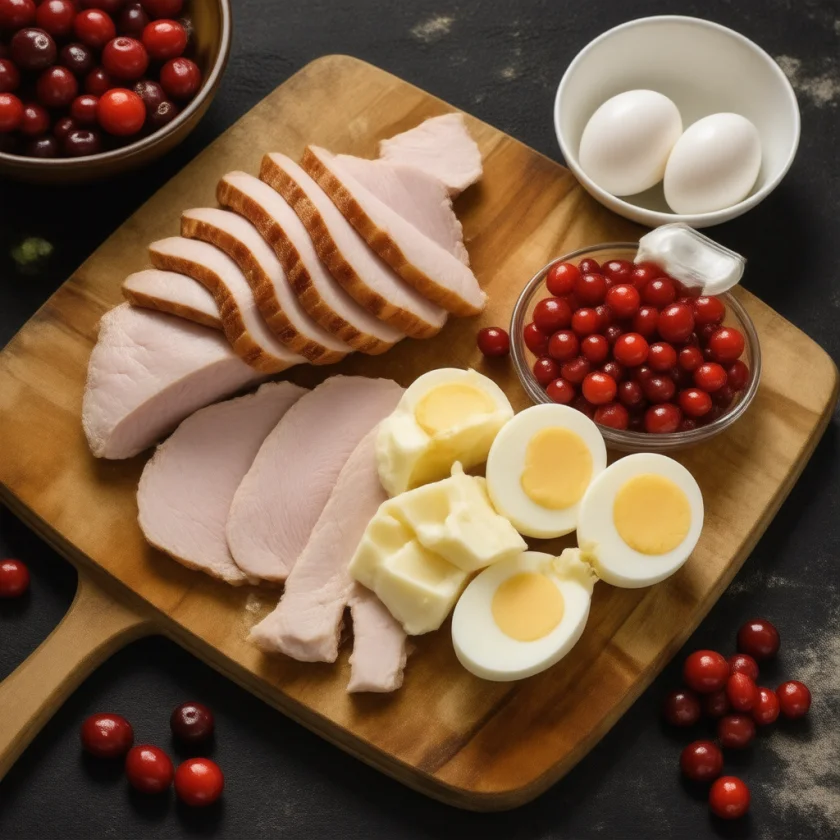
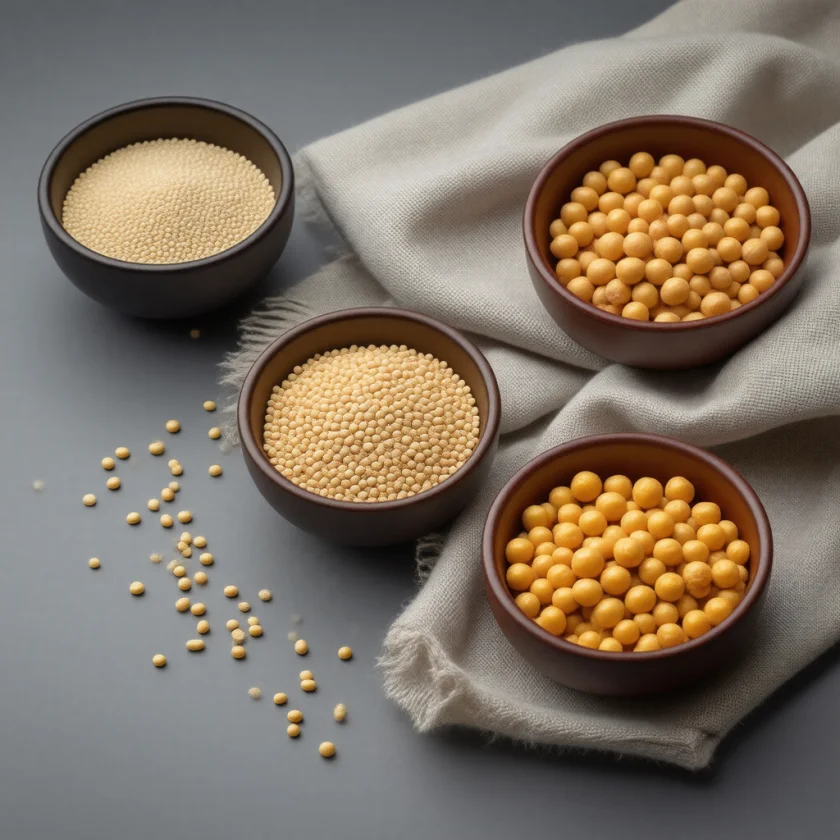
Tryptophan is an essential amino acid best known as the body’s starting material for two key signaling molecules: serotonin, a brain chemical tied to calm mood and well-being, which the body then converts into melatonin, the hormone that sets the sleep–wake clock. Tryptophan has a third, quieter job — it is the only amino acid the body can turn into the B-vitamin niacin (vitamin B3). Because it is essential, the body cannot make it, so it must come from food. It is also the rarest amino acid in protein, which is why the daily requirement is the smallest of all the essentials. The richest sources are concentrated animal proteins — poultry, fish, eggs and hard cheese — along with pumpkin and sesame seeds, peanuts, oats and legumes. The table below shows grams of tryptophan per 100 g of food; there is no U.S. Food and Drug Administration (FDA) Daily Value for individual amino acids, so amounts are absolute.
| Tryptophan: Food Sources & Daily Intake | |||||
|---|---|---|---|---|---|
| Rank | Food (serving) | Per 100 g | Glucose | Fructose | Notes |
| 1 | Pumpkin Seeds 1 oz / 28 g | 🟢 0.6 g | 0.1 | 0.1 | Top plant source. |
| 2 | Parmesan Cheese 1 oz / 28 g | 🟢 0.5 g | — | — | Concentrated protein. |
| 3 | Sesame Seeds 1 oz / 28 g | 🟢 0.4 g | — | — | Strong plant source. |
| 4 | Salmon 3 oz / 85 g | 🟢 0.3 g | 0 | 0 | |
| 5 | Pork Organ Meats 3 oz / 85 g | 🟢 0.3 g | — | — | Nutrient-dense organ meat. |
| 6 | Cheddar Cheese 1 oz / 28 g | 🟢 0.3 g | 0 | 0 | |
| 7 | Shrimp 3 oz / 85 g | 🟢 0.3 g | 0 | 0 | |
| 8 | Beef Meat 3 oz / 85 g | 🟢 0.3 g | 0 | 0 | |
| 9 | Turkey Breast 3 oz / 85 g | 🟢 0.3 g | 0 | 0 | The classic source — but no higher than other poultry. |
| 10 | Tuna 3 oz / 85 g | 🟢 0.3 g | 0 | 0 | |
| 11 | Pork 3 oz / 85 g | 🟢 0.3 g | 0 | 0 | |
| 12 | Cod 3 oz / 85 g | 🟢 0.3 g | 0 | 0 | Lean, protein-dense. |
| 13 | Halibut 3 oz / 85 g | 🟢 0.3 g | 0 | 0 | |
| 14 | Peanuts 1 oz / 28 g | 🟡 0.2 g | — | — | |
| 15 | Chicken Organ Meats 3 oz / 85 g | 🟡 0.1 g | 0 | 0 | Nutrient-dense organ meat (giblets). |
| 16 | Brown Rice 1 cup / 195 g | ⚪ 0.0 g | 0 | 0 | Common staple. |
Table of Contents
How to Read These Tables
- Essential amino acid. Your body cannot synthesize tryptophan, so a regular dietary supply matters. The nine essential amino acids must come from food; the other eleven the body can build itself. Tryptophan is the least abundant of the nine, so even protein-rich foods carry only modest amounts.
- Grams per 100 g, not %DV. There is no U.S. Food and Drug Administration Daily Value for individual amino acids, so this table reports the absolute grams per 100 g of food and ranks foods by that. A typical serving is shown beside each food.
- Complete vs incomplete protein. Animal foods are “complete” — they carry all the essential amino acids in good proportion. Most single plant foods are lower in one or two; eating a variety of legumes, grains, nuts and seeds across the day covers the gaps.
Recommended Intakes & Upper Limits
Tryptophan has no Daily Value: the U.S. food-label rules (21 CFR 101.9) set none for it, and the green and yellow marks in the food table above only rank each food against the richest food listed. The table below summarizes its status.
| Reference | Adult value | Notes |
|---|---|---|
| Essential? | Yes — essential | The body cannot make it; it must come from food. |
| Adult requirement | 4 mg/kg/day | WHO/FAO/UNU 2007 estimate. Tryptophan is the rarest essential amino acid, so the requirement is the smallest. |
| ≈ for a 70 kg adult | ~280 mg/day | Easily met by a normal protein intake (~0.8 g protein/kg) — about a single serving of poultry, fish or cheese. |
| Why it matters | Serotonin, melatonin & niacin | Precursor of serotonin (mood) and melatonin (sleep); also the only amino-acid route to making niacin (vitamin B3). |
Bioavailability & Absorption
Tryptophan from food is well absorbed as part of dietary protein, but getting it into the brain — where it becomes serotonin — is a separate, competitive step. Tryptophan is a large amino acid, and it has to share the same transporter into the brain with several other large amino acids (leucine, isoleucine, valine, phenylalanine, tyrosine). After a high-protein meal those competitors flood the bloodstream and crowd tryptophan out, so brain tryptophan can actually fall. A carbohydrate-rich meal does the opposite: it raises insulin, which pulls the competing amino acids into muscle and leaves tryptophan with a clearer path into the brain. This is the kernel of truth behind the “turkey makes you sleepy” idea — but the popular version is a myth. Turkey is not unusually high in tryptophan (chicken, fish and cheese are similar or higher), and because turkey is mostly protein it actually supplies the competing amino acids too. The post-Thanksgiving drowsiness owes far more to the big carbohydrate-heavy meal, alcohol and the size of the feast than to turkey itself.
Cooking & Storage
Amino acids are stable to ordinary cooking — tryptophan is not destroyed by normal heat, and cooking actually makes protein easier to digest. No special handling is needed. (One footnote for the curious: tryptophan can be partly lost during industrial acid hydrolysis used in the laboratory to measure protein, which is why some older food tables under-report it — but that is an analysis artifact, not something that happens on your stove.)
Vegetarian & Vegan Sources
Plant-based eaters can reach the tryptophan target comfortably, because the daily requirement is small and several plant foods are genuinely tryptophan-dense. The standout plant sources are pumpkin and sesame seeds, peanuts, oats and legumes (lentils, beans, chickpeas). Eating a variety across the day — seeds and legumes alongside whole grains — supplies all the essential amino acids in good balance. Because tryptophan competes with other amino acids to reach the brain, plant meals that pair these foods with wholesome carbohydrates (oats, fruit, whole grains) can also be a gentle, food-based way to support an evening wind-down.
Who Needs to Pay Attention
Outright tryptophan deficiency is rare in anyone eating enough total protein. The groups at risk are those with very low overall protein intake — some older adults, people recovering from illness, and poorly planned very-low-calorie or restrictive diets. Because tryptophan is the body’s backup route to making niacin (vitamin B3), a diet that is short on both niacin and tryptophan can contribute to pellagra (the classic niacin-deficiency disease of diarrhea, dermatitis and dementia) — historically seen where corn, which is low in both, dominated the diet. A separate caution applies to supplements: isolated tryptophan or 5-HTP raises serotonin, so combining them with serotonin-active medicines (such as selective serotonin reuptake inhibitor (SSRI) or serotonin-norepinephrine reuptake inhibitor (SNRI) antidepressants, certain migraine drugs, or monoamine oxidase (MAO) inhibitors) can push serotonin too high. Combining tryptophan or 5-HTP supplements with these medicines can cause serotonin syndrome (agitation, fever, sweating, muscle twitching, a fast heartbeat), signs that hospitals treat as urgent; getting tryptophan from ordinary food is not a concern.
Food tryptophan is not the concern in one piece of supplement history. In 1989 an outbreak of eosinophilia-myalgia syndrome (an illness of muscle pain with very high counts of eosinophils, a type of white blood cell) was linked to tryptophan supplements. A Centers for Disease Control investigation in Minnesota found that 29 of 30 patients (97%) whose tryptophan source was known had taken tryptophan made by a single company, compared with 21 of 35 comparison people (60%). The lots the patients used were linked to changes in that company’s manufacturing — less powdered carbon in a purification step and a new bacterial strain in fermentation — and the investigators concluded that the outbreak came from a chemical constituent tied to those manufacturing conditions, rather than from tryptophan itself.
Key Research Papers
- NIH MedlinePlus — Amino acids
- National Academies — Dietary Reference Intakes: Protein and Amino Acids (2005), Chapter 10
- PubMed — tryptophan, serotonin and brain uptake (large neutral amino acids)Search PubMed
- PubMed — tryptophan, niacin synthesis and pellagra
- Belongia EA, Hedberg CW, Gleich GJ, White KE, Mayeno AN, Loegering DA, Dunnette SL, Pirie PL, MacDonald KL, Osterholm MT. An investigation of the cause of the eosinophilia-myalgia syndrome associated with tryptophan use. N Engl J Med. 1990;323(6):357-365. PubMed PMID: 2370887